
Blog
Non-Woven Fabric for PPE: Technical Guide & Applications

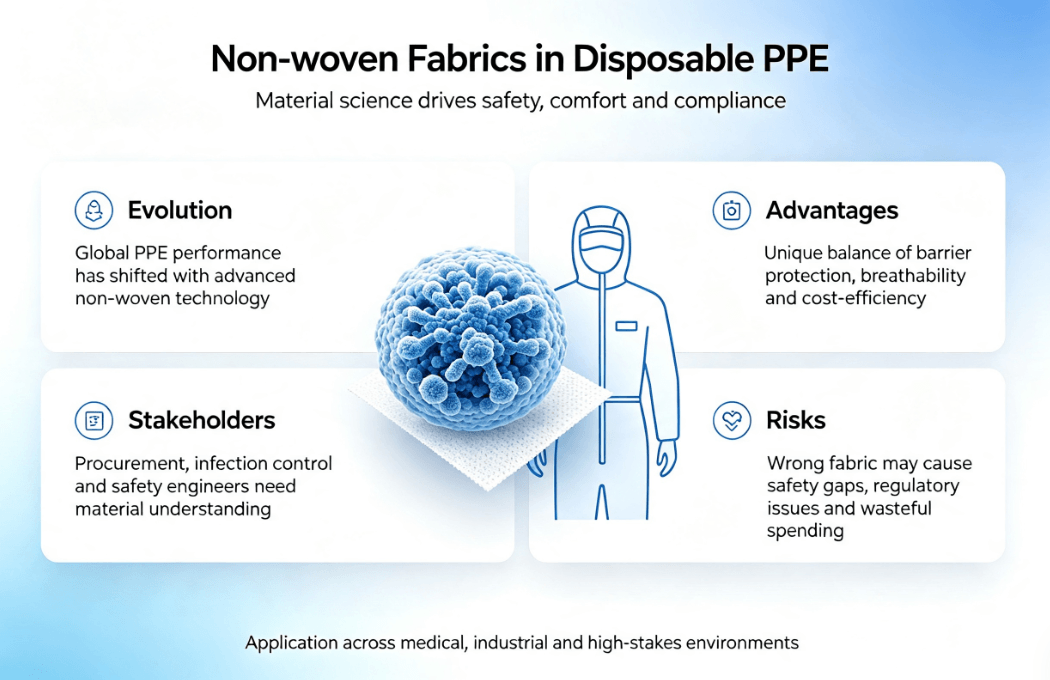
The global landscape of personal protective equipment (PPE) has shifted significantly over the last decade. At the heart of this evolution is the advancement of non-woven fabric technology. Unlike traditional woven textiles, non-woven fabrics provide a unique combination of barrier protection, breathability, and cost-efficiency, making them the indispensable backbone of disposable medical and industrial safety gear.
For procurement managers, infection control specialists, and safety engineers, understanding the nuances of material science is critical. Selecting the wrong fabric can lead to compromised safety, regulatory non-compliance, or unnecessary expenditure. This guide examines the technical structures of non-woven fabrics used in PPE and their specific applications across various high-stakes environments.
What is Non-Woven Fabric for PPE?
Non-woven fabric is a textile-like material made from staple fibers or long fibers, bonded together by chemical, mechanical, heat, or solvent treatment. In the context of PPE, these fabrics are engineered to provide specific functional properties, such as liquid repellency, bacterial filtration, and high tensile strength.
From a manufacturing perspective, the “non-woven” designation refers to the absence of interlaced yarns. Instead, polymers like polypropylene (PP) or polyethylene (PE) are transformed directly into a web-like structure. This process allows for the creation of high-performance barriers that are thin enough for comfort but dense enough to block microscopic pathogens.
Core Materials: The Technical Spectrum of PPE Fabrics
The choice of non-woven fabric dictates the protection level of the final product. Below are the most prevalent materials used in the production of disposable protective clothing.
Spunbonded Polypropylene (SBPP)
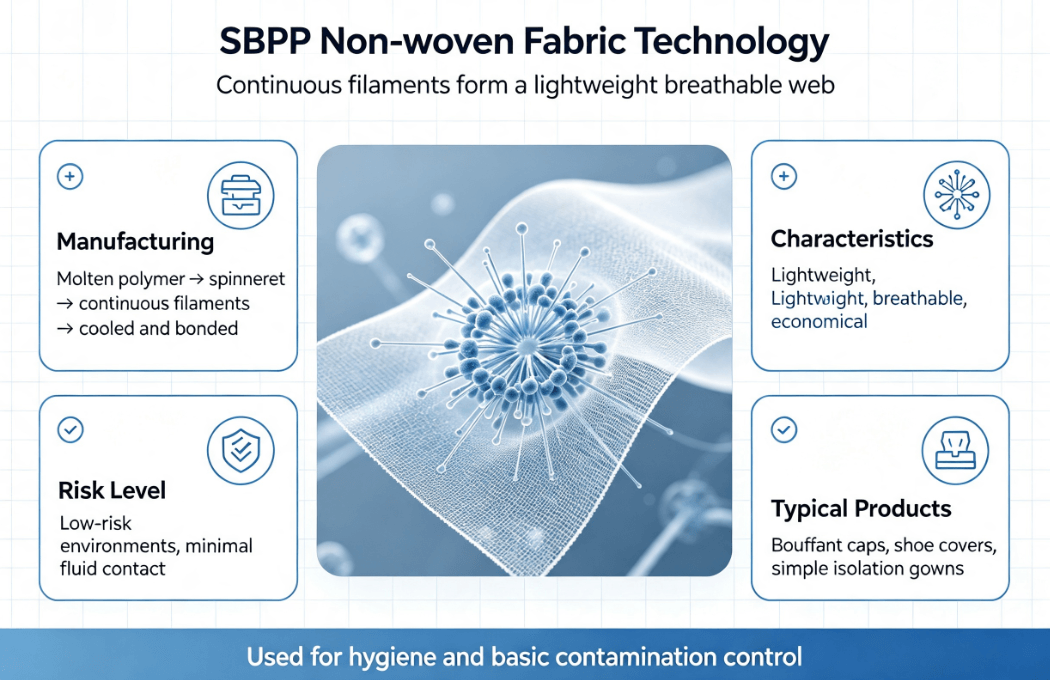
SBPP is the most basic and widely used non-woven fabric. It is created by extruding molten polymer through a spinneret to form continuous filaments, which are then cooled and bonded.
- Key Characteristics: Lightweight, breathable, and economical.
- Best For: Low-risk environments where fluid contact is minimal.
- Applications: Disposable bouffant caps, basic shoe covers, and simple isolation gowns used for hygiene rather than fluid protection.
SMS and SMMS (Spunbond-Meltblown-Spunbond)
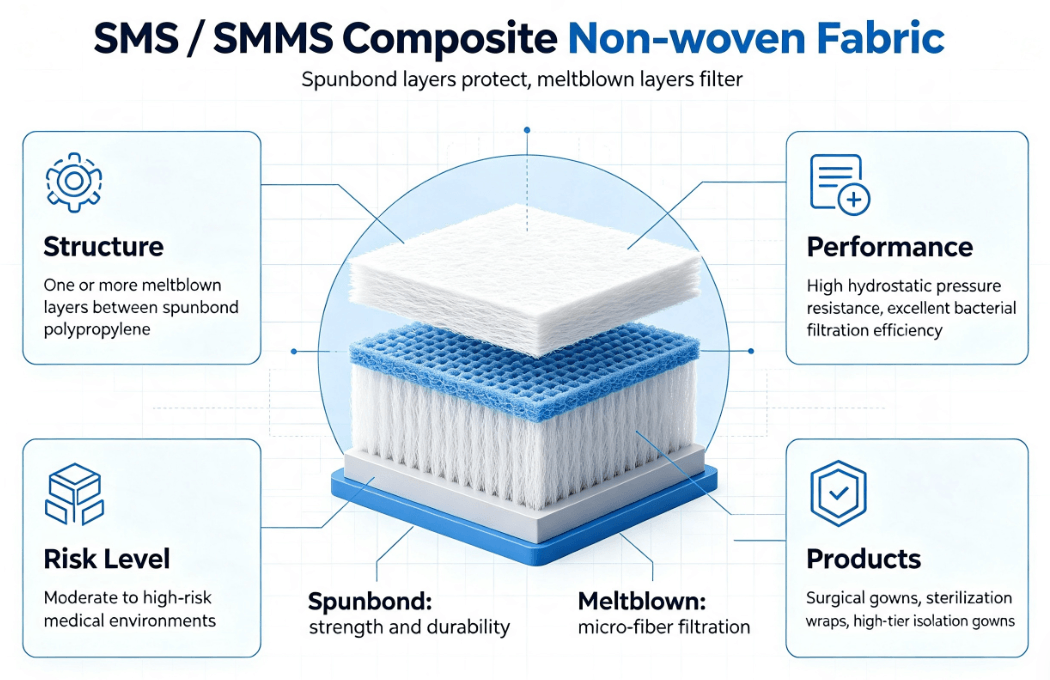
SMS is a multi-layer composite fabric. It sandwiches one or more layers of meltblown non-woven between layers of spunbond polypropylene. The meltblown layer acts as the “filter,” featuring a dense network of micro-fibers that trap particles and fluids.
- Key Characteristics: High hydrostatic pressure resistance, excellent bacterial filtration efficiency (BFE), and durability.
- Best For: Moderate to high-risk medical settings.
- Applications: Surgical gowns, sterilization wraps, and high-tier isolation gowns.
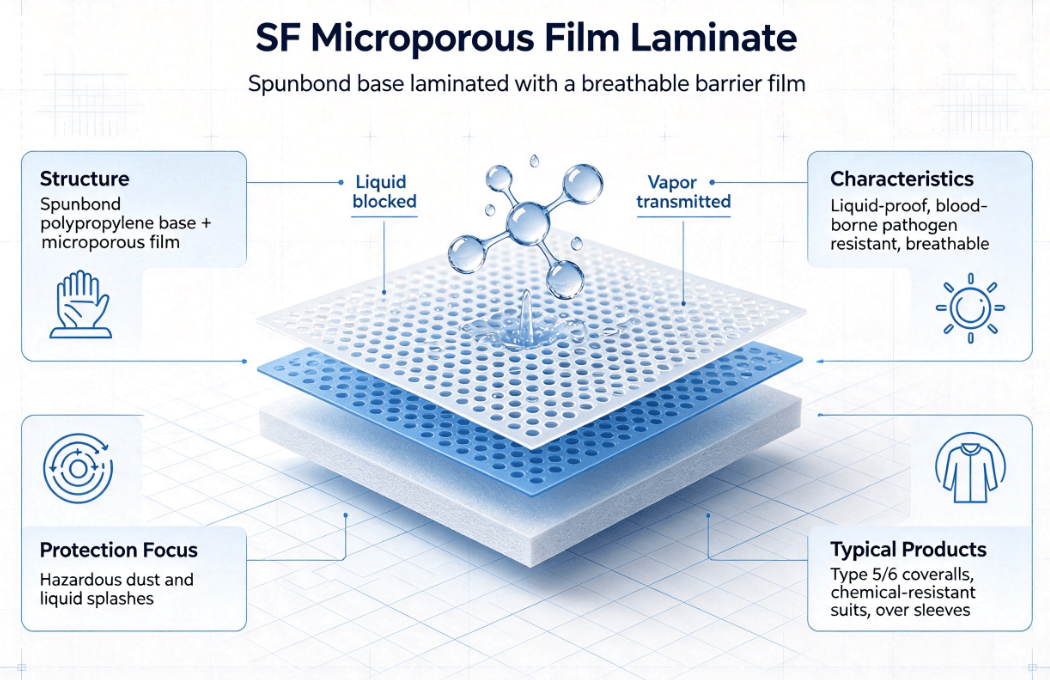
Microporous Film Laminate (SF Fabric)
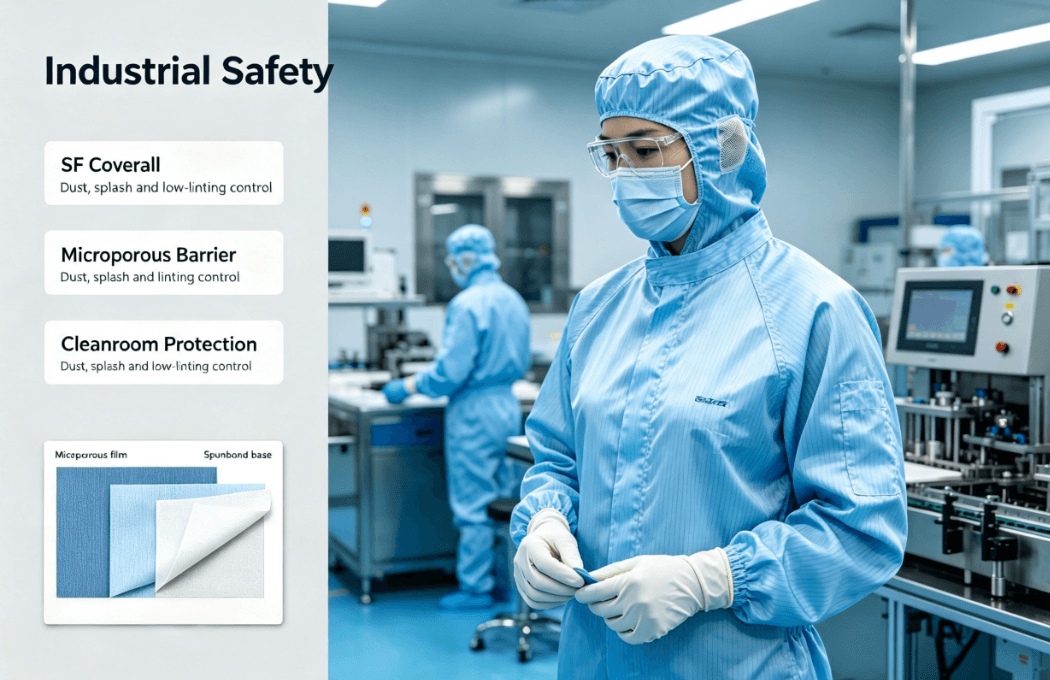
SF fabric consists of a spunbond polypropylene base laminated with a breathable, microporous film. The film contains millions of tiny pores that are smaller than a drop of water but larger than a molecule of water vapor.
- Key Characteristics: Liquid-proof, blood-borne pathogen resistant, yet breathable enough to prevent heat stress.
- Best For: Critical protection against hazardous dust and liquid splashes.
- Applications: Type 5/6 protective coveralls, chemical-resistant suits, and heavy-duty over sleeves.
PP+PE (Polypropylene with PE Lamination)
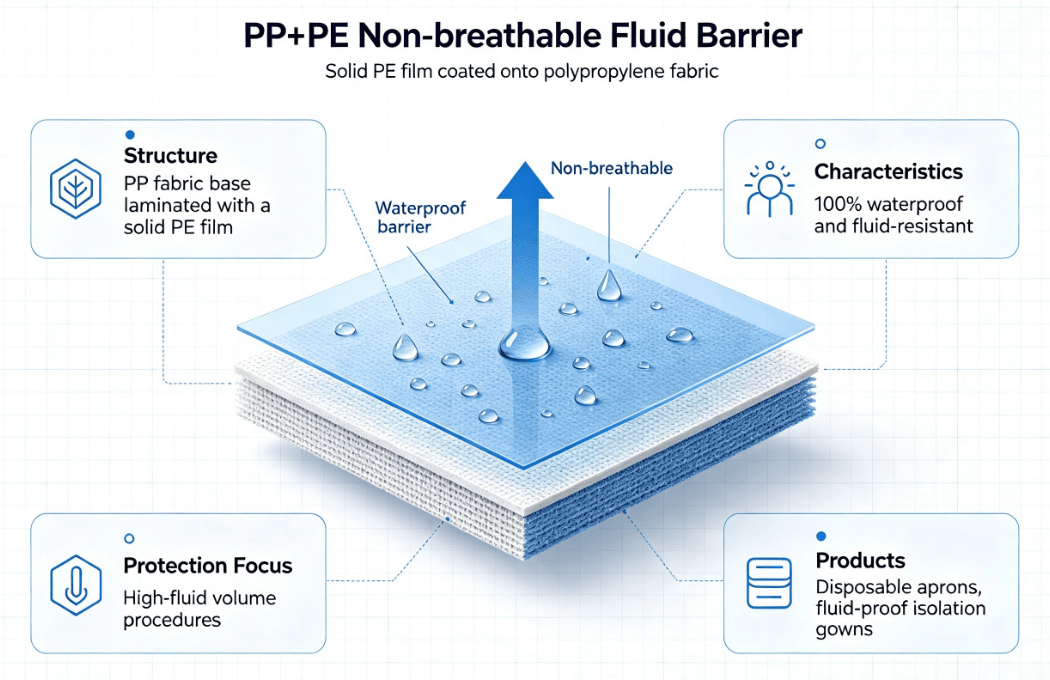
This is a non-breathable reinforced material where a solid polyethylene film is coated onto the PP fabric.
- Key Characteristics: 100% waterproof and fluid-resistant.
- Best For: High-fluid volume procedures.
- Applications: Disposable aprons and fluid-proof isolation gowns.
Comparison of Non-Woven PPE Materials
| Material Type | Breathability | Fluid Resistance | Bacterial Barrier | Typical Application |
|---|---|---|---|---|
| SBPP | High | Low | Low | Hair caps, beard covers |
| SMS | Medium | High | High | Surgical gowns (AAMI Level 3) |
| Microporous (SF) | Medium-Low | Very High | Very High | Protective coveralls |
| PP+PE | Low | Total | Total | Fluid-proof aprons |
| Spunlace | Very High | Low (unless treated) | Medium | Soft medical wipes, gowns |
Technical Performance Metrics for PPE Selection
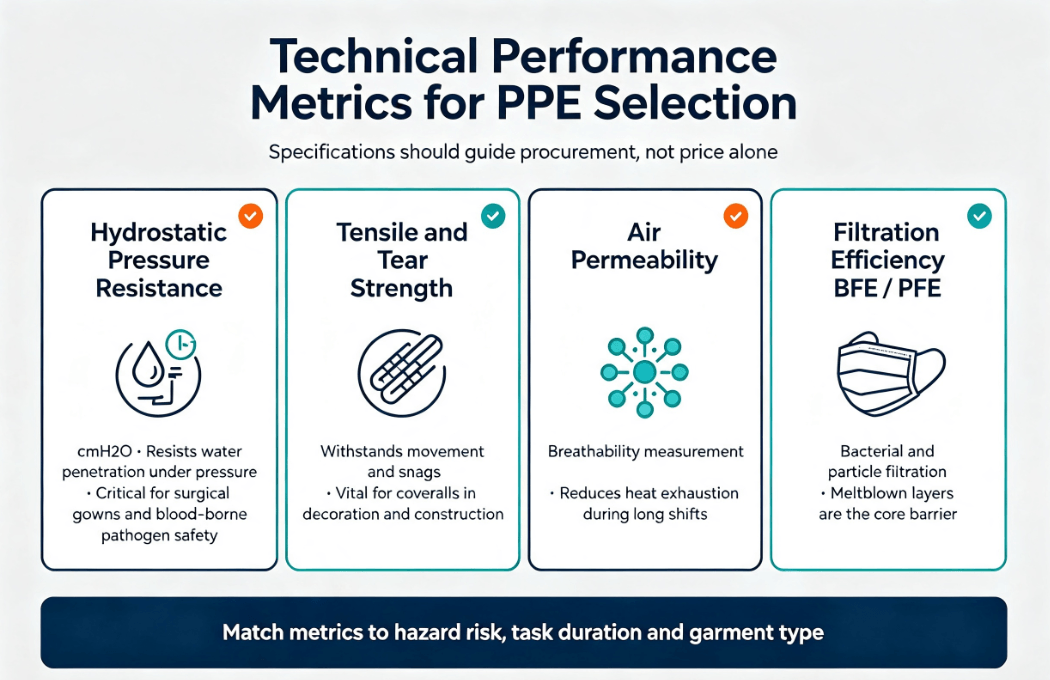
When evaluating non-woven fabric for PPE, technical specifications should guide the procurement process rather than price alone. Industry experts typically focus on the following metrics:
Hydrostatic Pressure Resistance
Measured in centimeters of water (cmH2O), this determines the fabric’s ability to resist water penetration under pressure. For surgical gowns and high-level PPE, this is a non-negotiable metric to ensure blood-borne pathogen safety.
Tensile and Tear Strength
Non-woven fabrics must withstand the rigors of movement without tearing. This is particularly vital for coveralls and suits used in industrial decoration or construction works, where snags are common.
Air Permeability
This measures the “breathability” of the fabric. High air permeability is essential for worker comfort during long shifts in electronic or pharmaceutical cleanrooms to reduce the risk of heat exhaustion.
Filtration Efficiency (BFE/PFE)
For face masks and respirators, Bacterial Filtration Efficiency (BFE) and Particle Filtration Efficiency (PFE) are the gold standards. Meltblown layers within the non-woven structure are primarily responsible for achieving these ratings.
Diverse Applications Across Industries
The versatility of non-woven materials allows them to be tailored for specific industrial and medical needs.
Medical and Healthcare
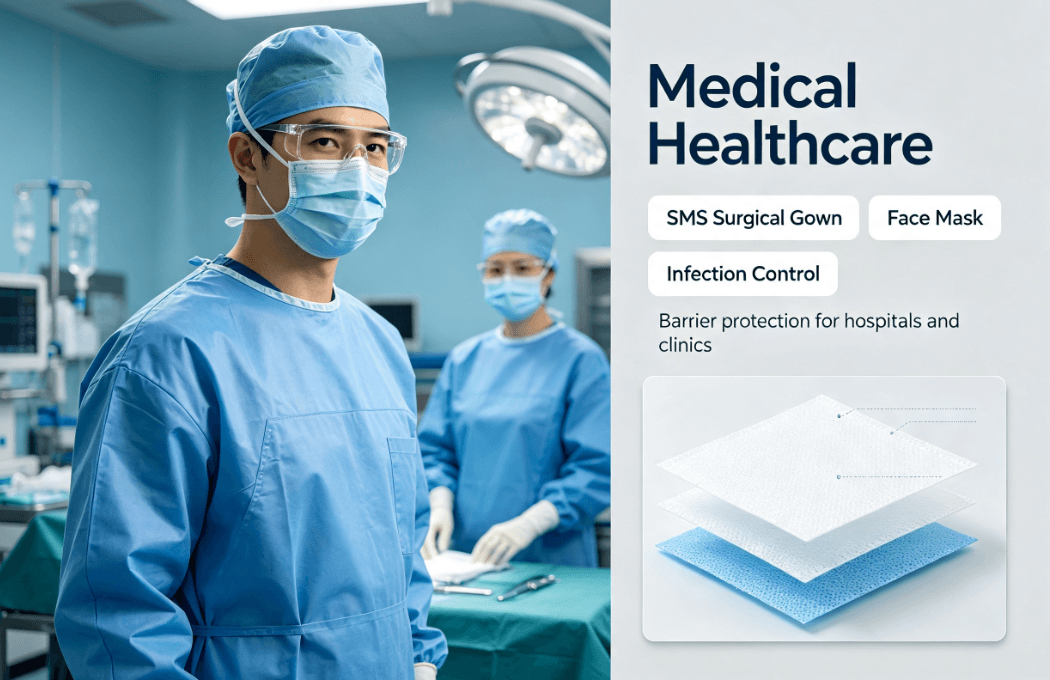
In hospitals and clinics, non-woven fabrics are essential for infection control. SMS surgical gowns provide a sterile barrier during operations, while SBPP face masks protect both the wearer and the patient from droplet transmission. The use of disposable bed sheets and covers also significantly reduces cross-contamination risks in high-turnover environments like hotels or clinics.
Industrial and Safety Protection
Workers in the chemical, electronic, and pharmaceutical industries require protection from particulate matter and hazardous liquids. SF microporous coveralls are frequently used in cleanrooms because they offer a high barrier while remaining “low-linting,” preventing the shed of fibers that could contaminate sensitive components.
Food Processing and Hygiene
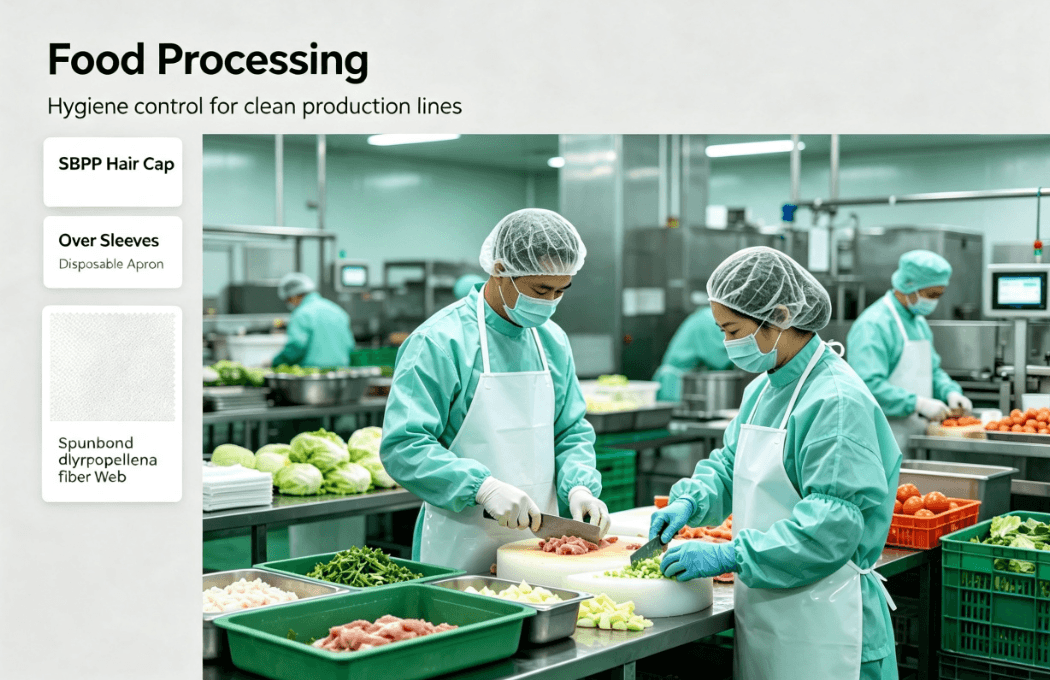
In food safety, the goal is to prevent human contamination of the product. Lightweight SBPP hair caps, over sleeves, and aprons are the industry standard due to their balance of comfort and hygiene.
Conclusion
Non-woven fabric for PPE is a complex field where material science meets human safety. Whether it is the multi-layered filtration of SMS or the breathable barrier of microporous film, the choice of fabric directly impacts the efficacy of protection. As a professional manufacturer with over 10 years of experience, Hubei Ruichen Protective Products Co., Ltd understands that quality begins with the raw material. By producing our own PE and CPE films and maintaining strict ISO 13485 standards, we ensure that every isolation gown, coverall, and face mask meets the rigorous demands of international procurement. Understanding these materials allows buyers to prioritize both end-user safety and operational efficiency.
FAQ
1. What is the difference between SMS and SF fabric?
SMS (Spunbond-Meltblown-Spunbond) is highly breathable and excellent for bacterial filtration, often used in surgical settings.
Microporous (SF) fabric offers a higher liquid barrier and is better suited for chemical splashes or hazardous dust (Type 5/6 protection), though it is generally less breathable than SMS.
2. Is non-woven fabric for PPE eco-friendly?
Most non-woven PPE is made from Polypropylene (PP), which is a recyclable thermoplastic.
Many manufacturers are also exploring degradable non-woven options or improved recycling programs for medical waste to minimize environmental impact in healthcare chains.
3. Can SBPP gowns be used in surgical procedures?
Generally, no. Basic SBPP (Spunbond Polypropylene) does not provide a sufficient fluid barrier for surgical procedures where blood exposure is likely.
Surgical gowns typically require SMS or reinforced laminated materials to meet AAMI Level 3 or 4 standards for critical fluid protection.
4. Why does the GSM matter in PPE manufacturing?
GSM (grams per square meter) indicates the weight and density of the fabric.
A higher GSM usually correlates with better durability and barrier properties, but it may also decrease breathability. Finding the right GSM depends on the specific risk level of the application.
Reference Sources
WHO: Technical specifications for PPE for COVID-19
ISO: ISO 13485 Medical devices Quality management systems
CDC: Understanding PPE and Non-woven materials in healthcare