

5 PPE Items Used in Laboratories

Laboratory work can involve chemical splashes, biological samples, airborne particles, sharp objects, and contaminated surfaces. Even routine tasks such as preparing solutions, handling specimens, cleaning equipment, or transferring materials may expose workers to hazards they cannot see or anticipate.
That is why laboratory PPE should be selected according to the work being performed, rather than treated as a standard uniform for every lab employee.
A well-planned laboratory PPE setup helps reduce direct exposure, protect workers from common injuries, and limit the spread of contamination. The exact equipment depends on the laboratory environment, the substances being handled, and the level of risk involved.
What Is Laboratory PPE?
Laboratory PPE, or personal protective equipment, refers to clothing and protective accessories worn to reduce exposure to workplace hazards. It may protect the hands, body, eyes, face, respiratory system, and feet.
Unlike general workwear, laboratory protective equipment is selected according to specific risks. A microbiology laboratory may require protection against biological contamination, while a chemical laboratory may need equipment designed to resist chemical splashes or exposure to hazardous vapors.
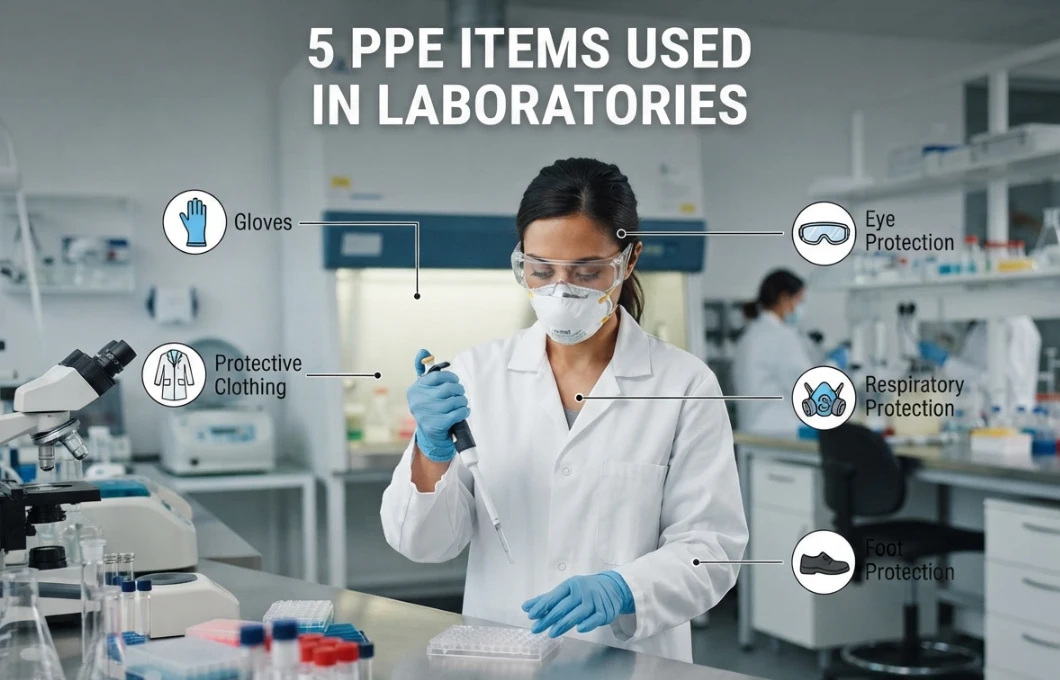
For most laboratory environments, the following five categories form the foundation of a practical lab PPE list.
1. Protective Gloves
Hands are among the body parts most frequently exposed during laboratory work. Workers may handle chemicals, biological specimens, glassware, instruments, and contaminated materials throughout the day.
Protective gloves create a barrier between the skin and these hazards. However, choosing the right glove matters more than simply wearing one.
Disposable nitrile gloves are widely used in laboratories because they offer convenient protection against many common contaminants and are a suitable alternative for people with latex allergies. Latex and other glove materials may also be used when their properties match the task.
Chemical compatibility should always be checked before selecting gloves. A material that works well for routine specimen handling may not provide sufficient protection against a particular solvent or corrosive substance.
Gloves should fit comfortably without restricting movement. Replace them when they become torn, contaminated, or unsuitable for continued use. Workers should also avoid touching clean surfaces, equipment controls, or personal items with contaminated gloves.
For laboratory hand protection, see our protective gloves and hand protection products.
2. Laboratory Coats and Protective Clothing
A laboratory coat is often the most recognizable item of laboratory PPE. It covers the arms and torso, helping reduce direct contact between clothing or skin and laboratory materials.
Depending on the work, laboratories may use reusable coats, disposable gowns, coveralls, aprons, or other protective garments. The choice usually depends on the expected exposure, contamination risk, and how the garment will be removed after use.
Disposable protective clothing can be particularly useful in environments where garments may become contaminated or where changing clothing between tasks is necessary. Nonwoven materials such as PP, SMS, and PP with PE coatings are used in different types of disposable protective apparel. Their protective properties vary, so the material should match the intended application.
For work involving liquid splashes, a garment with a suitable barrier may be more appropriate than a lightweight, breathable lab coat. Where contamination is the primary concern, coverage, garment design, and removal procedures also deserve attention.
A protective garment should cover the areas required by the task without creating unnecessary restrictions. Sleeves, closures, cuffs, and garment length all influence how well it fits the working environment.
Explore laboratory and body protection clothing for different protective garment options.
3. Eye and Face Protection
Laboratory accidents involving the eyes can happen during liquid transfer, sample preparation, cleaning, or handling materials under pressure. A small splash may be enough to cause irritation or injury, which makes eye protection an important part of everyday laboratory safety.
Safety glasses, chemical splash goggles, and face shields serve different purposes.
Safety glasses are generally used to protect against certain impact hazards. Goggles provide a closer seal around the eyes and are often preferred when splash exposure is possible. Face shields offer additional coverage for the face, but they are usually worn together with appropriate eye protection rather than used as a replacement.
The type of protection should match the hazard. A worker handling liquids that may splash needs different protection from someone working with flying particles or mechanical equipment.
Fit also matters. Eye protection that sits loosely, fogs excessively, or interferes with other equipment may be less likely to be worn correctly throughout a task.
For additional coverage around the head and face, some laboratory procedures may also require masks, face shields, or other protective accessories.
See our face protection products for more options.
4. Respiratory Protection
Some laboratory hazards enter the body through inhalation. Dust, aerosols, fumes, and certain airborne contaminants may pose risks depending on their concentration, properties, and exposure duration.
Respiratory protection is intended to reduce inhalation exposure when other controls cannot adequately manage the hazard or when a specific task requires additional protection.
The equipment may include filtering facepieces, particulate respirators, or respirators designed for particular gases and vapors. These products are not interchangeable. A particulate respirator, for example, does not automatically protect against chemical vapors.
Before selecting respiratory PPE, the laboratory should identify the contaminant, evaluate the exposure, and determine which type of protection is appropriate. Where respirators are required, proper selection, fit, training, and maintenance are important parts of the protection program.
A disposable mask intended for general hygiene should not be assumed to provide the same protection as a certified respirator.
Respiratory PPE also works alongside laboratory ventilation and other exposure-control measures. It should not be used as a substitute for appropriate engineering controls.
5. Protective Footwear
Laboratory floors may become wet, slippery, or contaminated. Broken glass, dropped tools, spilled liquids, and heavy equipment can create additional hazards for workers moving between benches, storage areas, and laboratory rooms.
Protective footwear helps reduce these risks. Depending on the working environment, laboratory personnel may need closed-toe shoes, slip-resistant footwear, chemical-resistant boots, or safety shoes with additional protective features.
The footwear should provide adequate coverage and remain stable during movement. In laboratories where liquid spills are possible, slip resistance and material compatibility may be important considerations.
Disposable shoe covers are also used in cleanrooms, medical laboratories, and controlled environments to help reduce contamination carried on footwear. However, they are not a replacement for safety footwear when protection against impact, puncture, or other physical hazards is required.
Choosing between ordinary protective shoes, safety footwear, and disposable shoe covers depends on the laboratory’s cleanliness requirements and workplace hazards.
Explore our foot protection products for shoe covers and other protective options.
A Practical Lab PPE List for Different Tasks
Not every laboratory task requires the same combination of equipment. A useful starting point is to match PPE to the potential exposure rather than issuing identical equipment for every activity.
| Laboratory task | PPE commonly considered |
|---|---|
| Routine sample handling | Laboratory coat, suitable gloves, safety glasses where required |
| Chemical solution preparation | Chemical-compatible gloves, splash goggles, protective clothing |
| Biological specimen handling | Gloves, laboratory coat or gown, eye or face protection where splash exposure is possible |
| Cleaning contaminated equipment | Gloves, protective clothing, eye protection, additional protection based on the cleaning agent |
| Work involving airborne hazards | Appropriate respiratory protection, eye protection, and protective clothing based on risk assessment |
| Work in controlled or clean environments | Suitable garments, gloves, masks, and shoe covers according to contamination-control requirements |
This list is a general guide, not a substitute for laboratory-specific risk assessment. Some tasks require additional protection, while others may need fewer items.
How to Choose Essential Lab PPE
When purchasing laboratory protective equipment, the decision should go beyond price and product appearance. The equipment needs to match the hazards, fit the user, and remain practical throughout the working day.
Consider the exposure risk. Identify whether the task involves chemicals, biological materials, splashes, particles, sharp objects, or contamination.
Check material compatibility. Glove and garment materials have different protective properties. Confirm that the material is appropriate for the substances and conditions involved.
Pay attention to fit and coverage. Poorly fitting gloves, loose garments, or uncomfortable eye protection can interfere with work and discourage proper use.
Consider disposable or reusable options. Disposable PPE may simplify changing and disposal in contamination-sensitive environments. Reusable equipment may be appropriate when it can be cleaned, maintained, and used safely.
Review applicable requirements. Laboratory PPE may need to meet relevant workplace, product, or industry standards. Requirements vary by country, product type, and intended application, so check the documentation before purchasing.
FAQ
What PPE is used in laboratories?
Common laboratory PPE includes protective gloves, laboratory coats or gowns, eye protection, respiratory protection, and protective footwear. The required combination depends on the laboratory’s activities and potential hazards.
What is the most essential PPE in a laboratory?
There is no single item that provides complete protection in every laboratory. Gloves, protective clothing, and eye protection are common starting points, but respiratory or foot protection may be equally important for specific tasks.
What should be included in a lab PPE list?
A basic lab PPE list may include suitable gloves, laboratory coats or protective gowns, safety glasses or splash goggles, appropriate masks or respirators, and closed-toe protective footwear. Additional items may be required for specialized work.
Are disposable gowns suitable for laboratory use?
Disposable gowns can be suitable for tasks involving contamination control, routine specimen handling, or situations where garments need to be changed frequently. The required barrier properties depend on the materials being handled and the level of exposure.
Can disposable shoe covers replace safety shoes?
No. Disposable shoe covers are primarily used to help control contamination. They do not automatically provide impact, puncture, or other safety protection offered by appropriately selected safety footwear.
Choosing PPE That Fits the Laboratory’s Needs
Laboratory PPE is most effective when each item is selected for a specific purpose. A comfortable pair of gloves, a protective garment with appropriate coverage, and properly fitted eye protection can make routine work safer and easier to manage.
For laboratories handling biological samples, chemicals, or materials that require contamination control, disposable protective products may help simplify garment changes and support consistent hygiene practices.
Hubei Ruichen Protective Products Co., Ltd. supplies disposable protective products for medical, laboratory, industrial, and cleanroom applications. Our product range includes protective gowns, coveralls, gloves, masks, head protection, and shoe covers.
If you are sourcing laboratory protective equipment for your facility or distribution business, contact our team to discuss product materials, specifications, packaging, and customization options.