

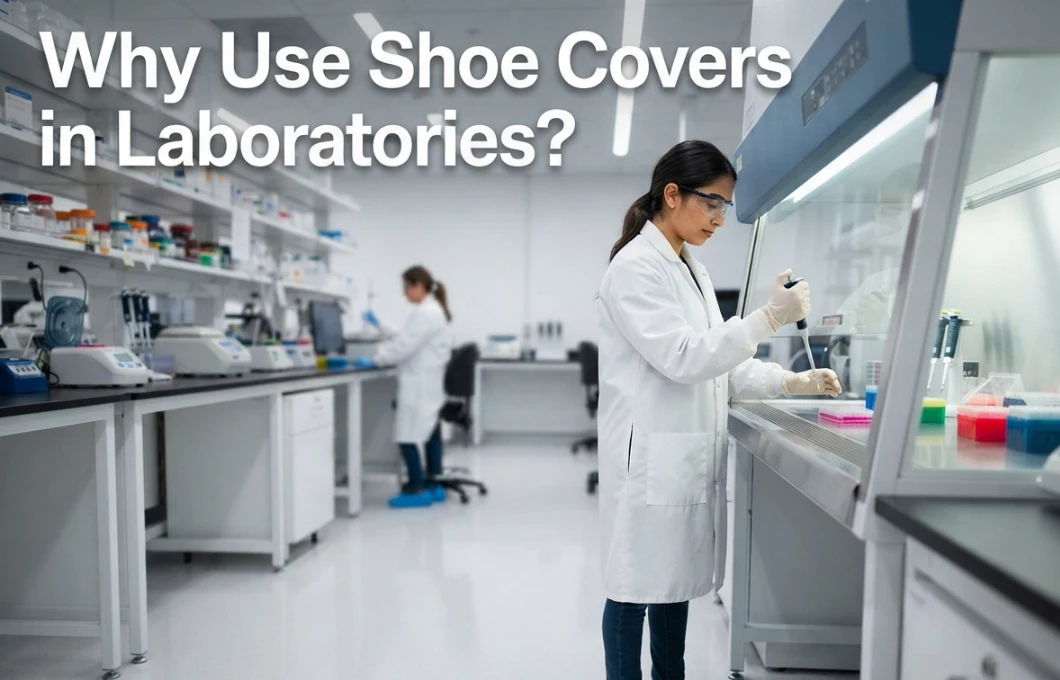
Why Use Shoe Covers in Laboratories?

A pair of shoes can carry more into a laboratory than most people realize. Dust, dirt, moisture, and other contaminants may cling to the soles and travel from hallways into work areas where cleanliness matters.
That is one reason many laboratories use disposable shoe covers. They provide a simple barrier between footwear and the working environment, helping reduce the transfer of contaminants while making routine cleaning and hygiene procedures easier to manage.
But are lab shoe covers necessary in every laboratory? The answer depends on the type of work, the cleanliness requirements, and the potential risks inside the facility.
Why Use Shoe Covers in a Lab?
Laboratory environments often require greater control over contamination than ordinary workplaces. Even small amounts of dust or debris can interfere with sensitive procedures, sample handling, or equipment operation.
Disposable lab shoe covers help limit the contaminants that footwear may bring into controlled areas. They are particularly useful in laboratories where staff move between different rooms, handle sensitive materials, or work under established hygiene procedures.
1. Reduce the Risk of Cross-Contamination
Shoes come into contact with floors, outdoor surfaces, and shared walkways throughout the day. Contaminants picked up along the way can be transferred into laboratory areas.
Disposable shoe covers create a protective layer over footwear, helping reduce the movement of dirt and other unwanted materials between different zones. In laboratories handling biological samples, chemicals, or sensitive testing materials, this additional barrier can support existing contamination-control procedures.
Shoe covers alone cannot eliminate contamination. Their effectiveness depends on proper use, timely replacement, and the overall hygiene practices followed by laboratory personnel.
2. Help Protect Laboratory Personnel
Laboratory safety involves more than gloves, masks, and protective clothing. Footwear protection may also be necessary when workers could encounter spills, splashes, dust, or contaminated surfaces.
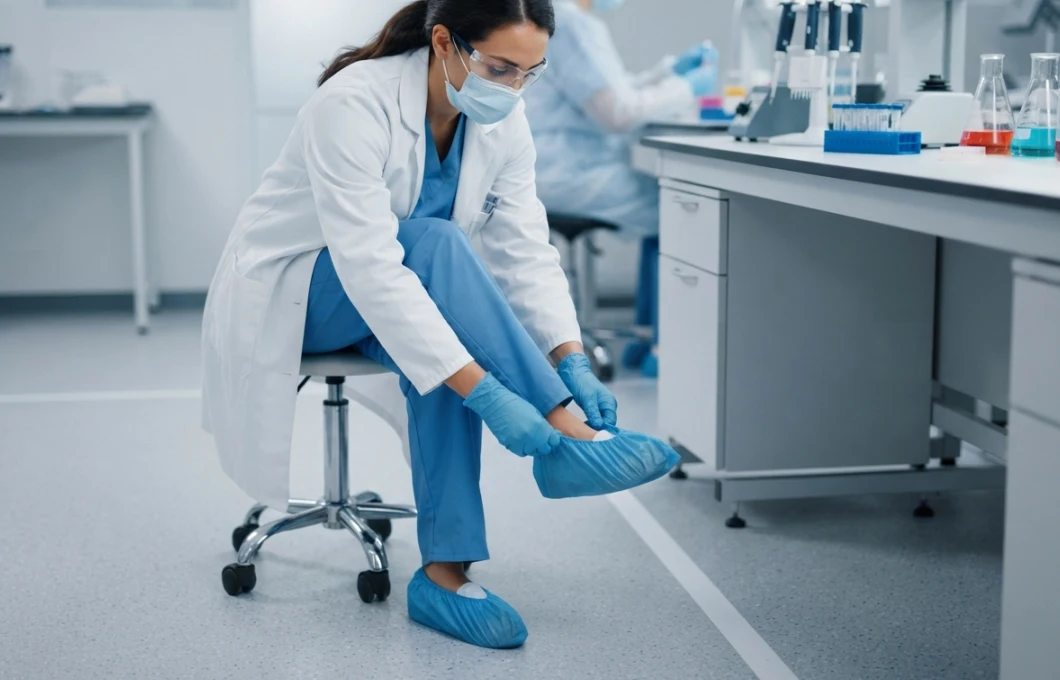
Boot covers for laboratory use can provide additional coverage over shoes, particularly in areas where workers need to protect their footwear from contamination.
The appropriate type depends on the working environment. A lightweight nonwoven shoe cover may suit general cleanliness requirements, while a coated or plastic-based cover may be more appropriate when moisture resistance is needed.
For chemical hazards, however, ordinary disposable shoe covers should not be treated as chemical-resistant footwear. Workers should select protective equipment based on the specific substances and exposure risks involved.
3. Maintain a Cleaner Working Environment
Dust, mud, hair, and small particles can easily enter a laboratory on the soles of shoes. In facilities with controlled access or frequent movement between rooms, managing this traffic can become a daily challenge.
Disposable lab shoe covers help reduce the amount of dirt transferred onto laboratory floors. They can also make it easier to maintain cleaner work areas, especially when visitors, contractors, or staff need to enter restricted spaces.
A practical benefit is that workers can remove used covers before leaving the designated area instead of carrying the same contaminants into other rooms.
4. A Practical and Economical Hygiene Solution
Reusable footwear protection may require washing, disinfection, storage, and regular inspection. These processes can add work to daily facility management.
Disposable shoe covers offer a straightforward alternative. Workers can put on a fresh pair when entering a designated area and discard it after use, according to the facility’s procedures.
For laboratories with frequent staff movement or visitor access, bulk disposable shoe covers can simplify supply management. Their lightweight design also makes them easy to store near entrances, changing areas, or hygiene stations.
The actual cost depends on material, thickness, size, usage frequency, and packaging. Choosing the right specification matters more than simply purchasing the lowest-priced option.
5. Support Laboratory Hygiene and Entry Procedures
Many laboratories establish rules for entering controlled work areas. These may include wearing protective clothing, washing hands, changing footwear, or using disposable protective accessories.
Lab shoe covers can form part of these procedures by helping staff follow designated hygiene practices. They are especially useful when facilities need a simple, visible way to distinguish between general areas and cleaner working zones.
However, shoe covers do not automatically make a laboratory compliant with a particular regulation or standard. Their use should follow the facility’s documented risk assessment, hygiene procedures, and applicable requirements.
What Should You Look for in Lab Shoe Covers?
Not every disposable shoe cover is suitable for laboratory use. Material, fit, construction, and the working environment all influence which type is appropriate.
| Selection Factor | What to Consider |
|---|---|
| Material | PP nonwoven for general use; PE or coated materials when greater moisture resistance is needed |
| Fit | A suitable size that covers footwear without restricting movement |
| Elastic opening | Helps keep the cover in place during normal movement |
| Surface | Smooth or textured options depending on floor conditions and application |
| Thickness | Should match the expected wear and protection requirements |
| Intended use | General laboratories, cleanrooms, medical facilities, or industrial environments may require different specifications |
PP nonwoven shoe covers are commonly selected for their lightweight construction and breathability. Plastic or coated options may offer better resistance to water and surface moisture, although their performance depends on material thickness and construction.
If the laboratory requires a specific level of cleanliness, particle control, liquid resistance, or other protective performance, buyers should verify the product specifications rather than rely on the product name alone.
Lab Shoe Cover Requirements: Are There Specific Rules?
Lab shoe cover requirements vary by laboratory type and the work being performed. A general testing laboratory may have different entry procedures from a cleanroom, pharmaceutical facility, microbiology laboratory, or medical research center.
A facility may require shoe covers when:
- Staff enter designated clean or restricted areas.
- Personnel handle sensitive samples or materials.
- Footwear could introduce dirt or contaminants.
- Workers need to prevent contamination from spreading between zones.
- Visitors or maintenance personnel enter controlled working areas.
The facility’s own hygiene procedures should determine when shoe covers are required, how often they should be replaced, and how used covers should be discarded.
For cleanroom applications, ordinary disposable shoe covers may not meet the required cleanliness or particle-control specifications. Cleanroom shoe covers should be selected according to the room classification, process requirements, and validated procedures.
Lab Shoe Covers vs. Cleanroom Shoe Covers
The terms are sometimes used interchangeably, but the products may serve different purposes.
General lab shoe covers are designed primarily to help keep footwear clean and reduce the transfer of dirt or contaminants. They may be made from PP nonwoven fabric, PE film, or other materials.
Cleanroom shoe covers are intended for environments with more specific contamination-control requirements. Depending on the application, they may require particular materials, construction, packaging, or cleanliness characteristics.
A cleanroom designation should not be assumed simply because a shoe cover is disposable or made from nonwoven fabric. Buyers should check whether the product meets the requirements of their facility.
How to Use Disposable Shoe Covers Properly
Proper use can make a noticeable difference in how well shoe covers support laboratory hygiene.
- Put on a fresh pair before entering the designated area.
- Make sure the cover fits securely over the shoe.
- Avoid touching the floor or other surfaces unnecessarily while putting them on.
- Replace covers if they become torn, heavily contaminated, or wet beyond their intended use.
- Remove used covers at the designated exit or disposal point.
- Follow the laboratory’s procedures for handling and discarding contaminated PPE.
For laboratories with clearly separated clean and general areas, placing shoe-cover dispensers and waste bins near access points can make the process easier for staff and visitors.
FAQ
Why use shoe covers in a lab?
Shoe covers help reduce the transfer of dirt, dust, and other contaminants carried on footwear. They also help protect shoes from contamination and support laboratory cleanliness procedures.
Are boot covers for laboratory use waterproof?
Not all laboratory boot covers are waterproof. PP nonwoven covers generally provide basic protection against dirt and light contact, while PE or coated materials may offer greater moisture resistance. Product performance depends on the material and construction.
Are lab shoe covers mandatory?
There is no single requirement that applies to every laboratory. Whether shoe covers are required depends on the facility’s risk assessment, hygiene rules, work processes, and applicable regulations.
Can disposable shoe covers be used in cleanrooms?
Some disposable shoe covers are suitable for certain cleanroom applications, but ordinary shoe covers should not automatically be considered cleanroom-compatible. Check the required cleanliness level, material, and product specifications before use.
How often should lab shoe covers be changed?
They should be changed whenever they become damaged, visibly contaminated, or no longer suitable for the working conditions. Laboratories may also require replacement when workers leave and re-enter designated areas.
Choosing the Right Shoe Covers for Your Laboratory
Disposable shoe covers are a simple accessory, but selecting the right type can make everyday laboratory hygiene easier to manage. The best option depends on the level of cleanliness required, the material being handled, the frequency of use, and the conditions workers encounter.
For general laboratory applications, lightweight PP nonwoven shoe covers may be a practical choice. Where moisture resistance or more specific contamination-control requirements are involved, alternative materials and product specifications may be necessary.
Before purchasing, consider how the shoe covers will be used, what protection they are expected to provide, and whether they fit your laboratory’s established procedures. A suitable product can help support a cleaner working environment without adding unnecessary complexity to daily operations.