
Blog
Types of Protective Medical Gowns

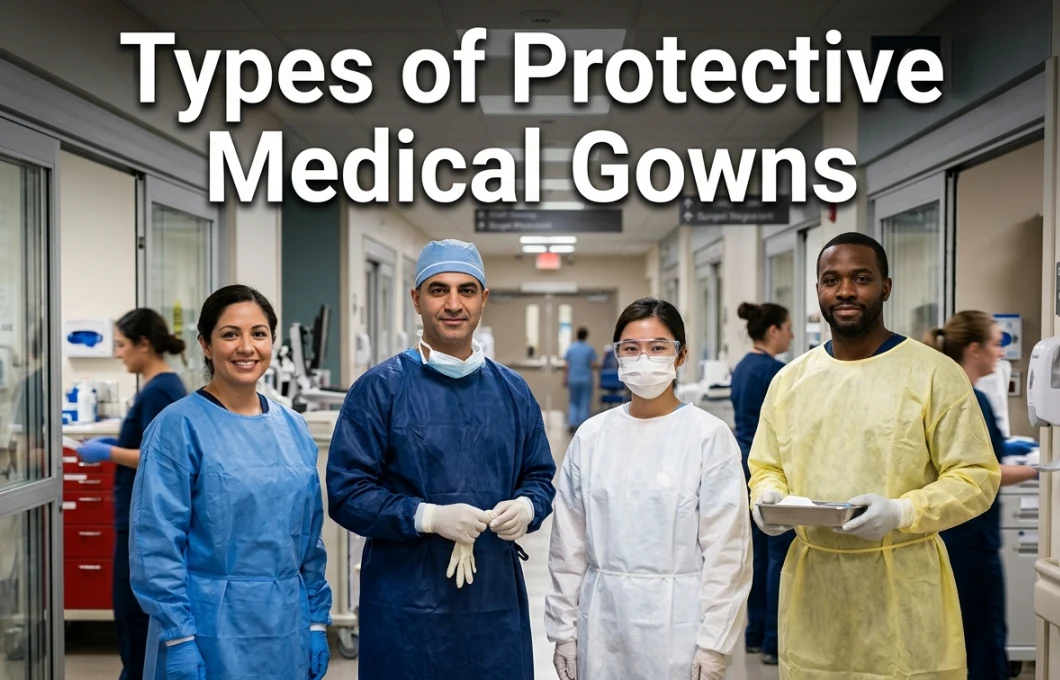
Protective medical gowns come in several forms, and each serves a different purpose. Some provide basic coverage during routine patient care, while others are designed for procedures involving blood, body fluids, or specific hazardous substances.
Understanding the different types of medical gowns helps healthcare facilities, PPE distributors, and purchasing teams select products that match their intended applications. The differences involve more than appearance. Material construction, garment coverage, barrier performance, and applicable standards all affect how a gown should be used.
A gown suitable for routine patient contact may not meet the requirements of a surgical procedure. Similarly, a lightweight visitor gown should not be treated as equivalent to a fluid-resistant isolation gown.
What Are the Main Types of Protective Medical Gowns?
Protective medical gowns are garments used in healthcare and related environments to provide coverage and, where designed and tested for that purpose, a barrier against contamination. Common categories include isolation gowns, surgical gowns, chemotherapy gowns, chemical protective gowns, and visitor gowns.
These categories can overlap in some applications, but they are not interchangeable. The appropriate choice depends on the expected exposure, the required level of protection, and the product’s intended use.
1. Isolation Gowns
Isolation gowns are commonly used when healthcare workers may come into contact with blood, body fluids, secretions, excretions, or contaminated surfaces. They help protect clothing and exposed skin as part of a facility’s infection prevention procedures.
Disposable isolation gowns are often made from nonwoven polypropylene (PP), SMS fabric, or laminated materials. The material and construction determine the garment’s actual properties, so the fabric name alone cannot establish its barrier performance.
Common applications include:
- Routine patient care when gown use is indicated by infection prevention protocols.
- Contact precautions and care involving potentially contaminated materials.
- Certain laboratory and clinical support activities.
- Selected healthcare-related tasks where garment coverage and fluid resistance are required.
Isolation gowns vary in sleeve design, cuffs, closures, fabric weight, and coverage. Some are lightweight for routine tasks, while others are designed to provide greater resistance to liquid penetration.
For a closer look at garment construction and intended use, read our guide to what a disposable isolation gown is.
2. Surgical Gowns
Surgical gowns are designed for use by surgical team members during procedures where sterile technique and protection from anticipated exposure are required. Their specifications depend on the procedure, expected fluid contact, and applicable requirements.
Unlike a general patient gown, a surgical gown used in an operating room must meet the relevant requirements for the intended surgical application. Sterility, when required, is also an important purchasing specification.
Features to evaluate include:
- Barrier performance: Resistance to liquid penetration in the areas and under the conditions specified by the applicable standard.
- Critical zones: Areas of the gown that require defined barrier performance under the relevant classification.
- Seam construction: The way seams are made can affect barrier integrity.
- Sterility and packaging: These must match the intended procedure and facility requirements.
A surgical gown should not be selected based on its color or fabric weight alone. Buyers should verify its intended use, applicable classification, test documentation, and whether the product is supplied sterile or non-sterile.
3. Chemotherapy Gowns
Chemotherapy gowns are specialized protective garments used when handling certain chemotherapy drugs or other hazardous medications. They are relevant to pharmacy preparation areas, oncology departments, and other workplaces where staff may face exposure during drug preparation, administration, or waste handling.
The protection required depends on the medication, the handling procedure, and the workplace’s hazardous-drug safety protocols. A standard disposable isolation gown should not automatically be assumed suitable for these tasks.
When evaluating a gown for chemotherapy-related work, consider:
- Resistance to the specific drugs or substances involved.
- Whether the garment has been tested for the intended exposure.
- Cuff and closure designs that support the required coverage.
- Compatibility with other PPE required by the facility.
- Applicable workplace guidance and product documentation.
The term chemotherapy gown describes an intended application, not a universal performance grade. Purchasing teams should confirm the product’s documented suitability rather than relying on the label alone.
4. Chemical Protective Gowns
Chemical protective gowns are designed for work involving specified chemical hazards. Depending on the application, they may be used in laboratories, pharmaceutical production, chemical handling areas, or specialized healthcare environments.
Their suitability depends heavily on the chemical involved and the type of exposure. A garment that resists a water-based splash may not provide adequate protection against an organic solvent or a corrosive substance.
Important selection factors include:
- The chemical’s identity and concentration.
- The likelihood of splashing, spraying, or prolonged contact.
- The material’s documented chemical resistance.
- Seam integrity and garment coverage.
- Compatibility with gloves, eye protection, and other required PPE.
No single gown material is suitable for every chemical. Consult the manufacturer’s chemical compatibility information and relevant safety documentation before selecting a garment for a specific hazard.
5. Visitor Gowns
Visitor gowns are lightweight garments used to provide basic clothing coverage in selected healthcare, laboratory, or controlled work environments. Their primary purpose may be hygiene, contamination control, or compliance with local facility procedures.
Depending on their design, visitor gowns may offer little resistance to liquid penetration. They should not be assumed to provide the same barrier performance as medical isolation gowns or surgical gowns.
Common considerations include:
- Whether the garment is intended for visitors or trained personnel.
- The coverage needed for the specific environment.
- Whether fluid resistance is required.
- Disposable or reusable construction.
- Local hygiene and entry requirements.
A visitor gown may be appropriate where basic coverage is sufficient. If the wearer could encounter infectious materials or hazardous substances, the facility should specify PPE that meets the actual exposure requirements.
How Do Medical Gown Types Differ in Materials and Protection?
The most useful way to compare protective gown types is to consider their intended use alongside material construction and verified performance. Similar-looking garments can have very different specifications.
| Gown type | Typical application | Main selection consideration |
|---|---|---|
| Isolation gown | Patient care and contact precautions when indicated | Expected fluid exposure and barrier performance |
| Surgical gown | Surgical procedures requiring appropriate sterile attire | Procedure risk, critical zones, sterility, and applicable standards |
| Chemotherapy gown | Handling certain hazardous chemotherapy drugs | Drug-specific protection and workplace protocols |
| Chemical protective gown | Work involving specified chemical hazards | Chemical compatibility and exposure conditions |
| Visitor gown | Basic coverage in designated areas | Hygiene requirements and level of coverage |
Common Materials Used in Disposable Gowns
Disposable gowns can be produced from several nonwoven materials. Their performance depends on the fiber structure, fabric layers, coatings or films, seam design, and manufacturing quality.
Spunbond polypropylene (PP) is a lightweight nonwoven material commonly used for basic disposable garments. It offers coverage and breathability, but untreated PP should not be assumed to provide a high level of fluid resistance.
SMS fabric combines spunbond and meltblown layers. This structure can balance strength, breathability, and barrier performance, depending on the fabric specification and test results.
PP+PE laminated material combines a polypropylene nonwoven layer with a polyethylene film. It is often considered when greater resistance to liquid penetration is required, although suitability still depends on the complete garment and the intended application.
Fabric weight, measured in grams per square meter (GSM), is another specification buyers commonly review. A higher GSM does not automatically mean that a garment meets a particular barrier classification.
When comparing products, evaluate the material together with test results, garment construction, and intended use. Our guide to disposable protective clothing types explains how different protective garment categories serve different working environments.
How to Choose the Right Protective Medical Gown
Choosing a gown begins with the task, not the product name. Healthcare facilities and PPE purchasing teams should identify the exposure risk before comparing materials or garment designs.
A practical selection process includes these steps:
- Define the application. Identify whether the gown will be used for routine patient care, surgery, hazardous-drug handling, chemical work, or visitor access.
- Assess the exposure. Consider possible contact with blood, body fluids, chemicals, or contaminated surfaces.
- Identify the required protection. Review applicable standards, workplace protocols, and product-specific performance requirements.
- Compare garment construction. Check coverage, sleeve length, cuffs, closures, seams, and fit.
- Review documentation. Request relevant technical data sheets, test reports, and applicable conformity documentation.
- Confirm purchasing specifications. Check size, fabric weight, color, packaging, sterility, and any customization requirements.
For isolation gowns, ANSI/AAMI PB70 is a relevant framework for classifying protective apparel according to liquid barrier performance. Its classification should be interpreted in the context of the product’s intended use and the applicable requirements.
The gown’s intended application matters just as much as the classification. A higher barrier level is not automatically necessary for every task, and a product should not be assigned a protection level without supporting test evidence.
For more detail, see our AAMI isolation gown standards and protection guide.
What Should Buyers Check When Comparing Disposable Gowns?
For distributors, importers, and institutional buyers, the specification sheet is a useful starting point. It helps clarify whether products being compared are actually equivalent.
Review the following details:
- Material type and fabric weight.
- Available dimensions and size range.
- Sleeve, cuff, and fastening design.
- Intended application and documented barrier performance.
- Sterile or non-sterile status.
- Packaging configuration and labeling.
- Available test reports and conformity documents.
- Customization options for colors, dimensions, or packaging.
For example, Ruichen’s disposable isolation gown range includes products using materials such as SMS and PP+PE, with listed size and fabric-weight options. Buyers should review each product’s documentation to confirm its suitability for the intended application.
For a broader view of disposable garments used across healthcare, industrial, and other work environments, see the protective clothing product category.
Different protective garments address different risks. A coverall may provide broader body coverage for certain industrial or contamination-control tasks, but it is not automatically a substitute for a gown designed for a specific medical procedure. Our guide to disposable protective clothing explains the broader product category and its applications.
Conclusion
Protective medical gowns differ in purpose, construction, and required performance. Isolation gowns are commonly associated with patient care and contact precautions, while surgical gowns are designed for procedures with specific sterile and barrier requirements. Chemotherapy and chemical protective gowns address more specialized exposure risks, and visitor gowns generally provide basic coverage.
The right choice depends on the actual task, the substances involved, and the protection required by the applicable protocols and standards. For procurement teams, checking product specifications and test documentation is more reliable than judging a gown by its appearance, material name, or fabric weight alone.
FAQ
What are the main types of protective medical gowns?
Common types include isolation gowns, surgical gowns, chemotherapy gowns, chemical protective gowns, and visitor gowns. Each serves a different purpose, and its suitability depends on the expected exposure and required protection.
What is the difference between an isolation gown and a surgical gown?
Isolation gowns are used in patient care and contact precautions when indicated. Surgical gowns are designed for surgical procedures with specific sterility and barrier requirements. The appropriate choice depends on the procedure and applicable standards.
What materials are used to make disposable medical gowns?
Common materials include spunbond polypropylene (PP), SMS nonwoven fabric, and PP+PE laminated material. Their properties differ, so buyers should review the garment’s construction and verified performance rather than relying on material names alone.
How is an isolation gown classification determined?
For applicable protective apparel, ANSI/AAMI PB70 classifies barrier performance into four levels based on specified liquid penetration tests. The appropriate level depends on the intended use, expected exposure, and relevant requirements.
Can a standard medical isolation gown be used for chemotherapy?
Not automatically. Chemotherapy-related work may involve hazardous drugs requiring specialized protective garments. Confirm drug-specific suitability, relevant test documentation, and workplace safety protocols before selecting a gown.