
Blog
What Is Disposable Protective Clothing?

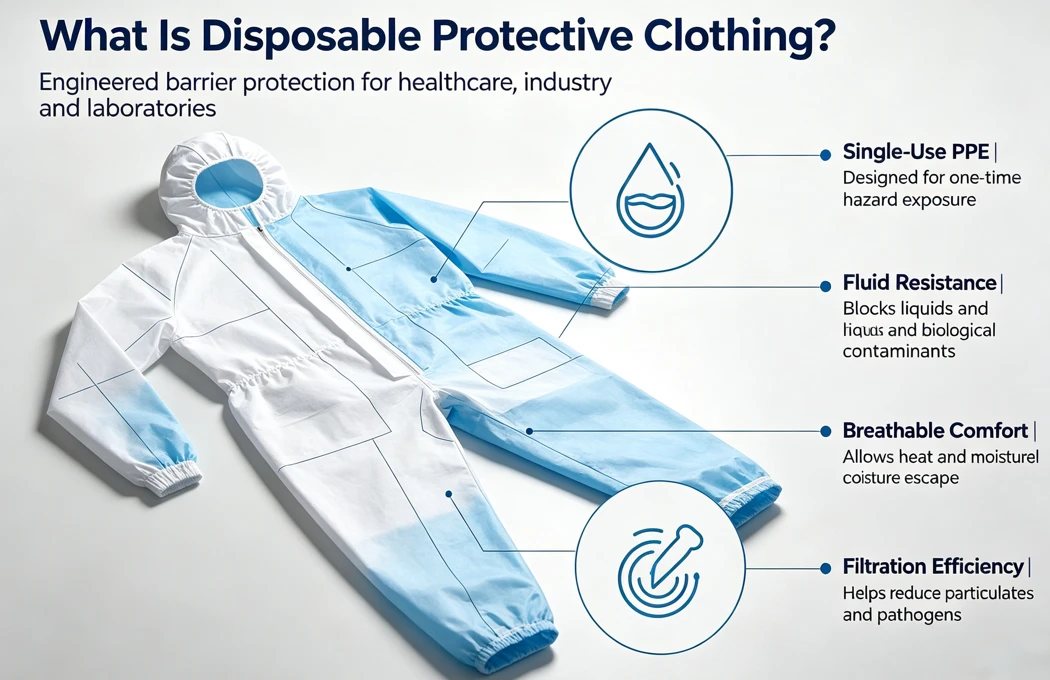
In the specialized fields of healthcare, industrial manufacturing, and laboratory research, the term “disposable protective clothing” refers to a critical category of Personal Protective Equipment (PPE) designed for single-use applications. These garments create a physical barrier between the wearer and potential hazards, including infectious agents, liquid chemicals, dry particulates, and biological contaminants. As a result, they help reduce exposure risks across medical, industrial, laboratory, and other controlled environments.
From a manufacturing and technical perspective, disposable protective clothing is not merely “throwaway apparel.” It is a highly engineered product utilizing advanced non-woven textile technologies. Unlike traditional textile garments, these products are constructed to provide specific barrier properties, such as fluid resistance, breathability, and filtration efficiency, tailored to the risk level of the environment.
The Technical Definition of Disposable Protective Clothing
At its core, disposable protective clothing definition encompasses any garment designed to be worn once and then discarded to prevent cross-contamination or the spread of hazardous materials. Technically, these are “limited-life” garments. The primary objective is to maintain a sterile or controlled environment while ensuring the biological or chemical safety of the professional.
The “disposable” nature is a strategic choice in infection control and safety protocols. By utilizing single-use garments, facilities eliminate the risks associated with inadequate laundering, residual contamination, and the degradation of protective barriers that occur over multiple wash cycles in reusable textiles.
The Materials Science Behind Protective Barriers
To understand disposable protective clothing, one must look at the non-woven fabrics that form its foundation. Manufacturers select raw materials based on the required “Protection Level” (such as AAMI levels in healthcare or Type 1-6 in industrial settings).
1. Spunbonded Polypropylene (SBPP)
This is the most basic non-woven material. It is lightweight, breathable, and provides a basic barrier against dust and non-hazardous liquids. It is commonly used for lab coats, basic isolation gowns, and shoe covers where high-level fluid resistance is not the primary concern.
2. SMS and SMMS (Spunbond-Meltblown-Spunbond)
This is a multi-layer fabric. The “Meltblown” layer acts as a microscopic filter, while the “Spunbond” layers provide structural strength. It offers high breathability while maintaining a strong barrier against fluids and bacteria. It is the gold standard for high-quality isolation gowns and surgical drapes.
3. Microporous Film Laminated (SF)
SF fabric consists of a non-woven base laminated with a microporous film. This film contains millions of microscopic pores that are small enough to block liquid water and blood-borne pathogens but large enough to allow moisture vapor (sweat) to escape. It is ideal for heavy-duty protective coveralls where protection against biological hazards is critical.
4. Polyethylene (PE) and CPE
Chlorinated Polyethylene (CPE) and standard PE are used for 100% waterproof protection. These are often used for aprons and thumb-loop gowns in environments with heavy fluid exposure, such as food processing or clinical decontamination areas.
| Material Type | Breathability | Fluid Resistance | Particle Filtration | Common Use |
|---|---|---|---|---|
| SBPP | High | Low | Low | Basic Hygiene/Dust |
| SMS | Medium | High | High | Medical Gowns |
| Microporous | Low/Medium | Very High | Excellent | Coveralls/Chemical |
| PE/CPE | Very Low | Total | N/A | Aprons/High Fluid |
Types of Disposable Protective Clothing?
The PPE industry categorizes disposable clothing by the area of the body it protects and the specific hazards it is designed to mitigate. A professional “head-to-toe” protection strategy usually involves a combination of the following:
1. Body Protection: Gowns, Coveralls, and Lab Coats
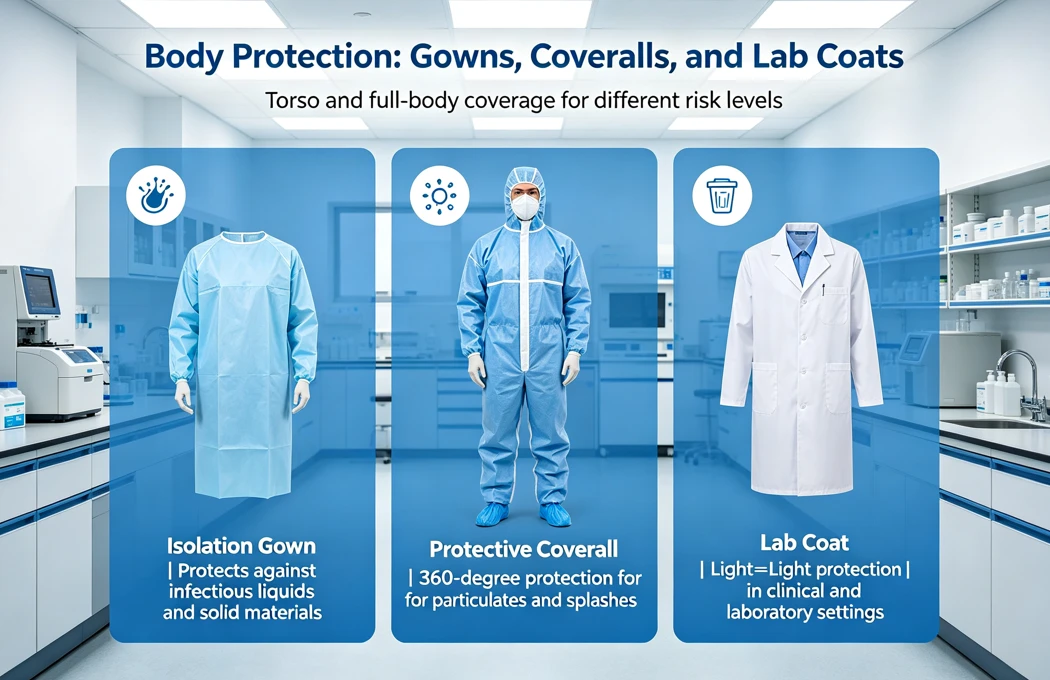
The most significant component of disposable protective clothing types involves full-body or torso coverage:
- Isolation Gowns: Designed to protect the wearer from the spread of infection or illness if the wearer comes into contact with potentially infectious liquid or solid material.
- Protective Coveralls: Coveralls provide 360-degree protection and help shield the entire body from particulates and liquid splashes. For high-risk environments, they offer broader coverage than gowns and help protect the torso, arms, and legs during demanding tasks.
- Lab Coats: Often used in clinical and laboratory settings for lighter protection over daily scrubs or street clothes.
2. Head and Face Protection
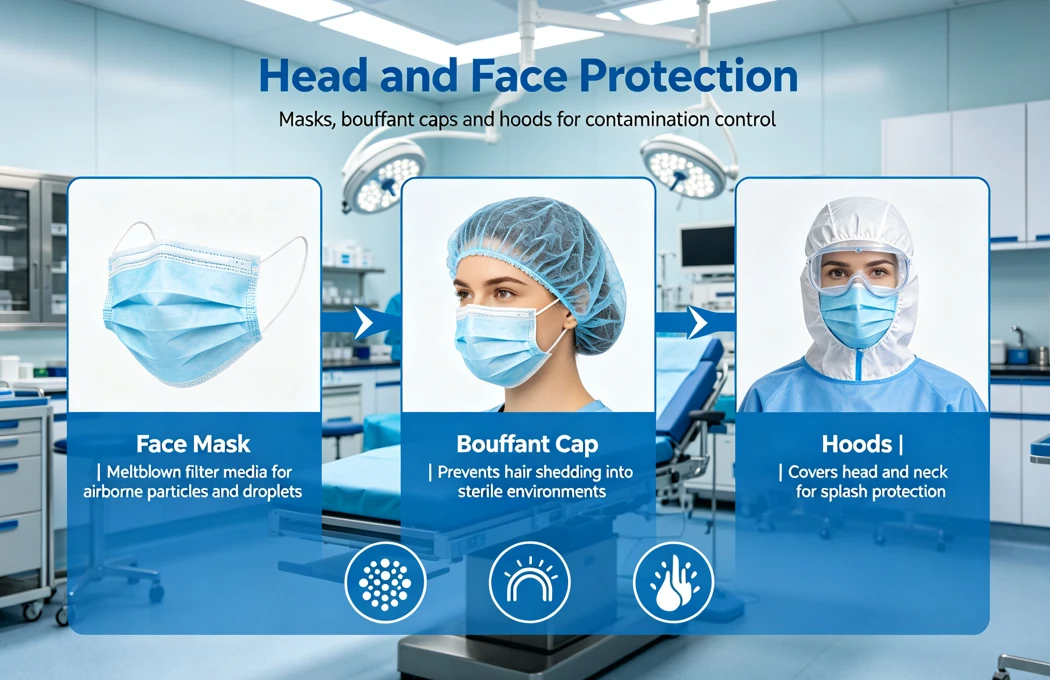
- Disposable Face Masks: Utilizing meltblown filter media to protect against airborne particles and droplets.
- Bouffant Caps and Hoods: Used to prevent hair from contaminating sterile environments (like operating rooms or food lines) and to protect the wearer’s head from splashes.
3. Limb Protection
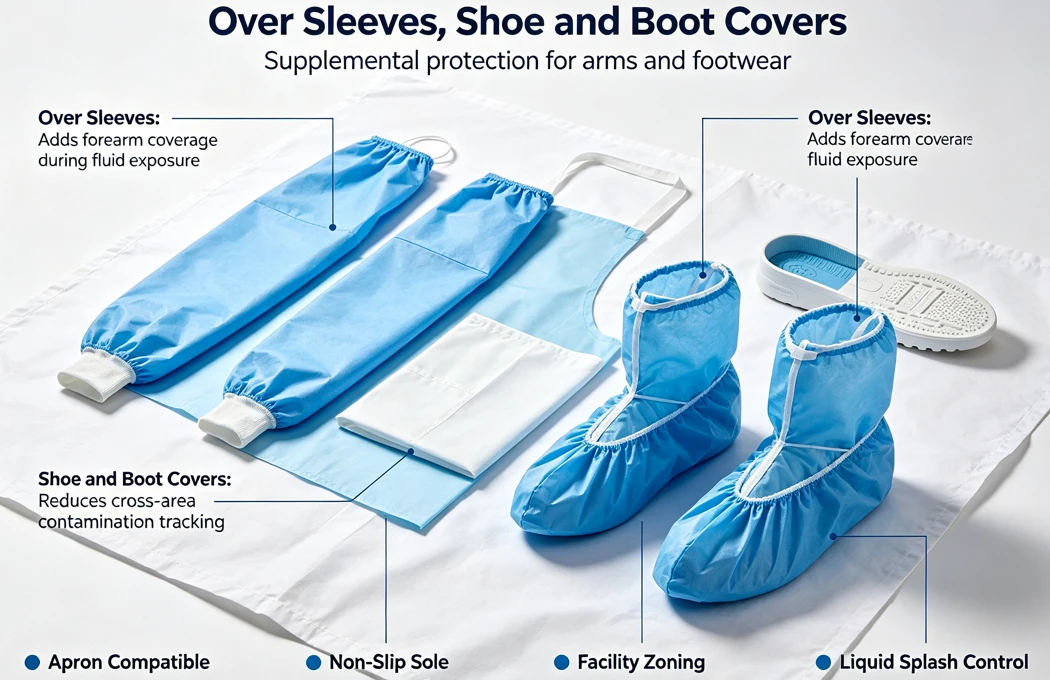
- Over Sleeves: Used to provide extra protection to the forearm area, often paired with aprons.
- Shoe and Boot Covers: Critical for preventing the “tracking” of contaminants from one area of a facility to another.
For detailed technical specifications on various body protection solutions, you may explore professional protective clothing categories to understand the differences in design and material weight.
Disposable Protective Clothing Uses in Industry?
Understanding disposable protective clothing uses requires looking at specific operational environments. Each industry has unique safety standards (such as EN standards in Europe or ASTM in the US).
1. Medical and Healthcare (Infection Control)
In hospitals and clinics, disposable clothing is the first line of defense against cross-infection. Doctors and nurses use isolation gowns and face masks to prevent the transmission of viruses and bacteria. The use of single-use items ensures that pathogens are disposed of immediately after a procedure, significantly lowering Hospital-Acquired Infection (HAI) rates.
2. Industrial and Manufacturing
In heavy industry, workers often deal with dust, paint, or non-hazardous chemicals. Disposable coveralls (Type 5/6) are frequently used in:
- Asbestos Removal: To prevent hazardous fibers from sticking to skin or clothing.
- Automotive Painting: To ensure a lint-free environment for the paint job while protecting the worker from overspray.
- Electronics (Cleanrooms): Where the goal is to protect the product from the human, preventing skin flakes and hair from entering sensitive micro-circuitry.
3. Food Processing and Hygiene
The food industry relies heavily on disposable aprons, hairnets, and sleeves. Here, the search intent is often focused on “food-safe” materials (FDA compliant). These items prevent human contaminants from entering the food supply chain, ensuring compliance with global food safety standards.
Why Quality Standards Matter (The Manufacturer’s Perspective)
When procurement managers evaluate disposable protective clothing, they must look beyond the price per unit. The integrity of the seams, the weight of the fabric (GSM), and the certification are paramount.
- CE Certification: Ensures the product meets European safety, health, and environmental protection requirements.
- ISO 13485: Specifically for medical devices, ensuring that the manufacturing process follows a strict quality management system.
- Material Sourcing: High-tier manufacturers often produce their own PE or CPE films in-house to allow for better cost control and consistent quality of the moisture barrier.
Key Considerations for PPE Procurement
If you are a procurement officer or a safety manager, choosing the right disposable clothing involves answering three technical questions:
- What is the primary hazard? (Is it liquid pressure, dry dust, or biological agents?)
- What is the duration of wear? For long shifts, choose breathable SMS materials to improve comfort and help reduce heat buildup. In contrast, microporous materials offer stronger protection against liquid splashes and work well for high-intensity, short-duration tasks. Therefore, consider both the exposure level and expected wear time when selecting protective coveralls.
- What are the required certifications? (Does the application require AAMI Level 2 gowns or Type 5/6 coveralls?)
By focusing on these parameters, organizations can ensure they provide the maximum level of safety while optimizing their PPE spend.
Conclusion
Disposable protective clothing is a foundational element of modern safety protocols. Whether it is a simple SBPP bouffant cap or a complex multi-layer SMS isolation gown, these products serve a singular, vital purpose: protection. By understanding the materials—such as Spunlace, SMS, and Polyethylene—and the specific applications across medical and industrial sectors, buyers can make informed decisions that prioritize both safety and operational efficiency. As the industry evolves, the focus remains on advancing material science to provide better barrier protection without sacrificing the comfort and breathability that professional workers require.
FAQ
1. What is the difference between disposable and reusable protective clothing?
Disposable protective clothing is designed for single use, ensuring a consistent barrier and eliminating laundering costs and cross-contamination risks.
Reusable clothing must be laundered according to strict protocols, and its barrier effectiveness can degrade over time due to heat and chemical exposure during cleaning.
2. Can disposable protective clothing be recycled?
While most disposable PPE is made from polypropylene (a plastic), recycling is often difficult because the garments are contaminated after use.
In medical settings, they are typically disposed of as biohazardous waste. However, some industrial sectors are exploring “clean” recycling for non-contaminated PPE.
3. What does “SMS” stand for in protective clothing?
SMS stands for Spunbond-Meltblown-Spunbond. It is a tri-laminated fabric that combines strength with superior filtration and liquid resistance.
This structure is particularly effective for medical isolation gowns where both comfort and barrier protection against fluids are required.
4. Is disposable protective clothing waterproof?
It depends on the material. PE and CPE products are 100% waterproof, making them ideal for heavy liquid exposure.
SMS is fluid-resistant (repels splashes) but may eventually soak through under high pressure, whereas Microporous film (SF) offers a very high level of water resistance while remaining breathable.
Reference Sources
WHO provides global standards for Personal Protective Equipment.
CDC offers technical guidance on gown selection for healthcare.
ISO 13485 defines quality management for medical manufacturing.
ASTM International sets standards for liquid barrier performance.