
Blog
Disposable Surgery Cap: How to Choose the Right Cap for Medical Use

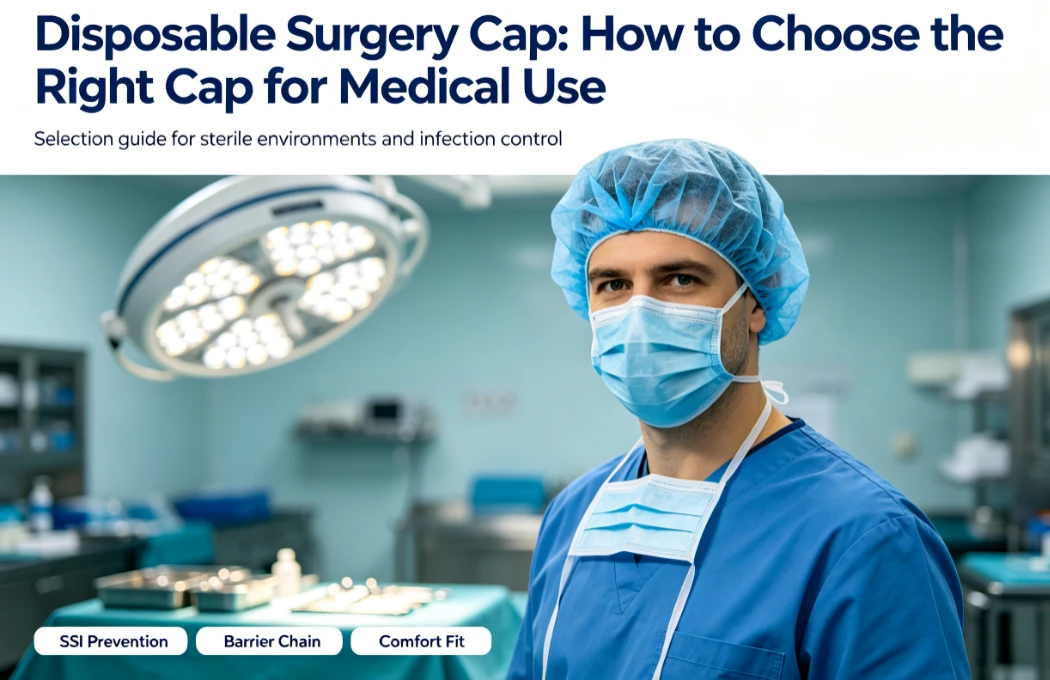
In any sterile surgical environment, the primary objective is the prevention of Surgical Site Infections (SSIs). While much focus is placed on surgical gowns and gloves, the disposable surgery cap plays a critical role in the “barrier chain.” Human hair and the scalp are natural reservoirs for microbial flora; without proper containment, these particles can easily contaminate a sterile field.
For medical procurement managers and infection control specialists, selecting a disposable surgical head cap is not merely about finding the lowest cost. It involves a technical evaluation of material integrity, breathability, and design ergonomics to ensure both patient safety and clinician comfort during long procedures.
The Clinical Importance of Head Coverage in Healthcare
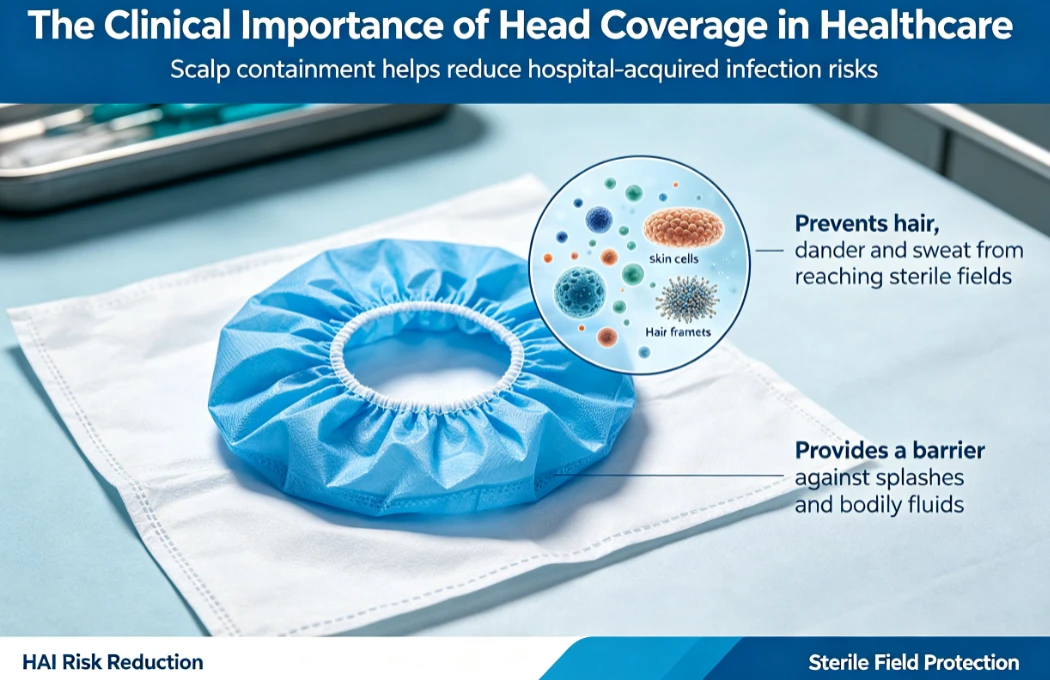
The scalp sheds thousands of skin cells and hair fragments daily. Research in clinical microbiology indicates that hair can harbor Staphylococcus aureus and other pathogens that contribute to hospital-acquired infections (HAIs).
A high-quality disposable surgery hair cap serves two main functions:
- Microbial Containment: It prevents hair, dander, and sweat from falling into the surgical wound or onto sterile instruments.
- Clinician Protection: It protects the wearer from splashes of blood, bodily fluids, or chemical agents used during procedures.
Understanding Materials: SBPP vs. SMS vs. Spunlace
The performance of a disposable surgery cap is dictated by the non-woven technology used in its manufacturing. As a leading manufacturer, we categorize materials based on their barrier properties and air permeability.
1. Spunbonded Polypropylene (SBPP)
This is the most common material for standard medical caps. It is lightweight, cost-effective, and highly breathable.
- Best for: General wards, dental clinics, and food processing.
- Key Advantage: Excellent airflow, reducing heat buildup for the wearer.
2. SMS (Spunbond-Meltblown-Spunbond)
SMS is a multi-layer fabric. The “Meltblown” layer acts as a high-efficiency filter against particulates and fluids.
- Best for: High-fluid procedures and sterile operating rooms (OR).
- Key Advantage: Superior barrier protection compared to single-layer SBPP.
3. Spunlace Non-woven
Produced by entangling fibers through high-pressure water jets, Spunlace feels more like traditional fabric.
- Best for: Long-duration surgeries where comfort is a priority.
- Key Advantage: Highly absorbent and extremely soft on the skin.
| Feature | SBPP | SMS | Spunlace |
|---|---|---|---|
| Fluid Resistance | Low to Moderate | High | Moderate |
| Breathability | Very High | Moderate | High |
| Texture | Paper-like | Firm/Structured | Cloth-like |
| Cost-Efficiency | Excellent | Moderate | Premium |
Design Variations: Choosing the Right Style
The choice between different disposable caps surgical styles often depends on the specific medical department’s protocols and the wearer’s hair volume.
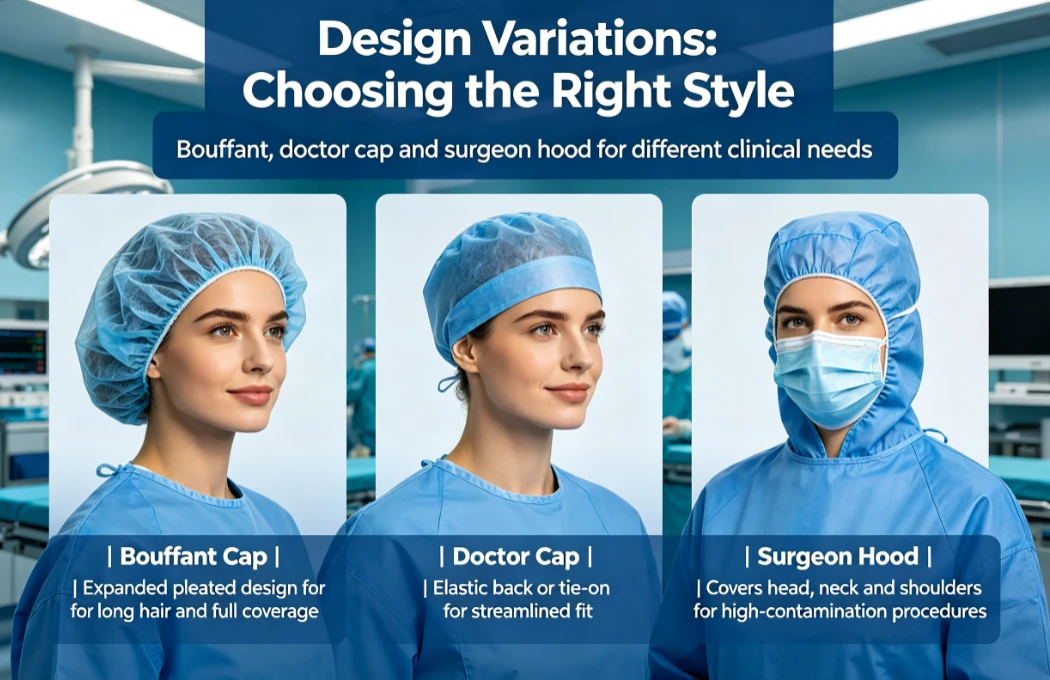
The Bouffant Cap
Characterized by its pleated design that expands into a “mushroom” shape, the bouffant cap is the “workhorse” of the medical industry. Its generous volume makes it ideal for staff with long hair, ensuring that every strand is securely tucked away.
The Doctor Cap (Surgical Tie-back or Elastic)
Surgeons often prefer the streamlined fit of a doctor cap. These typically come in two versions:
- Elastic Back: Quick to don and doff, providing a snug fit around the hairline.
- Tie-on: Allows for a customized fit, which is essential for comfort during multi-hour surgeries.
The Surgeon Hood (Astronaut Cap)
In orthopedic or neurosurgical procedures where the risk of contamination is exceptionally high, a full hood may be required. This design covers the head, neck, and shoulders, leaving only the face exposed.
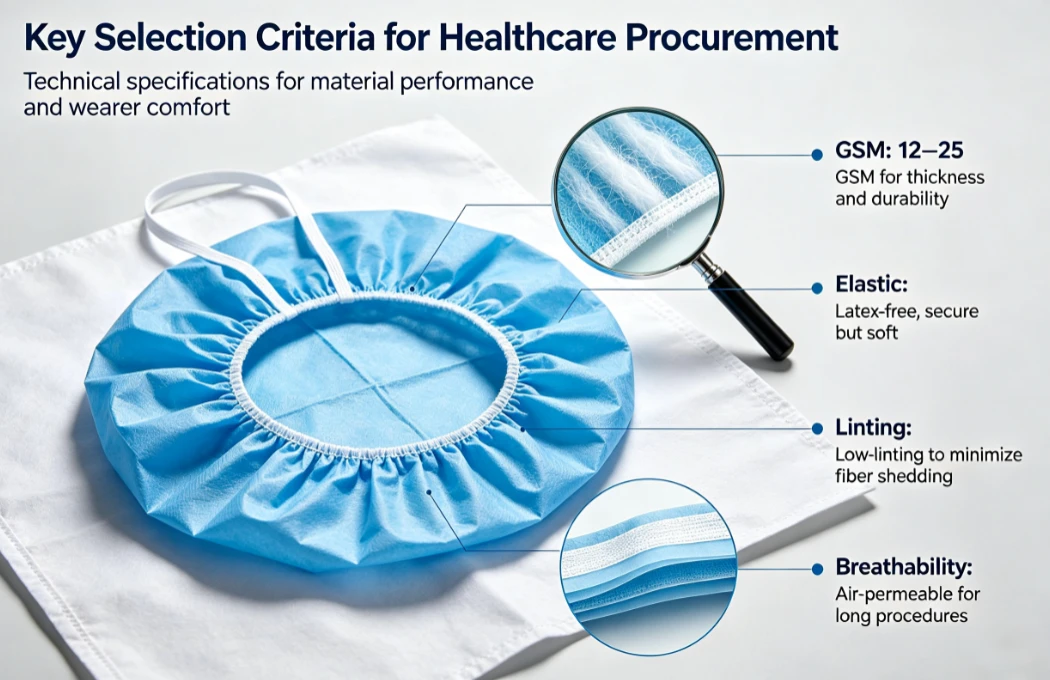
Key Selection Criteria for Healthcare Procurement
When evaluating a disposable surgical head cap from a manufacturing perspective, consider the following technical specifications:
1. Gram Weight (GSM)
The thickness of the non-woven material is measured in Grams per Square Meter (GSM). A cap that is too thin (below 10 GSM) may tear easily, while one that is too thick (above 30 GSM for SBPP) may cause the wearer to overheat. Most medical-grade caps range between 12 and 25 GSM.
2. Elastic Quality and Latex-Free Requirements
The elastic band must be strong enough to maintain a seal but soft enough to avoid “pressure headaches.” Furthermore, in modern healthcare, latex-free is the standard to prevent allergic reactions in both staff and patients.
3. Linting Properties
High-quality disposable surgery hair caps must be low-linting. Loose fibers from a cap can enter a surgical site, potentially causing foreign-body granulomas or interfering with wound healing.
4. Fluid Resistance vs. Breathability
There is always a trade-off. In the OR, surgeons require a cap that prevents sweat from dripping while allowing heat to escape. Look for materials that have been tested for “Air Permeability” to ensure comfort during long shifts.
Compliance and Standards
For international procurement, verifying certifications is the most effective way to ensure product consistency and safety. Reliable manufacturers should adhere to:
- ISO 13485: The international standard for Medical Device Quality Management Systems.
- CE Certification: Ensuring the product meets EU safety, health, and environmental protection requirements.
- FDA Registration: Necessary for the US clinical market.
Manufacturing Excellence: Why Source from Hubei Ruichen?
At Hubei Ruichen Protective Products Co., Ltd, we leverage over 10 years of professional manufacturing experience to produce high-performance PPE. Our facility in Xiantao city utilizes advanced equipment to control the entire production cycle.
By producing our own films and selecting premium non-woven resins, we ensure that every disposable surgery cap meets rigorous clinical standards while remaining cost-competitive for bulk hospital tenders. Our OEM/ODM capabilities allow us to customize GSM, color (Medical Blue, Green, White), and packaging to meet specific regional requirements.
Explore Our Specialized Head Protection Solutions
Conclusion
Choosing the right disposable surgery cap is a balance between material science, ergonomic design, and clinical necessity. For general outpatient use, a lightweight SBPP bouffant cap offers the best breathability. However, for the intensive environment of the operating theater, an SMS or high-GSM doctor cap provides the necessary barrier protection. By understanding these nuances, procurement professionals can ensure their staff remains comfortable and their surgical environments remain sterile.
FAQ
1. Are all disposable surgery caps the same?
No. They differ significantly in material (SBPP vs. SMS), weight (GSM), and design (Bouffant vs. Doctor cap). The choice should be based on the level of fluid exposure and the duration of the medical procedure.
2. Why are most surgical caps blue or green?
Blue and green fabrics reduce glare from high-intensity surgical lights and provide a high contrast against blood, which helps reduce eye fatigue for the surgical team.
3. Can bouffant caps be reused if they are not soiled?
No. Disposable surgical head caps are designed for single-use only. Reusing them compromises the integrity of the non-woven fibers and increases the risk of cross-contamination.
4. What is the shelf life of a non-woven disposable surgery cap?
Typically, these products have a shelf life of 3 to 5 years, provided they are stored in a cool, dry place away from direct sunlight and moisture, which can degrade the polypropylene fibers.
5. How do I ensure the cap fits all staff members?
For a diverse workforce, 21-inch or 24-inch bouffant caps are standard sizes that accommodate various hair lengths and head sizes. Tie-back doctor caps offer the most “universal” fit due to their adjustable nature.
Reference Sources
WHO technical specifications for Personal Protective Equipment.
FDA Medical Requirements for Surgical Apparel and Head Coverage.