
Blog
What Is a Surgical Cap and Why Is It Used in the Operating Room?

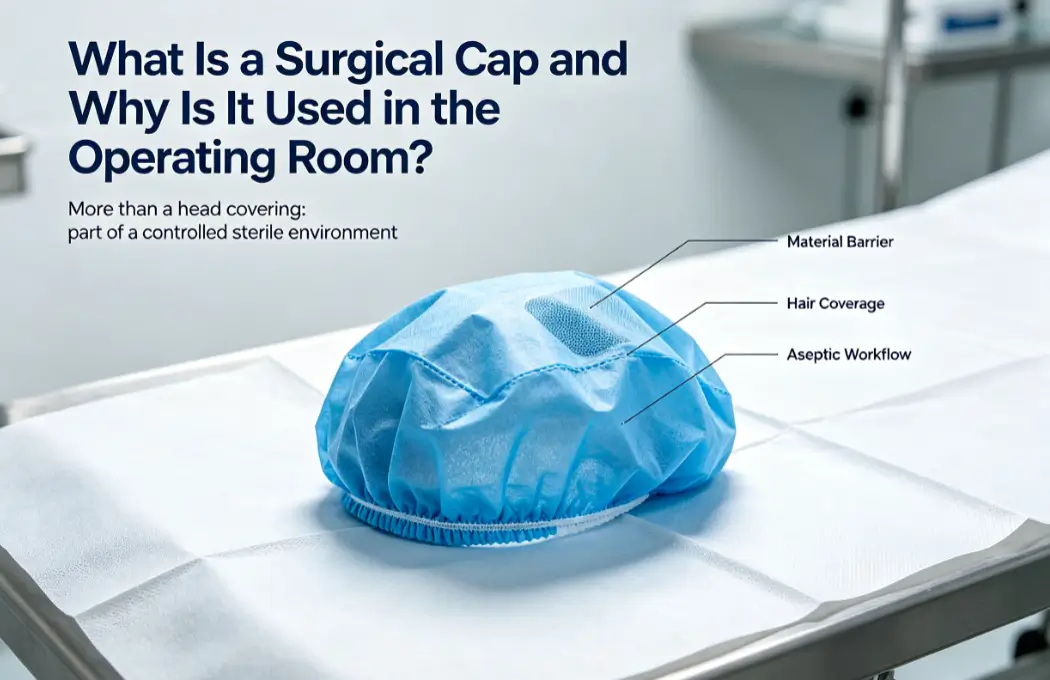
In the highly controlled environment of an operating room (OR), every piece of apparel serves a specific functional purpose. Among the most fundamental components of Personal Protective Equipment (PPE) is the surgical cap. While it may appear as a simple head covering, the surgical cap—often referred to as an operating room hat or a hat for surgery—is a critical barrier designed to maintain a sterile field and protect both the patient and the surgical team.
For hospital procurement managers and infection control specialists, understanding the technical nuances of these products is essential. From material composition to design variations, the choice of a surgical cap impacts aseptic outcomes and clinical comfort.
Defining the Surgical Cap in a Clinical Context
A surgical cap is a specialized protective garment designed to cover the hair and scalp of medical personnel during invasive procedures. Its primary function is to contain hair, dander, and skin cells that humans naturally shed. In a surgical environment, these microscopic particles are potential carriers of bacteria, such as Staphylococcus aureus, which can lead to severe complications if they enter a surgical wound.
Modern surgical caps are categorized primarily by their design and material. While reusable cloth versions exist, the medical industry has largely shifted toward disposable non-woven options due to their superior hygiene profile and cost-effectiveness in high-volume settings.
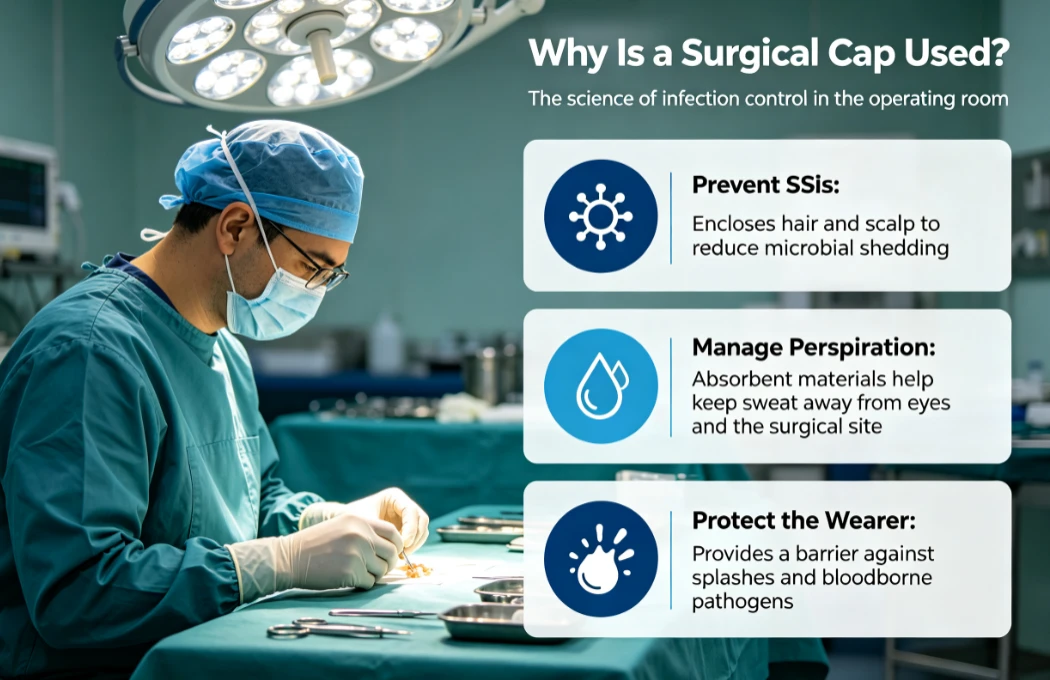
Why Is a Surgical Cap Used? The Science of Infection Control
The use of a hat for surgery is not merely a matter of tradition; it is a clinical necessity dictated by rigorous infection prevention protocols.
1. Prevention of Surgical Site Infections (SSIs)?
Surgical Site Infections are a leading cause of post-operative morbidity. Human hair and the scalp are significant reservoirs for micro-organisms. Studies have shown that even minimal movement can release thousands of skin squames (scales) into the air. By completely enclosing the hair, the surgical cap acts as a filter, preventing these particles from falling into the sterile field or onto surgical instruments.
2. Perspiration Management in High-Stress Environments?
Operating rooms are often high-pressure environments where surgeons and nurses work under intense surgical lights. These lights generate heat, leading to forehead perspiration. Many professional-grade surgical caps include absorbent sweatbands or are made from breathable non-woven materials that wick moisture away, preventing sweat from dripping into the surgeon’s eyes or, more critically, into the surgical site.
3. Protection of the Healthcare Provider?
While the patient’s safety is paramount, the cap also protects the wearer. During procedures involving irrigation or the potential for fluid arterial spray, a surgical cap provides a barrier against bloodborne pathogens and hazardous biological fluids.
Technical Analysis of Operating Room Hats: Design and Styles
Not all operating room hats are designed the same. The choice of style often depends on the duration of the procedure, the amount of hair the professional has, and specific hospital policies.
| Style | Description | Ideal Application |
|---|---|---|
| Bouffant Cap | A loose-fitting, pleated cap with an elastic band. Provides full coverage for long hair. | General surgery, nursing, and cleanroom use. |
| Skull Cap (Doctor Cap) | A close-fitting cap that covers the top of the head. Often features ties at the back. | Short-haired professionals; popular in orthopedic and ENT surgery. |
| Surgical Hood | Covers the head, neck, and sometimes the shoulders, leaving only the face exposed. | High-risk procedures (e.g., joint replacements) where maximum barrier is needed. |
For a comprehensive range of options, medical facilities typically source from specialized head protection categories to ensure all staff members have the appropriate fit.
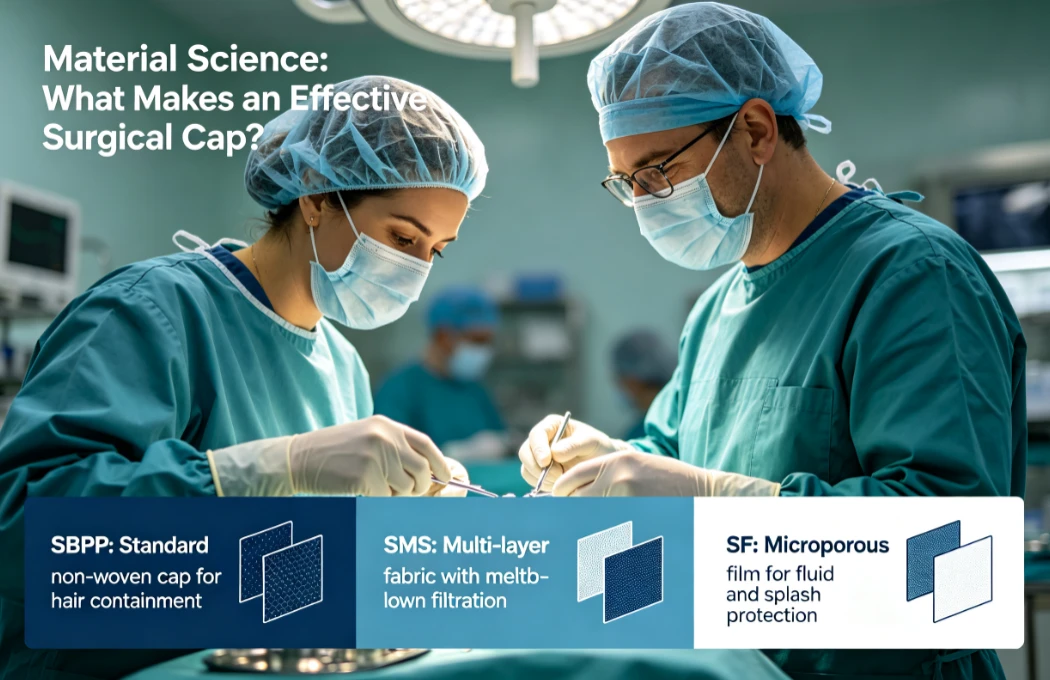
Material Science: What Makes an Effective Surgical Cap?
As a leading manufacturer, we recognize that the efficacy of a cap surgery professionals use depends heavily on the non-woven material utilized. The transition from traditional textiles to engineered non-wovens has revolutionized PPE performance.
Spunbonded Polypropylene (SBPP)?
This is the most common material for disposable caps. It is lightweight, breathable, and provides a basic barrier. SBPP is ideal for standard procedures where fluid risk is minimal but hair containment is mandatory.
SMS (Spunbond-Meltblown-Spunbond)?
SMS is a multi-layer fabric. The “Meltblown” layer acts as a high-efficiency filter against microbes, while the “Spunbond” layers provide structural strength. SMS surgical caps are preferred in environments requiring higher fluid resistance and a more robust bacterial filtration efficiency (BFE).
Microporous Film (SF)?
In specialized cases where total fluid proofing is required, SF materials are used. These are less breathable but offer maximum protection against viral and bacterial penetration.
Importance of Proper Donning and Doffing of a Hat for Surgery?
The effectiveness of a surgical cap is compromised if it is not worn correctly. Clinical guidelines emphasize that:
- Workers must completely cover all hair.
- Depending on the cap design and hospital policy, workers may cover or leave the ears uncovered, but they must completely enclose the scalp hairline.
- Workers should put on their caps before entering semi-restricted or restricted areas of the surgical suite to prevent hair shedding during the transition.
- Personnel should avoid touching the cap once they have begun scrubbing or entering the sterile field.
Beyond the OR: Versatility of Disposable Caps?
While “surgical” is in the name, these products are utilized across various industries that demand high levels of hygiene.
- Pharmaceutical & Laboratory: Preventing hair contamination in drug formulation and sensitive testing.
- Electronics Manufacturing: Used in cleanrooms to prevent skin flakes from damaging microchips.
- Food Processing: A staple in food safety (HACCP) to ensure consumer products remain free of physical contaminants.
Distributors often find that disposable caps and hairnets are among the highest-volume consumables due to this cross-industry demand.
Manufacturing Standards and Quality Assurance?
For international buyers, sourcing surgical caps involves more than just comparing prices. Compliance with global standards is the hallmark of a reliable manufacturer.
- ISO 13485: This certification ensures that the manufacturing process meets the specific quality management system requirements for medical devices.
- CE Certification: Essential for entry into the European market, indicating the product meets health, safety, and environmental protection standards.
- Fluid Resistance Testing: Manufacturers often test high-quality caps to determine their ability to resist synthetic blood penetration.
At Hubei Ruichen, we produce our own PE and CPE films and utilize advanced non-woven bonding techniques. This vertical integration allows us to control the quality of the barrier from the raw material stage to the finished surgical cap.
Conclusion
The surgical cap is a small but mighty tool in the fight against healthcare-associated infections. By providing a reliable barrier against hair and skin shedding, it protects the integrity of the sterile field and ensures patient safety. Whether you are selecting a bouffant style for maximum coverage or a streamlined skull cap for comfort, the material quality and manufacturing standards remain the most critical factors. For healthcare institutions, investing in high-quality, ISO-certified disposable headwear is a cost-effective strategy to reduce the risk of surgical site infections and maintain a professional, compliant operating environment.
FAQ
1. Can disposable surgical caps be reused if they are not soiled?
No. Disposable surgical caps are designed for single-use only. Reusing them compromises the structural integrity of the non-woven fibers and significantly increases the risk of cross-contamination between procedures.
2. What is the difference between a bouffant cap and a skull cap?
A bouffant cap is oversized and elasticated, designed to contain any amount of hair easily, including long hair or buns. A skull cap is more tailored and usually ties at the back, preferred by those with shorter hair for a snugger fit.
3. Are surgical caps typically latex-free?
Yes, most modern disposable surgical caps, especially those manufactured from SBPP or SMS, are latex-free to prevent allergic reactions in both medical staff and patients during surgery.
4. Why do surgical caps come in different colors like blue or green?
Blue and green are traditional in the OR because they reduce glare under bright lights and provide a high contrast against red, which helps reduce eye fatigue for the surgical team during long operations.
5. How do I choose the right material thickness (GSM) for a surgical cap?
GSM indicates the weight and thickness. For standard hair containment, 10-15 GSM is sufficient. For higher fluid protection or longer procedures where durability is key, 20-30 GSM SMS material is recommended.
Reference Sources
AORN Guidelines for Surgical Attire and Infection Prevention
ASTM International Standards for Medical Protective Clothing