
Blog
What Is a Disposable Isolation Gown?

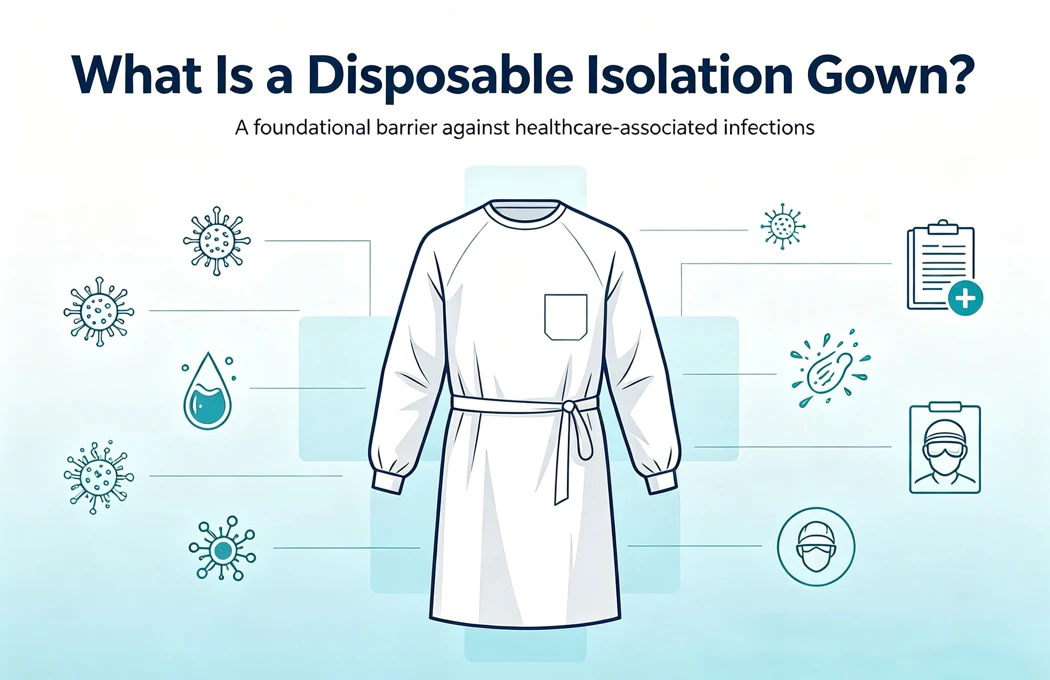
An isolation gown is a protective garment designed to help protect healthcare workers and patients from contact with infectious materials, body fluids, and other contaminants. Disposable isolation gowns are typically made from nonwoven materials and are designed for single-use applications.
What Is the Technical Definition of a Disposable Isolation Gown?
A disposable isolation gown is a protective garment designed to protect the wearer’s arms and exposed body areas from infectious liquid or solid material. Unlike reusable cloth gowns, disposable versions are engineered from non-woven synthetic fibers intended for single-use to eliminate cross-contamination risks.
From a manufacturing perspective, these gowns are categorized based on their barrier protection performance against fluid penetration. Their primary function is to act as a semi-permeable or impermeable shield during medical procedures or patient care.
Material Science: What Are Isolation Gowns Made Of?
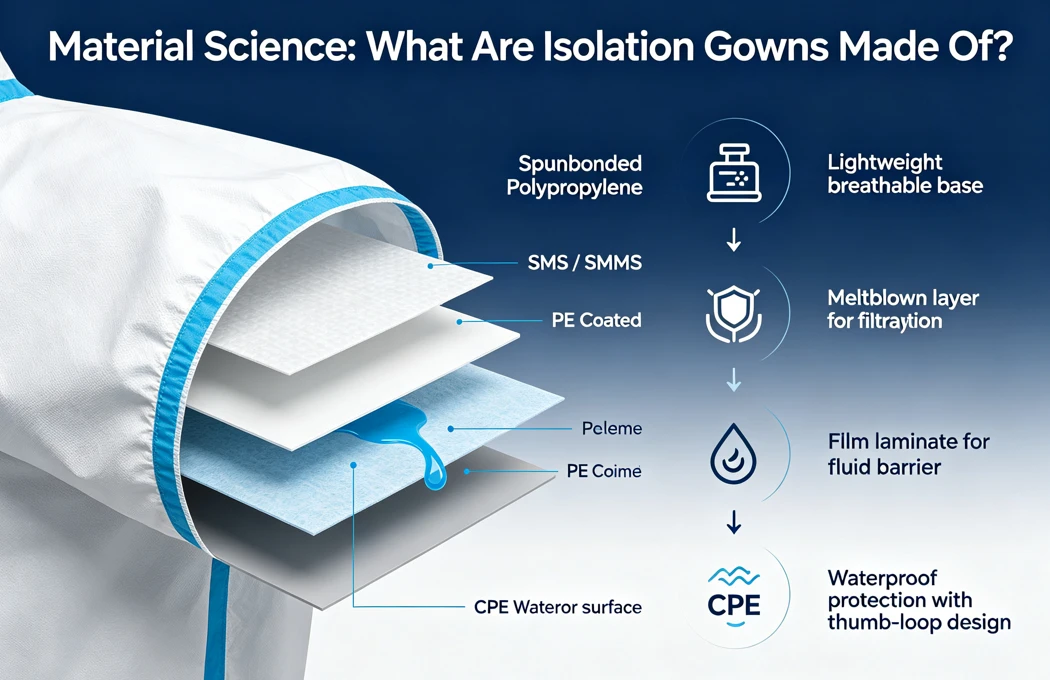
The efficacy of an isolation gown is dictated by its fabric composition and weight. At Hubei Ruichen, we utilize various non-woven technologies to meet diverse clinical and industrial demands.
- Spunbonded Polypropylene (SBPP): A lightweight, breathable material suitable for basic protection in Level 1 environments where fluid contact is unlikely.
- SMS/SMMS: Multi-layer nonwoven structures that combine spunbond layers for strength with meltblown layers that contribute to filtration and fluid-resistance performance.
- PE Coated Polypropylene (PP+PE): This dual-layer material combines a non-woven polypropylene base with a polyethylene film to create a strong fluid barrier. Manufacturers laminate the PE film onto the non-woven base to improve resistance to liquid penetration.
- CPE (Chlorinated Polyethylene): CPE: A plastic-based material that provides a strong liquid barrier and is commonly used where high fluid resistance is required.
How to Choose an Isolation Gown?
| Requirement | Recommended Consideration |
|---|---|
| Basic hygiene / minimal fluid exposure | PP/SBPP |
| General clinical use | SMS |
| Higher fluid exposure | SMMS or laminated materials |
| High fluid barrier required | PP+PE / SF |
| Extended wear | Consider breathability, cuff design and garment coverage |
Understanding Protection Levels: What Are the AAMI PB70 Standards?
The selection of a disposable isolation gown is governed by the AAMI PB70 standard. This standard classifies gowns into four levels based on their liquid barrier performance and test results.
| Isolation Gown Level | Risk Category | Test Methods | Primary Application |
|---|---|---|---|
| Level 1 | Minimal Risk | Impact Penetration < 4.5g | Basic care, standard isolation, visitor cover. |
| Level 2 | Low Risk | Impact < 1.0g; Hydrostatic Pressure > 20cm | Blood draw, pathology labs, or ICU work. |
| Level 3 | Moderate Risk | Impact < 1.0g; Hydrostatic Pressure > 50cm | ER trauma cases, nursing with high splash risk. |
| Level 4 | High Risk | Viral Penetration (ASTM F1671) | Pathogen resistance; used in infectious zones. |
What Are the Key Design Features of Modern Isolation Gowns?
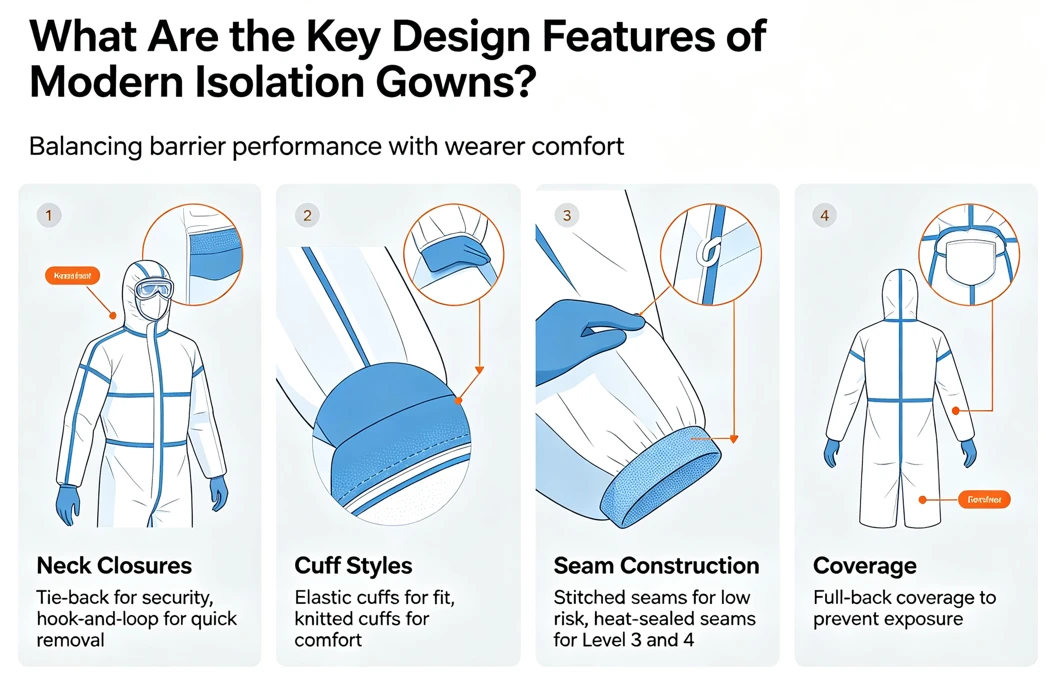
A well-engineered gown must balance protection with ergonomics to ensure the wearer remains comfortable during long shifts. Technical engineers focus on several critical design elements.
- Neck Closures: Options include tie-back for security or hook-and-loop for quick removal during doffing.
- Cuff Styles: Elastic cuffs provide a snug fit under gloves, while knitted cuffs offer higher comfort.
- Seam Construction: Manufacturers typically use stitched seams for low-risk gowns. For Level 3 and Level 4 protection, they use heat-sealed seams to create a stronger barrier against fluid penetration.
- Coverage: Full-back coverage is essential for high-risk zones to prevent exposure during movement.
What Is an Isolation Gown Used For?
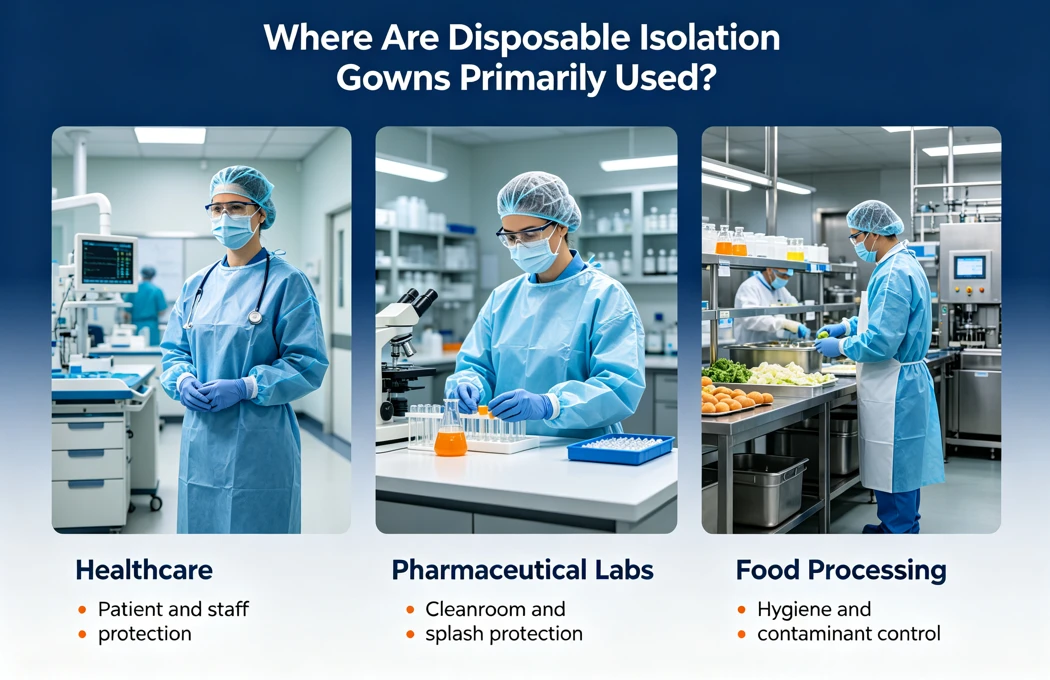
While the term medical gown is common, the applications extend across multiple high-stakes industries. Proper selection depends on the specific hazards present in each environment.
1. Healthcare and Clinical Settings?
This is the primary use case where gowns are worn during contact precautions. They prevent the transfer of organisms like MRSA or C. difficile between patients and staff.
2. Pharmaceutical and Laboratory Work?
In cleanroom environments, disposable gowns prevent human dander from contaminating sterile products. They also protect chemists from accidental chemical splashes or biological agents.
3. Industrial and Food Processing?
In environments where hygiene is paramount, such as meat processing, disposable gowns act as a barrier. They protect against grease, dust, and biological contaminants.
Why Does the “Disposable” Factor Matter in Infection Control?
The shift from reusable to disposable isolation gowns is driven by safety and economic factors. Research indicates that laundering processes can degrade the protective barrier of cloth gowns over time.
Disposables provide a consistent, certified barrier every time a new gown is donned. This eliminates the risk of contaminated lint or residual pathogens surviving a compromised wash cycle.
Furthermore, the cost of biohazard management is reduced by avoiding the energy-intensive laundering process. For large-scale facilities, this translates to both better safety outcomes and streamlined logistics.
How to Evaluate Manufacturer Quality?
When sourcing disposable isolation gowns, quality assurance is non-negotiable for international buyers. Sourcing from experienced production hubs like Xiantao ensures access to advanced manufacturing standards.
Key indicators of a reliable supplier include ISO 13485 compliance and material traceability. Manufacturers who produce their own PE or CPE films offer better consistency in barrier integrity and cost control.
As a leading exporter, Hubei Ruichen Protective Products Co., Ltd provides a full range of non-woven solutions. Our products are designed to meet global safety standards while maintaining competitive pricing.
Explore Hubei Ruichen’s Full Range of Certified Isolation Gowns
Conclusion
A disposable isolation gown is a scientifically designed barrier that stands between healthcare workers and biological threats. Understanding material composition and AAMI standards is the first step toward effective infection control. By selecting the appropriate level of protection, facilities can ensure maximum safety and compliance.
FAQ
1. What is the difference between an isolation gown and a surgical gown?
Surgical gowns are intended for sterile environments and require specific protection in critical zones like the chest. Isolation gowns provide more general coverage for contact precautions and non-sterile patient care.
2. Can I reuse a disposable isolation gown if it looks clean?
No, disposable gowns are designed for single-use only. The structural integrity of the non-woven fibers is compromised once worn, and microscopic pathogens may remain on the surface.
3. How should I dispose of a used isolation gown?
Gowns contaminated with blood or bodily fluids must be disposed of as biohazardous waste. Always follow your facility’s specific protocols for infectious waste management to prevent environmental contamination.
4. Does the color of the isolation gown matter?
Color is typically used by hospitals to differentiate between departments or protection levels. While yellow is common for contact precautions, the material certification and AAMI level are the truly critical factors.
Reference Sources
CDC Guidance for Selection and Use of PPE in Healthcare
One thought on “What Is a Disposable Isolation Gown?”