
Blog
What Is the Difference Between a Coverall and a Gown?

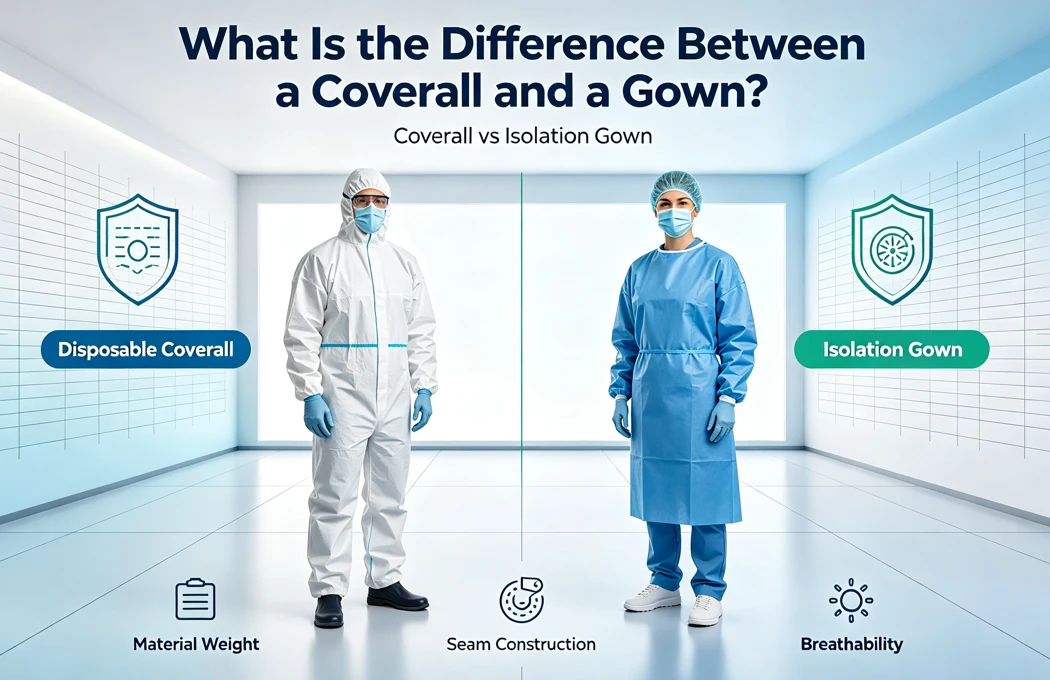
Selecting the appropriate Personal Protective Equipment (PPE) is a critical decision for procurement managers, infection control specialists, and safety officers. The choice often comes down to two primary garments: the disposable coverall and the isolation gown.
While both serve as barriers against contaminants, they are designed with different engineering principles, coverage areas, and risk profiles in mind. From a manufacturing perspective, understanding the technical nuances—such as material weight, seam construction, and breathability—is essential to ensuring workplace safety and regulatory compliance.
Defining the Core Structures: Coverall vs. Gown
To understand the difference between a coverall and a gown, we must first look at their physical design and the intended “barrier geometry.”
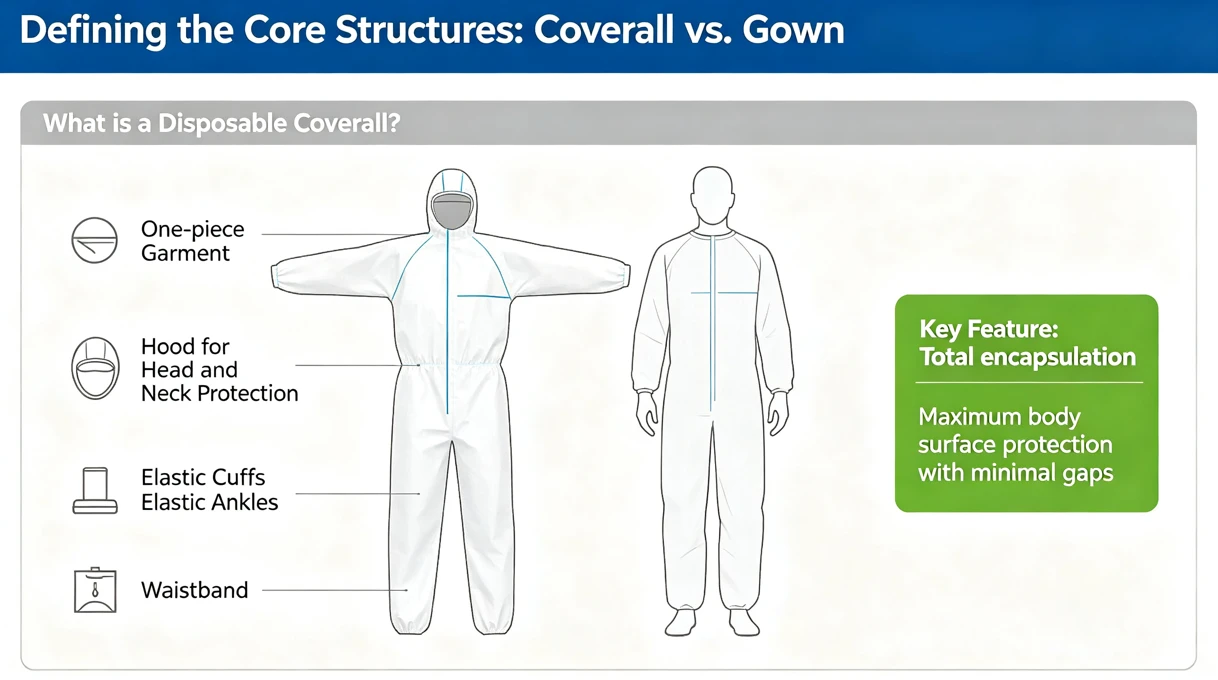
What is a Disposable Coverall?
A coverall is a one-piece garment designed to provide 360-degree coverage. It typically consists of a hood, sleeves, and trousers combined into a single unit. Professional-grade coveralls often feature elasticized wrists, ankles, and waistbands to minimize gaps.
- Primary Goal: Maximum body surface protection.
- Key Feature: Total encapsulation (except for the face, though integrated hoods offer head and neck protection).
What is an Isolation Gown?
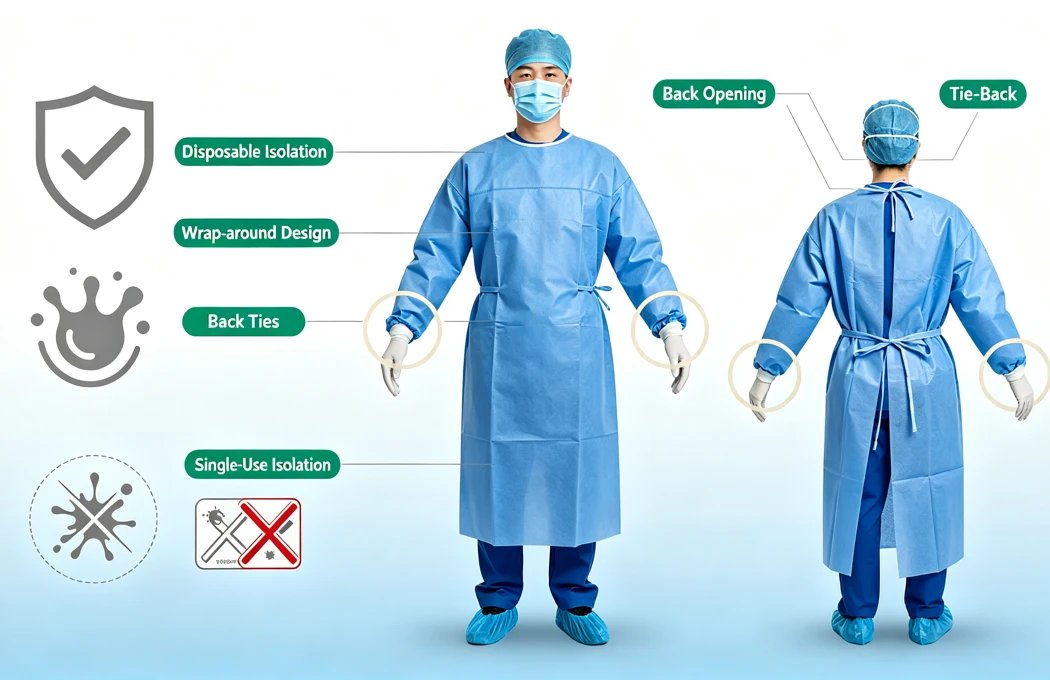
A gown is a wrap-around garment designed primarily to protect the front of the user and the arms. It usually features an open back or a tie-back system to facilitate easy donning and doffing.
- Primary Goal: Frontal protection against fluid splashes and cross-contamination during clinical procedures.
- Key Feature: Ease of removal, which is critical in high-turnover medical environments to prevent self-contamination.
Protection Levels and Standard Classifications
The technical “barrier effectiveness” is where the protective gown vs. coverall debate becomes most significant.
In medical settings, gowns are often classified by AAMI (Association for the Advancement of Medical Instrumentation) Levels 1 through 4. Level 1 provides minimal fluid resistance, while Level 4 offers a viral barrier.
Coveralls, conversely, are often categorized under International Standards (such as EN 14126 or Types 1–6).
- Type 5: Protection against airborne solid particulates.
- Type 6: Limited protection against liquid chemical splashes.
When comparing an isolation gown or coverall, the coverall usually offers a higher level of protection against dry particulates (like dust or fibers) and pressurized liquid sprays, simply because it lacks the open back characteristic of a gown.
Material Science: The Backbone of PPE
As a manufacturer with over 10 years of experience, Hubei Ruichen emphasizes that the material is just as important as the design. The choice of non-woven fabric determines the breathability, durability, and fluid resistance of the garment.
| Material Type | Technical Characteristics | Best Suited For |
|---|---|---|
| SBPP (Spunbonded Polypropylene) | Basic, lightweight, breathable. | Low-risk hygiene, food processing, or basic visitor gowns. |
| SMS/SMMS | Multi-layer (Spunbond + Meltblown). High filtration and strength. | Medical isolation gowns and breathable coveralls for moderate-risk zones. |
| PP+PE (Laminated) | Polypropylene coated with Polyethylene film. Impermeable to fluids. | High-fluid risk procedures, chemical handling, and surgical environments. |
| SF (Microporous Film) | Breathable yet liquid-proof. High barrier against biological hazards. | Heavy-duty industrial work and infectious disease wards. |
Critical Differences in Donning and Doffing
In infection control, the most dangerous moment is “doffing” (removing) the PPE. This is where the difference between gown and coverall impacts safety protocols.
- Gowns: Designed for quick removal. The user can usually “break” the ties and roll the gown away from their body, touching only the inside of the garment. This makes gowns superior for routine patient care where the risk of heavy aerosolization is lower.
- Coveralls: These are more complex to remove. Because they cover the entire body, the doffing process requires a specific sequence to ensure the contaminated exterior does not touch the wearer’s skin or undergarments. Coveralls are preferred when the environment itself is contaminated (e.g., hazardous material cleanup or high-risk viral environments).
Application Scenarios: Which Should You Choose?
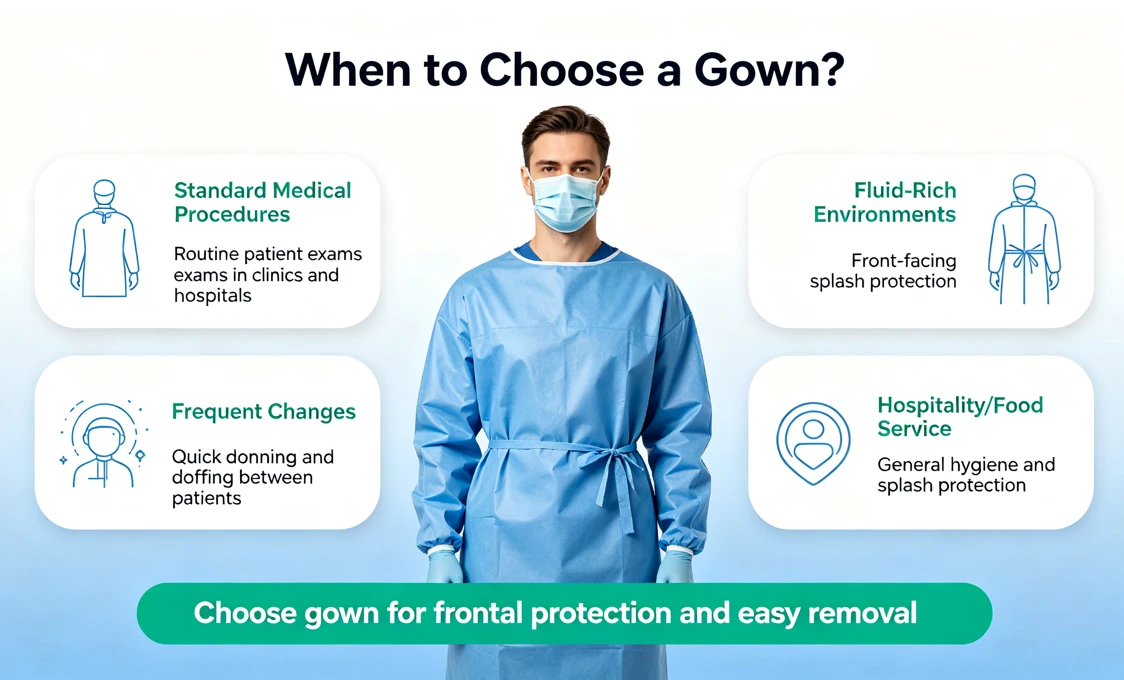
When to Choose a Gown?
- Standard Medical Procedures: In clinics and hospitals for routine patient exams.
- Fluid-Rich Environments: Specifically when the threat is from the front (e.g., minor surgery).
- Frequent Changes: When staff must move between patients quickly.
- Hospitality/Food Service: For general hygiene and splash protection.
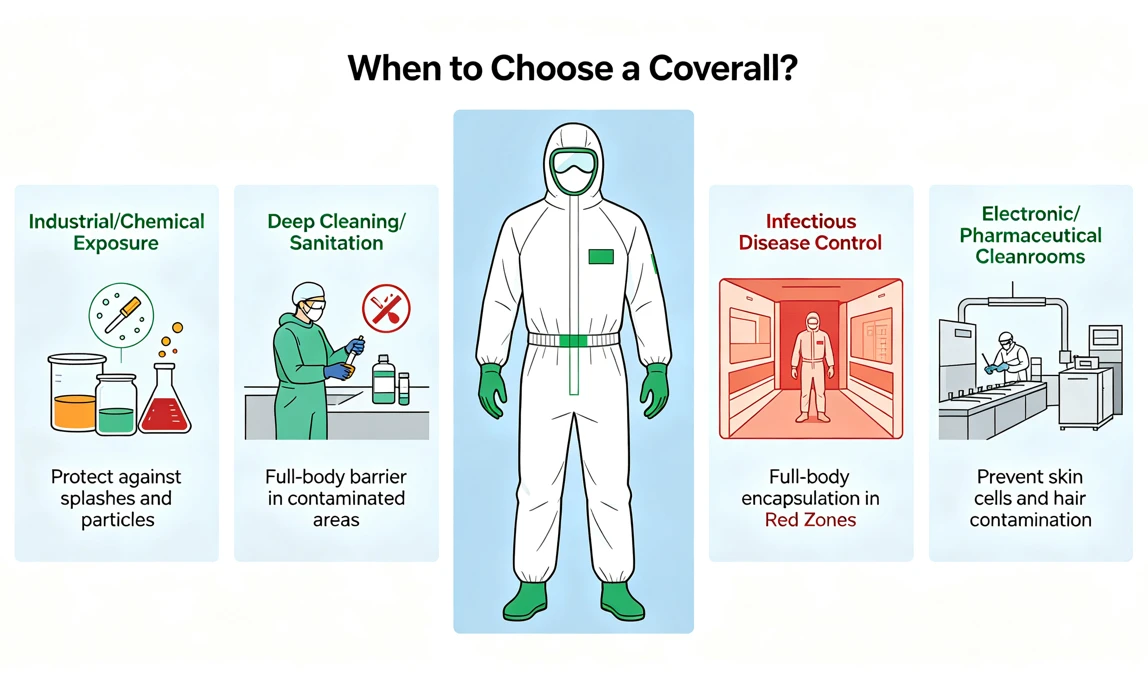
When to Choose a Coverall?
- Industrial/Chemical Exposure: When working with powders, paints, or liquid chemicals.
- Deep Cleaning/Sanitation: When the wearer is surrounded by contaminants.
- Infectious Disease Control: In “Red Zones” where full-body encapsulation is mandated by health authorities (e.g., Ebola or highly infectious respiratory outbreaks).
- Electronic/Pharmaceutical Cleanrooms: To prevent human skin cells or hair from contaminating the production environment.
Recommended Protective Solutions from Hubei Ruichen
As an ISO9001 and ISO13485 certified manufacturer, we produce high-quality PPE using advanced equipment and self-produced PE/CPE films to ensure cost-efficiency and quality control.
For environments requiring full-body coverage, we recommend our specialized medical suits:
- Blue Striped White PP Coverall: A standard for medical protection combining breathability with reinforced seams.
- Yellow PP+PE Protective Suit: Ideal for high-fluid resistance requirements, featuring a laminated film barrier.
- SMS Medical Protective Suit: Offers superior filtration and durability for healthcare professionals.
Our isolation gowns are designed for comfort and ease of use in hospital and laboratory environments:
- Short Sleeve PP Isolation Gown: Suitable for low-risk, high-mobility tasks.
- Long Sleeve PP+PE Gown: Provides an impermeable fluid barrier for front-line medical staff.
- SMS Long Sleeve Isolation Gown: High-level filtration with excellent breathability for long shifts.
You can explore our full range of Body Protection Coveralls or our dedicated Isolation Gown Category for bulk procurement.
Conclusion
The decision between a disposable coverall vs. gown is not about which product is “better,” but which is more appropriate for the specific hazard. Gowns offer convenience and targeted protection in clinical settings, while coveralls provide comprehensive barriers for high-risk industrial and infectious environments. For procurement professionals, the key is to match the fabric material (SMS, PP+PE, etc.) and the garment design to the risk assessment of the workplace. By working with a direct manufacturer like Hubei Ruichen, you gain the advantage of OEM/ODM flexibility and factory-direct quality control.
FAQ
1. Can a gown be as protective as a coverall?
In terms of the fabric’s barrier properties (e.g., fluid resistance), a Level 4 gown can be just as effective as a coverall material. However, because a gown has an open back and doesn’t cover the legs, it does not provide the same “total body” protection.
2. Which material is best for “breathable” protection?
SMS (Spunbond-Meltblown-Spunbond) is the gold standard for breathability. It allows air to circulate while the meltblown layer filters out particulates. If you need a total fluid barrier, PP+PE is better, though it is less breathable.
3. Why are coveralls often more expensive than gowns?
Coveralls use significantly more material, require more complex sewing patterns (including zippers and elastic), and involve more labor-intensive manufacturing processes.
4. How do I know if I need a hooded coverall or a standard one?
If your risk assessment includes overhead splashes, falling dust, or the need for head/hair containment in a cleanroom, a hooded coverall is essential.
5. Does Hubei Ruichen support custom labeling (OEM)?
Yes, we welcome OEM and ODM orders. We can customize the material weight, color, sizing, and packaging to meet your specific regional standards or branding requirements.