
Blog
PP vs SMS Nonwoven Fabric: Key Differences

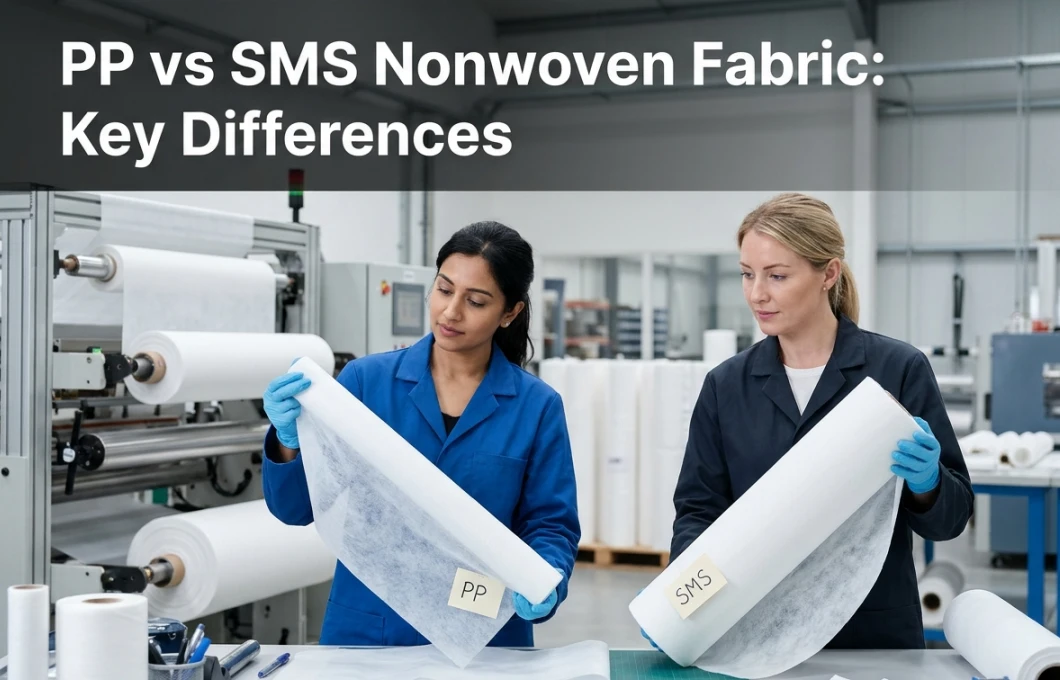
Choosing between PP and SMS nonwoven fabric can be confusing if you are comparing material names alone. Both are widely used in disposable products, including protective clothing, but they do not describe exactly the same thing.
PP refers to polypropylene, a thermoplastic polymer used to make nonwoven fibers. SMS describes a three-layer fabric structure made from spunbond, meltblown, and spunbond layers. In fact, many SMS fabrics are also made from polypropylene.
For buyers sourcing disposable gowns, coveralls, or other PPE products, the real question is which fabric structure fits the intended application.
What Is PP Nonwoven Fabric?
PP nonwoven fabric is made from polypropylene fibers or continuous filaments that are formed into a web and bonded together without weaving or knitting. One common manufacturing method is spunbond production, which uses heat to bond the fibers or filaments into a stable sheet.
The resulting fabric is generally lightweight, easy to process, and suitable for a wide range of disposable products. Its strength, softness, and air permeability depend on factors such as fiber arrangement, fabric weight, and bonding conditions.
PP spunbond nonwoven fabric is commonly used in disposable caps, shoe covers, gowns, hygiene products, packaging, and other applications where a lightweight textile-like material is needed.
However, ordinary PP spunbond fabric should not automatically be treated as a liquid-resistant or medical-grade barrier material. Its suitability depends on the fabric specifications, any functional treatments, and the requirements of the finished product.
What Is SMS Nonwoven Fabric?
SMS stands for Spunbond-Meltblown-Spunbond. It combines two spunbond layers with a meltblown layer between them.
The outer spunbond layers generally contribute strength and durability, while the fine-fiber meltblown layer helps provide filtration and barrier characteristics. The performance of the finished fabric depends on how these layers are designed and manufactured.
SMS nonwoven fabric is commonly used in medical and protective products, including isolation gowns, surgical gowns, coveralls, and other disposable garments.
Some SMS fabrics can also receive additional treatments to improve properties such as water repellency or antistatic performance. These features are not guaranteed by the SMS structure alone; they depend on the specific material and treatment.
PP vs SMS Nonwoven: What Are the Main Differences?
The main difference between PP and SMS nonwoven fabric is the level of detail described by each term. PP identifies the polymer, while SMS identifies a multilayer fabric structure.
| Comparison | PP Spunbond Nonwoven | SMS Nonwoven |
|---|---|---|
| What the name describes | Polypropylene material, commonly in spunbond form | Spunbond-meltblown-spunbond structure |
| Typical construction | Bonded PP fibers or filaments | Spunbond outer layers and a meltblown inner layer |
| Main characteristics | Lightweight, processable, and often breathable | Combines strength with filtration and barrier characteristics |
| Liquid resistance | Depends on the fabric and any treatment | Depends on the structure, specifications, and any treatment |
| Common applications | Caps, shoe covers, hygiene products, disposable apparel, and packaging | Medical gowns, isolation gowns, coveralls, and other protective products |
| Selection priority | Basic material properties and intended use | Layer design and required barrier performance |
These are general distinctions, not a guarantee that every SMS fabric will outperform every PP spunbond fabric. Fabric weight, fiber structure, manufacturing quality, and functional treatments can all affect the result.
Difference Between PP and SMS Nonwoven for Medical Gowns
When selecting fabric for medical gowns, buyers should look beyond the material name. The required level of protection depends on the intended use and the exposure risks involved.
PP Nonwoven for Disposable Gowns
PP spunbond fabric can be suitable for disposable gowns used in environments where lightweight coverage and comfort are the main requirements. It is relatively easy to convert into garments and can be produced in different fabric weights.
Its limitations become more important when the garment must resist liquid penetration or provide a defined barrier against contaminants. Standard spunbond PP does not automatically provide the same barrier properties as a purpose-designed multilayer or laminated material.
SMS Fabric for Isolation Gowns
SMS fabric is often considered for isolation gowns because its layered construction can offer a useful balance of breathability, strength, and barrier performance.
For example, a buyer sourcing disposable isolation gowns for a healthcare facility may prefer SMS when the product specification calls for a combination of wear comfort and tested resistance to fluid penetration.
Still, SMS alone does not establish a gown’s protection level. Buyers should review the finished product’s applicable test results, intended use, seam construction, and relevant regulatory requirements before making a purchasing decision.
If a gown is intended for exposure to substantial liquid contact or specific hazardous substances, a more specialized barrier material may be necessary.
How to Choose Between PP and SMS Fabric
The right choice depends on what the finished product needs to do, rather than which material name sounds more advanced.
- For lightweight disposable products: PP spunbond may be appropriate when basic coverage, processability, and cost are the main priorities.
- For medical gowns requiring a defined barrier: SMS may be a suitable option when its tested performance meets the product specification.
- For applications involving liquid exposure: Compare actual liquid penetration and hydrostatic resistance results rather than relying on fabric type alone.
- For long production runs: Check GSM consistency, tensile strength, tear resistance, fabric width, and batch-to-batch quality.
- For customized PPE: Confirm the intended use, applicable standards, garment design, and required performance before finalizing the fabric.
A fabric sample can help assess softness, drape, and general construction. However, touch and appearance cannot establish filtration efficiency or protective performance. Those properties require appropriate testing.
What Should Buyers Check Before Placing an Order?
For importers, distributors, and PPE manufacturers, a clear technical specification can prevent costly misunderstandings.
Before placing a bulk order, confirm:
- Material composition: Verify whether the fabric is PP spunbond, SMS, or another construction.
- Fabric weight: Specify the required GSM and acceptable production tolerance.
- Mechanical properties: Review tensile strength, tear resistance, and other relevant requirements.
- Barrier performance: Request applicable test reports for liquid resistance, filtration, or other required properties.
- Surface treatment: Confirm whether water-repellent, antistatic, or other treatments are needed.
- Finished-product compliance: Check that the final gown or coverall meets the requirements for its intended market and use.
- Production consistency: Agree on inspection criteria, sample approval, packaging, and batch specifications.
The fabric is only one part of a protective garment. Seams, closures, coverage, manufacturing quality, and the garment’s design can also affect the protection provided by the finished product.
FAQ
1. What is the difference between PP and SMS nonwoven fabric?
PP refers to polypropylene, the polymer used to make many nonwoven fabrics. SMS refers to a three-layer structure consisting of spunbond, meltblown, and spunbond layers. Common SMS fabrics can also be made from PP.
2. Is SMS fabric better than PP nonwoven fabric?
Not in every application. SMS offers a layered structure that can provide useful barrier and filtration characteristics, while PP spunbond is suitable for many lightweight disposable products. The better choice depends on the required performance and product specifications.
3. Is SMS nonwoven fabric made from polypropylene?
Many SMS fabrics are made from polypropylene. However, buyers should verify the composition of the specific fabric rather than assume that every SMS product uses the same polymer.
4. Why is SMS fabric used for isolation gowns?
SMS fabric can combine the strength of spunbond layers with the filtration and barrier characteristics of a meltblown layer. Its suitability for isolation gowns depends on the tested performance of the fabric and the requirements of the finished gown.
5. Is PP spunbond fabric waterproof?
Ordinary PP spunbond fabric should not be assumed to be waterproof. Liquid resistance depends on the fabric structure, pore characteristics, surface treatment, and any additional barrier layers.
6. Does SMS fabric provide medical-grade protection?
The SMS structure alone does not establish medical-grade protection. Buyers should verify applicable test results, product claims, and regulatory requirements for the intended use of the finished product.
7. How does GSM affect PP and SMS nonwoven fabric?
GSM measures fabric mass per square meter. A higher GSM can influence thickness, strength, drape, and air permeability, but it does not independently establish liquid resistance or protective performance.
8. How can buyers select the right nonwoven fabric for disposable gowns?
Start with the intended application and exposure risks. Then compare material construction, GSM, mechanical properties, barrier test results, finished-garment requirements, and production consistency before approving a sample or placing a bulk order.
Find the Right Nonwoven Material for Your Application
Selecting PP spunbond or SMS nonwoven fabric is easier when the material requirements are tied to the final product’s purpose. A clear specification helps manufacturers and buyers compare suitable options without relying on material names alone.
When sourcing nonwoven fabric for disposable gowns, coveralls, or other PPE products, define the required performance first, then verify that the selected material and finished product meet those requirements.