
Blog
SMS Nonwoven Fabric: Medical Features & Applications

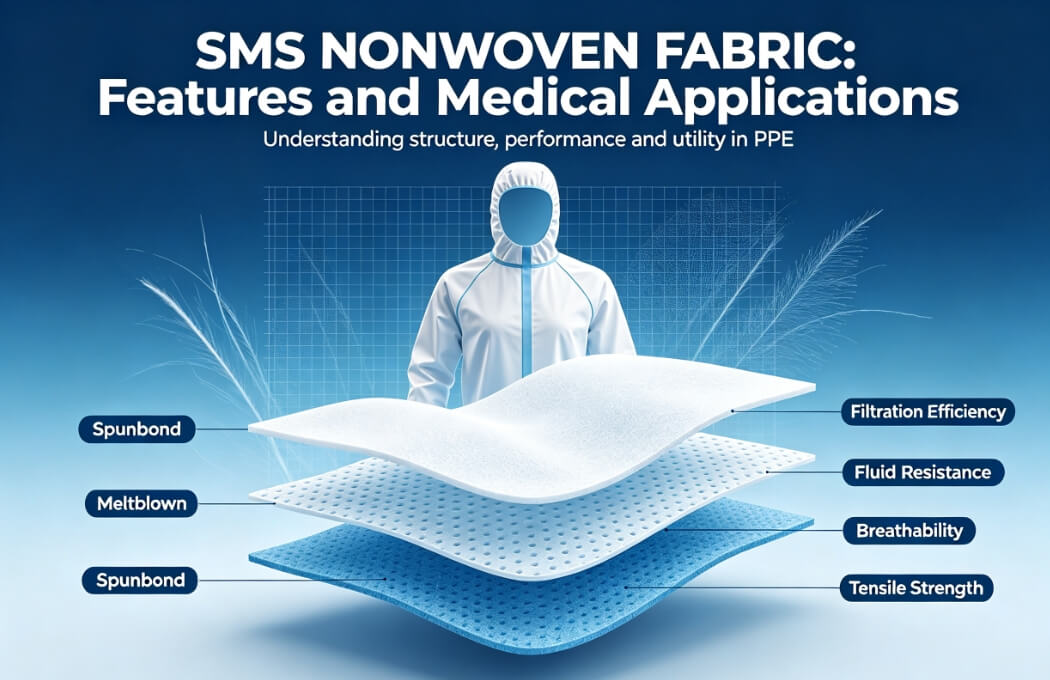
In the high-stakes environment of healthcare and industrial safety, the choice of material for Personal Protective Equipment (PPE) is not merely a matter of comfort—it is a critical factor in infection control and worker safety. Among the various materials used in the production of disposable protective apparel, SMS nonwoven fabric has emerged as a cornerstone technology.
For procurement managers, hospital infection control specialists, and PPE engineers, understanding the “how” and “why” behind SMS fabric is essential for making informed decisions. This article provides a technical deep dive into the structure, features, and medical utility of SMS nonwoven materials.
What is SMS Nonwoven Fabric?
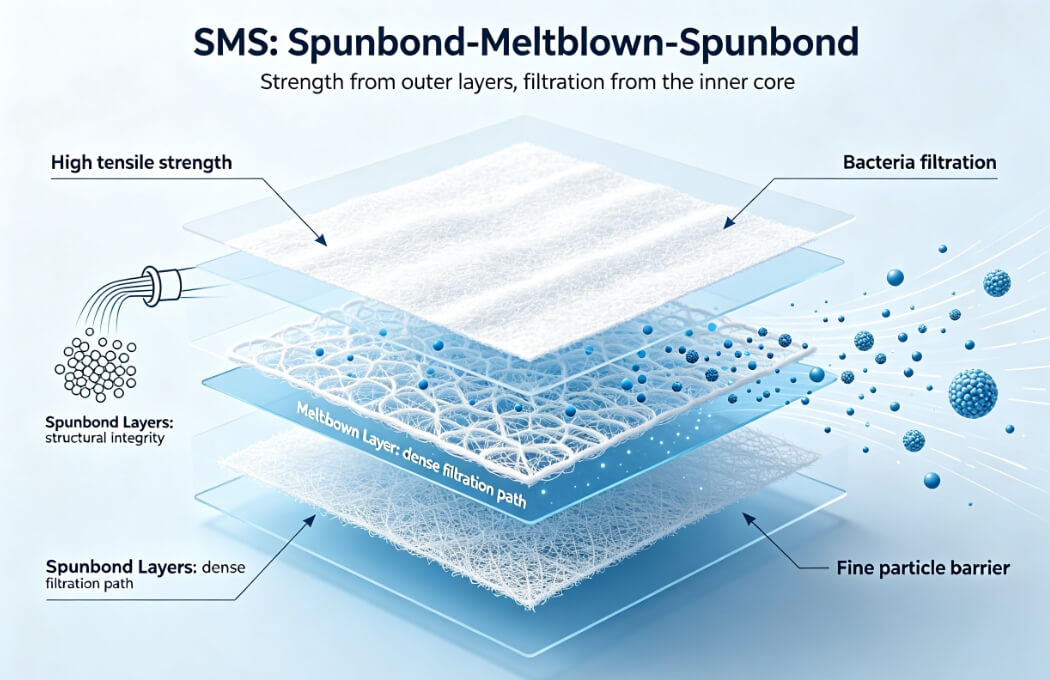
SMS is a trilaminate nonwoven fabric. The acronym stands for Spunbond + Meltblown + Spunbond. It is produced by combining these two distinct technologies into a layered “sandwich” structure, which is then thermally or chemically bonded to create a unified textile.
- Spunbond Layers (The Outer Shell): The “S” layers provide the structural integrity. Manufacturers produce spunbond fabric by extruding molten polymer, usually polypropylene, through spinnerets to form continuous filaments. They then lay these filaments into a random web. These layers offer high tensile strength, abrasion resistance, and durability.
- Meltblown Layer (The Inner Core): The “M” layer is the functional heart of the fabric. Meltblown fibers are significantly finer than spunbond fibers—often in the micrometer range. This creates a dense, tortuous path that acts as a highly efficient filter against bacteria, fluids, and fine particulates while remaining breathable.
By combining these layers, manufacturers create a material that possesses the strength of traditional textiles with the superior filtration capabilities of advanced membranes.
Technical Features of SMS Nonwoven Fabric
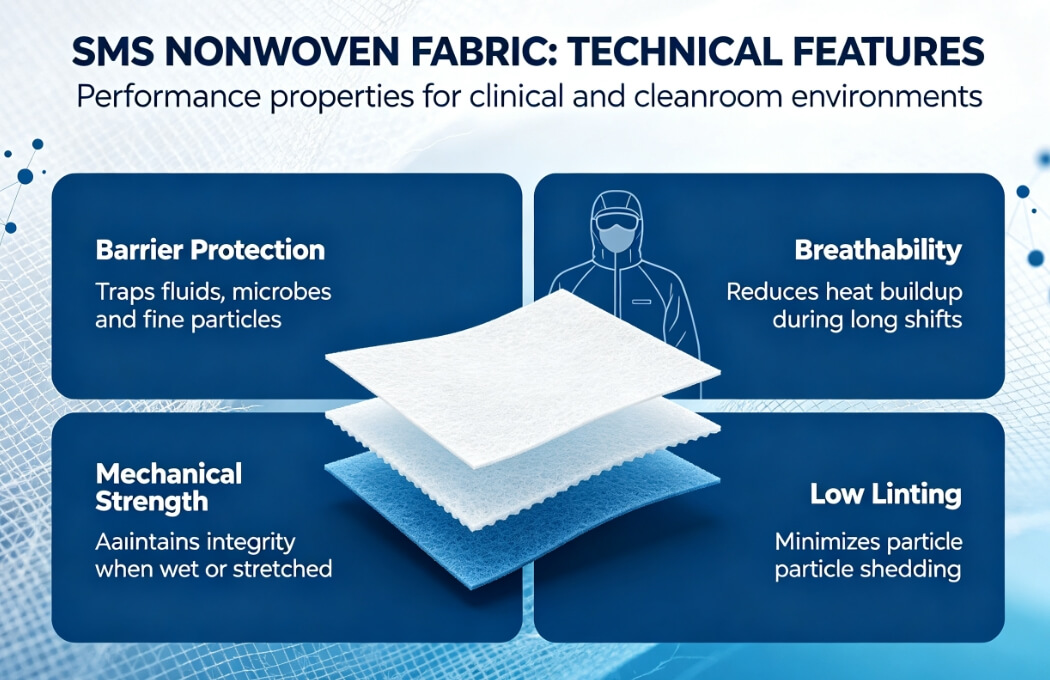
The widespread adoption of SMS in medical settings is driven by several unique physical and chemical properties.
- High Barrier Protection: The primary function of SMS in a clinical setting is to prevent the strike-through of fluids and the migration of microbes. The meltblown core creates a “maze” that traps pathogens. Depending on the Grams per Square Meter (GSM) of the fabric, SMS can provide varying levels of hydrostatic pressure resistance.
- Breathability and Thermoregulation: Unlike plastic-based films (like PE or CPE) which can be stifling and cause heat stress, SMS allows for air and moisture vapor transmission. This air permeability ensures that healthcare workers remain cool and comfortable during extended shifts.
- Mechanical Strength: Medical environments are physically demanding. SMS fabric resists tearing and puncturing, even when wet. The outer spunbond layers ensure that the garment maintains its structural integrity during movement.
- Low Linting (Particulate Control): In surgical environments, lint can become a vehicle for bacteria. Because the fibers bond together, SMS fabric produces little lint, making it suitable for cleanroom environments and operating theaters.
SMS vs. Other Nonwoven Materials
When evaluating PPE, it is helpful to compare SMS against other common materials such as Single-layer Spunbond Polypropylene (SBPP) and Microporous Film (SF).
| Feature | Spunbond (SBPP) | SMS (S-M-S) | Microporous (SF) |
|---|---|---|---|
| Structure | Single Layer | Trilaminate | Film Laminated to Fabric |
| Barrier Level | Low (Fluid Repellent) | Medium to High | Very High (Liquid Proof) |
| Breathability | Very High | High | Low to Medium |
| Durability | Moderate | High | High |
| Primary Use | Bouffant caps, Shoe covers | Surgical/Isolation gowns | Heavy-duty coveralls |
Critical Medical Applications of SMS Fabric
The versatility of SMS allows it to be manufactured into a wide range of protective products, each tailored to specific risk levels.
Surgical Gowns and AAMI Standards
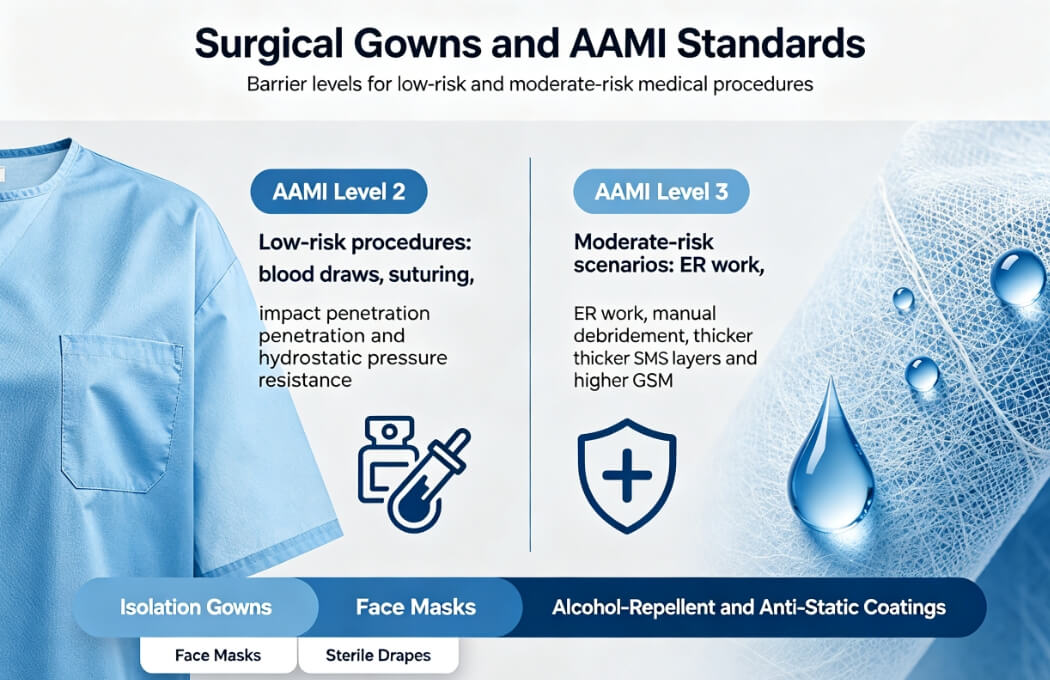
One of the most critical uses of SMS is in surgical gowns. The Association for the Advancement of Medical Instrumentation (AAMI) classifies gowns into four levels. SMS fabric is typically utilized for Level 2 and Level 3 gowns:
- AAMI Level 2: Used in low-risk procedures like blood draws or suturing. The SMS fabric must demonstrate resistance to water penetration (impact penetration) and hydrostatic pressure.
- AAMI Level 3: Required for moderate-risk scenarios such as ER work or manual debridement. The SMS layers are thicker (higher GSM) to provide a more robust barrier against fluid strike-through.
Isolation Gowns and Face Masks
In wards managing infectious diseases, SMS isolation gowns provide a breathable yet effective barrier. Because they are often worn for entire shifts, the comfort and breathability of the SMS material are paramount for staff compliance. SMS is also used to create sterile drapes for patients and equipment. Its ability to be treated with alcohol-repellent and anti-static coatings makes it safe for use in environments where oxygen and electronic equipment are present.
Procurement Considerations for SMS Products
When sourcing SMS protective products, professional buyers should look beyond the price point and focus on technical specifications that ensure safety and compliance.
- Weight (GSM): The Grams per Square Meter (GSM) directly correlates with protection. A 25-30 GSM SMS is common for light isolation, while 45-60 GSM is standard for high-performance surgical gowns.
- Certification Compliance: Ensure the material meets international standards such as EN 13795 (for surgical drapes and gowns) or ISO 13485 manufacturing protocols.
- Anti-Static and Alcohol Repellency: In specialized surgical settings, verify if the SMS has undergone secondary treatments to resist chemicals or prevent static discharge in oxygen-rich environments.
- Reinforcement: For high-fluid surgeries, “reinforced SMS” gowns include an extra layer of PE film in critical zones (chest and sleeves) while maintaining SMS breathability on the back.
Conclusion
SMS nonwoven fabric represents the ideal synergy of textile engineering and polymer science. Its ability to provide a high bacterial barrier while remaining comfortable and durable makes it indispensable in modern healthcare. As global health standards continue to evolve, the demand for high-quality SMS products will only increase, necessitating a deep understanding of its technical properties by both manufacturers and procurement professionals.
FAQ
1. Is SMS fabric waterproof?
SMS is highly fluid-repellent and can withstand significant hydrostatic pressure, but it is technically “water-resistant” rather than “waterproof” like a solid plastic film. It is designed to resist liquid strike-through while allowing gas to pass through.
2. Can SMS fabric be reused?
In most medical contexts, SMS products are designed for single use. This is to prevent cross-contamination and because the meltblown microfibers can be damaged by the high heat or chemicals required for sterilization, potentially compromising the barrier.
3. What is the difference between SMS and SMMS?
SMMS stands for Spunbond + Meltblown + Meltblown + Spunbond. It features two layers of meltblown instead of one. This provides an even more consistent filter layer and higher barrier protection, often used in premium surgical gowns.
4. Is SMS nonwoven fabric recyclable?
Yes, most SMS is made from 100% polypropylene. While medical-grade SMS that has been contaminated must be treated as biohazardous waste, clean SMS scraps from the manufacturing process can be recycled into other plastic products.
5. How does GSM affect SMS performance?
GSM (Grams per Square Meter) measures the density of the fabric. A higher GSM typically means a thicker meltblown layer and stronger spunbond layers, resulting in better fluid resistance and higher tensile strength, but slightly lower breathability.