

Polypropylene Fabric: Uses, Properties & PPE Applications

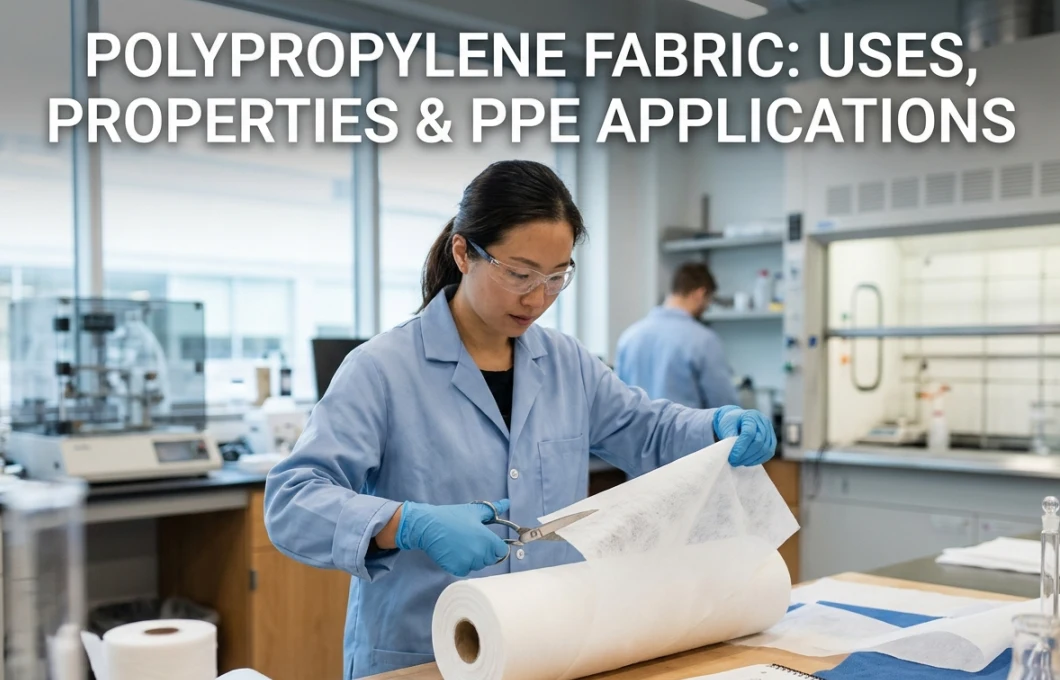
Polypropylene fabric is made from polypropylene, a thermoplastic polymer widely used in textile and nonwoven manufacturing. It is lightweight, relatively affordable, and can be processed into different structures to suit a range of applications.
In protective products, polypropylene is often used as a nonwoven material rather than a conventional woven textile. Spunbond PP fabric, for example, is formed by bonding continuous polypropylene filaments into a sheet. Its weight, thickness, texture, and construction can be adjusted to meet different product requirements.
That flexibility makes PP fabric a practical option for manufacturers producing disposable clothing, shoe covers, caps, protective accessories, and other products used in workplaces where cleanliness matters.
Properties of Polypropylene Fabric
The properties of polypropylene fabric depend on how it is manufactured. A lightweight spunbond fabric will behave differently from a multilayer composite, so the material name alone does not tell you everything about its performance.
Lightweight and Cost-Effective
One reason manufacturers choose polypropylene is its low material cost and relatively low weight. These characteristics are useful when producing disposable items in large quantities.
For buyers sourcing protective clothing or shoe covers, fabric weight and construction can affect material consumption, handling, comfort, and the final product price. The right specification depends on how the item will be used.
Moisture Resistance
Polypropylene absorbs relatively little moisture compared with many conventional textile fibers. This can help fabrics dry quickly and makes the material useful in applications where low moisture absorption is desirable.
However, low moisture absorption does not automatically make a PP fabric waterproof. Liquid resistance depends on the fabric structure, bonding method, surface treatment, and any additional film or coating.
Breathability and Comfort
Is polypropylene breathable? Yes, polypropylene fabric can be breathable, particularly when it is produced as a porous nonwoven material.
Airflow depends on factors such as fiber arrangement, fabric density, weight, and the presence of additional layers. A lightweight PP nonwoven may be suitable for disposable garments worn during routine tasks, while a denser or coated material may offer different levels of airflow and liquid resistance.
For protective clothing, buyers should consider breathability alongside the required barrier performance. A fabric that allows more airflow is not necessarily suitable for every exposure or workplace.
Strength and Durability
Polypropylene fabric can offer useful tensile strength and resistance to ordinary handling. Its actual durability varies with fiber structure, basis weight, bonding quality, and product design.
For disposable PPE, the material must remain intact during the intended period of use. Buyers may need to assess seam strength, tear resistance, and performance under the conditions expected in the workplace.
Claims about resistance to cuts, punctures, abrasion, chemicals, or ultraviolet exposure should be supported by appropriate product-specific testing rather than assumed from the use of polypropylene alone.
Chemical Resistance
Polypropylene has resistance to many common chemicals, but its performance depends on the substance, concentration, temperature, and exposure time.
This distinction matters when selecting protective equipment. A PP nonwoven suitable for general-purpose disposable wear should not automatically be treated as protection against hazardous chemicals. Where chemical exposure is possible, check the finished product’s test results and applicable protective standards.
Care and Maintenance
Some polypropylene textiles can be cleaned and reused under specified conditions. Disposable PP nonwoven products, however, are generally designed for limited use and should be handled according to the manufacturer’s instructions.
Washing, heat, mechanical stress, and cleaning agents can affect the performance of a finished product. Reusability should therefore be confirmed for the specific material and construction rather than assumed for all PP fabrics.
Common Polypropylene Fabric Uses
Polypropylene is used across several industries because manufacturers can adapt its structure and weight to different applications.
Medical and Healthcare Products
PP nonwoven fabric is commonly used in disposable medical and healthcare products, including caps, masks, isolation gowns, lab coats, and shoe covers.
Different products require different material structures. A basic spunbond layer may provide a lightweight physical covering, while SMS fabric combines spunbond and meltblown layers to achieve a different balance of strength, airflow, and barrier performance.
The finished product must meet the requirements of its intended use. The presence of PP fabric alone does not establish medical-grade protection or compliance with a particular standard.
Industrial and Workplace Protection
Disposable PP garments and accessories are used in selected industrial environments, laboratories, workshops, and clean areas.
Typical applications include disposable cover garments, protective caps, oversleeves, and shoe covers. They can help reduce direct contact between clothing, workers, and surrounding surfaces.
The appropriate material depends on the workplace hazards. Routine dust control, liquid splash protection, and hazardous chemical protection are different requirements and should not be treated as interchangeable.
Food Processing and Hygiene
PP nonwoven products can be used in food-processing facilities and other environments where disposable hygiene items are needed.
Caps, beard covers, aprons, and shoe covers may help manage contamination from clothing or footwear when included in a suitable hygiene procedure. Their effectiveness also depends on correct use, replacement, and compliance with the facility’s food-safety requirements.
Consumer and General Textile Applications
Beyond protective equipment, polypropylene fibers are used in carpets, upholstery, bags, and selected outdoor textile products.
The material’s low weight and moisture absorption can be useful in these applications. Performance still depends on the product design, exposure conditions, and any additional treatments.
PP Fabric for PPE: What Should Buyers Check?
For PPE manufacturers, distributors, and bulk purchasers, choosing polypropylene fabric involves more than comparing price per kilogram or fabric weight.
Fabric structure: Determine whether the product uses spunbond PP, SMS, or another construction. Different structures serve different purposes.
Basis weight: Compare the specified GSM and its tolerances. A higher GSM does not automatically mean better protection, but it can affect handling, thickness, and material consumption.
Barrier requirements: Identify whether the finished product needs resistance to particles, fluids, or specific workplace hazards. Ask for relevant test reports instead of relying on general material descriptions.
Product dimensions and construction: Check sizing, seam design, elastic components, closures, and packaging. These details can influence fit, usability, and performance.
Compliance documentation: Confirm the standards and certifications applicable to the product and destination market. Documentation should correspond to the actual product and its intended protective use.
For bulk orders, it is also sensible to confirm sample quality, production consistency, packaging specifications, and lead time before approving a shipment.
Is Polypropylene Fabric the Right Choice?
Polypropylene fabric is a practical material for many lightweight textiles and disposable protective products. Its low moisture absorption, adaptable construction, and cost advantages make it useful across healthcare, hygiene, food processing, and selected industrial applications.
Its limitations matter just as much as its advantages. Breathability varies with fabric structure, liquid resistance depends on construction, and protective performance must be demonstrated for the finished product.
For buyers, the best choice is the material that matches the actual application, required performance, and purchasing specifications—not simply the fabric with the lowest price.
FAQ
Is polypropylene fabric breathable?
Yes. Many PP nonwoven fabrics allow air to pass through them, but airflow varies with GSM, fiber arrangement, bonding, and additional layers. Check the finished product’s specifications when comfort and barrier performance are both important.
What are the main uses of polypropylene fabric?
Common uses include disposable medical garments, masks, caps, shoe covers, industrial protective accessories, carpets, upholstery, and bags. The suitable fabric construction depends on the application.
Is PP fabric suitable for PPE?
PP fabric is used in many disposable PPE products. Suitability depends on the required protection level, fabric construction, finished-product design, and applicable testing. Ordinary PP nonwoven fabric should not be assumed to provide protection against every workplace hazard.
Is polypropylene fabric waterproof?
Not necessarily. Polypropylene has low moisture absorption, but a porous PP nonwoven may still allow liquid to pass through. Waterproof or liquid-resistant performance depends on the construction, coatings, films, and test results.
What is the difference between spunbond PP and SMS fabric?
Spunbond PP is made using bonded continuous filaments. SMS fabric combines spunbond, meltblown, and spunbond layers. The multilayer structure can provide a different balance of strength, filtration, and barrier performance, depending on the product design and testing.
How should buyers select PP fabric for disposable protective products?
Start with the intended application, required barrier performance, fabric structure, GSM, dimensions, packaging, and applicable compliance requirements. Request samples and relevant test documentation before confirming a bulk order.