

What Is PP Material? Uses & Benefits

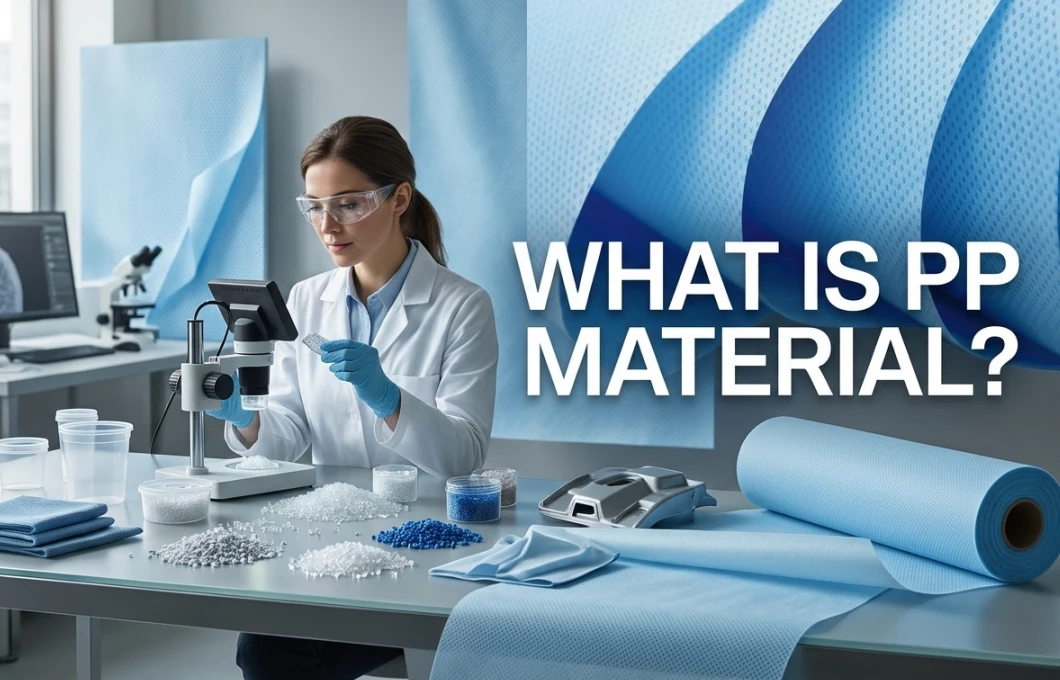
PP material stands for polypropylene, a thermoplastic polymer widely used in plastic products and nonwoven fabrics. It is lightweight, relatively tough, and resistant to many common chemicals. These properties make it suitable for applications ranging from household containers to disposable protective clothing.
You may encounter PP in storage boxes, buckets, bottle caps, packaging, woven bags, and protective equipment. Its performance depends on how the material is processed and what additives or other materials are used in the finished product.
For buyers sourcing disposable PPE, understanding the difference between PP plastic and PP nonwoven fabric is particularly useful. Both are made from polypropylene, but their structures and practical uses can be quite different.
What Does PP Plastic Mean?
PP plastic is the common name for polypropylene plastic. It is a lightweight polymer that can be processed using methods such as injection molding, extrusion, and fiber production.
The material has a relatively low density, generally around 0.90–0.91 g/cm³. This helps manufacturers produce lightweight products without relying on heavier materials.
PP is also known for its resistance to many acids, alkalis, and other chemicals under suitable conditions. However, its resistance depends on the chemical involved, concentration, temperature, and exposure time.
Like other plastics, polypropylene has limitations. It can become brittle under certain low-temperature or aging conditions, and prolonged exposure to ultraviolet radiation may affect its performance. Its dimensional stability and stiffness also depend on the grade, product design, and manufacturing process.
These characteristics explain why PP is useful across different industries, but they also show why material selection should be based on the intended application rather than price alone.
What Are the Main Properties of PP Material?
Lightweight and Practical
Polypropylene has a relatively low density, making it useful when weight and material consumption matter. In disposable protective products, lightweight PP nonwoven fabric can help reduce the overall weight of gowns, coveralls, masks, and shoe covers.
Chemical Resistance
PP offers resistance to many commonly encountered chemicals, including certain acids and alkalis. It is not resistant to every chemical under every condition, so the specific substance, concentration, temperature, and contact duration should be considered before use.
Heat Resistance
Polypropylene can tolerate heat within a range determined by its grade, design, and exposure conditions. It is used in some reusable containers and industrial components, but this does not mean every PP product can withstand high temperatures or sterilization.
Disposable PPE should be evaluated according to its intended use and the manufacturer’s instructions.
Flexibility and Mechanical Performance
PP can provide a useful balance of stiffness, toughness, and flexibility. Its performance varies with polymer grade, processing method, thickness, and fabric construction.
For nonwoven protective clothing, fabric weight and structure influence drape, tear resistance, comfort, and handling. A higher GSM value indicates more mass per unit area, but it does not automatically mean better barrier protection.
Processing Versatility
Polypropylene can be formed into rigid plastic products, films, fibers, and nonwoven fabrics. This versatility allows manufacturers to use the same base polymer in products with very different functions.
What Are the Common Polypropylene Material Uses?
Polypropylene material uses extend across household goods, packaging, manufacturing, healthcare, and industrial protection.
| Application | Typical PP Products |
|---|---|
| Household goods | Buckets, storage containers, organizers |
| Packaging | Caps, containers, woven bags, films |
| Automotive and industry | Selected molded components and industrial parts |
| Medical and healthcare | Disposable masks, gowns, caps, and shoe covers |
| Food processing | Selected disposable clothing and protective accessories |
| Cleanrooms and laboratories | Disposable garments and other protective items |
The suitability of PP depends on the finished product’s design and performance requirements. A material commonly used in one application is not automatically suitable for every product in the same industry.
PP Material for PPE: What Should Buyers Know?
PP material for PPE is particularly relevant to buyers sourcing disposable protective clothing and accessories. In this market, polypropylene is commonly processed into nonwoven fabric for products such as disposable coveralls, isolation gowns, caps, masks, and shoe covers.
However, PP nonwoven fabric should not be treated as a single, standardized material. Different constructions can deliver different levels of breathability, strength, fluid resistance, and particle barrier performance.
PP Nonwoven Fabric
PP nonwoven fabric is made by forming polypropylene fibers into a fabric-like web without conventional weaving or knitting.
Spunbond PP is commonly used for lightweight disposable clothing, caps, and shoe covers. It can offer practical coverage and comfort in applications where the required protection level is appropriate for the fabric.
Its actual barrier performance depends on fabric construction, weight, treatment, seams, and the finished product design.
SMS and Other Composite Fabrics
SMS fabric combines spunbond and meltblown layers. The spunbond layers contribute strength, while the meltblown layer can provide additional filtration or barrier performance, depending on its construction and the applicable test results.
Some protective garments also use PP-based composite materials or add a polyethylene (PE) film layer. These constructions can provide different levels of resistance to liquid penetration and other hazards.
The right choice depends on the intended use. A lightweight PP coverall for general cleanliness is not equivalent to a garment tested for hazardous chemical exposure.
Is PP Material Safe for Disposable PPE?
Polypropylene is widely used in disposable PPE, but the safety of a finished product depends on more than the base polymer.
Buyers should consider the product’s intended use, material composition, manufacturing quality, applicable regulations, and relevant test reports. For medical or industrial applications, verify the required performance claims and certifications for the specific product.
A CE mark or other certification should be checked against the applicable product requirements and supporting documentation. The presence of polypropylene alone does not establish that a product meets medical, infection-control, or industrial safety standards.
Is PP Material Waterproof?
PP itself absorbs relatively little moisture, but this does not make every PP fabric waterproof.
Ordinary PP spunbond nonwoven fabric may provide limited resistance to moisture, depending on its construction. It should not be assumed to prevent liquid penetration under all conditions.
For stronger liquid resistance, manufacturers may use coated fabrics, laminated structures, or PP-based garments with a PE film layer. The finished product’s performance should be confirmed through appropriate testing.
This distinction matters when selecting disposable gowns, coveralls, and shoe covers for healthcare, food processing, cleaning, or industrial work.
Is PP Material Toxic?
Polypropylene is widely used in consumer products and industrial applications. However, whether a specific PP product is suitable for a particular use depends on its formulation, additives, manufacturing quality, and intended conditions of use.
For PPE procurement, buyers should request relevant material and product documentation when chemical composition or contact safety is important. Products intended for food contact, medical use, or other regulated applications may have additional requirements.
It is also important to distinguish material safety from protective performance. A material may be suitable for its intended contact conditions without providing the barrier protection required for a particular workplace hazard.
How to Choose the Right PP Material for PPE
When sourcing disposable protective products, buyers should look beyond the words “PP material” on a product specification sheet.
Consider these factors:
- Material construction: Determine whether the product uses spunbond PP, SMS, or a composite fabric.
- Fabric weight: Confirm the required GSM range and whether it suits the intended application.
- Barrier requirements: Identify whether the product needs resistance to splashes, particles, or other specific hazards.
- Product design: Check dimensions, seams, cuffs, elastic openings, closures, and overall coverage.
- Testing and documentation: Request applicable test reports, declarations, and certification documents.
- Packaging and customization: Confirm individual packaging, carton quantities, colors, sizes, labeling, and private-label options.
For bulk purchasing, it is also useful to request samples before placing a large order. This allows buyers to assess fit, fabric feel, workmanship, and packaging before confirming specifications.
Frequently Asked Questions
What is PP material used for?
PP material is used in household products, packaging, molded components, and disposable nonwoven products. In PPE, common examples include gowns, coveralls, caps, masks, and shoe covers.
What is the difference between PP and PE material?
PP stands for polypropylene, while PE stands for polyethylene. They have different mechanical and processing characteristics. PP is widely used in fibers and nonwoven fabrics, while PE is commonly used in films and flexible plastic products. The better choice depends on the product design and required performance.
Is PP nonwoven fabric breathable?
PP nonwoven fabric can allow air to pass through, depending on its structure, fiber arrangement, and any coatings or laminations. Composite fabrics and film-backed products may behave differently, so breathability should be assessed for the finished product.
Does higher GSM mean better protection?
Not necessarily. GSM measures fabric mass per unit area. Protection also depends on the material structure, barrier properties, seams, garment design, and test results. Buyers should select products based on the relevant performance requirements rather than GSM alone.
Can PP material be used for medical gowns?
Yes. PP-based nonwoven fabrics are used in various medical gowns and disposable garments. The appropriate material and finished garment must meet the requirements for their intended medical use. Not every PP gown provides the same level of fluid resistance or infection-control protection.
What information should buyers request from a PP PPE supplier?
Ask for the material composition, GSM range, available sizes, product dimensions, packaging details, minimum order quantity, production capacity, and applicable test documentation. For regulated applications, verify that the supplied documents correspond to the specific product and its claimed performance.
Choosing PP Materials for Your Application
Polypropylene offers a practical combination of low weight, processing versatility, and resistance to many common chemicals. Its broad range of applications makes it useful in both rigid plastic products and disposable nonwoven PPE.
The important question is not simply whether a product is made from PP, but whether its construction and verified performance meet the needs of the intended application. For protective clothing and accessories, material specifications, product design, and appropriate testing should guide the purchasing decision.