
Blog
What Is Polypropylene Spunbond Nonwoven?

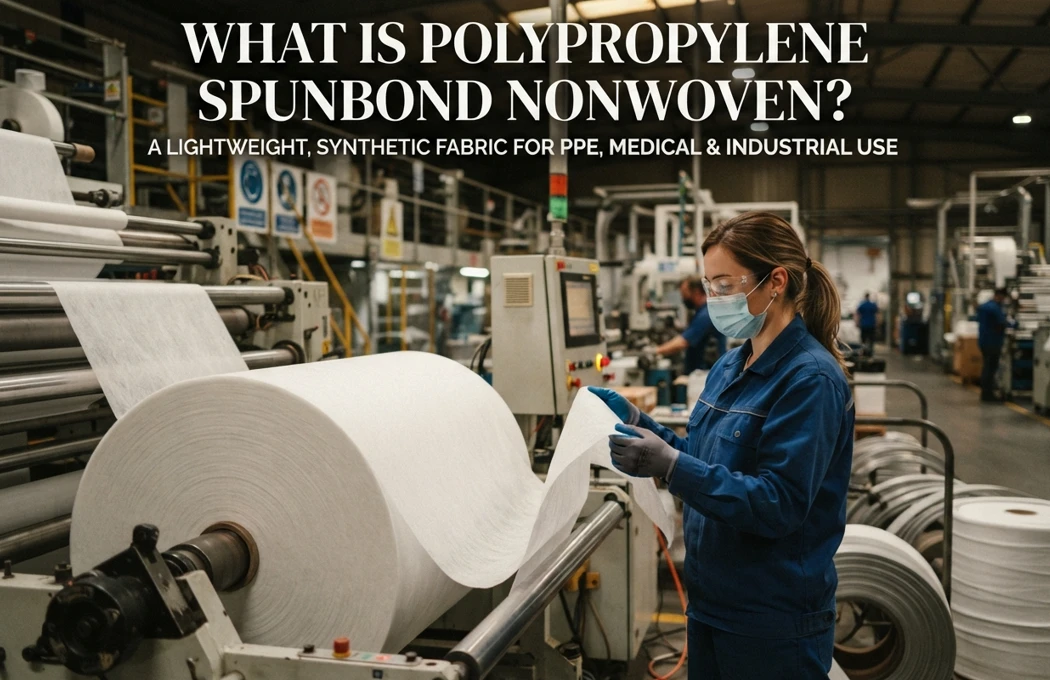
Polypropylene spunbond nonwoven is a lightweight synthetic fabric made from continuous polypropylene filaments bonded together without weaving or knitting. It is widely used in disposable personal protective equipment (PPE), medical supplies, hygiene products, agriculture, and industrial applications.
What makes this material useful is the balance between strength, weight, breathability, and production cost. It can be manufactured in different thicknesses and fabric structures to suit different applications, from disposable medical caps to protective coveralls.
For PPE manufacturers, understanding how polypropylene spunbond nonwoven is produced and how its properties affect the finished product helps with material selection, product design, and quality control.
What Is PP Spunbond Nonwoven Fabric?
PP spunbond nonwoven fabric is made from polypropylene, a thermoplastic polymer commonly used in packaging, textiles, and industrial products. During manufacturing, polypropylene resin is melted and extruded through a spinneret to form fine, continuous filaments.
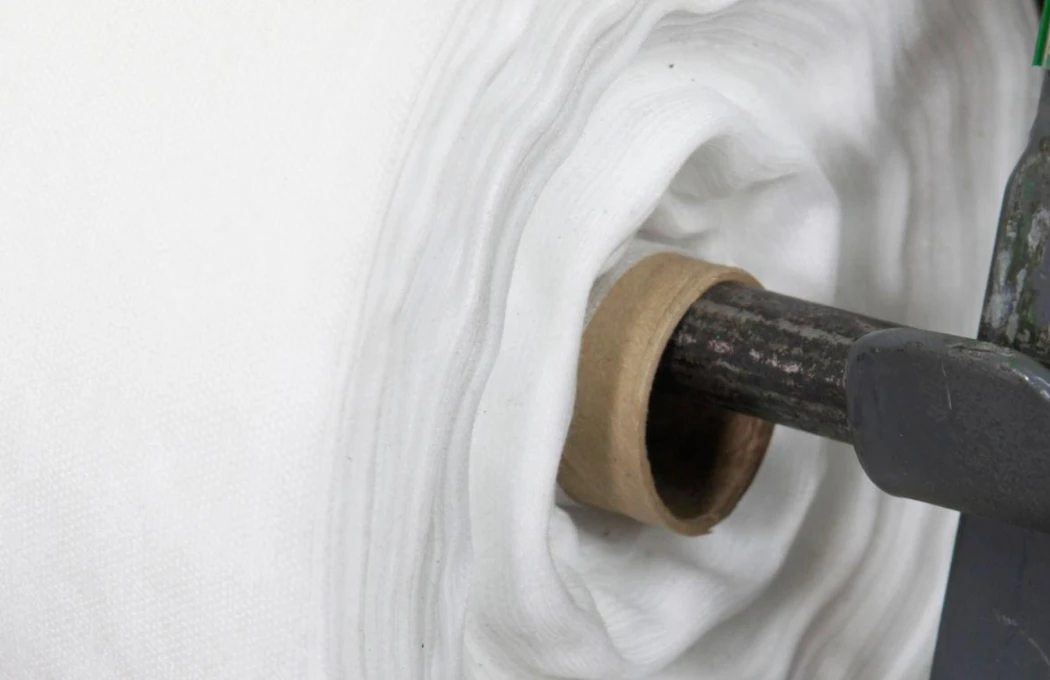
These filaments are stretched, cooled, and deposited onto a moving belt to create a loose web. Heat and pressure are then used to bond the filaments, forming a stable fabric.
Unlike woven fabrics, which are made by interlacing yarns, or knitted fabrics, which use interconnected loops, spunbond nonwovens have a randomly distributed filament structure.
The resulting fabric is generally lightweight, flexible, and air-permeable. Its performance depends on factors such as filament arrangement, bonding conditions, fabric weight, and any additional finishing treatments.
In disposable PPE manufacturing, PP spunbond is commonly used as a base material for garments and accessories that require lightweight coverage and everyday contamination control.
How Is Polypropylene Spunbond Nonwoven Manufactured?
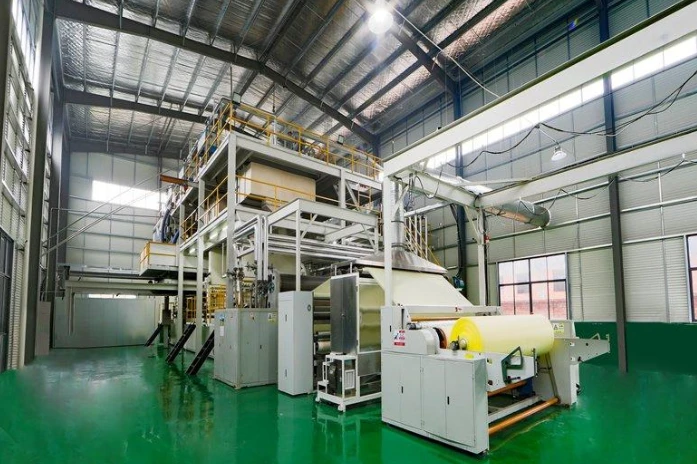
Spunbond nonwoven manufacturing combines polymer processing, filament formation, web formation, and bonding in a continuous production line. Each stage influences the consistency and physical properties of the finished fabric.
1. Polypropylene Extrusion
The process begins with polypropylene resin pellets, which are fed into an extruder and heated until they melt.
The molten polymer is pushed through a spinneret containing many small openings. As the polymer exits these openings, it forms continuous filaments.
Stable extrusion conditions help maintain consistent filament formation and reduce variations in the resulting fabric.
2. Filament Drawing and Cooling
The newly formed filaments are stretched using a controlled airflow or mechanical drawing system. Drawing reduces filament diameter and helps develop the physical strength of the fibers.
The filaments are then cooled and solidified before they reach the web-forming section.
Consistent filament diameter and cooling conditions contribute to uniform fabric formation.
3. Web Formation
The continuous filaments are deposited onto a moving conveyor belt, where they form a loose, nonwoven web.
The distribution of the filaments affects the fabric’s thickness, coverage, tensile behavior, and surface uniformity. Proper control of the web-forming process helps reduce weak spots and uneven areas.
4. Thermal Bonding
The loose filament web passes through heated calender rollers or another suitable thermal bonding system. Heat and pressure soften the polypropylene at selected contact points, bonding the filaments together.
This process gives the fabric its structural integrity and helps determine its surface texture, stiffness, and mechanical strength.
Thermal bonding is a common method for PP spunbond production. The bonding conditions must be adjusted to suit the polymer and desired fabric properties.
5. Finishing and Fabric Inspection
After bonding, the fabric may undergo finishing processes such as embossing, surface treatment, slitting, or winding, depending on its intended application.
Manufacturers can adjust fabric weight, width, color, and other specifications to meet product requirements.
Quality checks may include basis weight, tensile strength, appearance, width, and uniformity. For PPE applications, further testing of the finished product may be necessary to confirm its specific protective performance.
Key Properties of Polypropylene Spunbond Nonwoven
The properties of PP spunbond fabric make it suitable for many lightweight, disposable products. However, the actual performance depends on the fabric specification and how it is converted into a finished item.
Lightweight and Flexible
Polypropylene has a relatively low density, allowing manufacturers to produce lightweight fabrics that are easy to cut, sew, fold, and package.
This is particularly useful for disposable garments, caps, shoe covers, and other PPE items that need to provide coverage without adding unnecessary bulk.
Strength and Tear Resistance
Continuous filaments bonded into a web provide mechanical strength for handling and everyday use. Fabric weight, filament characteristics, bonding conditions, and product construction all influence tensile and tear resistance.
A lightweight fabric may be suitable for short-duration, low-risk applications, while more demanding uses may require a heavier fabric or a different material structure.
Breathability
The spaces between bonded filaments allow air to pass through the fabric. This can help reduce heat buildup when the material is used in disposable garments and head coverings.
Breathability varies with fabric weight, bonding density, and any coating or lamination applied to the surface.
Moisture Resistance
Polypropylene is hydrophobic, meaning it has low affinity for water and does not readily absorb moisture.
However, this property does not make untreated PP spunbond fabric waterproof or fully resistant to liquid penetration. Liquid may still pass through the spaces in the fabric, particularly under pressure.
When liquid resistance is required, additional layers, coatings, or laminated materials may be needed.
Chemical Resistance
Polypropylene is resistant to many commonly encountered acids, alkalis, and chemicals. Its resistance varies with the specific chemical, concentration, temperature, and exposure duration.
For this reason, chemical resistance should be assessed against the actual working environment rather than assumed from the polymer type alone.
Cost Efficiency
The continuous production process allows PP spunbond fabric to be manufactured at scale. Its relatively low weight also helps reduce material consumption and transportation requirements for many disposable products.
These characteristics make it a practical material option for high-volume PPE production.
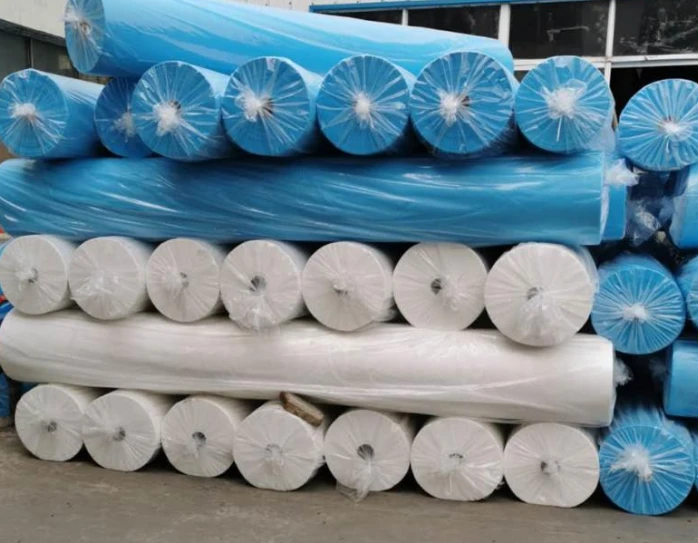
Polypropylene Spunbond Nonwoven Uses
Polypropylene spunbond nonwoven is used in various industries because its specifications can be adapted to different product requirements. Its role in PPE is particularly relevant where lightweight coverage and disposable use are required.
1. Medical and Healthcare
In healthcare settings, PP spunbond is commonly used in disposable garments and accessories that provide basic coverage and help reduce the transfer of contaminants through direct contact.
Typical applications include:
- Disposable isolation gowns
- Patient gowns
- Surgical caps and bouffant caps
- Shoe covers
- Protective coveralls
- Medical bed sheets
The suitability of a fabric depends on the intended medical application. Basic PP spunbond is not automatically suitable for surgical gowns or other applications requiring tested fluid barriers. Higher-risk uses may require SMS, laminated fabrics, or other validated material constructions.
Explore disposable body protection products and disposable head protection products from Hubei Ruichen.
2. Food Processing and Catering
Food processing facilities often use disposable nonwoven products to help contain loose hair, reduce clothing-related contamination, and support workplace hygiene procedures.
Common products include:
- Disposable mob caps
- Beard covers
- Disposable aprons
- Protective coveralls
- Shoe covers
PP spunbond is often selected for its lightweight structure and breathability. Product design, fit, and appropriate replacement practices are also important for effective hygiene management.
3. Pharmaceutical and Cleanroom Environments
In pharmaceutical production and controlled environments, disposable nonwoven garments can help reduce the introduction of particles from workers’ clothing and hair.
Depending on the cleanliness requirements, PP spunbond may be used in selected low-risk garments or as one component of a multilayer material.
Cleanroom suitability should be verified against particle shedding, garment construction, laundering or disposal requirements, and the facility’s contamination control procedures.
4. Industrial and General Workplace Protection
In general manufacturing, maintenance, cleaning, and light industrial work, PP spunbond may be used to make disposable protective clothing and accessories.
These products can help keep ordinary dust, lint, and workplace dirt away from workers’ clothing. They are not a substitute for specialized PPE designed for chemical splashes, hazardous dust, heat, or other high-risk exposures.
Related product categories include face protection, hand protection, foot protection, and PPE accessories.
PP Spunbond Fabric for PPE: How to Choose the Right Material
Choosing PP spunbond fabric for PPE requires more than comparing fabric weight or price. The material needs to match the intended application, expected wear duration, and required level of protection.
Fabric Weight (GSM)
GSM refers to grams per square meter and measures the fabric’s basis weight. A higher GSM generally means more material per unit area, but it does not automatically guarantee better protective performance.
For example, lightweight PP spunbond may be suitable for disposable caps and basic protective garments. Heavier fabrics may be considered for products requiring greater coverage strength or durability.
The appropriate GSM should be selected based on the finished product’s design and performance requirements.
Material Structure
Different nonwoven structures offer different properties.
| Material | General characteristics | Typical PPE applications |
|---|---|---|
| PP Spunbond | Lightweight, breathable, economical | Caps, basic gowns, shoe covers |
| SMS | Spunbond-meltblown-spunbond multilayer structure | Selected medical gowns and coveralls |
| SMMS | Multiple spunbond and meltblown layers | Selected protective apparel |
| PP+PE Laminated | PP substrate with a polyethylene barrier layer | Products requiring additional liquid resistance |
| SF Laminated | Microporous film laminated to a fabric substrate | Selected protective coveralls and garments |
The material should be chosen according to the intended use and the applicable testing requirements. A multilayer structure or film laminate does not, by itself, establish a particular level of protection.
Intended Application and Compliance
PPE requirements differ between healthcare, food processing, laboratories, and industrial workplaces.
Procurement teams should identify the relevant standards, assess the hazards, and review the test results for the finished product. Depending on the application, this may include tests for liquid penetration, tensile strength, particle shedding, or other specified performance characteristics.
Manufacturers should provide accurate material specifications and applicable product documentation to support purchasing decisions.
Environmental Considerations of PP Spunbond Nonwoven
Polypropylene is a petroleum-based thermoplastic and is not biodegradable under ordinary environmental conditions. Disposable PP spunbond products can therefore contribute to plastic waste if they are not managed appropriately after use.
Polypropylene is technically recyclable, but actual recycling depends on collection systems, contamination levels, product composition, and local recycling infrastructure. Used medical PPE may also be subject to specific waste-handling requirements.
Manufacturers can help reduce material waste through efficient cutting, controlled production processes, and suitable packaging. Selecting the correct fabric weight and product design can also avoid unnecessary material use.
For disposable PPE, waste management should take into account the product’s intended use, contamination status, and local regulations.
How Hubei Ruichen Uses PP Spunbond in Disposable PPE
Hubei Ruichen Protective Products Co., Ltd. is a manufacturer and exporter of disposable nonwoven and plastic protective products based in Xiantao, Hubei, China.
PP spunbond is one of the material options used in disposable PPE manufacturing. Its lightweight structure and adaptability make it suitable for various products that require basic coverage and convenient disposal.
Depending on the product design, PP can be used in disposable isolation gowns, coveralls, mob caps, shoe covers, and other protective accessories.
Material selection is based on the product’s intended application, required fabric weight, construction, and customer specifications. For products that require additional liquid resistance or other specific protective properties, alternative or multilayer materials may be considered.
For buyers evaluating a PPE supplier, key considerations include:
- Material specifications: Confirm the fabric type, GSM, color, and construction.
- Product consistency: Review fabric uniformity, dimensions, stitching, and finished-product quality.
- Customization: Confirm available sizes, packaging, colors, and OEM/ODM requirements.
- Compliance documentation: Request relevant certifications and applicable test reports for the specific products.
- Supply capability: Confirm production capacity, minimum order quantities, and delivery arrangements.
By matching material specifications with the actual application, buyers can make more informed decisions when sourcing disposable protective products.
Explore the full range of disposable body protection and other PPE accessories from Hubei Ruichen.
5. Conclusion
Polypropylene spunbond nonwoven is a versatile material manufactured by extruding polypropylene into continuous filaments, forming a web, and bonding the filaments with heat and pressure. Its lightweight structure, breathability, mechanical strength, and cost efficiency make it suitable for a wide range of disposable products.
In PPE manufacturing, the material is commonly used in disposable garments, caps, shoe covers, and other protective accessories. However, its suitability depends on the intended application, fabric specifications, and verified performance of the finished product.
Understanding the differences between PP spunbond, SMS, SMMS, and laminated materials helps procurement teams select products that meet their operational and compliance requirements.
6. FAQ
1. What is polypropylene spunbond nonwoven fabric?
Polypropylene spunbond nonwoven fabric is a synthetic textile made from continuous polypropylene filaments that are laid into a web and bonded together without weaving or knitting. It is lightweight, breathable, and commonly used in disposable PPE, medical supplies, and industrial products.
2. How is PP spunbond nonwoven fabric manufactured?
PP spunbond fabric is manufactured by melting polypropylene resin, extruding it through a spinneret to form continuous filaments, drawing and cooling the filaments, forming a web, and bonding the web with heat and pressure. The fabric may then undergo additional finishing and inspection.
3. What are the main uses of polypropylene spunbond nonwoven?
Common applications include disposable isolation gowns, protective coveralls, medical caps, shoe covers, food processing apparel, hygiene products, agricultural covers, and industrial protective materials. The appropriate application depends on the fabric’s specifications and performance.
4. Is polypropylene spunbond fabric waterproof?
No. Standard PP spunbond fabric is hydrophobic, but it is not inherently waterproof. Liquid can pass through the gaps in its filament structure. Products requiring liquid resistance may need PE lamination, microporous film, or other suitable barrier materials with verified test performance.
5. Is PP spunbond suitable for disposable PPE?
Yes, PP spunbond is widely used in disposable PPE, particularly for lightweight garments and accessories that provide basic coverage. However, it is not suitable for every hazard. Higher-risk applications may require multilayer materials or specialized barrier fabrics that meet the relevant performance standards.
6. What is the difference between PP spunbond and SMS nonwoven?
PP spunbond consists of bonded continuous polypropylene filaments, while SMS combines two spunbond layers with a meltblown layer between them. SMS provides a different filtration and barrier structure, but its actual performance depends on the material specifications and product testing.
7. What does GSM mean in PP spunbond fabric?
GSM stands for grams per square meter. It measures the fabric’s basis weight and is commonly used to specify PP spunbond materials. Higher GSM generally indicates more material per unit area, but does not independently determine strength, breathability, or protective performance.
8. Is polypropylene spunbond nonwoven recyclable?
Polypropylene is a recyclable thermoplastic. However, the recyclability of spunbond products depends on the material composition, contamination, collection facilities, and local recycling systems. Used PPE may require special disposal according to its contamination status and applicable regulations.