
Blog
Surgical Cap vs Hair Cover: Key Differences & Buying Guide

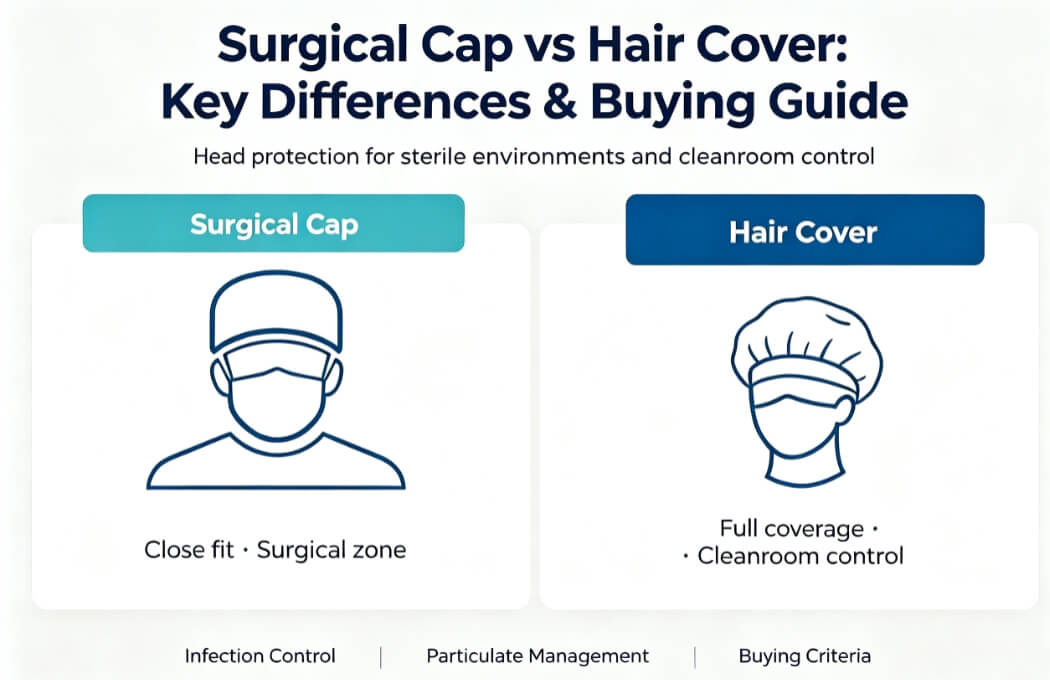
In the hierarchy of Personal Protective Equipment (PPE), head protection often receives less attention than respiratory or body protection. However, in sterile environments like operating rooms (OR) or highly regulated cleanrooms, the distinction between a surgical cap and a standard disposable hair cover is critical for infection control and particulate management.
For procurement managers and healthcare administrators, selecting the correct “hat surgical” or “cap surgery” involves more than just aesthetics; it requires an understanding of material science, fluid resistance, and the specific bio-burden requirements of the environment. This guide explores the technical nuances that differentiate professional surgical headwear from general-purpose hair covers.
Defining the Professional Surgical Cap
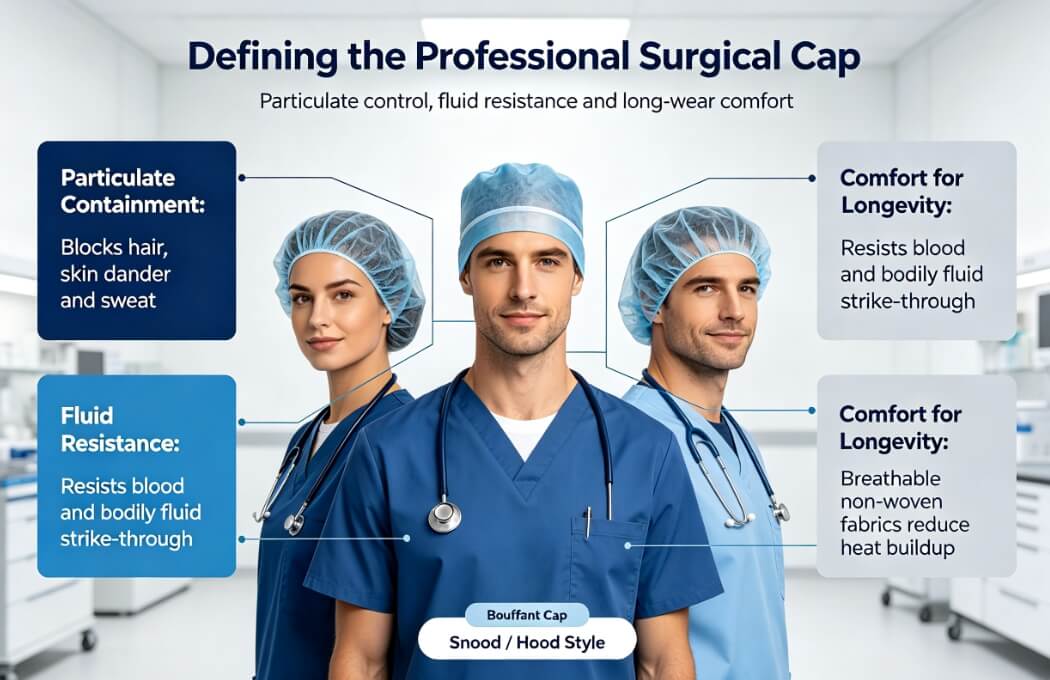
A surgical cap is a specialized piece of medical headwear designed primarily for use by surgeons, nurses, and technicians within a sterile field. Unlike a generic hair net, a disposable surgeon hair cap is engineered to provide a barrier against both microorganisms and fluid splashes.
- Particulate Containment: The primary goal of a disposable surgery cap is to prevent hair, skin dander, and sweat from falling into a sterile surgical site.
- Fluid Resistance: High-quality surgical caps often use materials that resist strike-through from blood or other bodily fluids.
- Comfort for Longevity: Since surgical procedures can last several hours, manufacturers use breathable non-woven fabrics to make these caps and prevent heat buildup.
Common styles of cap surgery include Bouffant Caps, Doctor Caps (Tie-on or Elastic), and Snood/Hood Styles used in orthopedic surgery where full head and neck coverage is required.
Defining the Disposable Hair Cover
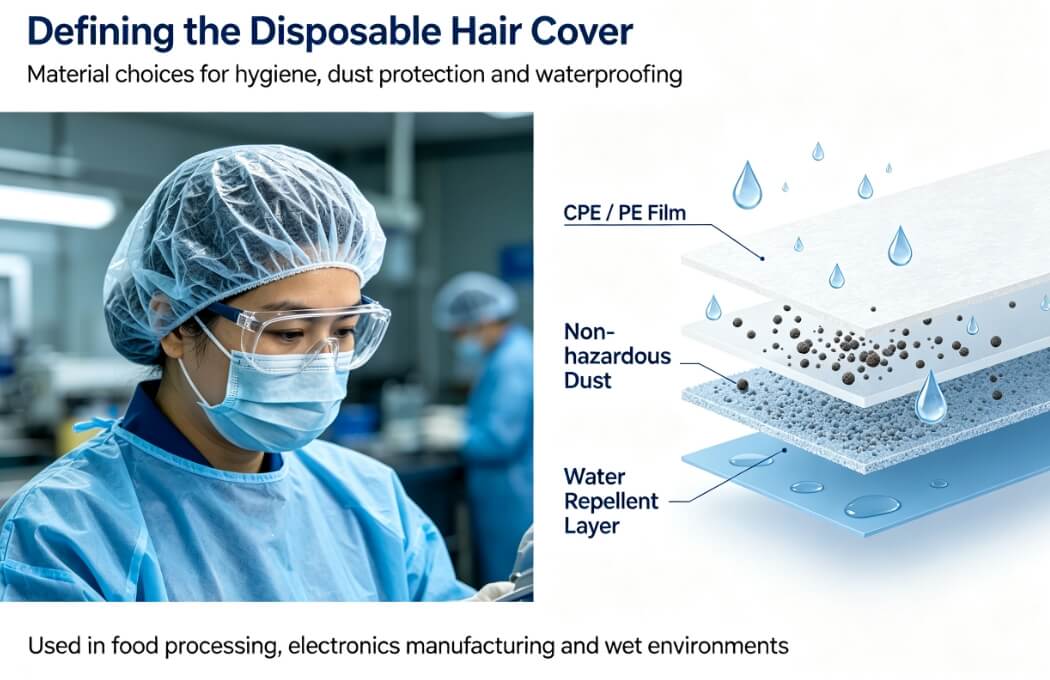
The term “hair cover” is a broader category that includes products used in food processing, electronics manufacturing, and general hygiene. A disposable hair cover plastic or a disposable net hair cap is generally intended for “hygienic” rather than “sterile” applications.
- Contamination Prevention: Preventing physical hair from entering products (e.g., in a food assembly line).
- Light Dust Protection: Shielding the wearer’s hair from non-hazardous dust in industrial settings.
- Waterproofing: Wearers often choose a disposable hair cover plastic (CPE or PE) to keep their hair dry in wet environments.
Technical Comparison: Surgical Cap vs. Hair Cover
To make an informed procurement decision, it is essential to compare these products across technical dimensions such as material weight, barrier properties, and regulatory compliance.
| Feature | Surgical Cap (Medical Grade) | Hair Cover (Hygienic/Industrial) |
|---|---|---|
| Primary Material | SMS (Spunbond-Meltblown-Spunbond) or SBPP | SBPP (Spunbond Polypropylene) or PE/CPE |
| Fluid Resistance | Moderate to High | Low to None (unless Plastic) |
| Breathability | Optimized for long-wear comfort | Variable; often less breathable in plastic versions |
| Primary Goal | Infection control & sterile field maintenance | Product contamination prevention |
| Standards | CE, ISO13485, EN 13795 (relevant sections) | Basic FDA/CE for food contact or hygiene |
| Typical Environment | Operating Rooms, ICUs, Labs | Kitchens, Food Plants, Cleanrooms, Hotels |
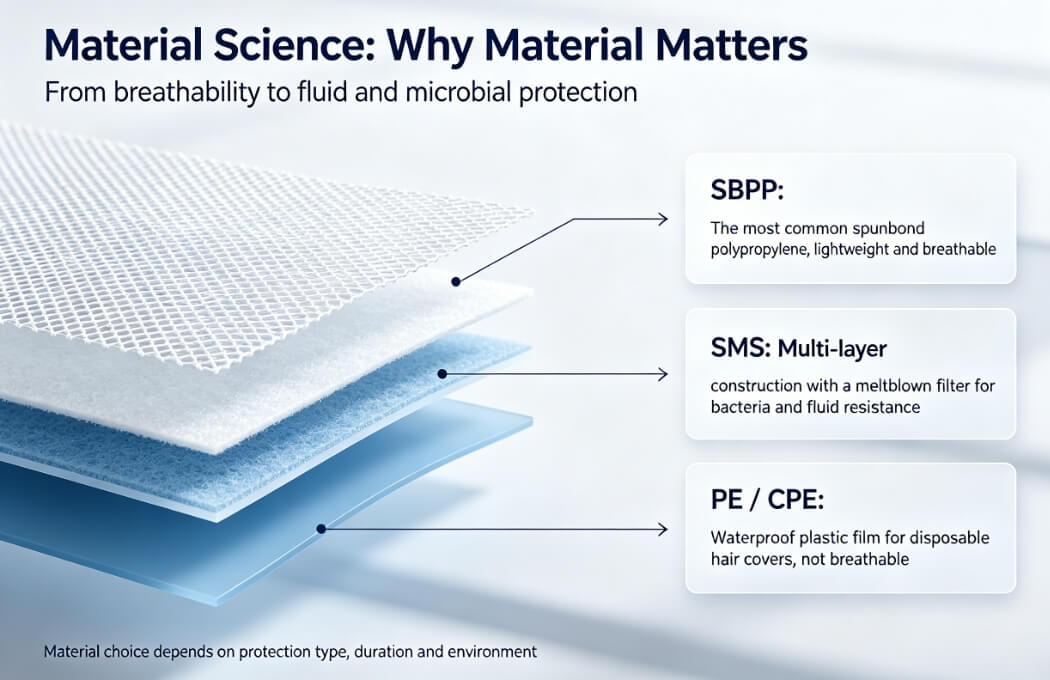
Material Science: Why Material Matters
The choice of non-woven fabric defines the performance of the head cover.
- SBPP (Spunbond Polypropylene): The most common material for both categories. It is lightweight and breathable but offers limited fluid protection.
- SMS (Spunbond-Meltblown-Spunbond): Often used in high-end surgical caps. The meltblown layer acts as a microbial filter, providing higher protection against bacteria and fluids.
- PE/CPE (Polyethylene): Used for disposable hair cover plastic. These are completely waterproof but have zero breathability, making them unsuitable for long surgeries.
Application Scenarios: Selecting the Right Protection
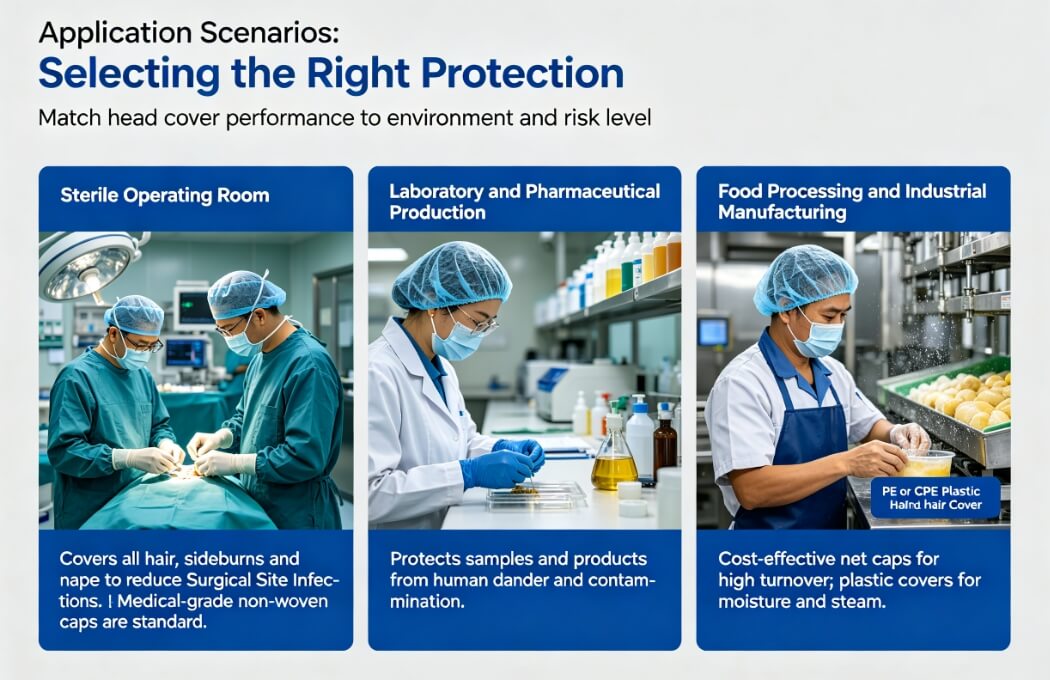
The Sterile Operating Room
In the OR, the disposable surgeon hair cap must cover all hair, including sideburns and the nape of the neck. Here, the focus is on preventing Surgical Site Infections (SSIs). Studies have shown that the fabric type of the hat surgical can impact the number of colony-forming units (CFUs) in the air. Therefore, medical-grade non-woven caps are the standard.
Laboratory and Pharmaceutical Production
In these environments, the focus shifts to protecting the integrity of the sample or product. A disposable surgery cap or a high-GSM (grams per square meter) bouffant cap is often required to ensure that human dander does not contaminate sensitive chemical or biological assays.
Food Processing and Industrial Manufacturing
For the food industry, a disposable net hair cap (often called a “mop cap” or “clip cap”) is usually sufficient. These are cost-effective and designed for high-volume turnover. If the environment involves high moisture or steam, switching to a disposable hair cover plastic made of PE or CPE ensures that the wearer’s hair remains dry and contained.
Procurement Considerations for B2B Buyers
When sourcing head protection from a manufacturer, especially in high-volume regions like Hubei, China, buyers should look beyond price and evaluate the following:
- Elastic Quality: The elastic band must be latex-free and heat-sealed or double-stitched for durability.
- GSM (Fabric Weight): A higher GSM (e.g., 20g-30g) provides a better barrier but slightly less breathability.
- Sizing Consistency: Ensure the manufacturer offers various sizes (e.g., 18″, 21″, or 24″ diameters).
- Certification Compliance: Ensure the factory holds ISO9001 and ISO13485 certifications.
How Manufacturing Processes Affect Quality
The reliability of a surgical cap or hair cover is heavily influenced by raw material handling. Leading manufacturers often produce their own PE or CPE films in-house. This vertical integration allows for better cost control and strict control over the film’s thickness and puncture resistance.
For non-woven products, the bonding process (ultrasonic vs. heat-sealed) determines seam strength. For disposable surgeon hair caps, ultrasonic sealing is preferred as it eliminates needle holes, thereby enhancing barrier properties.
Explore our full range of professional caps and hairnets for clinical and industrial use.
Discover specialized head covers and hoods for high-protection environments.
Conclusion
While “surgical cap” and “hair cover” are terms often used interchangeably, their technical specifications and intended applications are distinct. The surgical cap is a critical component of clinical infection control, requiring specific materials like SMS to provide fluid and microbial barriers. In contrast, the disposable hair cover serves as a vital hygiene tool in food and industrial sectors to prevent physical contamination. By understanding these differences, healthcare facilities and industrial buyers can optimize their PPE spend and ensure staff safety.
FAQ
1. Can a bouffant cap be used as a surgical cap?
Yes, in many clinical settings, a bouffant-style cap is considered a type of disposable surgery cap, provided it is made of medical-grade non-woven material (SBPP or SMS) and completely covers the wearer’s hair and ears.
2. What is the difference between SBPP and SMS for head covers?
SBPP (Spunbond Polypropylene) is a single-layer fabric used for basic hygiene. SMS (Spunbond-Meltblown-Spunbond) is a multi-layer fabric. The “M” layer in SMS provides superior filtration and fluid resistance, making it better suited for hat surgical applications.
3. Why should I choose a disposable hair cover plastic (PE/CPE) instead of non-woven?
A disposable hair cover plastic is non-porous and waterproof. It is the best choice for wet environments, such as food cleaning stations or chemical processing, where non-woven fabric would absorb liquid and become heavy or contaminated.
4. Are these products biodegradable?
Standard PP and PE products are not biodegradable. However, some manufacturers are now developing PLA (Polylactic Acid) or other eco-friendly alternatives. Always check the specific material datasheet from your supplier for environmental compliance.
5. What certifications should I check for medical-grade surgical caps?
Look for CE marking, ISO13485 (Medical Devices Quality Management), and evidence of testing against standards such as EN 13795 for surgical drapes and gowns, which often covers the material requirements for surgical headwear.