
Blog
Why Do You Need Safety Equipment? A Guide to Professional PPE

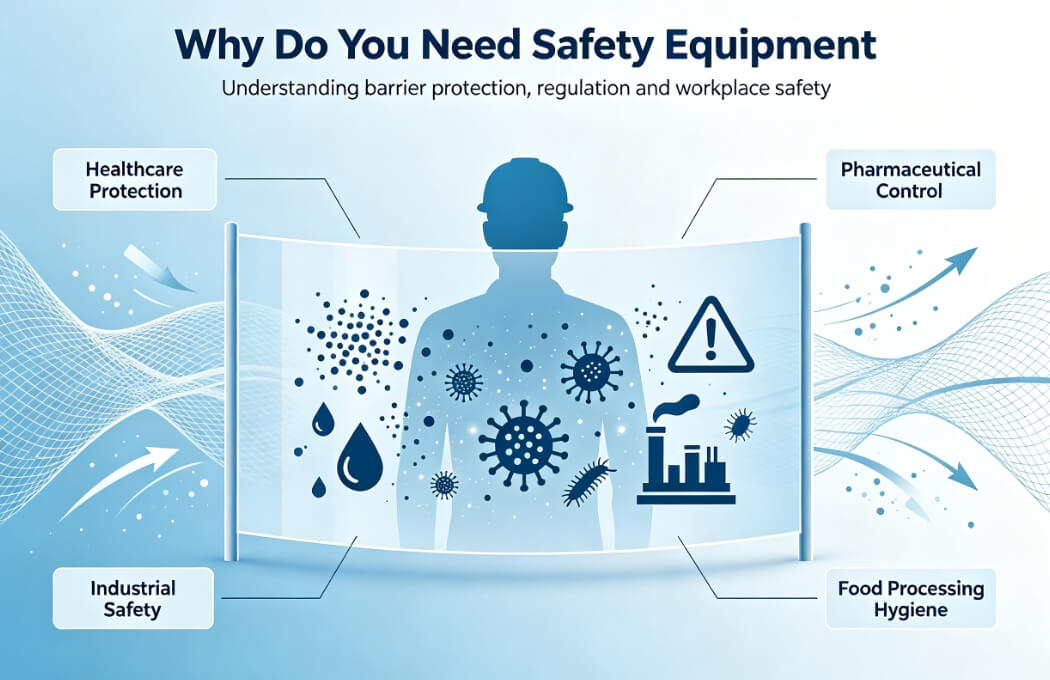
In the hierarchy of hazard control, Personal Protective Equipment (PPE) is often described as the “last line of defense.” However, in sectors ranging from healthcare and pharmaceuticals to heavy industry and food processing, safety equipment is much more than a final precaution—it is a fundamental component of operational integrity.
Understanding why you need safety equipment requires looking beyond the simple act of wearing a mask or a gown. It involves understanding the science of barrier protection, the regulatory landscape of occupational health, and the economic implications of workplace safety. For procurement managers and safety officers, selecting the right equipment is a technical decision that impacts both human lives and institutional compliance.
The Core Function: Creating an Engineered Barrier
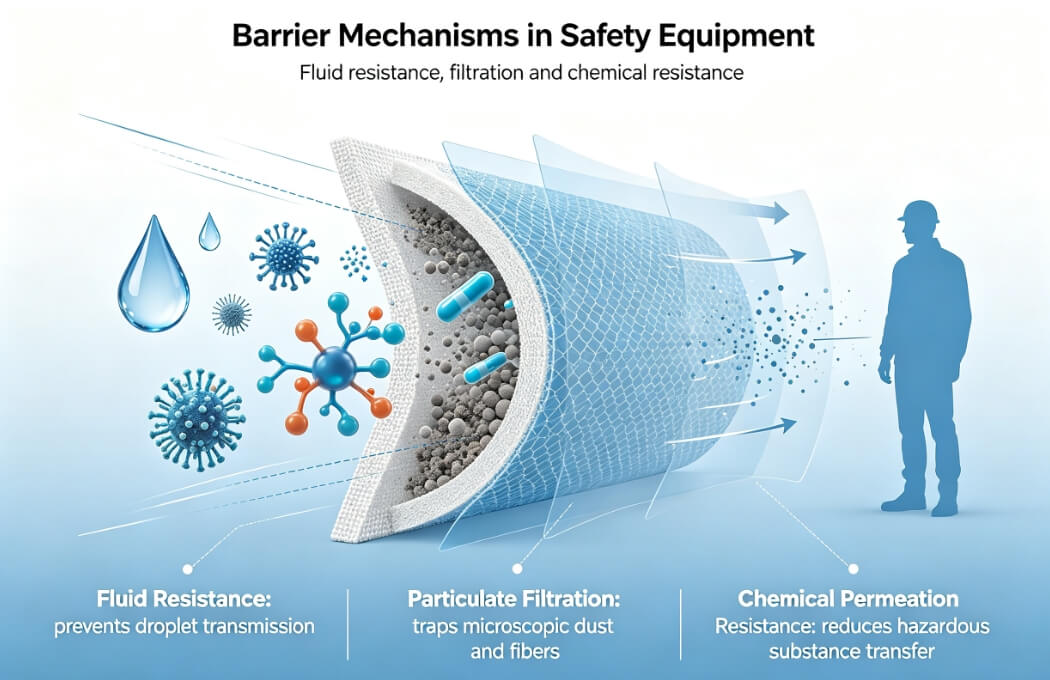
The primary reason why you need safety equipment is to establish a physical barrier between a hazardous environment and the human body. In technical terms, this is known as “barrier efficiency.”
Whether the hazard is biological (viruses, bacteria), chemical (acids, solvents), or physical (dust, particulates), the equipment must be engineered to resist penetration. For instance, in a medical setting, an isolation gown is not just a garment; it is a fluid-resistant shield designed to prevent the strike-through of blood-borne pathogens.
Key Barrier Mechanisms?
- Fluid Resistance: Crucial for medical gowns and face masks to prevent the transmission of droplets.
- Particulate Filtration: Essential in respirators and coveralls to keep microscopic fibers or dust from reaching the skin or lungs.
- Chemical Permeation Resistance: Necessary for industrial suits handling hazardous substances.
Why is Infection Control Crucial for Public Health?
In healthcare environments, the “why” behind safety equipment is dual-layered: protecting the wearer and protecting the patient. This is particularly evident in the use of disposable non-woven products.
Disposable protective clothing, such as those made from Spunbonded Polypropylene (SBPP) or SMS (Spunbond-Meltblown-Spunbond) fabrics, is designed to be used once and discarded. This protocol is the cornerstone of modern infection control. By using disposable equipment, facilities eliminate the risk of cross-contamination that can occur with laundered reusable textiles, which may retain microscopic residues or lose structural integrity over time.
Material Performance Comparison?
| Material Type | Structure | Primary Benefit | Common Application |
|---|---|---|---|
| SBPP | Single layer non-woven | Breathable, basic dust protection | Lab coats, hair covers |
| SMS/SMMS | Multi-layer (Meltblown core) | High fluid resistance & filtration | Isolation gowns, surgical drapes |
| SF (Microporous) | PP with microporous film | Breathable but waterproof | Type 5/6 Coveralls |
| PE/CPE | Polyethylene film | 100% Waterproof, fluid-proof | Aprons, shoe covers |
Do You Meet International Standards and Regulations?
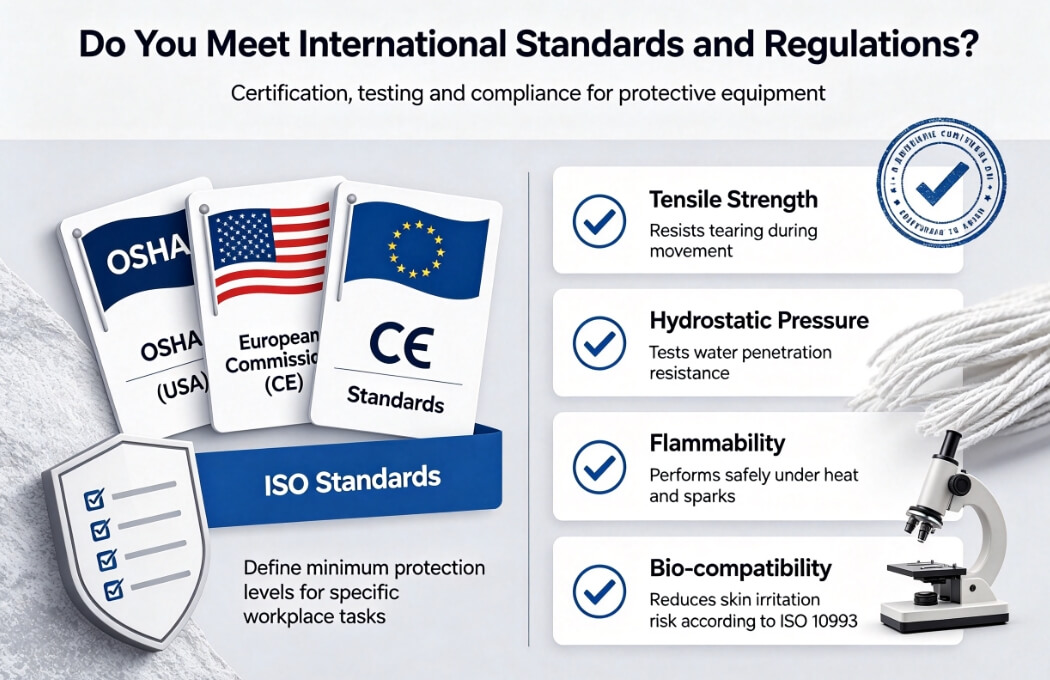
Another critical reason why you need safety equipment is to meet stringent legal and regulatory requirements. Regulatory bodies like OSHA (USA), the European Commission (CE), and various ISO standards dictate the minimum levels of protection required for specific tasks.
Using certified safety equipment ensures that the products have undergone rigorous testing for:
- Tensile Strength: Ensuring the material won’t tear during movement.
- Hydrostatic Pressure: Testing the fabric’s ability to resist water penetration.
- Flammability: Ensuring safety in environments with high heat or sparks.
- Bio-compatibility: Ensuring the materials do not cause skin irritation (ISO 10993).
Why Does Material Science Matter in PPE Manufacturing?
From a manufacturing standpoint, the question of “why” is often answered by the specific properties of the raw materials. Not all safety equipment is created equal. The efficacy of a face mask or a protective suit depends heavily on the consistency of the non-woven fabric.
For example, SMS (Spunbond-Meltblown-Spunbond) technology is widely used because the “Meltblown” layer acts as a high-density filter, while the “Spunbond” layers provide the strength. If a manufacturer produces their own films (such as PE or CPE), they can more tightly control the cost and quality, ensuring that the thickness and barrier properties are uniform across every batch.
Where is Safety Equipment Needed in Industrial Settings?
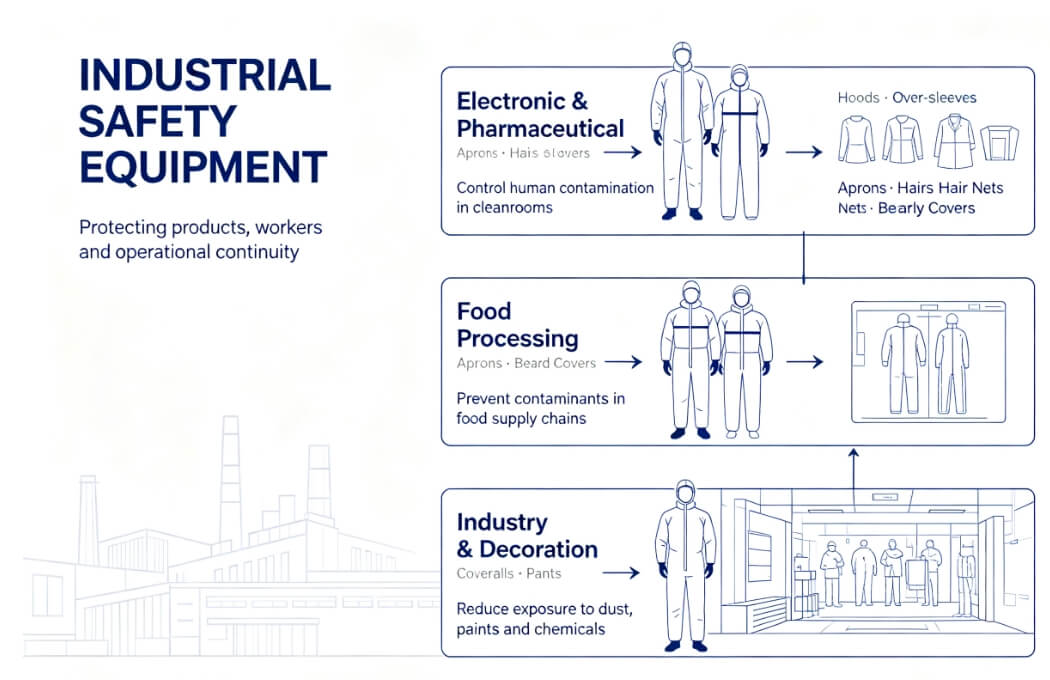
In industrial settings, the need for safety equipment shifts toward physical protection and contamination control.
- Electronic & Pharmaceutical: In cleanrooms, workers wear PPE such as hoods and over-sleeves to prevent human contamination from affecting products. Humans are the largest source of contamination (skin cells, hair, oils). Safety equipment maintains the sterile environment required for high-tech manufacturing.
- Food Processing: Here, the primary goal is food safety. Disposable aprons, hair nets, and beard covers prevent physical contaminants from entering the supply chain, which could lead to expensive recalls and brand damage.
- Industry & Decoration: Coveralls and pants protect workers from heavy dust, paints, and non-toxic chemicals, reducing the risk of skin diseases and respiratory issues.
What is the Economic Impact of Utilizing PPE?
While some view safety equipment as an overhead cost, it is actually an investment in operational efficiency.
- Reduced Downtime: Proper PPE prevents workplace injuries and illnesses, keeping the workforce active and reducing “sick days.”
- Lower Insurance Premiums: Organizations that demonstrate high safety standards and consistent PPE usage often benefit from lower insurance costs.
- Avoiding Fines: Non-compliance with safety regulations can result in massive financial penalties from government inspectors.
- Waste Reduction: High-quality disposable products that do not tear easily reduce the total volume of waste compared to low-quality products that require frequent changing.
Does PPE Improve Worker Confidence?
There is a significant psychological component to safety equipment. When workers are provided with high-quality, comfortable, and well-fitting PPE—such as soft Spunlace gowns or breathable SF coveralls—they feel more secure. This confidence leads to higher productivity and better focus on the task at hand, especially in high-stress environments like surgical theaters or hazardous chemical labs.
Conclusion
Why do you need safety equipment? It is the synthesis of biological necessity, material science, and regulatory compliance. Whether it is a simple CPE shoe cover in a clinic or a full-body SF coverall in an industrial plant, each piece of equipment serves as a vital link in the chain of safety. Investing in high-quality, certified protective products is the only way to ensure that the “last line of defense” remains unbreakable.
FAQ
1. What is the most important factor when choosing PPE?
The most important factor is the specific hazard of the environment. For fluid protection, SMS or PP+PE is preferred. For dry particulate protection in industrial settings, SF (microporous film) offers a better balance of breathability and barrier protection.
2. Why is disposable PPE preferred over reusable items?
Disposable PPE ensures a guaranteed level of sterility for every use. Reusable items can degrade after multiple wash cycles, and there is always a residual risk of cross-contamination if the laundering process is not 100% effective against specialized pathogens.
3. What do CE and ISO certifications signify for buyers?
CE certification indicates that the product meets European Union safety and health requirements. ISO 13485 is a specific quality management standard for medical device manufacturing, ensuring that the factory maintains consistent quality and traceability.
4. Can non-woven clothing protect against chemicals?
It depends on the type. Standard SBPP offers no chemical protection. However, laminated fabrics like PP+PE or SF film provide resistance to certain non-toxic liquid splashes. For heavy chemical exposure, specialized Type 3 or 4 chemical suits are required.
5. How does manufacturing experience impact PPE quality?
A manufacturer with over 10 years of experience has refined their production processes and stable supply chains. Manufacturing their own films (like PE or CPE) further allows for better quality consistency and cost-effectiveness for the buyer.
Reference Sources
WHO guidance on personal protective equipment for health.