
Blog
Disposable PPE vs Reusable PPE: A B2B Procurement Guide

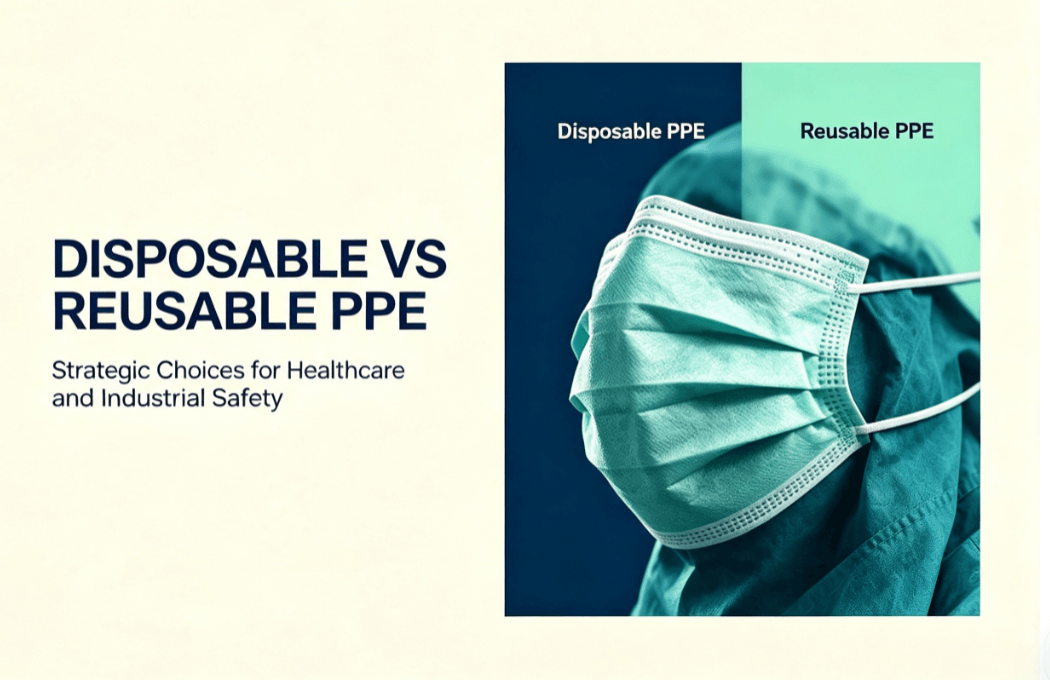
In the complex landscape of healthcare and industrial safety, the decision between disposable and reusable Personal Protective Equipment (PPE) is a critical strategic pivot. For procurement managers and infection control specialists, this choice impacts not only the facility’s operational budget but also the fundamental safety of personnel and the reliability of the supply chain.
As a leading manufacturer in the non-woven industry, Hubei Ruichen Protective Products Co., Ltd understands that this debate is not merely about price per unit. It involves a sophisticated evaluation of material integrity, sterilization logistics, and risk management. This guide provides a technical deep dive into the “Disposable PPE vs Reusable PPE” comparison to assist in data-driven decision-making.
Technical Material Differences and Barrier Integrity
The primary objective of PPE, whether it is an isolation gown or a surgical face mask, is to serve as a reliable barrier against pathogens and contaminants.
Disposable PPE:Material and BarrierIntegrity
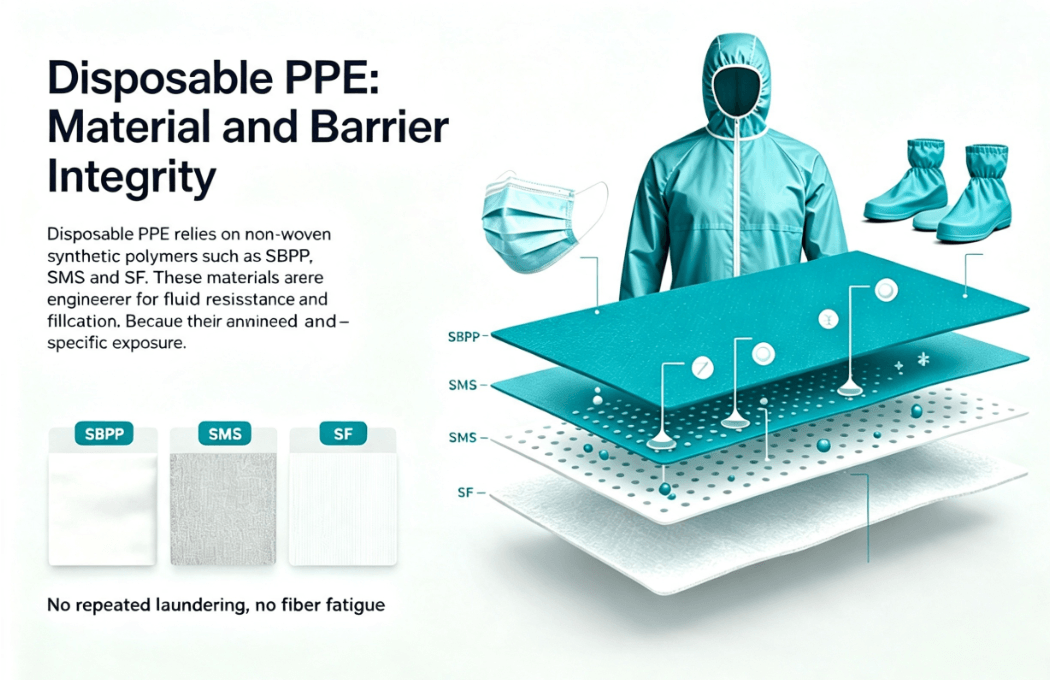
Disposable PPE is predominantly manufactured from non-woven synthetic polymers. Materials like Spunbonded Polypropylene (SBPP), SMS (Spunbond-Meltblown-Spunbond), and SF (Microporous film laminated) are engineered for high-performance fluid resistance and filtration. Because these products are used once and discarded, the barrier integrity is guaranteed for that specific encounter. There is no mechanical fatigue or chemical degradation involved.
Reusable PPE: Durability and Degradation
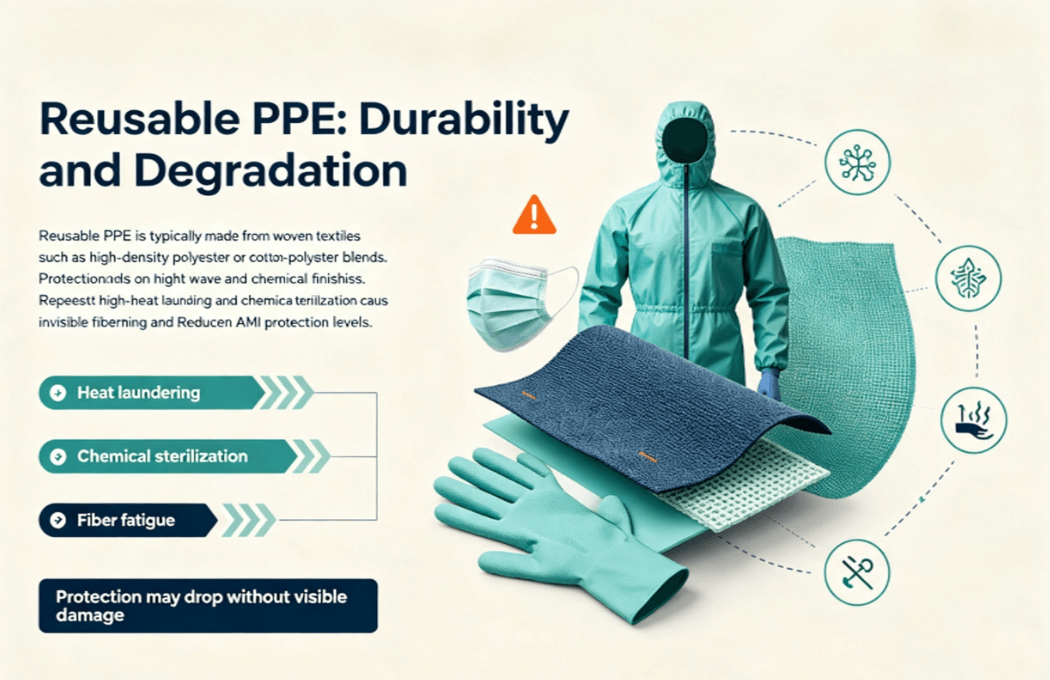
In contrast, reusable PPE is typically constructed from woven textiles, such as high-density polyester or cotton-polyester blends. While these materials are durable, they rely on a tight weave and chemical finishes to provide protection. Over time, the repeated cycles of high-heat laundering and chemical sterilization cause the fibers to expand or thin. This degradation is often invisible to the naked eye but can lead to a significant drop in AAMI (Association for the Advancement of Medical Instrumentation) protection levels.
Clinical Safety and Infection Prevention Standards
In high-risk environments like surgical suites or infectious disease wards, the margin for error is zero. The “single-use” nature of disposable PPE offers a distinct advantage in aseptic reliability.
Each disposable item is removed from a controlled package in a factory-clean or sterile state. This eliminates the risk of residual pathogens that may survive an imperfect laundering process in reusable items. Furthermore, the handling of soiled reusable PPE introduces an additional biohazard risk within the facility as contaminated garments must be transported, sorted, and washed.
With disposable solutions, the contaminant is trapped and removed from the facility’s active environment immediately after the task is completed. This “point-of-use” disposal significantly reduces the window for cross-contamination.
Comparison of Key Features
The following table summarizes the technical and operational differences between these two PPE strategies:
| Feature | Disposable PPE (Non-woven) | Reusable PPE (Woven) |
|---|---|---|
| Barrier Reliability | High; consistent for every use | Decreases after each laundry cycle |
| Sterilization Risk | None; single-chain of use | Risk of laundering/heat failure |
| Initial Unit Cost | Low | High |
| Total Cost of Ownership | Predictable and linear | High (laundry, energy, labor, repair) |
| Storage & Logistics | Higher storage volume needed | Complex laundry logistics required |
| Regulatory Tracking | Easy (batch/lot tracking) | Difficult (monitoring wash counts) |
Total Cost of Ownership (TCO) in B2B Procurement
A common misconception in institutional procurement is that reusable PPE is more cost-effective because it is used multiple times. However, a comprehensive Total Cost of Ownership (TCO) analysis often favors disposables.
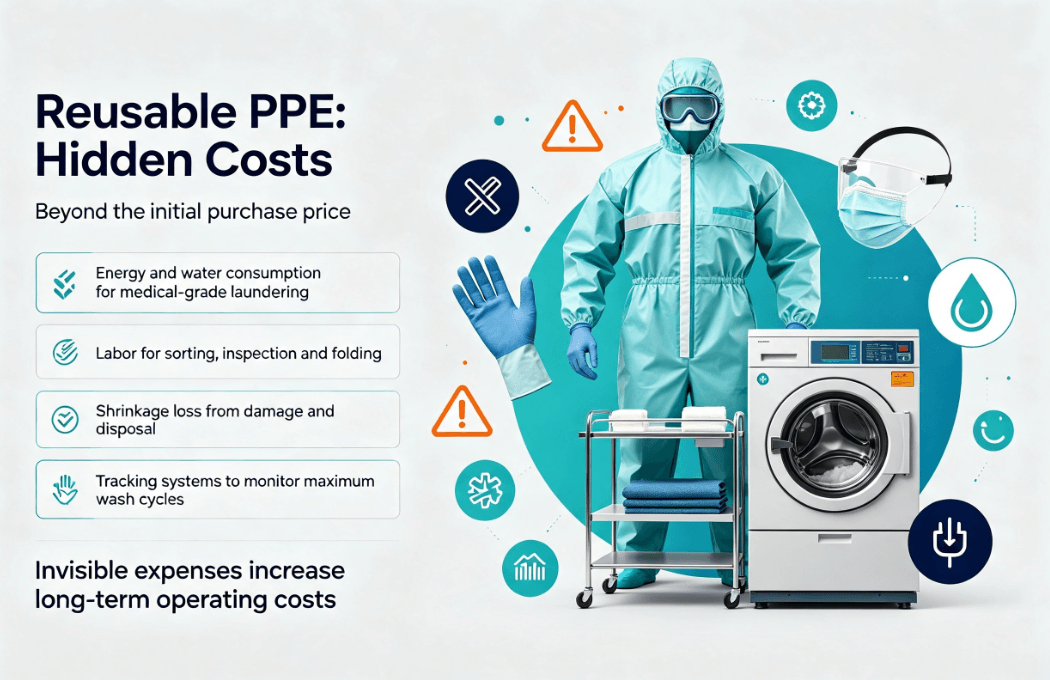
For reusable PPE, the “hidden” costs are substantial:
- Substantial energy and water consumption for medical-grade laundering.
- Labor costs for sorting, inspecting for holes, and folding.
- The expense of “shrinkage” refers to items that workers lose or damage beyond repair.
- The cost of tracking systems (like RFID tags) to ensure an item does not exceed its maximum validated wash cycles.
Disposable PPE offers a transparent and predictable cost model. At Hubei Ruichen, we further optimize this for our clients by producing our own PE and CPE films in-house. This vertical integration allows us to reduce manufacturing costs while maintaining high quality, passing those savings directly to bulk purchasers and distributors.
Application Scenarios and Decision Framework
The choice between these two formats often depends on the specific application and the facility’s infrastructure.
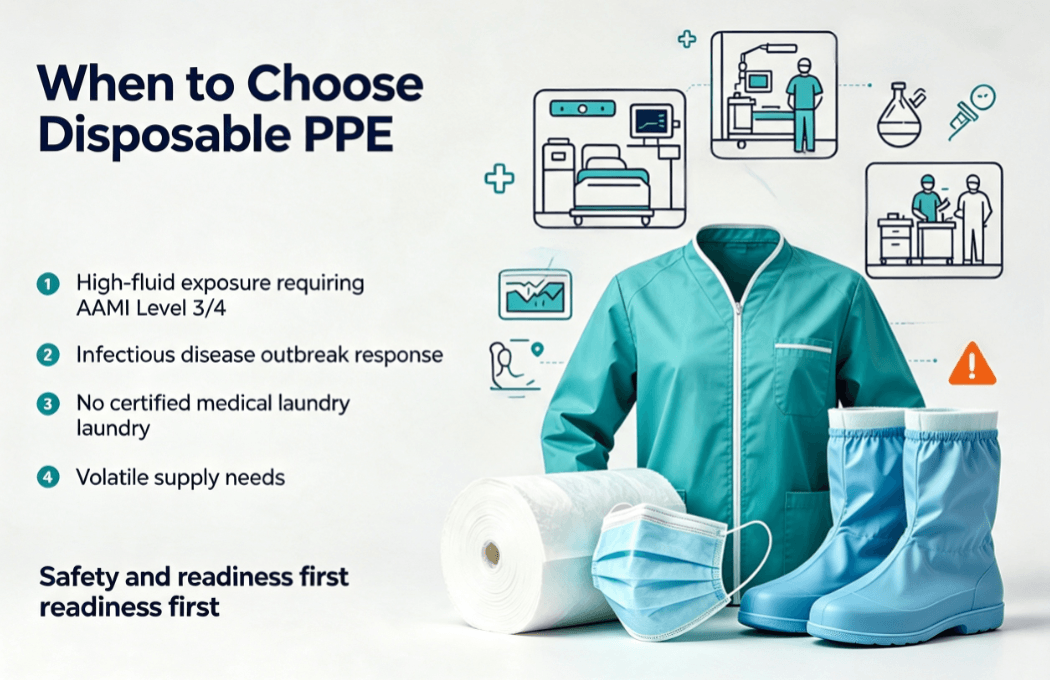
When to Prioritize Disposable PPE:
- In environments with heavy fluid exposure, such as surgery and emergency rooms, healthcare facilities require gowns that meet AAMI Level 3 or 4 protection standards.
- During outbreaks of highly infectious diseases, healthcare facilities should strengthen infection control measures to minimize cross-contamination risks.
- Facilities that lack the high-capital infrastructure required for a certified medical laundry.
- For volatile supply needs where the ability to quickly ramp up stock is essential.
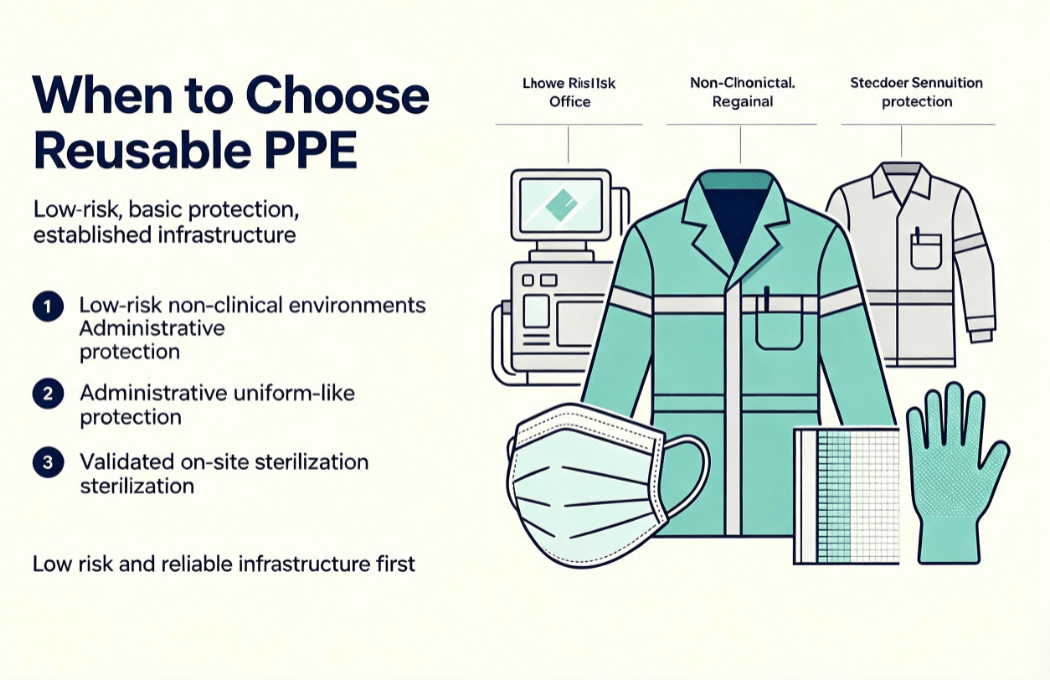
When to Consider Reusable PPE:
- In low-risk, non-clinical environments, workers typically need only basic protection against dust or minor scratches.
- In administrative areas where staff require a uniform-like barrier rather than medical-grade protection.
Facilities with existing, highly efficient, and validated on-site sterilization capabilities.
Sustainability and Environmental Factors
The environmental impact of PPE is a growing concern for modern healthcare facilities. While reusable PPE reduces solid waste, it places a heavy burden on water and energy resources.
Disposable PPE technology is evolving toward sustainability through the use of recyclable non-woven materials. Polypropylene (PP), the core material for most of our products, is a thermoplastic that can be recycled in specialized programs. By implementing closed-loop recycling for non-contaminated PPE, facilities can enjoy the safety of disposables while significantly reducing their landfill footprint.
Conclusion
The debate over disposable vs. reusable PPE is ultimately a matter of risk management and operational efficiency. While reusables may seem traditional, the consistent barrier integrity, superior infection control, and simplified logistics of disposable PPE make it the preferred choice for modern, high-standard healthcare and industrial facilities.
Hubei Ruichen Protective Products Co., Ltd provides a comprehensive range of disposable solutions, from SMS isolation gowns to SF microporous coveralls. Our 10+ years of manufacturing expertise and ISO 13485 certification ensure that every product we export meets the rigorous safety demands of the global market.
FAQ
1. How do I verify the barrier level of disposable PPE?
Procurement managers should request documentation showing the product has been tested according to AAMI PB70 or EN 14126 standards. These tests measure fluid resistance and hydrostatic pressure to ensure the material performs under stress.
2. Is disposable PPE more expensive for long-term use?
While the recurring purchase frequency is higher, the absence of laundry, energy, labor, and repair costs often makes the total cost of ownership for disposables lower than reusables over a fiscal year.
3. What materials provide the best fluid protection?
For maximum protection, look for PP+PE (Polypropylene with PE film lamination) or SF (Microporous film laminated) materials. These provide a non-permeable barrier that is superior to standard woven textiles.
4. How should disposable PPE be stored to maintain its quality?
Disposable non-woven products should be stored in a cool, dry environment away from direct sunlight. Under these conditions, products typically maintain a shelf life of 3 to 5 years without degradation.
5. Can I customize disposable PPE for my specific facility needs?
Yes, as an OEM/ODM manufacturer, we can customize material weight, dimensions, and features like knitted cuffs or thumb loops to meet the specific safety protocols of your organization.