

Blog
Guide to Disposable PPE: Materials, Standards & Types

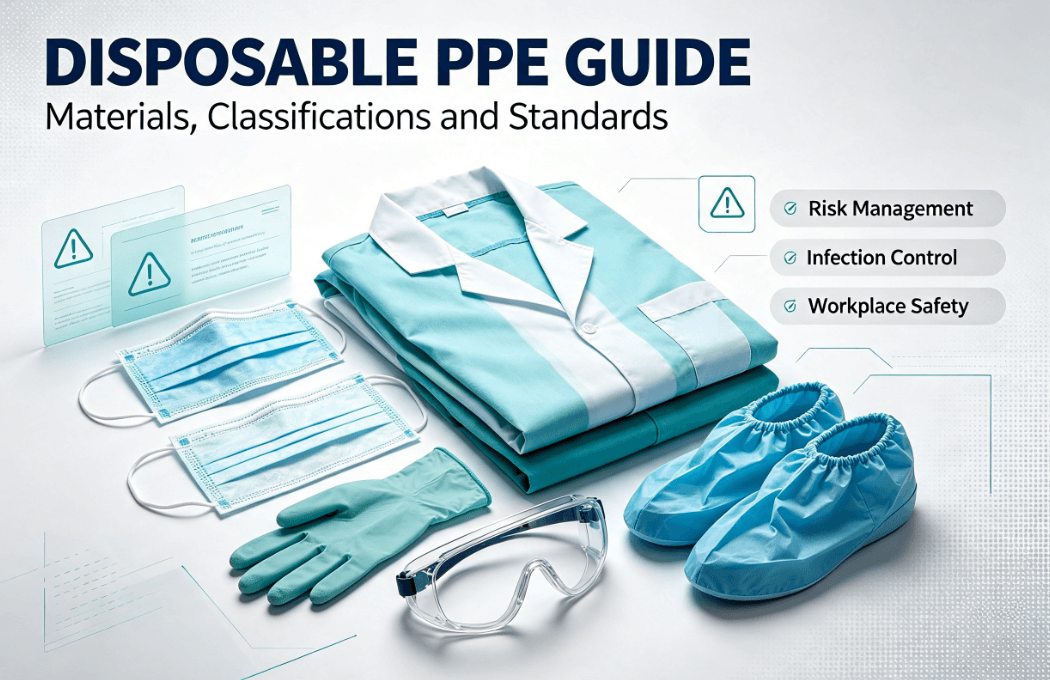
The global landscape of workplace safety and infection control has undergone a radical transformation. At the center of this shift are disposable PPE products—single-use garments and accessories designed to create a physical barrier between the wearer and potential hazards.
For procurement managers, hospital administrators, and safety officers, understanding the technical nuances of these products is no longer optional. It is a critical component of risk management. This guide provides a technical deep dive into the materials, classifications, and standards that define modern disposable personal protective equipment.
Defining Disposable PPE in Professional Environments
Disposable Personal Protective Equipment (PPE) refers to specialized clothing or equipment worn by individuals to minimize exposure to biological, chemical, or physical hazards. Unlike reusable gear, disposable PPE is designed for single-use or single-session application, after which it is safely discarded.
The primary objective of disposable PPE is to prevent cross-contamination. In medical settings, this means protecting both the healthcare provider and the patient from pathogens. In industrial settings, it involves shielding workers from dust, chemicals, or particulate matter.
The transition from reusable textiles to disposable non-wovens has been driven by three factors:
- Infection Control: Eliminating the risk of laundry-related failures.
- Barrier Consistency: New disposable garments offer predictable fluid resistance.
- Cost-Efficiency: Reducing the overhead of sterilization and maintenance.
The Science of Materials: What Makes PPE “Protective”?
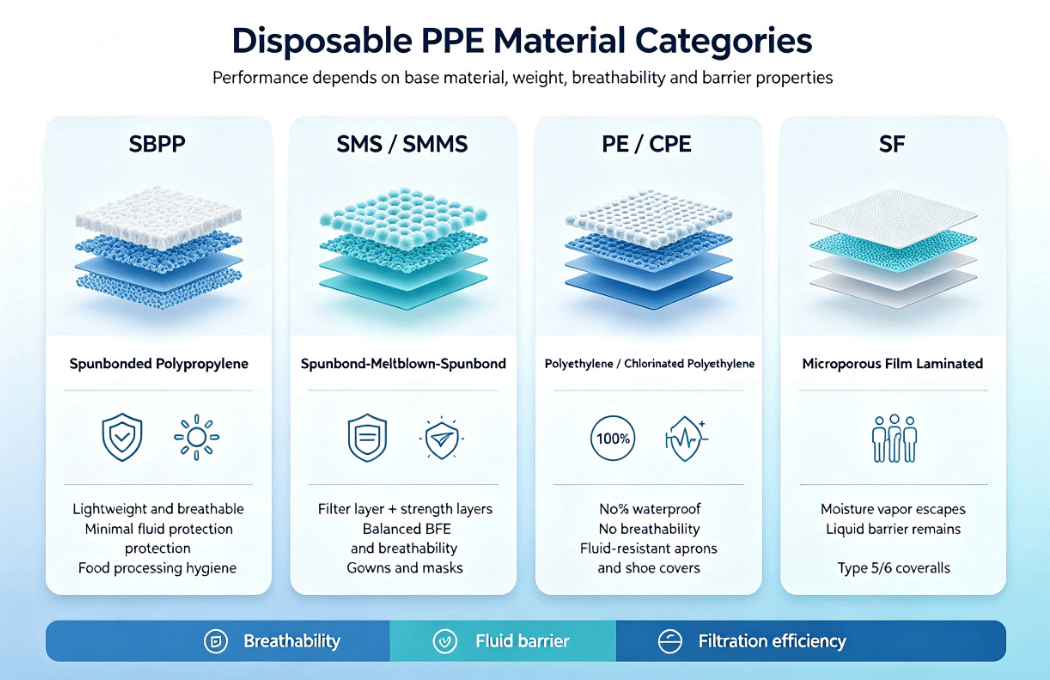
The performance of any disposable PPE product is dictated by its base material. As manufacturers, we categorize these materials based on their weight (GSM), breathability, and barrier properties.
1. Spunbonded Polypropylene (SBPP)
This is the most basic non-woven fabric. It is highly breathable and lightweight. While it offers minimal fluid protection, it is ideal for basic hygiene, such as hairnets or beard covers in food processing environments.
2. SMS and SMMS (Spunbond-Meltblown-Spunbond)
SMS is a multi-layer fabric. The “Meltblown” layer acts as a filter, while the “Spunbond” layers provide structural strength. This material is the industry standard for isolation gowns and face masks due to its balance of breathability and bacterial filtration efficiency (BFE).
3. PE/CPE (Polyethylene / Chlorinated Polyethylene)
These are plastic-based materials. They are 100% waterproof but offer zero breathability. CPE is commonly used for high-fluid-exposure tasks, such as thumb-loop aprons or heavy-duty shoe covers.
4. SF (Microporous Film Laminated)
SF material consists of a spunbond polypropylene laminated with a microporous film. This creates a “breathable membrane” that allows moisture vapor to escape while blocking liquid molecules. It is the preferred material for Type 5/6 protective coveralls used in chemical or pharmaceutical labs.
| Material Type | Fluid Resistance | Breathability | Common Application |
|---|---|---|---|
| SBPP | Low | Very High | Hairnets, Visitor Coats |
| SMS | Moderate | High | Isolation Gowns, Masks |
| PE/CPE | Absolute | None | Aprons, Shoe Covers |
| SF (Microporous) | High | Moderate | Protective Coveralls |
Essential Categories of Disposable PPE Products
A “head-to-toe” protection strategy requires a combination of different PPE categories, each serving a specific anatomical defense purpose.
Head and Face Protection
- Disposable Hairnets and Bouffant Caps: Essential for preventing hair shed in sterile environments.
- Face Masks: Categorized by filtration levels (e.g., Type I, II, or IIR). Type IIR masks are fluid-resistant, making them standard for surgical settings.
- Disposable Hoods: Used in high-risk industrial or cleanroom environments to provide 360-degree coverage of the head and neck.
Body Protection
- Isolation Gowns: These are the workhorses of the medical industry. They are designed to protect the torso and arms from fluid splashes.
- Coveralls: Unlike gowns, coveralls provide full-body coverage. They are typically used in industrial, decontamination, or high-pathogen environments (like Ebola or COVID-19 wards).
- Lab Coats: Used primarily in clinical or electronic assembly settings for light protection and anti-static purposes.
Extremity Protection
- Over Sleeves: Often paired with aprons to provide arm protection without requiring a full gown.
- Shoe and Boot Covers: Critical for floor hygiene. High-quality boot covers often feature anti-skid soles to prevent workplace accidents.
Understanding International Standards and Ratings
When evaluating disposable PPE products, “quality” must be quantified by international standards. A product without certification is a liability.
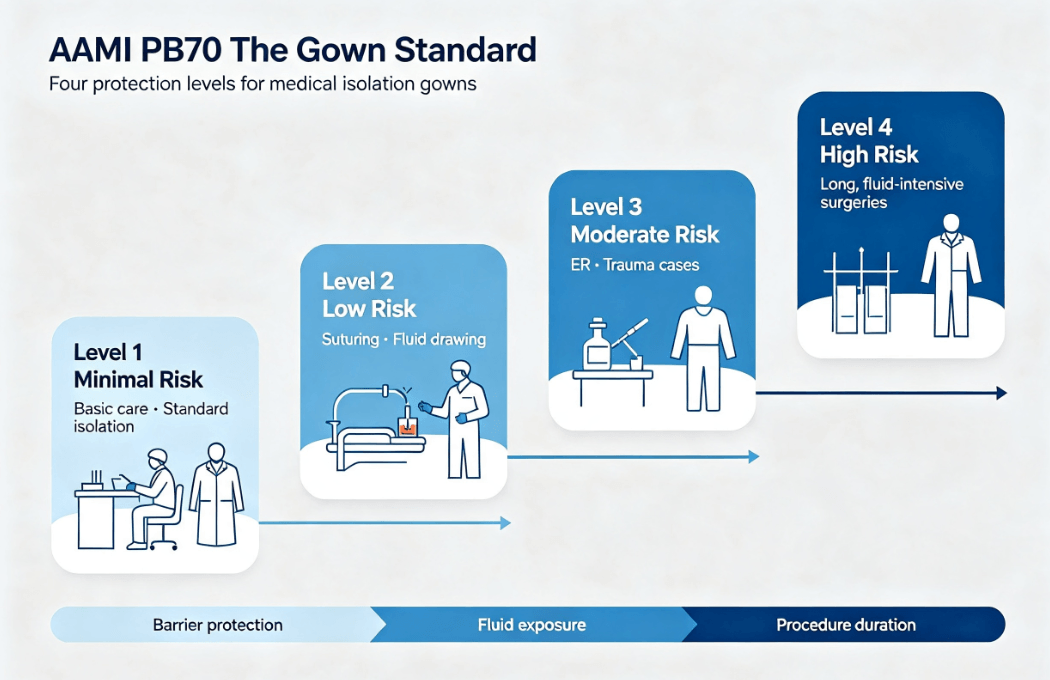
AAMI PB70 (The Gown Standard)
The Association for the Advancement of Medical Instrumentation (AAMI) classifies gowns into four levels:
- Level 1: Minimal risk (Basic care, standard isolation).
- Level 2: Low risk (Suturing, fluid drawing).
- Level 3: Moderate risk (ER, trauma cases).
- Level 4: High risk (Long, fluid-intensive surgeries).
EN Standards for Coveralls
European standards classify protective clothing into “Types”:
- Type 5 (EN ISO 13982-1): Protection against hazardous dry particles.
- Type 6 (EN 13034): Protection against light spray/splashes of liquid chemicals.
- EN 14126: The standard for protection against biological agents and infectious diseases.
Technical Considerations for PPE Selection
Choosing the right PPE requires a risk-based approach. Procurement managers should ask three technical questions:
- What is the “Strike-Through” Risk?
If the environment involves high-pressure fluid sprays, a standard SMS gown may not provide sufficient protection. In these conditions, workers should choose a PP+PE laminated gown or an AAMI Level 4 gown, depending on the specific exposure risk. - What is the Wear Duration?
Heat stress is a real concern. If a worker needs to wear PPE for up to 8 hours, microporous (SF) materials can offer better breathability than PE by allowing water vapor to escape and helping reduce heat buildup. - Is Material Consistency Verified?
Vertical integration in manufacturing—where a factory produces its own PE film or non-woven fabric—is a significant trust signal. It ensures that the “Type 5” coverall you buy today has the same GSM and barrier thickness as the one you bought six months ago.
Conclusion
Disposable PPE products are engineered safety tools. From the breathability of Spunlace to the absolute barrier of CPE, each material has a dedicated role in the ecosystem of protection. By understanding the material science and international standards, procurement professionals can ensure they are not just buying a product, but investing in the safety and health of their workforce. Maintaining high standards in manufacturing remains the best way to manage risk and maintain operational continuity.
FAQ
1. What is the main difference between an isolation gown and a coverall?
An isolation gown protects the front and arms but usually has an open back for breathability. A coverall provides 360-degree protection, including the back, head, and often the feet, and is used for higher-risk hazardous exposures.
2. Can I reuse disposable PPE if it does not look dirty?
No. Disposable PPE is designed for single-use. The structural integrity of the non-woven fibers degrades after use, and microscopic pathogens may be present even if the garment appears clean.
3. What does GSM mean in PPE specifications?
GSM stands for Grams per Square Meter. It measures the density and weight of the fabric. Generally, a higher GSM indicates a thicker, more durable material, though it does not always correlate directly with filtration efficiency.
4. Is SMS fabric waterproof?
SMS is fluid-resistant (it repels droplets), but it is not 100% waterproof under pressure. For absolute waterproof requirements, a PE-coated or laminated material (PP+PE) is necessary.
5. What certifications should I look for in a PPE manufacturer?
For medical use, look for ISO 13485 (Medical Device Quality Management) and CE certification. For industrial use, check for specific EN Type 5/6 ratings and ISO 9001.
Reference Sources
CDC official guidelines for Personal Protective Equipment
WHO technical specifications for PPE in healthcare settings