
Blog
What Is Coverall PPE? Complete Guide

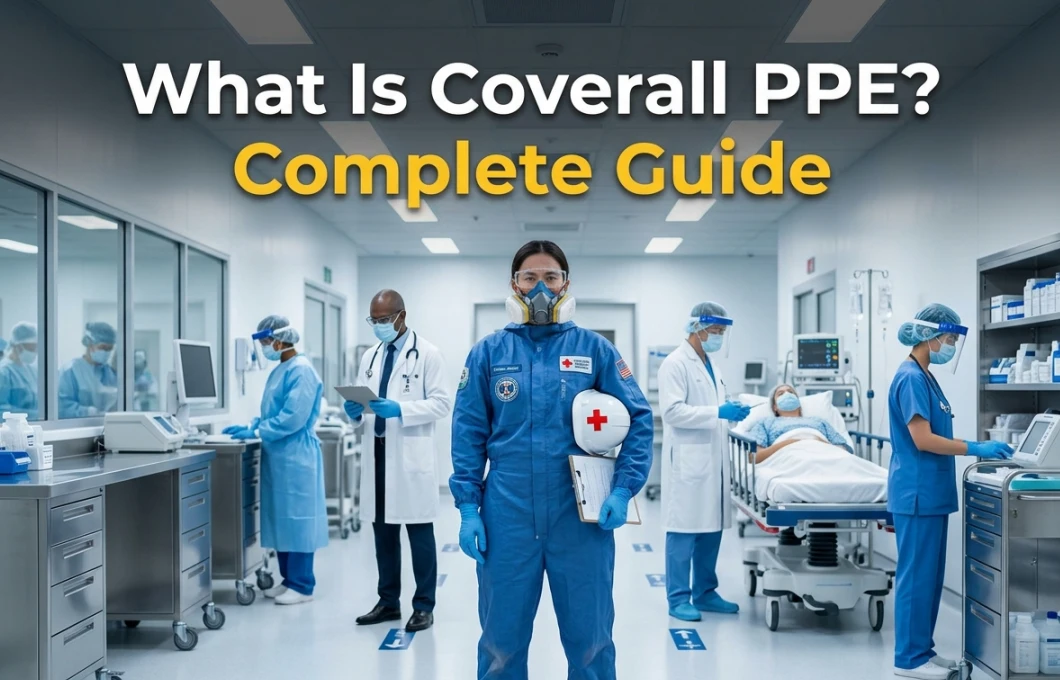
Coverall PPE is a type of protective clothing designed to cover most or all of the body, helping reduce contact with dust, dirt, particles, and certain workplace contaminants. Depending on its material, construction, and tested performance, a coverall may suit environments such as healthcare facilities, laboratories, food processing plants, pharmaceutical production areas, and industrial workplaces. However, not every coverall provides the same level of protection. Understanding its material, intended use, and applicable standards is essential before putting it into service.
The term coverall PPE generally describes one-piece protective garments that cover the torso, arms, and legs. Some designs include an attached hood, elastic cuffs, ankle closures, or a front zipper. Disposable versions commonly use nonwoven fabrics or film-laminated materials, while other workplace coveralls may use woven textiles or specialized protective materials.
For anyone looking for a practical disposable coverall guide, the most useful starting point is the difference between the garment’s appearance and its actual protective performance. Two coveralls may look almost identical but behave differently when exposed to particles, liquid splashes, or other hazards.
What Is a Coverall PPE and How Does It Work?
A protective coverall creates a physical barrier between the wearer’s clothing or skin and selected workplace contaminants. Its effectiveness depends on the fabric, seam construction, closure design, garment fit, and the hazard it was tested to address.
Disposable coveralls often appear in environments where workers need a fresh garment for a particular task or shift. They can help keep dust and other contaminants from reaching personal clothing, or reduce the transfer of particles from clothing into controlled work areas. The exact purpose varies by product.
Common coverall design features include:
- Full-body coverage: One garment covers the torso, arms, and legs.
- Front closure: A zipper or another fastening system allows the wearer to put on and remove the garment.
- Elastic or fitted openings: Cuffs, ankles, and sometimes the hood help improve the fit around exposed areas.
- Optional hood: Some models cover the head as well as the body, although the face and respiratory system may require separate protection.
- Material-specific barriers: Different fabrics and laminates offer different levels of resistance to particles, liquid penetration, and other exposures.
These features work together, but no single design detail proves that a coverall is suitable for every hazard. For example, an elastic cuff may improve fit without establishing chemical resistance. Similarly, a hood does not automatically make a garment suitable for biological hazards.
Coveralls also differ from other protective clothing categories. Isolation gowns generally focus on covering the torso and arms, with coverage and barrier performance determined by their design and intended use. Surgical gowns are designed for specific surgical applications and applicable performance requirements. Protective coveralls offer broader body coverage, but they do not automatically replace either type of medical gown.
Types of Coverall Protection: Materials and Their Differences
The types of coverall protection available on the market reflect differences in fabric structure, surface treatment, garment design, and testing. Material names are a useful starting point, but they should not be treated as protection classifications on their own.
1. PP Nonwoven Coveralls
Polypropylene, commonly shortened to PP, is widely used in disposable nonwoven protective clothing. Spunbond PP fabric consists of continuous polypropylene filaments bonded into a fabric structure.
This material is commonly used for lightweight garments intended for general hygiene, dust control, and low-risk work environments. Its performance depends on fabric weight, construction, seams, and the conditions in which it is used.
A representative example is the White Disposable PP Non-Woven Medical Protective Suit. It provides a practical reference when discussing basic PP protective clothing and the role of nonwoven fabric in disposable garment design.
PP garments should not automatically be described as waterproof or resistant to hazardous chemicals. Untreated PP nonwoven fabric may allow liquids to pass through, depending on its construction and exposure conditions.
2. PP+PE Laminated Coveralls
PP+PE protective clothing combines a polypropylene nonwoven substrate with a polyethylene film layer. The PP layer provides the textile-like structure, while the PE film can improve resistance to liquid penetration.
This construction may suit tasks where workers need greater resistance to selected liquid splashes than a basic nonwoven garment provides. Actual performance still depends on film thickness, seams, closures, and product testing.
The White Disposable PP+PE Non-Woven Medical Protective Suit is an example of this material combination.
A laminated garment is not automatically suitable for every chemical exposure. Chemical compatibility, exposure duration, concentration, and the manufacturer’s test results all matter. Users should verify the relevant documentation before assigning the garment to a hazardous task.
3. SMS Nonwoven Coveralls
SMS stands for spunbond-meltblown-spunbond. The material combines two spunbond layers with a meltblown layer between them. This layered structure is used in disposable protective products because it can balance fabric strength, airflow, and selected barrier properties.
SMS garments may be suitable for certain healthcare, laboratory, and controlled-work environments, depending on the product specification. However, the term SMS alone does not establish a particular fluid-resistance level or compliance with a medical or industrial protection standard.
The White Disposable SMS Non-Woven Medical Protective Suit illustrates this type of nonwoven construction.
When comparing SMS with PP or PP+PE, consider the intended application rather than assuming that one material is universally superior. Fabric weight, layer structure, garment assembly, and verified test results can all affect performance.
4. Microporous Film Coveralls
Microporous film protective clothing uses a film layer containing microscopic pores, usually combined with a supporting nonwoven fabric. The material is designed to balance certain forms of liquid and particle resistance with water-vapor transmission.
This construction may be relevant to industrial maintenance, selected contamination-control tasks, and other environments where the specified barrier properties match the exposure. It should not be assumed to protect against every liquid, chemical, or biological agent.
The Disposable Microporous Film Protective Coveralls provide an example for readers comparing laminated and nonwoven protective garments.
5. Liquid-Resistant Coveralls
Liquid-resistant coveralls are intended to reduce penetration from specified liquid exposures. Their suitability depends on the tested garment, including its seams, closure, fabric, and the type of liquid involved.
The Disposable Liquid-Resistant Protective Coveralls are relevant when discussing this requirement.
Liquid resistance and chemical resistance are not interchangeable. A garment tested against water or a limited range of liquid splashes may not protect against solvents, concentrated cleaning agents, or other hazardous chemicals. Always check the product’s test data and compatibility information against the actual workplace hazard.
Quick Comparison of Common Coverall Materials
| Material or design | General characteristics | Potential applications | Important limitation |
|---|---|---|---|
| PP nonwoven | Lightweight nonwoven structure | General hygiene, dust-control tasks | Liquid resistance depends on construction |
| PP+PE laminated | Nonwoven fabric with a PE film layer | Tasks requiring resistance to specified liquid splashes | Does not establish universal chemical resistance |
| SMS nonwoven | Spunbond and meltblown layered structure | Selected healthcare and controlled-work environments | Performance varies by specification and testing |
| Microporous film | Film laminate designed for a balance of barrier and vapor transmission properties | Selected industrial and contamination-control tasks | Not suitable for every chemical or exposure |
| Liquid-resistant coverall | Designed for specified liquid exposure conditions | Tasks involving tested liquid-splash hazards | Verify the actual liquid and protection requirements |
Coverall PPE Uses Across Different Work Environments
Coverall PPE uses vary with the workplace, the contaminants present, and the level of protection required. A garment that works well for general dust control may be unsuitable for a task involving hazardous chemicals or infectious materials.
Healthcare and Laboratory Settings
Disposable protective coveralls may be used for selected support tasks where body and clothing coverage helps control contamination. Their suitability depends on the activity, the expected exposure, the facility’s infection-prevention procedures, and the garment’s documented performance.
Coveralls are not a universal substitute for medical isolation gowns or surgical gowns. Healthcare teams should follow the relevant risk assessment and institutional protocols when determining which garment category is appropriate.
Gloves, eye protection, respiratory protection, and other PPE may also be necessary. The complete protective ensemble should match the task rather than relying on the coverall alone.
Pharmaceutical Manufacturing and Controlled Areas
Pharmaceutical production can involve requirements for both worker protection and contamination control. In these environments, garment selection may depend on the cleanroom classification, product sensitivity, process requirements, and site-specific gowning procedures.
A coverall’s material is only one part of the decision. Particle shedding, garment cleanliness, seam construction, fit, and compatibility with the site’s gowning system can also matter.
Food Processing
Food-processing facilities may use disposable coveralls to help manage clothing-related contamination and maintain workplace hygiene. The required garment depends on the process, cleaning practices, food-safety procedures, and any additional hazards workers face.
A garment suitable for routine hygiene tasks should not automatically be used where heat, sharp equipment, or chemical cleaning agents introduce different risks.
Industrial and Maintenance Work
Industrial workplaces may require coveralls for dust, dirt, fibers, or selected liquid exposures. Workers handling hazardous substances need a more specific assessment of the material and the garment’s verified protection performance.
For example, a lightweight PP garment intended for general contamination control should not be treated as chemical protective clothing merely because it covers the body. The relevant hazard assessment determines whether disposable nonwoven clothing is appropriate at all.
Cleanrooms and Electronics Manufacturing
Cleanroom garments help control particles released from workers’ clothing and bodies. Their suitability depends on the cleanliness requirements of the controlled environment, the garment’s particle characteristics, and the facility’s procedures.
For a garment designed specifically for this setting, see Disposable Cleanroom Protective Coveralls. The product’s documented characteristics should be checked against the facility’s requirements before use.
Cleanroom clothing is not automatically chemical PPE, and a garment that reduces particle contamination may still be unsuitable for liquid or biological hazards.
How to Understand Coverall Protection Requirements
Before using a disposable coverall, identify the hazard it needs to address. This step is more useful than choosing a garment based on color, thickness, or a broad product name.
A practical assessment usually covers the following points:
- Identify the exposure. Determine whether the task involves dust, non-hazardous liquids, biological materials, chemicals, or another workplace hazard.
- Define the required protection. Establish whether the garment needs to provide particle resistance, liquid-splash resistance, chemical protection, or contamination control.
- Check the material and construction. Review the fabric, film layer, seams, closures, cuffs, and hood design.
- Review test reports and standards. Confirm that the product documentation supports the intended application and the requirements of the relevant market.
- Assess the complete PPE system. Determine whether gloves, goggles, face protection, respirators, or other equipment are also necessary.
- Plan use and disposal. Follow workplace procedures for donning, removal, disposal, and hand hygiene to reduce the risk of transferring contaminants.
Standards and certification requirements depend on the product category and intended use. In Europe, for example, certain protective coveralls fall under the EU Personal Protective Equipment Regulation and applicable garment standards. Other markets may have different requirements. Buyers should verify the specific conformity documents and test reports rather than relying on a general statement that a product is “medical” or “protective.”
Garment fit also deserves attention. A coverall that is too tight may restrict movement or stress the seams, while an excessively loose garment may interfere with the task. The chosen size and design should support the required movements without compromising the intended coverage.
For organizations managing recurring use, written procedures can help maintain consistency. Staff should understand which garment is assigned to each task, when it needs replacement, and how it should be removed after use.
Choosing the Right Disposable Coverall for the Task
A disposable coverall should match the exposure, work process, and required level of protection. There is no single material that suits every environment.
Use these questions as a starting point:
- What contaminant or hazard will the garment encounter?
- Is the main requirement general hygiene, particle control, liquid resistance, or protection against a specific hazardous substance?
- Does the task require a hood, elastic cuffs, or another design feature?
- Which standards, test reports, or conformity documents must the garment meet?
- Will the garment be worn briefly, throughout a shift, or as part of a controlled-area gowning procedure?
- What disposal procedure applies after use?
For bulk users, consistency between production batches may also matter. Product specifications should clearly identify the material, design, size range, packaging configuration, and any agreed testing requirements. Where customization is required, buyers should confirm that changes to fabric, seams, closures, or sizing do not invalidate the performance evidence relevant to the intended use.
The full Protective Clothing product category provides a starting point for exploring different garment designs. The product page and its supporting documentation should then be reviewed to determine whether a particular model meets the task’s requirements.
A clear specification makes the decision easier for both end users and purchasing teams. It also helps manufacturers understand what the garment must do, which tests may be relevant, and what information customers need before placing an order.
Conclusion
Coverall PPE refers to protective garments that cover most or all of the body, but the term does not describe one universal level of protection. PP, PP+PE, SMS, and microporous film constructions have different characteristics, and each must be evaluated against its intended application.
The most reliable approach is to identify the workplace hazard, review the garment’s material and design, and verify its documented performance. A disposable coverall that suits general hygiene or dust-control work may not be appropriate for chemical exposure, infectious hazards, or a controlled cleanroom process.
Understanding these differences helps workplaces assign PPE more accurately and gives buyers a clearer basis for comparing products. The right garment is the one whose tested performance and design match the actual task.
FAQ
What is a coverall PPE used for?
A coverall is used to cover the torso, arms, and legs, helping reduce contact with specified workplace contaminants. Its exact use depends on the material, design, tested performance, and workplace hazard.
What are the main types of disposable coveralls?
Common types include PP nonwoven, PP+PE laminated, SMS nonwoven, microporous film, and liquid-resistant coveralls. These categories describe different materials or intended functions, not interchangeable protection levels.
What is the difference between PP and PP+PE coveralls?
PP coveralls use polypropylene nonwoven fabric. PP+PE coveralls add a polyethylene film layer, which can improve resistance to specified liquid penetration. Actual performance depends on product construction and testing.
Are SMS coveralls waterproof?
Not necessarily. SMS is a layered nonwoven material, and the term alone does not establish waterproof performance. Check the specific garment’s test results and product documentation.
Can disposable coveralls protect against chemicals?
Only when the garment is suitable for the particular chemical and exposure conditions. General disposable coveralls should not be assumed to protect against hazardous chemicals without supporting compatibility and performance data.
Are coveralls the same as isolation gowns?
No. Coveralls generally provide broader body coverage, while isolation gowns have a different design and application. The appropriate garment depends on the task, expected exposure, and applicable requirements.
Can coveralls be used in cleanrooms?
Some coveralls are designed for cleanroom environments. Their suitability depends on the facility’s cleanliness requirements, garment cleanliness, particle characteristics, and gowning procedures.
What should buyers check before ordering disposable coveralls in bulk?
Buyers should confirm the intended application, material, size range, garment design, packaging, relevant test reports, applicable conformity documents, and any customization requirements. These details help ensure that the selected product matches the workplace specification.