
Blog
What Is a Hospital Gown? Hospital Gown vs Patient Gown

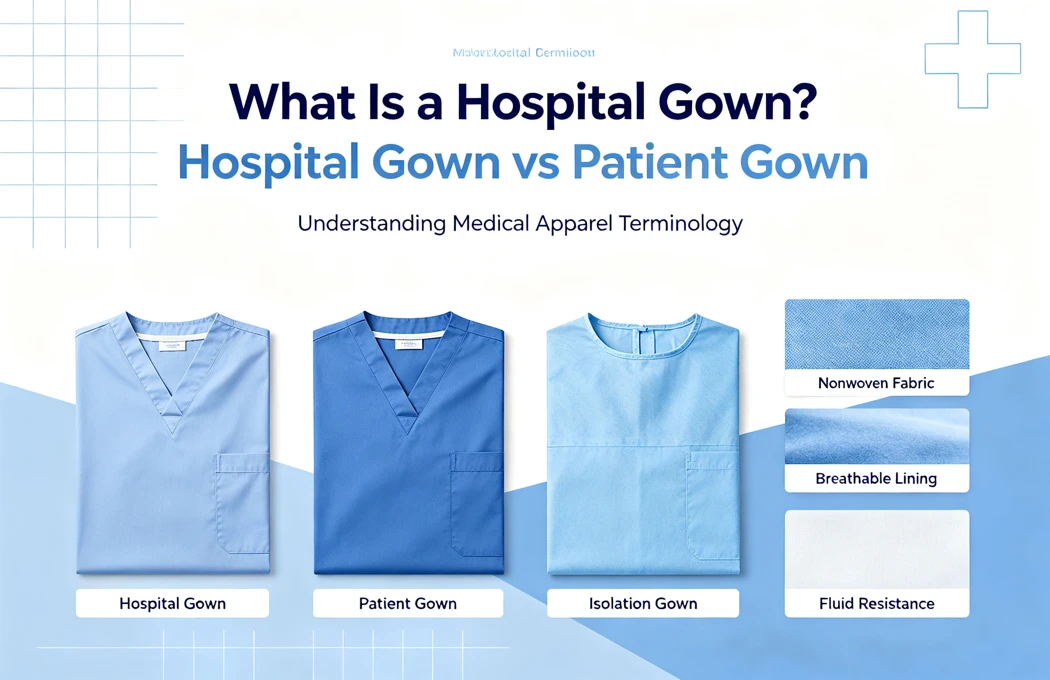
Healthcare facilities use different types of garments to support patient care, clinical access, hygiene, and staff protection. One of the most familiar examples is the hospital gown, which is commonly worn by patients during examinations, treatment, procedures, and hospital stays.
However, terminology in the medical apparel industry can sometimes be confusing. People may use terms such as hospital gown, patient gown, exam gown, or Johnny gown to describe similar types of patient clothing.
Understanding the terminology is useful for both healthcare professionals and medical procurement teams. It helps buyers identify the right product, compare materials, and distinguish patient apparel from protective gowns designed for healthcare workers.
This guide explains what a hospital gown is called, how a hospital gown differs from a patient gown, which materials are commonly used for disposable patient apparel, and how these garments differ from isolation gowns.
What Are Hospital Clothes for Patients Called?
If you have ever wondered what is the hospital gown called, the answer depends somewhat on the healthcare context.
One of the most common terms used for clothing worn by patients is patient gown. The term describes apparel designed for people receiving medical care. Patient gowns provide coverage and modesty while allowing healthcare professionals convenient access during examinations and treatment.
When people ask what hospital clothes for patients are called, they may be referring to the same type of garment.
Common terms include:
- Patient Gown: A common term used by medical suppliers, manufacturers, and healthcare facilities.
- Hospital Gown: A widely used general term for clothing worn by patients in hospitals and other healthcare settings.
- Exam Gown: A term frequently used for patient clothing in outpatient clinics, diagnostic centers, and examination settings.
- Johnny Gown: A colloquial term used in some English-speaking regions, particularly in North America.
- Hospital Apparel: A broader term that may include patient gowns, patient pants, and other healthcare clothing.
For procurement teams, using a specific product term can make purchasing and inventory management easier. It can also help distinguish patient apparel from protective equipment worn by healthcare personnel.
Hospital Gown vs Patient Gown: What Is the Difference?
The terms hospital gown and patient gown are often used interchangeably when referring to clothing worn by patients.
The main difference is therefore usually one of terminology and context rather than two completely separate product categories.
“Hospital gown” is a broad and commonly understood expression. “Patient gown” is more specific when the garment is intended for a person receiving medical care.
The term “hospital gown” can also appear in broader discussions of healthcare garments. However, protective garments worn by healthcare workers are generally described separately as isolation gowns or surgical gowns.
| Feature | Hospital Gown | Patient Gown |
|---|---|---|
| Common meaning | Broad term for garments used in healthcare settings | Specific term for clothing intended for patients |
| Primary user | Usually patients, depending on context | Patients and outpatients |
| Main purpose | Depends on the specific garment | Modesty, comfort, hygiene, and clinical access |
| Typical design | Varies according to application | Open-back, ties, snaps, or other easy-access designs |
| Material | Depends on intended use | PP nonwoven, SMS, cotton, or blended fabrics |
| Protective function | Depends on the product type | Generally intended as patient apparel rather than staff PPE |
The distinction is important during procurement. A facility purchasing patient clothing should focus on comfort, coverage, sizing, accessibility, and material suitability. A facility purchasing protective apparel for healthcare personnel needs to evaluate the required barrier performance and applicable product standards.
For facilities comparing patient clothing options, the patient gown category provides examples of disposable patient-gown designs and material options.
Hospital Gown vs Isolation Gown
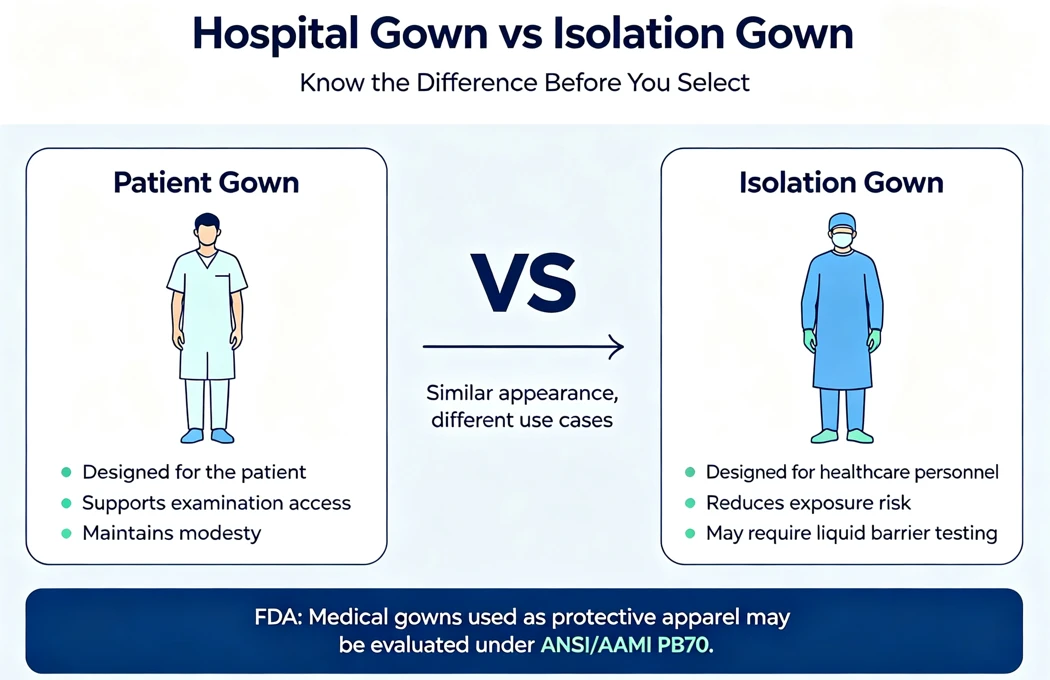
A patient gown should not be confused with an isolation gown.
A patient gown is designed for the person receiving medical care. Its primary functions include providing coverage, maintaining modesty, and allowing convenient access for examinations and procedures.
An isolation gown, by contrast, is protective apparel used by healthcare personnel when exposure to blood, body fluids, or other potentially infectious materials is anticipated.
These garments can sometimes look similar, but their intended users and performance requirements are different.
Healthcare facilities requiring protective apparel can explore disposable isolation gowns separately from patient clothing.
According to the CDC, selection of protective gowns should be based on the nature of the patient interaction and anticipated exposure rather than simply on the garment’s color.
The FDA also explains that medical gowns used as protective apparel may be evaluated according to liquid-barrier performance and applicable standards such as ANSI/AAMI PB70. These requirements should not automatically be applied to every patient gown.
Materials Behind the Disposable Patient Gown
Healthcare facilities use both reusable and disposable materials for patient apparel. Disposable patient gowns are commonly manufactured from nonwoven fabrics because these materials can provide lightweight coverage and support single-use workflows.
Spunbond Polypropylene
Spunbond polypropylene, commonly called PP nonwoven, is widely used for disposable healthcare apparel.
The material is produced by forming continuous polymer filaments and bonding them into a nonwoven web. It is lightweight and can provide a practical combination of coverage, breathability, and cost efficiency for suitable applications.
For routine hospital applications, a Lightweight Disposable Patient Gown for Hospital Use provides an example of disposable PP nonwoven patient apparel.
PP Nonwoven Patient Gown Sets
PP nonwoven can also be used to produce coordinated patient clothing sets.
A PP Non Woven Disposable Patient Gown Set may combine a patient top with matching pants, depending on the product configuration.
This type of design can provide additional coverage for patients who need to remain in healthcare facilities for longer periods or who require more complete disposable clothing.
SMS Nonwoven
SMS is a multilayer nonwoven structure consisting of spunbond, meltblown, and spunbond layers.
It can provide different performance characteristics from a basic spunbond PP material. However, the material name alone does not establish a specific level of liquid resistance or protective performance.
When a patient gown is being considered for an application involving additional barrier requirements, buyers should review the complete product construction, technical specifications, and applicable test documentation.
PE-Laminated Nonwoven
PE-laminated nonwoven combines a nonwoven substrate with a polyethylene film layer.
This construction can provide greater resistance to liquid penetration than standard spunbond PP, depending on the complete garment design and manufacturing process.
For this reason, buyers should select the material according to the intended application rather than assuming that every disposable gown provides the same level of protection.
Design Features Optimized for Clinical Access
Patient gowns are designed around the practical needs of medical care.
One common feature is an open-back or partially open-back construction. This design allows healthcare professionals to access relevant areas of the patient’s body without requiring the patient to completely remove the garment.
Ties, snaps, and other closures may also be used to make the garment easier to put on and remove.
Some designs incorporate openings that make it easier to accommodate medical equipment or access specific areas during examinations. The exact design depends on the intended application and manufacturer specifications.
Fabric Opacity
Opacity is another consideration for patient apparel.
Because patient gowns are designed to provide coverage, the material should offer an appropriate balance between visibility, comfort, and breathability. Fabric weight, construction, color, and material density can all influence the final appearance of the garment.
Procurement teams should therefore evaluate the actual sample or product specification rather than assuming that all nonwoven gowns have identical opacity.
Why Are Healthcare Facilities Using Disposable Patient Gowns?
Disposable patient gowns can simplify garment handling in applications where single-use apparel is appropriate.
Unlike reusable garments, disposable gowns do not need to be collected, laundered, dried, and returned to inventory after every use. This can simplify logistics for certain healthcare environments.
However, disposable garments should not be described as completely eliminating infection risks. Safe healthcare practices depend on appropriate garment selection, correct use, disposal procedures, hand hygiene, and other infection-control measures.
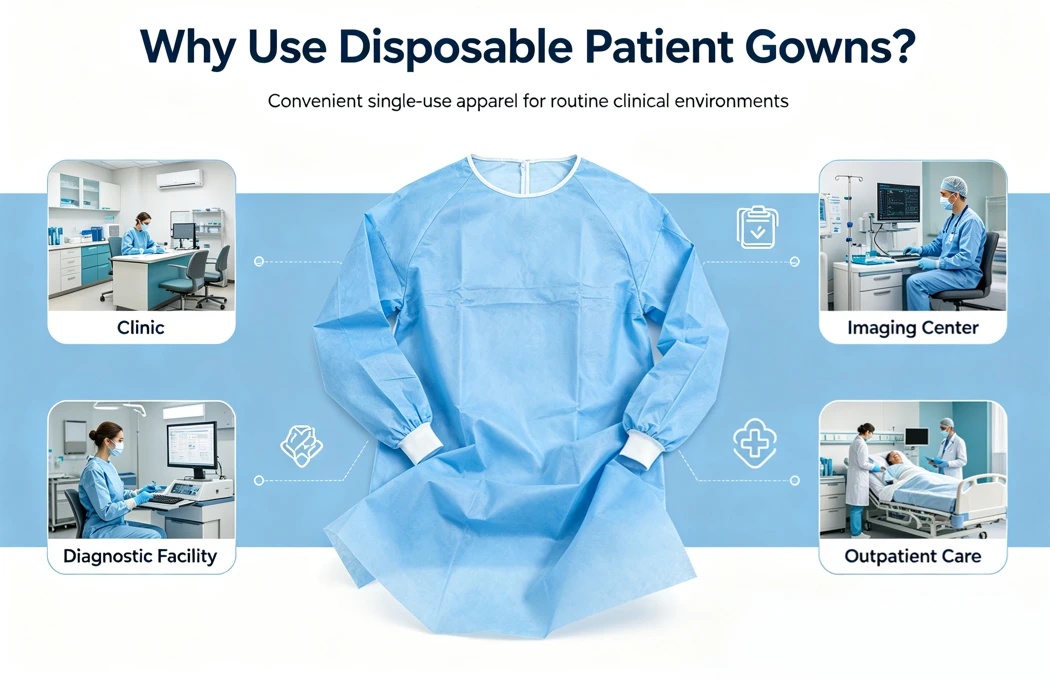
Disposable patient apparel may be particularly practical for clinics, diagnostic facilities, imaging centers, and other environments where convenient single-use clothing is preferred.
For these applications, a Disposable Patient Gown for Clinic and Medical Care can provide an example of patient clothing designed for routine clinical use.
Standard PP nonwoven patient gowns are generally intended for lightweight coverage rather than high-level liquid protection. If liquid resistance is important, buyers should verify the specific material construction, treatment, product specifications, and test results.
Color Coding in Healthcare Facilities
Healthcare facilities may use different gown colors for organizational purposes. Color can help distinguish garment types, departments, or internal workflows.
However, there is no universal rule that assigns one specific medical meaning to every hospital gown color.
For example, some healthcare organizations may use blue patient gowns for general patient care, while another facility may use a different color system.
Color should therefore not be assumed to indicate a patient’s diagnosis, infection status, or clinical risk.
For a more detailed discussion of blue patient apparel, see our guide to what a blue hospital gown means.
From a manufacturing perspective, colorants can be incorporated into polypropylene during production to achieve consistent color across manufacturing batches. Finished products should meet the manufacturer’s applicable material and quality specifications.
How Should Buyers Choose a Patient Gown?
Healthcare procurement teams should evaluate patient gowns according to their intended application rather than selecting products based only on appearance.
Important considerations include:
Intended Use
Determine whether the garment will be used for hospital admission, routine examinations, outpatient care, diagnostic procedures, or another application.
Material
PP nonwoven can be suitable for lightweight disposable patient apparel. Other materials, including SMS and PE-laminated nonwoven, may be considered when different material or barrier characteristics are required.
Fabric Weight
GSM affects the feel, coverage, and construction of the garment. Buyers should select an appropriate fabric weight according to the intended application.
Design
Review the neckline, sleeves, back opening, closures, waist ties, and overall dimensions.
Size
Confirm the available dimensions and determine whether they match the requirements of the intended patient population.
Performance
If liquid resistance or another specific performance characteristic is required, review product specifications and relevant test documentation.
Documentation
Depending on the destination market, intended use, and product classification, buyers may need technical documentation, conformity documentation, test reports, or quality-management information.
Customization
Manufacturers may offer options such as color, size, fabric weight, material, garment construction, packaging, labeling, and OEM/ODM services.
Frequently Asked Questions
1. What is the hospital gown called officially?
“Patient gown” is one of the most common terms used for clothing worn by patients in hospitals and other healthcare settings. “Hospital gown” is also widely used, while terms such as “exam gown” and “Johnny gown” may appear in specific regions or contexts.
2. What is the difference between an isolation gown and a patient gown?
An isolation gown is protective apparel generally used by healthcare workers when exposure to blood, body fluids, or other potentially infectious materials is anticipated. A patient gown is intended for the patient and primarily supports modesty, comfort, hygiene, and clinical access.
3. Why do patient gowns open in the back?
Open-back designs can provide healthcare professionals with easier access to the patient’s body during examinations and treatment. They can also make the garment easier to put on and remove in clinical settings.
4. What materials are disposable patient gowns made from?
Disposable patient gowns can be manufactured from materials such as spunbond polypropylene, SMS nonwoven, and PE-laminated nonwoven. The most suitable material depends on the intended application, comfort requirements, garment construction, and required performance.
5. Are disposable patient gowns recyclable?
Polypropylene is a recyclable polymer, but a used patient gown may be subject to healthcare-waste requirements depending on how it was used and whether it has been contaminated. Disposal should follow applicable local healthcare-waste regulations rather than relying solely on the recyclability of the base material.
Conclusion
Understanding the terminology used for healthcare apparel can make medical procurement easier and help facilities select the right products for different applications.
Hospital gown is a broad and commonly used term, while patient gown is a more specific term for clothing intended for patients. These garments should also be distinguished from isolation gowns and other protective apparel used by healthcare workers.
Disposable patient gowns are commonly produced from nonwoven materials such as PP, SMS, and PE-laminated fabrics. Material, fabric weight, design, sizing, intended use, and required performance should all be considered before purchasing.
For facilities sourcing disposable patient apparel, selecting products according to their actual clinical application is more reliable than choosing based on terminology or color alone.