
Blog
What Are Non-Woven Protective Suits Made Of?

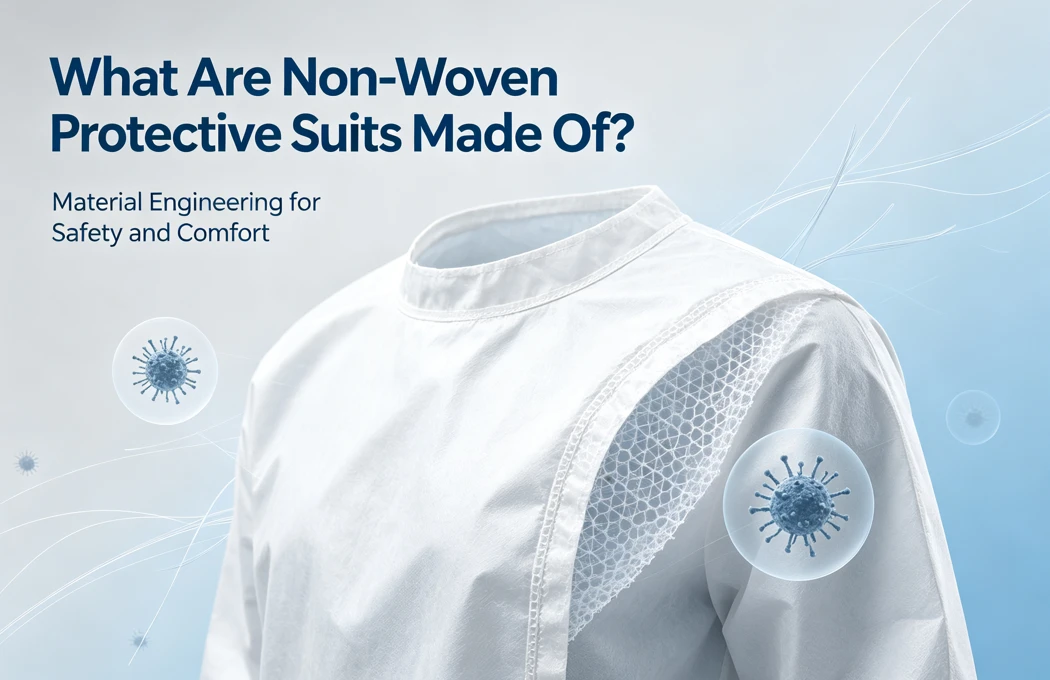
In the specialized sector of Personal Protective Equipment (PPE), the choice of material is the single most critical factor determining the safety and comfort of the wearer. For procurement officers, medical facility managers, and industrial safety distributors, understanding the engineering behind these fabrics is essential for risk management.
Unlike traditional textiles that rely on weaving or knitting, non-woven protective clothing material is produced by bonding fibers together through mechanical, thermal, or chemical processes. This creates a web-like structure that can be engineered to block microscopic pathogens while allowing air or moisture vapor to pass through.
The Role of Polypropylene in Protective Fabrics
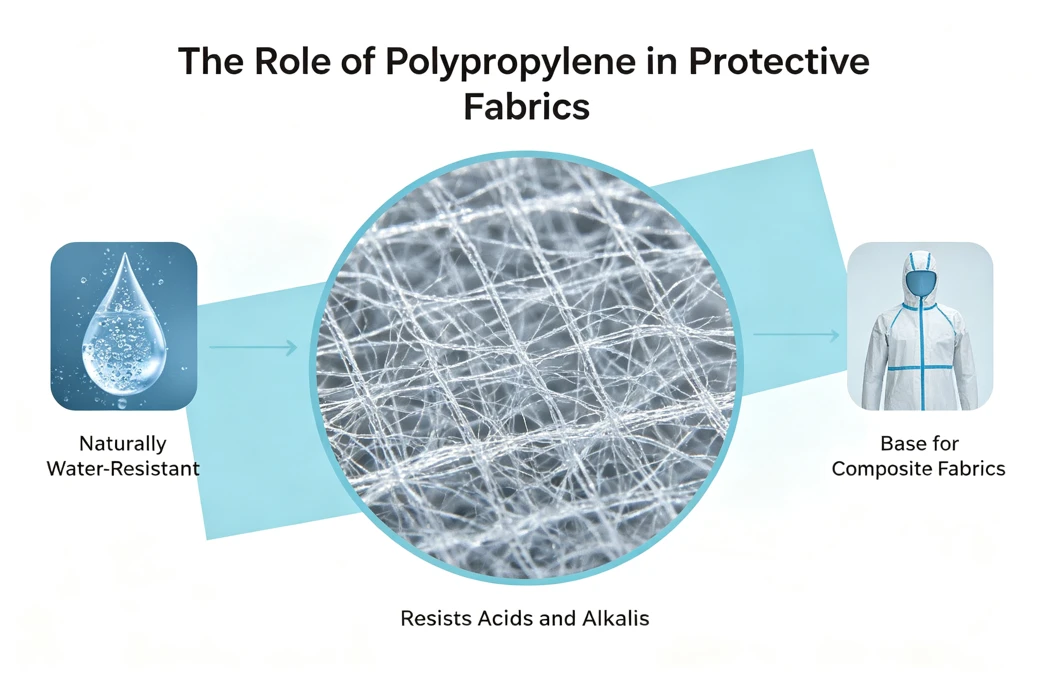
The foundation of modern disposable suit materials is Polypropylene (PP). This thermoplastic polymer is favored for its versatility and inherent protective properties.
Is Polypropylene Naturally Water-Resistant?
Polypropylene is inherently hydrophobic. This means it naturally repels water and aqueous liquids. For basic medical tasks or hygiene-controlled environments, this property provides a primary barrier against minor splashes without the need for additional chemical treatments.
Why Is Chemical Resistance Important?
In laboratory and industrial settings, the fabric must withstand exposure to various reagents. Polypropylene maintains its structural integrity when in contact with many acids and alkalis, making it a reliable base for more complex composite materials.
Technical Classification of Non-Woven Materials
Different environments require different levels of barrier protection. The industry classifies non-woven protective suit materials based on their construction layers.
What Is Spunbonded Polypropylene (SBPP)?
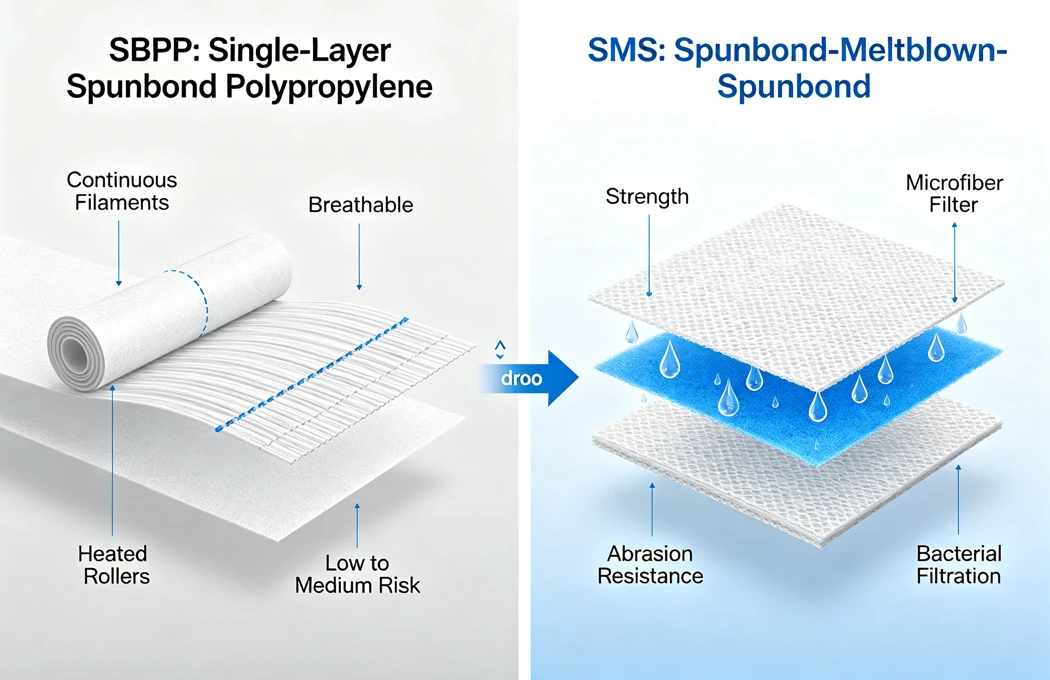
SBPP is a single-layer fabric created by extruding molten polymer into continuous filaments. These filaments are laid onto a moving belt and bonded by heated rollers.
- Best For: Low-risk environments, food processing, and basic hygiene.
- Characteristics: High breathability and soft hand-feel, but limited filtration for fine particulates.
How Does SMS Fabric Enhance Protection?
SMS (Spunbond-Meltblown-Spunbond) is a multi-layer “sandwich” fabric. The outer Spunbond layers provide tensile strength and abrasion resistance, while the inner Meltblown layer acts as the high-efficiency filter.
- Meltblown Layer: This layer consists of micro-denier fibers that trap bacteria and liquid droplets.
- Application: Ideal for surgical gowns and isolation suits where bacterial filtration is a priority.
When Is Microporous Film (SF) Required?
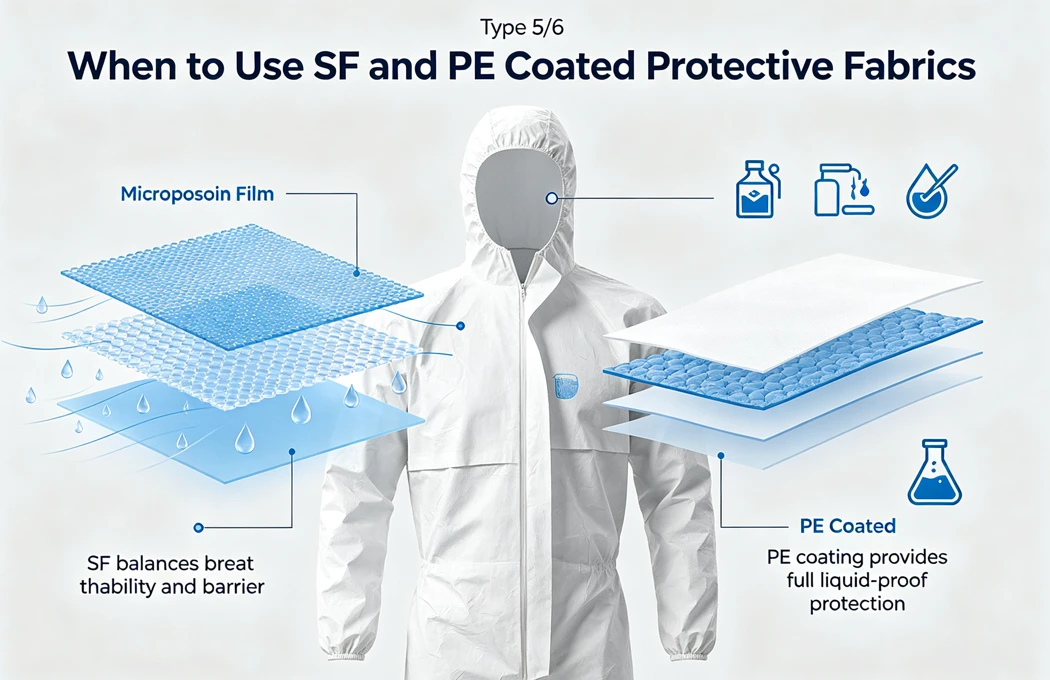
Microporous film material (SF) combines a spunbond base with a specialized laminated film. This film contains millions of microscopic pores that are large enough for air molecules to escape but too small for liquid water or viral particles to enter.
- Performance: It offers a superior balance of “breathable comfort” and “high-level barrier” protection.
- Usage: Frequently used in Type 5/6 protective coveralls for pharmaceutical and chemical handling.
What Are PE Coated Materials?
Polyethylene (PE) coated fabrics involve laminating a solid plastic film onto the non-woven base. This creates a 100% liquid-proof barrier. While it offers maximum protection against heavy fluid spray, it has zero breathability, which is a consideration for user heat stress during long shifts.
Technical Comparison of Protective Suit Materials
| Material Type | Barrier Level | Breathability | Primary Protection Goal |
|---|---|---|---|
| SBPP | Low | Very High | Dust and Hygiene |
| SMS / SMMS | Medium | Medium | Bacteria and Fluid |
| Microporous (SF) | High | High | Chemicals and Viruses |
| PE Laminated | Very High | Low | Heavy Liquid Splash |
Critical Structural Components in Suit Manufacturing
The fabric provides the surface protection, but the integrity of the suit also depends on the construction of seams and closures.
How Do Seam Types Impact Safety?
The method used to join fabric panels can be a point of vulnerability.
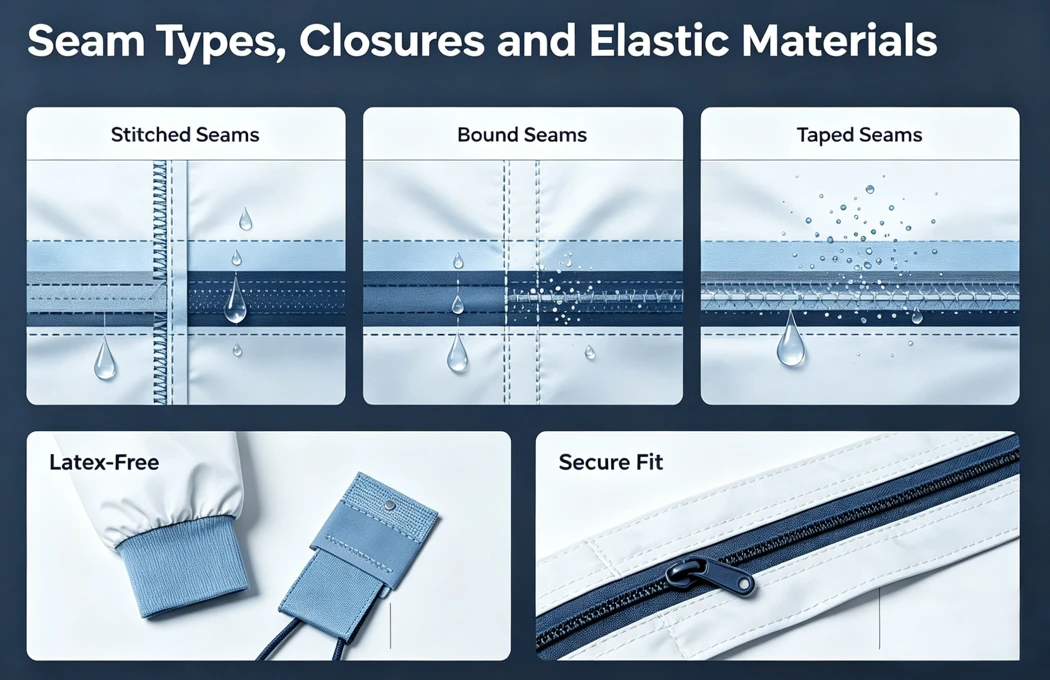
- Stitched Seams: Suitable for dry particulate protection.
- Bound Seams: Manufacturers sew an extra reinforced strip over the seam edge to improve strength.
- Taped Seams: Manufacturers heat-seal chemical-resistant tape over the stitched seam to prevent liquids from penetrating through the needle holes.
What Materials Are Used for Closures and Elastics?
To ensure a secure fit, manufacturers use specific accessory materials.
- Elastics: Typically made from latex-free synthetic rubber to avoid allergic reactions in clinical environments.
- Zippers: Usually nylon or polyester, often covered by a protective “storm flap” made of the same material as the suit body to prevent liquid ingress at the front.
Manufacturing Quality and Procurement Factors
The performance of non-woven protective clothing material is often measured by its GSM (Grams per Square Meter). A higher GSM indicates a thicker, more durable fabric. However, thickness must be balanced with flexibility to ensure the worker can move freely.
Leading manufacturers, particularly in major production hubs like Xiantao, China, utilize advanced equipment to produce their own PE and CPE films. This vertical integration allows for stricter quality control over the lamination process, ensuring the bond between the film and the non-woven fabric does not delaminate under stress.
Conclusion
The evolution of non-woven protective suit material has moved from simple dust covers to highly engineered multi-layer barriers. Whether selecting SMS for a hospital ward or Microporous SF for a chemical plant, understanding the polymer science and construction methods is vital. By matching the material properties to the specific environmental hazards, procurement teams can ensure both maximum safety and cost-efficiency.
For technical specifications and a full range of high-performance disposable protective clothing, explore our Body Protection & Protective Clothing catalog.
FAQ
1. What is the most common material for disposable protective suits?
The most common material is Polypropylene, often configured as SMS (Spunbond-Meltblown-Spunbond) for a balance of filtration and strength, or SBPP for basic hygiene.
2. Is there a difference between “breathable” and “waterproof” materials?
Yes. Materials like Microporous SF are designed to be both. They allow moisture vapor (sweat) to escape while blocking liquid droplets. PE-coated materials are waterproof but not breathable.
3. How do I know if the suit material is suitable for chemicals?
You must check the material’s “Permeation Data” and its “Type” classification. Microporous SF and PE-laminated fabrics are generally required for chemical splash protection.
4. Are these non-woven materials latex-free?
Most high-quality non-woven suits made from Polypropylene or Polyethylene are naturally latex-free. Quality manufacturers also ensure that elastic components are made from synthetic rubber to prevent allergies.
5. Does the color of the material indicate the protection level?
Generally, no. While white, blue, and yellow are common, the color is typically a dye or pigment added to the polymer and does not determine the barrier performance. Always refer to the technical data sheet.
Reference Sources
ASTM International standards for protective clothing materials.