
Blog
PP vs PP+PE vs SMS: Which Material Is Used for Protective Clothing?

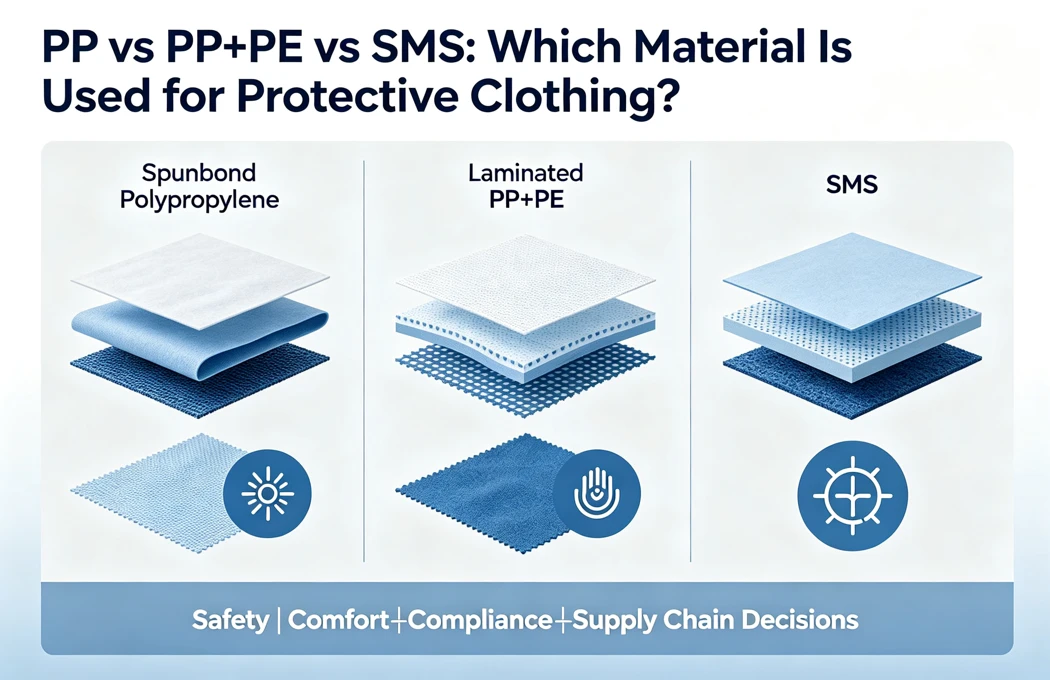
Selecting the correct material for disposable protective clothing is a critical decision for procurement managers and safety officers. This choice directly impacts the wearer’s safety, comfort, and compliance with international health standards. Within the non-woven industry, three materials dominate the market: Spunbond Polypropylene (PP), Laminated Polypropylene (PP+PE), and Spunbond-Meltblown-Spunbond (SMS).
Each fabric offers distinct physical properties. Understanding these differences is essential for matching the protective garment to the specific biological or chemical risks of a work environment. This guide provides a technical breakdown of these materials to assist in professional PPE selection and supply chain management.
Technical Understanding of Spunbond Polypropylene (PP)
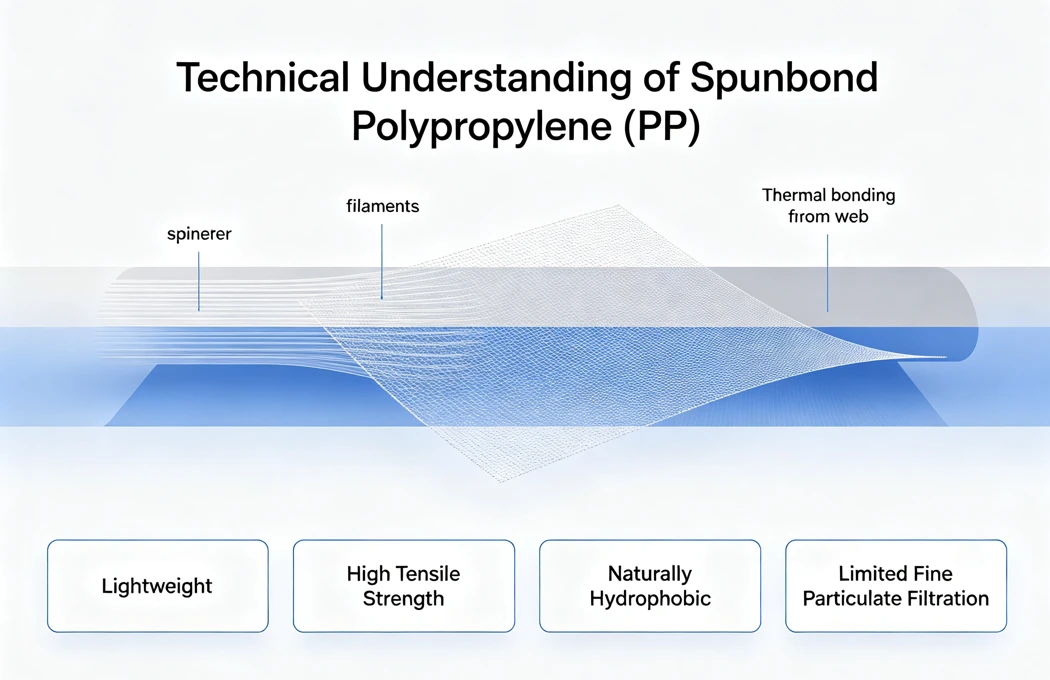
Spunbond Polypropylene, often referred to as SBPP or simply PP, is the most basic and widely used non-woven fabric in the protective clothing industry. The manufacturing process involves extruding molten polymer through spinnerets to create continuous filaments. These filaments are then cooled and bonded thermally or chemically to form a cohesive web.
Characteristics of Single-Layer PP
PP fabric is known for its lightweight nature and high tensile strength. It is naturally hydrophobic, meaning it repels small amounts of water. However, because it is a single-layer material with a relatively open pore structure, it provides limited filtration for microscopic particles or pressurized fluids.
Common Industry Applications
In environments where the primary goal is hygiene rather than high-level protection, PP is the standard choice. You will commonly find it used for:
- Basic isolation gowns for visitors in hospitals.
- Dust coats for electronic manufacturing and cleanrooms.
- Food processing hairnets, aprons, and beard covers.
- Laboratory coats in low-risk educational settings.
The primary advantage of PP is its high breathability and low cost. It effectively prevents the shedding of skin flakes or hair into a clean environment but offers minimal protection against bloodborne pathogens or chemical aerosols.
The Barrier Performance of PP+PE (Laminated Polypropylene)
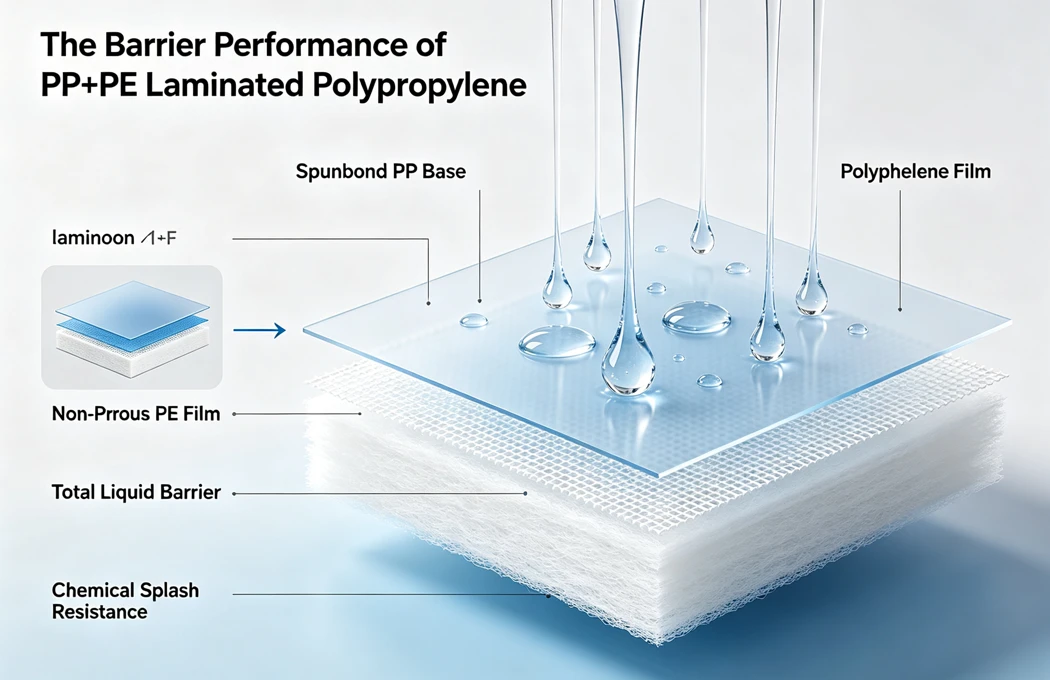
PP+PE is a composite material designed for liquid-heavy environments. This fabric combines a base layer of Spunbond Polypropylene with a top layer of Polyethylene (PE) film. The lamination process creates a total liquid barrier that standard PP cannot achieve.
Technical Advantages of Film Lamination
The PE film layer is non-porous. This specific construction makes PP+PE garments completely waterproof and resistant to chemical splashes. When a manufacturer laminates these layers, the resulting fabric is much stiffer than standard PP but offers superior protection against fluids, fats, oils, and particulate matter.
Professional Considerations for PP+PE
While PP+PE provides an excellent fluid barrier, the lack of porosity means it has zero breathability. In high-temperature environments or during long shifts, heat stress can become a significant factor for the wearer. Professionals typically specify PP+PE for:
- Medical procedures with high fluid exposure risk.
- Decontamination and industrial cleaning tasks.
- Chemical handling where splash protection is mandatory.
- Agriculture and pesticide spraying operations.
SMS (Spunbond-Meltblown-Spunbond): The Breathable Shield
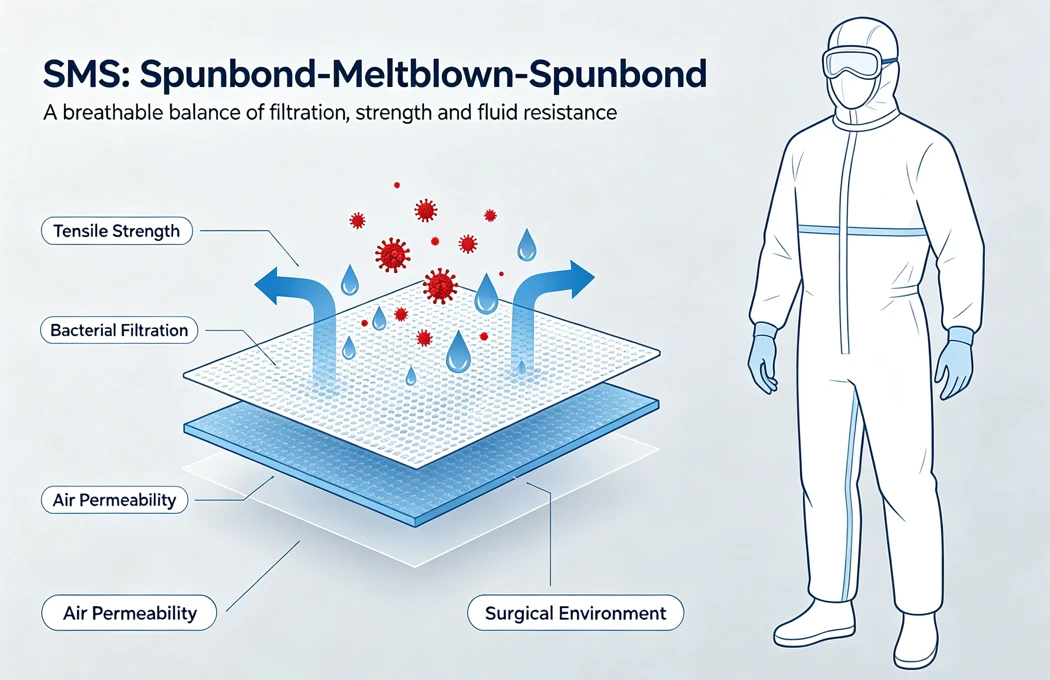
SMS is a multi-layered “sandwich” fabric that serves as the gold standard for medical-grade protective clothing. It consists of two layers of Spunbond Polypropylene on the outside and one or more layers of Meltblown Polypropylene in the middle. The layers are bonded together using high-pressure thermal technology.
The Role of the Meltblown Filtration Layer
The Meltblown layer is the functional “filter” of the fabric. It consists of extremely fine microfibers that create a dense, tortuous path. This structure allows the material to trap bacteria and fine particles while still permitting air molecules to pass through.
Why SMS is the Industry Standard for PPE
SMS provides a balance that neither PP nor PP+PE can match: it is both breathable and fluid-resistant. It offers high hydrostatic pressure resistance, making it suitable for surgical environments where blood strike-through is a major concern.
- SMS: Standard protection for surgical gowns and industrial coveralls.
- SMMS/SSMMS: Enhanced versions with multiple meltblown layers for higher filtration and bacterial barrier properties.
Technical Comparison Table: PP vs PP+PE vs SMS
The following table summarizes the performance metrics typically evaluated by PPE engineers and procurement specialists when choosing protective clothing solutions.
| Feature | PP (Spunbond) | PP+PE (Laminated) | SMS (Tri-Layer) |
|---|---|---|---|
| Fluid Resistance | Low (Splash resistant) | Excellent (Waterproof) | High (Hydrostatic barrier) |
| Breathability | High | None | Moderate to High |
| Particle Filtration | Low | High (Solid barrier) | High (Fiber matrix) |
| Durability | Moderate | High | High |
| Linting Level | Low | Very Low | Very Low |
| Softness/Comfort | Excellent | Moderate | High |
| Best Use Case | Hygiene/Dust protection | Liquid/Chemical splash | Medical/Surgical/Industrial |
Selection Criteria Based on Risk Levels
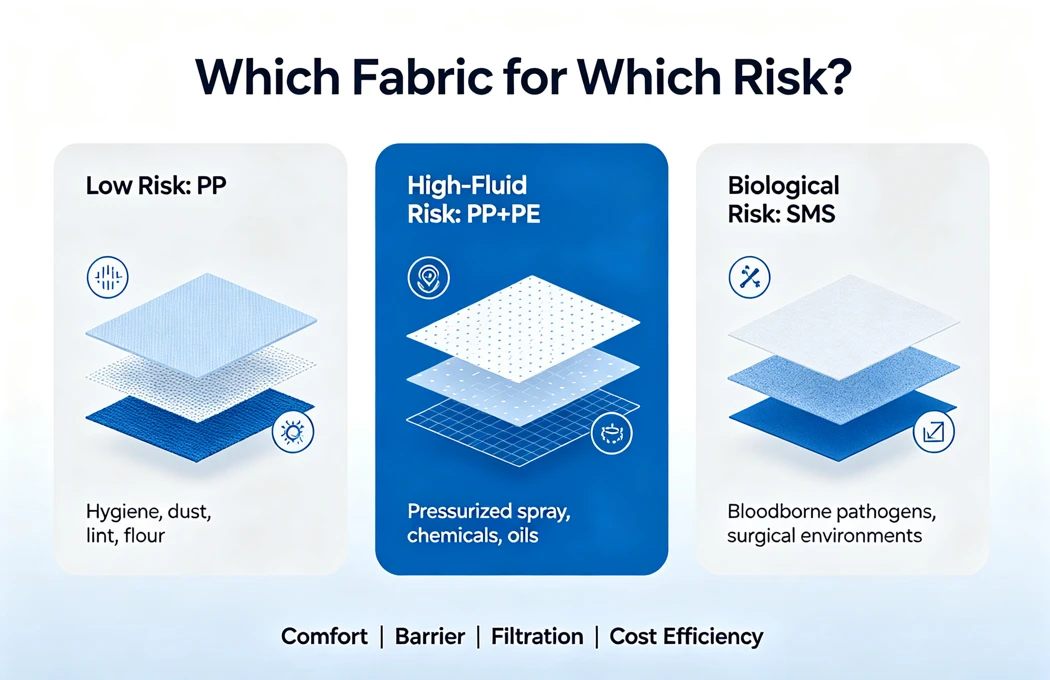
When selecting protective apparel, the choice must align with recognized risk categories, such as the AAMI (Association for the Advancement of Medical Instrumentation) levels or EN industrial standards.
Low-Risk Environments (PP)
If the task involves simple hygiene or protection against dry particles (like dust, lint, or flour), PP is the most cost-effective solution. It keeps the wearer comfortable during long shifts in non-hazardous areas where fluid contact is unlikely.
High-Fluid and Chemical Risk (PP+PE)
If there is a significant risk of pressurized fluid spray or contact with hazardous liquid chemicals, PP+PE is preferred. The PE coating ensures that no liquid can penetrate the garment, protecting the skin and underclothing from contamination.
Biological and Surgical Risk (SMS)
In clinical settings where the wearer faces potential exposure to bloodborne pathogens and needs to move comfortably for hours, SMS is the superior choice. Its ability to “breathe” reduces the risk of heat exhaustion while the meltblown layer provides a robust bacterial barrier.
Manufacturing Quality and Global Standards
Regardless of the material chosen, the manufacturing process determines the final safety level. Professional manufacturers often produce their own PE or CPE films to ensure consistency, material traceability, and cost-efficiency.
Critical Compliance Standards
When evaluating a supplier, procurement managers must verify specific certifications that validate the material’s performance:
- ISO 13485: The quality management system standard specific to the medical device industry.
- CE Certification: Confirms the product meets EU health, safety, and environmental requirements.
- EN 14126: Essential for protective clothing intended for use against infective agents.
- AAMI PB70: The standard for liquid barrier performance and classification of protective apparel in healthcare.
Conclusion
Choosing between PP, PP+PE, and SMS requires a technical understanding of the balance between barrier protection and wearer comfort. PP is ideal for basic hygiene; PP+PE offers the highest liquid barrier at the cost of breathability; and SMS provides a sophisticated balance of filtration and air permeability. By matching the material properties to the environmental risks, organizations can ensure both safety and operational efficiency.
FAQ
1. Is SMS material considered waterproof?
SMS is highly water-resistant and can withstand significant hydrostatic pressure.
However, it is not “waterproof” in the same way as a plastic-coated PP+PE material.
This fabric allows air and vapor to pass through but blocks liquid droplets under normal pressure conditions.
2. Which material is best for an isolation gown?
Selection depends heavily on the AAMI Level.
For Level 1 (minimal risk), PP is sufficient.
For Level 2 and 3, SMS is the industry standard due to its balance of barrier and comfort.
3. Can these materials be recycled in a medical setting?
Most PP and SMS materials are made from polypropylene, which is technically recyclable.
However, once used in medical or hazardous environments, they are classified as biohazardous waste.
Disposal must follow local safety regulations, which usually require incineration.
4. What is the difference between SMS and SMMS?
SMMS has two meltblown layers instead of one.
This provides a more consistent filtration barrier and reduces the chance of “pinholes” in the fabric.
The result is higher protection without significantly reducing the breathability of the garment.
5. Why does PP+PE feel hotter than SMS for the wearer?
PP+PE uses a solid plastic film lamination that effectively blocks all airflow and moisture vapor transmission.
In contrast, SMS uses a porous fiber structure.
This allows heat and sweat vapor to escape through micro-pores while trapping larger liquid molecules.
Reference Sources
CDC Guide on Healthcare Protective Clothing Performance Standards
https://www.cdc.gov/niosh/npptl/topics/protectiveclothing/
FDA Regulations and Classification for Medical Gowns and PPE
https://www.fda.gov/medical-devices/personal-protective-equipment-infection-control/medical-gowns
ISO 13485 Quality Management for Medical Device Manufacturers
https://www.iso.org/standard/59752.html
ASTM International Standards for Protective Apparel Materials
https://www.astm.org/standards/f2407.htm