

Blog
Masks for Spray Painting & Fumes: Types and Selection

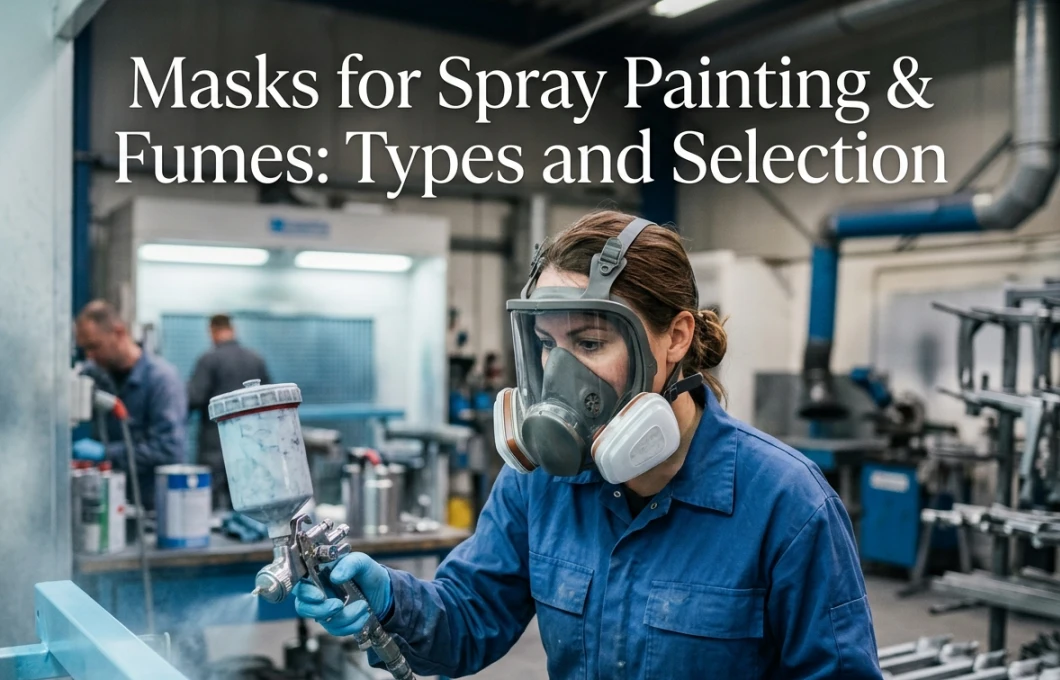
Spray painting can leave a smooth, even finish, but the air around the work area may contain more than visible paint mist. Depending on the coating, spraying method, and ventilation, workers may breathe in airborne particles, solvent vapors, or a mixture of both.
Choosing a spray painting mask is not simply a matter of picking the thickest filter or the most expensive respirator. The right choice depends on what is in the paint, how it is applied, and how long you will be exposed.
Why Do You Need a Mask for Spray Painting?
When paint passes through a spray gun, it breaks into fine droplets that can remain suspended in the air. These droplets may be inhaled during application. Some coatings also release chemical vapors as solvents evaporate.
The two hazards are different. A particulate respirator can filter certain airborne particles, but it does not automatically protect against solvent vapors. A vapor filter, in turn, must be suitable for the chemicals involved and may need to be combined with a particulate filter.
That distinction matters when choosing a respirator for painting. A mask that works for sanding dust may not be suitable for spraying solvent-based paint.
4 Common Types of Masks for Spray Painting
Different respirators serve different purposes. Disposable models may be practical for certain particle-exposure tasks, while reusable and powered systems offer other features for more demanding work. None should be selected without checking the actual exposure risks.
1. Disposable Respirators
Disposable respirators are widely available and convenient for short tasks. They are typically discarded after use according to the manufacturer’s instructions, so there is no need to clean and store the facepiece for repeated use.
Their main limitation is that protection depends on the respirator’s rating, condition, and fit. A poorly fitted mask can allow contaminated air to leak around the edges.
More importantly, an ordinary disposable particulate respirator does not protect against paint solvent vapors. Even a high-efficiency particle filter is not a substitute for a suitable vapor-filtering respirator.
For spray painting, check the product’s intended use rather than assuming every disposable mask is appropriate.
2. Half-Face Reusable Respirators
A half-face reusable respirator covers the nose and mouth and usually has replaceable cartridges or filters. The facepiece is commonly made from rubber or silicone, with adjustable straps to help create a secure seal.
One advantage is flexibility. Depending on the respirator and its approved filter combination, it may provide protection against specific particles, gases, or vapors. Replacement filters also make it suitable for repeated use when the equipment is maintained properly.
However, the respirator itself does not determine the level of protection. The cartridge must match the chemicals present, and the facepiece must fit the wearer correctly.
Users also need to follow the manufacturer’s instructions for cartridge replacement, cleaning, storage, and fit testing where required.
3. Full-Face Respirators
A full-face respirator covers the eyes as well as the nose and mouth. This can be useful when the work creates eye hazards in addition to respiratory exposure.
Like half-face models, full-face respirators require the correct filters or cartridges for the substances involved. A full-face design does not automatically make a respirator suitable for every type of paint or chemical.
These models are often bulkier and more expensive than half-face respirators. Before choosing one, consider the coating, the working environment, compatibility with other protective equipment, and the manufacturer’s instructions.
Workers who have difficulty breathing while wearing a respirator should seek appropriate occupational health guidance rather than simply switching to a different mask without assessing the hazard.
4. Powered Air-Purifying Respirators (PAPRs)
A powered air-purifying respirator uses a battery-powered blower to draw air through compatible filters or cartridges. The filtered air is then delivered to a hood, helmet, or facepiece, depending on the system.
For some users, the powered airflow can make breathing more comfortable than using a conventional negative-pressure respirator. Certain systems also provide head and face coverage.
PAPRs require a suitable configuration for the specific hazard. Their protection depends on the system design, filter selection, condition, and correct use. They do not automatically protect against every chemical vapor or oxygen-deficient atmosphere.
The purchase price and maintenance requirements are generally higher than those of basic disposable respirators, so the system should be selected according to the actual workplace risk.
How to Choose the Best Mask for Spray Painting Fumes
The best mask for spray painting fumes is the one that provides appropriate protection against the substances you may inhale under the conditions in which you work. There is no single model that suits every paint, coating, or spray application.
Before buying a respirator, consider these factors.
Identify the Paint and Its Chemical Hazards
Check the paint’s Safety Data Sheet (SDS), especially the sections covering hazards, exposure controls, and personal protective equipment. Different formulations can produce different airborne hazards.
Water-based paint, solvent-based paint, and two-component coatings should not be treated as interchangeable. Some products may require protection against both particles and chemical vapors.
Check Ventilation and Exposure Conditions
Spray painting in a small, poorly ventilated room can create a very different exposure risk from working in a properly designed spray booth. Good ventilation and appropriate engineering controls should be part of the protection plan, not replaced by a mask.
If the exposure level is unknown or potentially dangerous, obtain a professional assessment before starting work.
Make Sure the Respirator Fits
A respirator only works as intended when it fits correctly. Facial hair along the sealing surface, incorrect strap adjustment, or an unsuitable facepiece can compromise protection.
For tight-fitting respirators, follow applicable fit-testing and seal-check requirements. If a proper seal cannot be achieved, a suitable alternative respiratory protection system may be necessary.
Follow Filter Replacement and Maintenance Instructions
Filters and cartridges have different service lives. Particle filters can become loaded with dust or paint mist, while chemical cartridges may reach the end of their useful life without an obvious visual change.
Replace components according to the manufacturer’s instructions and the applicable respiratory protection program. Do not rely on smell alone to determine whether a cartridge is still effective.
Common Mistakes When Choosing a Spray Painting Mask
Assuming all disposable masks protect against fumes. A particulate-only mask cannot be relied on to remove solvent vapors.
Choosing a respirator by price alone. A cheaper model may not have the protection needed for the coating being used.
Ignoring ventilation. Respiratory protection is only one part of controlling exposure during spray painting.
Using the same cartridge for every paint. Chemical compatibility matters, and some coatings require specialized protection.
Forgetting eye and skin protection. Spray mist can affect the eyes and exposed skin. Additional protective equipment may be needed depending on the coating and application method.
FAQs About Spray Painting Masks
What is the best mask for spray painting fumes?
There is no universal answer. The correct respirator depends on the paint’s chemical composition, exposure conditions, ventilation, and the equipment’s approved use. Check the SDS and applicable respiratory protection guidance before selecting a model.
Can I use a disposable mask for spray painting?
Only when the specific respirator is suitable for the identified hazard. A disposable particulate respirator may filter certain paint particles, but it does not automatically protect against solvent vapors.
Is a half-face respirator enough for painting?
It may be appropriate for some tasks when equipped with compatible filters or cartridges and fitted correctly. Other jobs may require eye protection, a full-face respirator, a powered system, or a different level of protection.
Do paint fumes require a special filter?
Potentially. The required filter or cartridge depends on the chemicals in the coating. Some applications require protection against both airborne particles and organic vapors, so the manufacturer’s approved combination must be checked.
Can I spray paint indoors with a respirator?
A respirator should not be used as a substitute for appropriate ventilation and exposure controls. Indoor spraying can create hazardous concentrations of airborne contaminants, particularly in confined spaces. Assess the environment and follow the coating manufacturer’s safety instructions before proceeding.
Choose Respiratory Protection Based on the Actual Risk
A suitable spray painting mask starts with understanding the material being sprayed. The paint formulation, ventilation, exposure duration, and respirator fit all influence the protection needed.
When the hazards are uncertain, consult the SDS and a qualified occupational safety professional. Selecting the correct equipment before spraying is far more reliable than assuming any mask will keep paint particles and fumes out of your lungs.