


Lab Coat Materials: Ultimate Guide

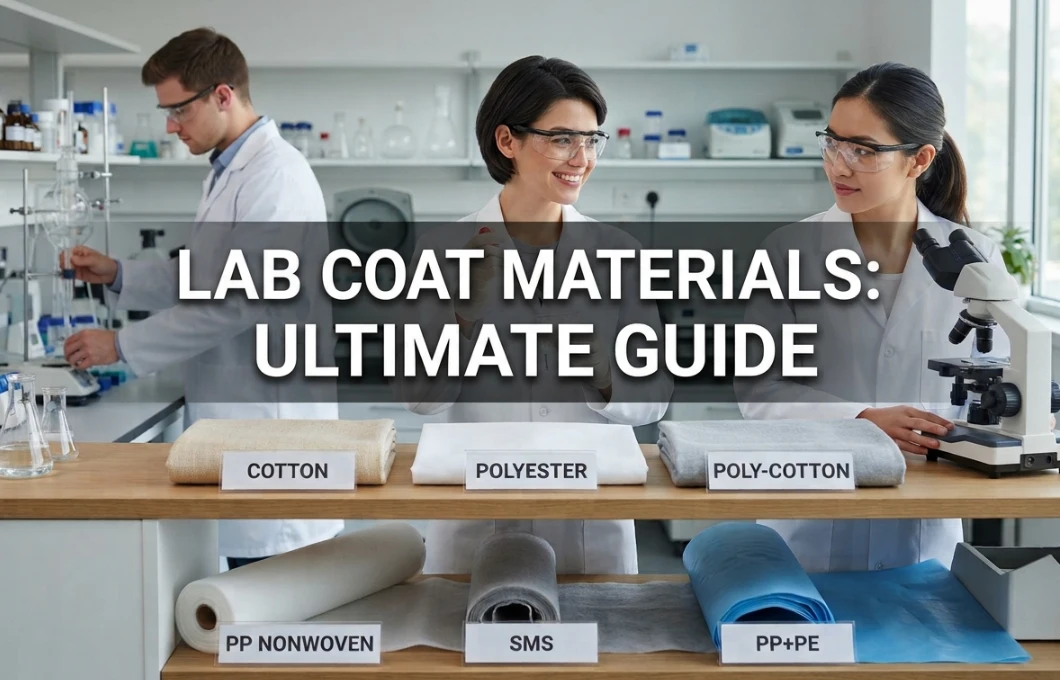
Lab coats are made from different fabrics depending on their intended use. Cotton and polyester are common choices for reusable garments, while polypropylene (PP), SMS, and PE-laminated nonwoven fabrics are widely used in disposable lab coats.
The material affects breathability, durability, liquid resistance, and maintenance. Understanding these differences helps laboratories and PPE buyers choose suitable garments for their working environments.
What Are Lab Coats Made Of?
Most lab coats use woven fabrics or nonwoven materials. Reusable lab coats typically contain cotton, polyester, or a blend of both. Disposable lab coats are commonly made from PP spunbond, SMS nonwoven, or PP fabric laminated with polyethylene.
Each material offers different properties, making it suitable for particular applications.
6 Common Lab Coat Materials
1. Cotton
Cotton lab coats are valued for their softness and breathability. The fabric feels comfortable during extended wear and is suitable for laboratories where workers need lightweight, washable clothing.
Cotton absorbs moisture and does not provide a liquid barrier. Repeated washing may also cause shrinkage or wear, depending on fabric quality and care.
Typical applications: Research laboratories, educational laboratories, and general laboratory work.
2. Polyester
Polyester is a synthetic fabric known for its durability, wrinkle resistance, and relatively quick drying. It generally maintains its shape better than cotton after repeated washing.
However, polyester may feel less breathable, particularly in warm working environments.
Typical applications: Routine laboratory work, workwear, and environments requiring easy garment maintenance.
3. Poly-Cotton
Poly-cotton combines cotton and polyester to balance comfort and durability. Cotton contributes breathability, while polyester helps reduce wrinkles and improve dimensional stability.
The fabric’s performance depends on its blend ratio and construction.
Typical applications: Laboratories, medical facilities, and workplaces requiring reusable uniforms.
4. Polypropylene (PP) Nonwoven
PP spunbond fabric is lightweight and economical. It is widely used in disposable lab coats where routine garment replacement and basic coverage are required.
Basic PP nonwoven offers limited liquid resistance, so it may not be suitable for environments involving significant liquid exposure.
Typical applications: General laboratories, food processing, healthcare, and hygiene-sensitive workplaces.
5. SMS Nonwoven
SMS stands for spunbond-meltblown-spunbond. Its multilayer structure combines spunbond outer layers with a meltblown middle layer.
SMS fabric provides a balance of softness, breathability, and barrier performance. It is commonly used in disposable protective clothing, although actual protection depends on fabric specifications and testing.
Typical applications: Medical facilities, laboratories, pharmaceutical environments, and hygiene-related applications.
6. PP+PE Laminated Fabric
PP+PE fabric combines polypropylene nonwoven with a polyethylene film layer. The film improves liquid resistance compared with basic PP spunbond fabric.
Because the laminated layer can reduce breathability, it is generally selected according to the exposure risk rather than comfort alone.
Typical applications: Laboratory work involving liquid splashes, cleaning tasks, and environments requiring additional liquid barrier performance.
Lab Coat Materials Comparison
| Material | Breathability | Durability | Liquid Resistance | Reusable |
|---|---|---|---|---|
| Cotton | High | Good | Low | Yes |
| Polyester | Medium | Good | Low | Yes |
| Poly-Cotton | Medium–High | Good | Low | Yes |
| PP Nonwoven | Medium | Limited | Low | No |
| SMS | Medium–High | Moderate | Moderate, depending on specification | No |
| PP+PE | Lower | Moderate | Higher than basic PP | No |
Actual performance varies with fabric weight, construction, finishing, and garment design. Material names alone cannot determine the protection level.
How to Choose the Right Lab Coat Material
The choice depends on the working environment and garment requirements.
- Comfort and breathability: Cotton or poly-cotton may be suitable for extended wear.
- Durability and easy maintenance: Polyester or poly-cotton is commonly used for reusable workwear.
- Economical disposable clothing: PP nonwoven is a practical option for routine garment replacement.
- Balance of breathability and barrier performance: SMS may suit applications requiring disposable protective clothing.
- Liquid splash protection: PP+PE laminated fabric may offer improved resistance to liquid penetration.
For chemical handling, biological hazards, or other high-risk applications, buyers should check the garment’s applicable test results and protection standards rather than relying on fabric composition alone.
FAQ
What is the best material for a lab coat?
Cotton and poly-cotton are common choices for reusable lab coats. PP and SMS are frequently used for disposable garments. The best option depends on comfort, maintenance, and workplace requirements.
What material are disposable lab coats made of?
Disposable lab coats are commonly made from PP spunbond, SMS nonwoven, or PP+PE laminated fabric. Each offers different levels of breathability and liquid resistance.
Are PP lab coats waterproof?
Basic PP spunbond fabric is not waterproof. PP+PE laminated fabric provides improved liquid resistance because of its polyethylene film layer.
Which is better, cotton or polyester lab coats?
Cotton generally offers better breathability and softness, while polyester is more wrinkle-resistant and dries relatively quickly. Poly-cotton combines properties of both materials.
Choose the Right Lab Coat for Your Application
Selecting the right lab coat material comes down to comfort, durability, liquid resistance, and the intended working environment.
For disposable laboratory and protective clothing, PP, SMS, and PP+PE fabrics offer different options for daily use and specific garment requirements.
Explore our disposable lab coat products to find suitable materials, styles, and specifications for your application.