

Disposable PPE Gowns: Healthcare & Beyond

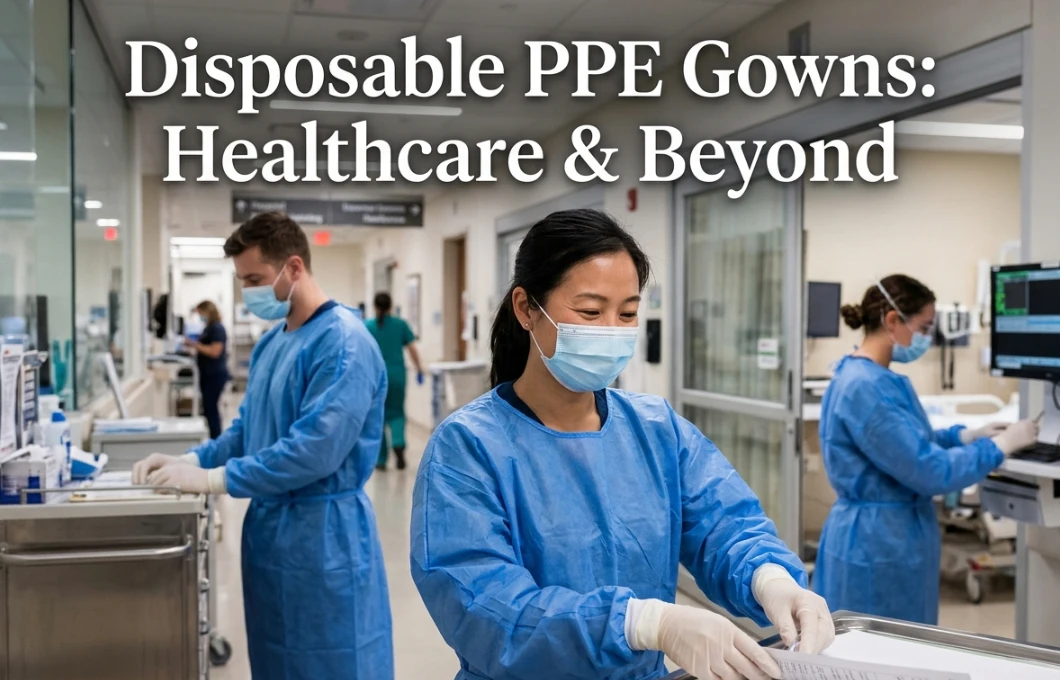
A disposable gown may look like a simple piece of protective clothing, but its material, construction, and intended use can make a considerable difference in daily operations. In a hospital, it may help protect healthcare workers from blood and body fluid splashes. In a laboratory or food processing facility, it can help keep clothing away from contaminants and workplace residues.
Disposable PPE gowns are widely used because they are convenient to distribute, easy to put on, and designed for single-use applications. However, not every gown provides the same level of protection. A lightweight polypropylene gown, an SMS isolation gown, and a polyethylene-coated gown serve different purposes.
Understanding these differences makes it easier for healthcare facilities, medical distributors, and industrial buyers to select products that match their actual working conditions.
What Are Disposable PPE Gowns?
Disposable PPE gowns are single-use protective garments designed to create a barrier between the wearer’s clothing or skin and potential contaminants. Depending on their material and construction, they can help reduce exposure to liquids, dirt, splashes, and other workplace substances.
Most disposable gowns use lightweight nonwoven fabrics or plastic-based materials. Common options include polypropylene (PP), SMS nonwoven fabric, and polyethylene (PE) or PE-coated materials.
Unlike reusable medical gowns, disposable PPE gowns generally do not require laundering after use. Staff can remove and discard them according to the facility’s waste management procedures, which can simplify garment handling in busy environments.
Their actual protective performance depends on several factors:
- Material composition and fabric weight
- Liquid resistance and barrier performance
- Seam construction and garment coverage
- Sleeve and cuff design
- Fit and freedom of movement
- The type and level of exposure expected
A gown intended to keep clothing clean during routine patient visits should not automatically be treated as suitable for surgical procedures or high-exposure environments.
Common PPE Gown Types and Their Materials
Choosing between different PPE gown types starts with understanding what each material can offer. Breathability, fluid resistance, durability, and comfort all affect how a gown performs during use.
1. Polypropylene (PP) Gowns
Polypropylene is a common material for disposable protective clothing. It is lightweight and allows air to pass through its nonwoven structure, making it suitable for environments where basic clothing protection and wearer comfort are important.
PP gowns are commonly used in:
- General patient care
- Medical examinations
- Visitor protection
- Cleaning and maintenance
- Food preparation and handling
Standard PP fabric does not provide the same liquid barrier as a plastic-coated material. For applications involving frequent splashes or greater fluid exposure, buyers should consider a more suitable barrier construction.
2. SMS Nonwoven Gowns
SMS stands for Spunbond-Meltblown-Spunbond. This material combines two spunbond layers with a meltblown layer between them.
The structure provides a balance of strength, breathability, and barrier characteristics. Its performance depends on fabric specifications, manufacturing quality, and the finished garment design.
SMS gowns are commonly considered for:
- Healthcare and patient care
- Medical examination areas
- Dental practices
- Laboratories
- Pharmaceutical and clean working environments
Different SMS fabrics can have different liquid resistance and physical properties. Buyers should check the relevant test results instead of assuming that every SMS gown offers the same protection.
3. PE-Coated and Plastic Gowns
Polyethylene (PE) can be used as a coating or film layer to improve resistance to liquid penetration.
CPE gowns, made from chlorinated polyethylene, are another common option for applications requiring a plastic-based fluid barrier.
These gowns are useful in environments where workers may encounter water, liquid splashes, oils, or other non-hazardous workplace residues, depending on the product specifications.
Typical applications include:
- Patient care and personal hygiene
- Cleaning operations
- Food processing
- Veterinary care
- Laboratory support work
Their relatively low liquid permeability can make them useful in wet working environments. However, plastic-based materials generally offer less air permeability than conventional nonwoven fabrics, which may affect comfort during extended wear.
Material Comparison
| Material | Main Characteristics | Typical Applications |
|---|---|---|
| PP | Lightweight and breathable | General care, visitor gowns |
| SMS | Balance of strength and breathability | Medical and laboratory use |
| PE-coated PP | Improved liquid resistance | Wet and splash-prone environments |
| CPE | Plastic-based fluid barrier | Patient care, cleaning, food handling |
The best material depends on the exposure conditions rather than the material name alone.
Disposable PPE Gown Uses in Healthcare
Healthcare facilities use disposable gowns in different situations, from routine examinations to procedures involving a greater risk of fluid exposure.
The purpose of the gown is to provide an additional protective barrier. It should be selected alongside other appropriate PPE, including gloves, masks, eye protection, and other equipment required by the facility’s infection prevention procedures.
Protective Gowns for Healthcare Workers
Doctors, nurses, laboratory technicians, and other healthcare workers may wear protective gowns when their duties involve contact with patients, body fluids, contaminated materials, or potentially infectious substances.
The required gown depends on the task.
For routine patient care, a lightweight isolation gown may be sufficient when the expected exposure is limited. Procedures involving greater liquid exposure require garments with appropriate barrier performance.
Healthcare facilities should assess the expected exposure before selecting a gown. A breathable gown may be comfortable for routine work, while a fluid-resistant design may be more appropriate for splash-prone procedures.
Disposable Gown for Visitors
Hospitals and clinics sometimes provide disposable gowns for visitors entering designated patient care areas.
A disposable gown for visitors helps reduce the transfer of contaminants between personal clothing and the surrounding environment. It may also be required in isolation areas or other locations where facilities have specific protective clothing policies.
For these applications, practical considerations include:
- Easy-to-wear designs
- Suitable body coverage
- Comfortable sleeve construction
- Convenient single-use packaging
- Appropriate sizing for different visitors
The gown should match the facility’s visitor protection policy. A standard visitor gown should not be considered a substitute for higher-protection PPE when additional barrier protection is required.
Surgical and Isolation Applications
Surgical gowns and isolation gowns are designed for different clinical situations.
Surgical gowns are used by surgical personnel during procedures where maintaining appropriate barrier protection is essential. Isolation gowns are generally used to help protect healthcare workers and their clothing from contact with potentially infectious materials.
Their required performance depends on the procedure and expected exposure.
In the United States, ANSI/AAMI PB70 provides a classification framework for the liquid barrier performance of surgical and isolation gowns. The framework includes four levels:
| Protection Level | General Description |
|---|---|
| Level 1 | Minimal risk, suitable for basic care and standard isolation |
| Level 2 | Low risk, suitable for procedures involving minor fluid exposure |
| Level 3 | Moderate risk, suitable for procedures with greater fluid exposure |
| Level 4 | High risk, suitable for situations involving heavy fluid exposure and potential viral penetration |
These levels help healthcare professionals select appropriate gowns for different exposure conditions.
They should not be confused with a simple ranking of fabric quality. Actual suitability depends on the garment’s tested performance and the intended procedure.
Where Else Are Disposable PPE Gowns Used?
Healthcare is an important market for disposable protective gowns, but their applications extend beyond hospitals.
Different workplaces have their own hygiene and contamination-control requirements.
Dental Clinics
Dental professionals may encounter saliva, blood, water spray, and other splashes during examinations and treatment.
Disposable gowns help protect work clothing from contamination. The required barrier performance depends on the procedure and exposure risk.
Laboratories and Pharmaceutical Facilities
Laboratory technicians may wear disposable gowns when handling samples, preparing materials, or working in controlled environments.
In pharmaceutical production, suitable protective garments can help reduce contamination risks and support workplace hygiene procedures.
However, ordinary disposable gowns are not automatically suitable for every cleanroom or chemical-handling application. Facilities should assess material compatibility, garment cleanliness, and the required protective specifications.
Veterinary Clinics
Veterinary staff may use disposable gowns during animal examinations, treatment, and cleaning activities.
These garments can help keep personal clothing away from animal fluids, dirt, and other contaminants. The appropriate design depends on the type of work being performed.
Food Processing and Catering
Food processing plants, commercial kitchens, and catering facilities often require protective clothing as part of their hygiene practices.
Disposable gowns can help protect workers’ clothing from food residues, water, and workplace contamination.
Material selection should take into account the working environment, food hygiene requirements, and applicable workplace procedures.
Home Care and Personal Care
Caregivers may use disposable gowns when assisting patients with bathing, personal hygiene, or other activities involving contact with body fluids.
For these situations, lightweight materials and convenient garment designs can make daily use easier.
How to Choose the Right Disposable PPE Gown
A gown that works well in one environment may be unsuitable for another. For buyers, the selection process should begin with the actual working conditions rather than simply comparing prices or fabric weights.
1. Identify the Exposure Risk
Consider what the wearer may come into contact with.
Is the main concern dust, dirt, water, blood, or other body fluids? Does the work involve occasional splashes or more substantial liquid exposure?
These questions help determine the required barrier performance.
2. Compare Material and Fabric Weight
Material composition and GSM (grams per square meter) influence garment weight, physical properties, and comfort.
A higher GSM does not automatically mean better liquid resistance. Fabric structure, coatings, treatments, and finished garment construction also affect performance.
Buyers should compare technical specifications and relevant test results rather than relying on GSM alone.
3. Check Coverage and Garment Design
Different gown designs provide different levels of coverage.
Important details include:
- Long or short sleeves
- Elastic or knitted cuffs
- Waist ties or back closures
- Neck fastening
- Overall garment length
- Available sizes
For healthcare workers, a comfortable fit and secure fastening can make a difference during repeated movement.
4. Review Applicable Standards and Testing
For medical gown procurement, buyers should identify the standards relevant to their intended application.
ANSI/AAMI PB70 addresses the liquid barrier performance classification of surgical and isolation gowns.
ASTM F1670 evaluates resistance to penetration by synthetic blood under specified test conditions. ASTM F1671 evaluates resistance to penetration by blood-borne pathogens using a bacteriophage test method.
ISO 13485, on the other hand, is a quality management system standard for medical device organizations. It is not a product-level liquid barrier rating.
These standards serve different purposes. A supplier’s certification should not be treated as proof that every gown meets a particular protection level.
Always request applicable product test reports, technical specifications, and regulatory documentation before placing an order.
5. Consider Comfort and Daily Use
Healthcare workers may need to wear protective gowns for extended periods.
Breathability, garment weight, sleeve design, and freedom of movement all influence user comfort.
In warm working environments, an overly restrictive or poorly ventilated gown may make routine tasks more difficult.
A suitable balance between protection and comfort helps support consistent use.
6. Evaluate Supplier and Bulk Purchasing Requirements
For hospitals, medical distributors, and importers, purchasing decisions involve more than the product itself.
It is useful to review:
- Production capacity and order lead time
- Material and product consistency
- Available sizes and colors
- Packaging specifications
- OEM and private-label options
- Quality inspection procedures
- Relevant certificates and test documentation
Before confirming a large order, buyers should request samples and verify that the actual product matches the agreed specifications.
Advantages and Limitations of Disposable PPE Gowns
Disposable gowns offer practical benefits in environments where protective clothing needs to be distributed and replaced regularly.
Their main advantages include:
Convenient replacement
Single-use gowns can be discarded after use according to the facility’s waste management procedures. This avoids the laundering and handling process required for reusable garments.
Easy distribution
Many disposable gowns are supplied in individual or bulk packaging, making it easier for facilities to organize supplies and distribute garments to staff or visitors.
Different material options
PP, SMS, PE-coated fabrics, and CPE provide different combinations of breathability, strength, and liquid resistance.
Flexible purchasing options
Manufacturers can offer different garment sizes, materials, colors, and packaging configurations according to customer requirements.
There are also limitations to consider.
Disposable gowns create ongoing material consumption and waste. Some are made from plastic-based materials that may not be accepted in ordinary recycling programs, particularly after use in healthcare environments.
Their protection is also application-specific. A disposable gown should never be assumed to protect against every biological, chemical, or liquid hazard.
Facilities need to consider both the intended protection and the environmental impact when establishing their purchasing and disposal policies.
Proper Donning, Doffing, and Disposal
Even a properly selected gown can become a source of contamination if it is handled incorrectly.
Healthcare facilities should provide clear instructions on putting on and removing protective clothing. Staff should follow the facility’s PPE procedures and receive appropriate training.
A typical gown-use process includes:
Before wearing: Check the packaging and gown for damage. Confirm that the garment is appropriate for the task and provides the required coverage.
While wearing: Keep the gown properly fastened and avoid touching potentially contaminated surfaces unnecessarily.
When removing: Follow the established doffing sequence. Avoid touching the potentially contaminated outer surface with bare skin or clothing.
After use: Dispose of the gown according to the facility’s waste segregation and infection prevention procedures.
The exact disposal route depends on the type of contamination and applicable local regulations. Not every used disposable gown automatically requires the same waste classification.
The Future of Disposable Protective Gowns
Demand for disposable protective clothing is closely connected to healthcare activity, workplace hygiene, and infection prevention requirements.
Manufacturers are also exploring ways to improve garment comfort, material efficiency, and environmental performance.
Potential areas of development include lighter material structures, improved barrier properties, better garment fit, and alternative materials with lower environmental impact.
For buyers, these developments make it increasingly important to look beyond the basic product description. A suitable disposable gown should meet the practical requirements of its intended application while offering consistent quality and reliable supply.
FAQ About Disposable PPE Gowns
1. What are disposable PPE gowns used for?
Disposable PPE gowns are used to help protect clothing and the wearer’s body from contact with liquids, contaminants, dirt, and other workplace substances. Common applications include hospitals, clinics, laboratories, dental practices, food processing, and personal care.
2. What is the difference between PP and SMS gowns?
PP gowns are generally lightweight and breathable, making them suitable for basic clothing protection. SMS gowns combine spunbond and meltblown layers to provide different barrier and physical properties. The actual performance depends on fabric specifications and garment construction.
3. Are disposable PPE gowns waterproof?
Not all disposable PPE gowns are waterproof. Standard PP and SMS gowns may provide limited resistance to liquid penetration, depending on their construction and testing. PE-coated and CPE gowns generally offer stronger liquid barriers, but buyers should verify the product’s tested performance.
4. What is the difference between an isolation gown and a surgical gown?
Isolation gowns are generally used to help protect healthcare workers from contact with potentially infectious materials. Surgical gowns are designed for use by surgical personnel during procedures requiring specific barrier performance. Their applicable standards and protection requirements may differ.
5. What does AAMI Level 1–4 mean?
AAMI PB70 classifies the liquid barrier performance of surgical and isolation gowns into four levels. Level 1 represents minimal liquid barrier requirements, while Level 4 represents the highest level in this classification framework.
The appropriate level depends on the expected exposure during the procedure.
6. Can visitors wear disposable PPE gowns in hospitals?
Yes. Hospitals may provide disposable visitor gowns in isolation areas or designated patient care environments. The required gown type depends on the facility’s infection prevention policies and the exposure risk.
7. Are disposable PPE gowns reusable?
Most disposable PPE gowns are designed for single use. They should not be washed or reused unless the manufacturer specifically provides validated instructions and the product is intended for that purpose.
8. How should buyers choose a disposable PPE gown supplier?
Buyers should review material specifications, garment construction, production consistency, quality control procedures, applicable test reports, packaging, and delivery capabilities. Requesting samples before bulk purchasing is a practical way to verify product suitability.
9. Can disposable PPE gowns be customized?
Many manufacturers offer customization options such as material, GSM, size, color, sleeve design, fastening method, and packaging. Available options depend on the manufacturer’s production capabilities and the specific product.
10. What information should buyers provide when requesting a quotation?
To receive a more accurate quotation, buyers should provide the intended application, required material, fabric weight, gown dimensions, color, order quantity, packaging requirements, and any applicable testing or certification requirements.
Choose the Right Disposable PPE Gowns for Your Application
Selecting protective clothing is easier when the material, garment design, and expected exposure are clearly defined.
Whether you are sourcing disposable gowns for healthcare facilities, medical distribution, laboratories, or industrial applications, the right product should match your operational requirements rather than simply offer the lowest purchasing price.
At HuBei Wanli, we supply disposable protective products for medical and industrial applications. Our product range includes different gown materials and designs to support varying customer requirements.
Contact our team to discuss your specifications, request product samples, or obtain a quotation for bulk orders.