

Chemical Splash Protection for Lab Workers

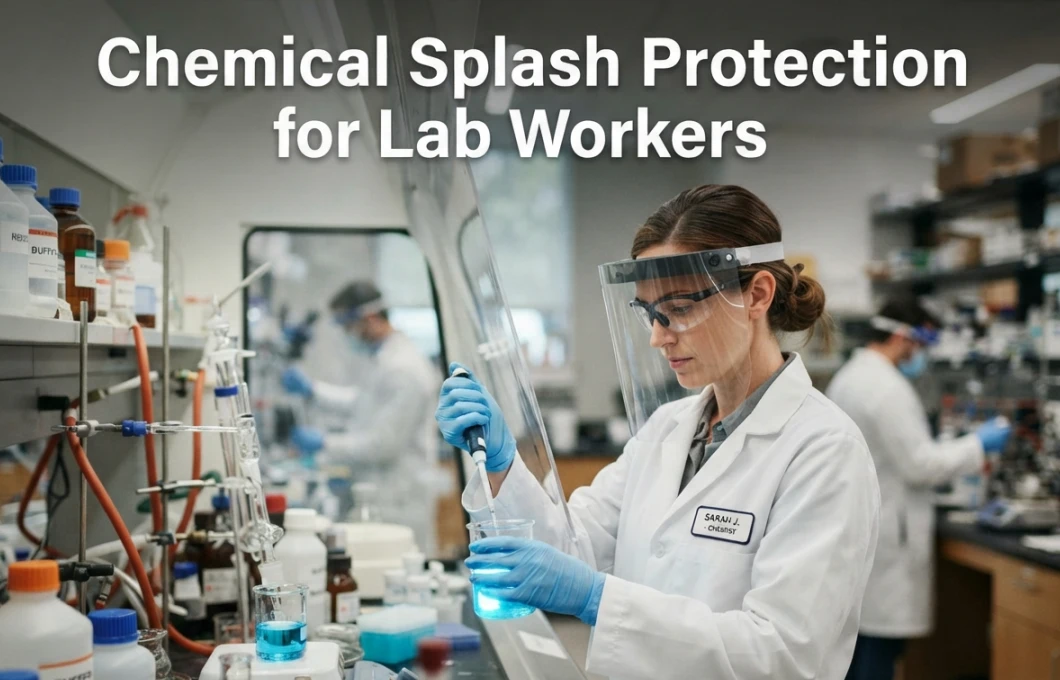
Working in a laboratory often means handling liquids with very different properties. Some are harmless under normal conditions, while others can irritate the skin, damage the eyes, or cause serious injury after brief contact. A small splash from a bottle, pipette, or mixing container may be enough to create a safety problem.
Chemical splash protection starts with understanding what you are handling. The right protective equipment depends on the chemical, how it is used, and where exposure could occur. Wearing a lab coat and gloves is a good starting point, but they cannot provide reliable protection against every chemical or every type of exposure.
Where Chemical Splash Risks Come From in a Laboratory
Chemical splashes rarely happen during the moments people expect. A worker may be transferring liquids between containers, cleaning laboratory equipment, preparing a solution, or handling a sample. A loose cap, unexpected reaction, spilled container, or careless movement can send liquid onto the skin, clothing, or face.
The level of risk depends on several factors, including the chemical’s concentration, temperature, quantity, and hazardous properties. Even a relatively small spill can be serious when the substance is corrosive or harmful to the skin or eyes.
Common exposure areas include:
- Eyes and face during pouring, mixing, or handling liquid samples.
- Hands and wrists when working with containers, tools, or contaminated surfaces.
- Arms and torso when liquids splash onto work clothing.
- Legs and feet when chemicals spill onto benches, floors, or workstations.
Understanding where splashes are likely to occur helps laboratory workers choose PPE that covers the areas most exposed during their daily tasks.
Choosing Chemical Splash PPE for Lab Work
Protective equipment should match the actual work being performed. A routine task involving a low-risk solution may require different protection from handling concentrated chemicals or cleaning a contaminated workstation.
Chemical Splash Goggles and Face Shields
Eye protection deserves particular attention because chemical splashes can happen quickly and leave little time to react.
Chemical splash goggles provide a protective barrier around the eyes. They are generally more suitable for splash hazards than ordinary safety glasses, which may leave gaps around the sides. Workers should check that goggles fit properly and remain comfortable enough to wear throughout the task.
A face shield can provide additional protection for the face when the work involves a greater splash risk. However, it should not be treated as a replacement for appropriate eye protection. Goggles and a face shield may be used together when the task requires both.
The choice should reflect the chemical being handled, the direction of potential splashes, and the equipment used during the procedure.
Chemical-Resistant Gloves
Hands come into direct contact with laboratory materials more frequently than most other body areas. Gloves can reduce the risk of chemical exposure, but the material matters.
Different glove materials have different resistance to different chemicals. A glove that performs well with one substance may offer inadequate protection against another. Laboratory staff should consult the chemical safety information and glove compatibility guidance before selecting gloves for a specific task.
Fit also matters. Gloves that are too loose can interfere with handling small equipment, while damaged or poorly fitted gloves may increase the chance of accidental exposure.
Replace gloves when they become contaminated, damaged, or unsuitable for continued use. Removing them carefully also helps prevent chemicals from transferring to bare skin.
Lab Coats, Aprons, and Protective Clothing
A laboratory coat provides a practical layer between everyday clothing and the working environment. It can help limit contamination from minor splashes, but its protective value depends on its material, construction, and the chemicals involved.
For tasks with a higher likelihood of liquid contact, a chemical-resistant apron may provide additional coverage over the front of the body. Workers handling chemicals should pay attention to sleeve openings, front closures, cuffs, and areas where liquid could enter or collect.
Disposable protective clothing may be appropriate for certain laboratory procedures, particularly when clothing contamination is a concern or garments need to be discarded after use.
However, disposable coveralls, gowns, and nonwoven garments are not automatically chemical-resistant. Ordinary PP, SMS, or other nonwoven protective apparel should not be assumed to provide protection against hazardous chemical liquids unless its suitability has been established for the specific substance and exposure conditions.
Footwear and Respiratory Protection
Closed-toe shoes help protect the feet from spills and falling objects. Where liquid exposure is possible, footwear should be suitable for the laboratory environment and easy to manage if contamination occurs.
Respiratory protection addresses a different type of hazard. Chemical splashes involve liquid contact, while vapors, gases, aerosols, and airborne particles may require separate controls. Respiratory equipment should be selected according to the substance, exposure conditions, and applicable workplace safety requirements.
Protecting one part of the body does not eliminate risks to other areas. PPE works best when each item addresses a clearly identified hazard.
How to Select the Right Lab Chemical Protection
Choosing PPE by appearance or convenience can lead to gaps in protection. A garment may look durable yet allow a chemical to penetrate its material. Gloves may feel thick but still be unsuitable for a particular solvent.
A more practical selection process begins with the task itself.
Identify the chemical. Review its label and Safety Data Sheet (SDS) to understand the hazards, recommended protective equipment, and precautions for handling.
Assess the exposure. Consider whether the work involves pouring, mixing, spraying, cleaning, immersion, or possible splashing. Think about where liquid could reach the body and how much exposure could occur.
Check material compatibility. Confirm that glove and clothing materials are appropriate for the chemical. Resistance to water or general liquid splashes does not necessarily mean resistance to hazardous substances.
Consider garment coverage. Look at the torso, sleeves, cuffs, neckline, and lower body. Protective clothing should cover the areas likely to be exposed without interfering with movement or laboratory work.
Review removal and disposal. Contaminated PPE needs to be removed without transferring chemicals to the skin, other clothing, or clean surfaces. Reusable items may require specific cleaning procedures, while disposable items may need appropriate waste handling.
These steps help laboratory managers and workers select chemical splash PPE based on actual risks rather than relying on a single garment for every task.
Laboratory Chemical Safety Goes Beyond PPE
Protective clothing is one part of a broader laboratory safety system. Work practices and the laboratory environment can reduce the chance of exposure before PPE becomes necessary.
Chemical containers should remain properly labeled and closed when not in use. Work areas should be organized to reduce accidental knocks, spills, and unnecessary handling. Procedures involving hazardous substances should follow the appropriate controls for the chemical and task.
Workers also need to know where emergency equipment is located. Eyewash stations and emergency showers should be accessible when required by the laboratory’s risk assessment and safety procedures. Staff should understand how to use them and what to do when chemical exposure occurs.
Training should cover more than putting on gloves or fastening a lab coat. Workers need to recognize contaminated PPE, understand when it must be replaced, and know how to remove it safely.
What to Do When a Chemical Splash Occurs
When a chemical reaches the skin or eyes, the response should follow the substance-specific emergency procedures. Do not wait to see whether irritation develops before taking action.
For skin or eye exposure, use the designated emergency washing equipment and follow the instructions in the chemical’s SDS and workplace emergency protocol. Seek medical assistance when the substance, symptoms, or exposure circumstances require it.
If PPE becomes contaminated, avoid touching clean surfaces with contaminated gloves or garments. Follow the laboratory’s procedures for removing, isolating, cleaning, or disposing of affected equipment and clothing.
A well-prepared laboratory should have emergency instructions that workers can access without searching for them during an incident.
Building a More Reliable Chemical Splash Protection Routine
Effective laboratory protection is usually the result of several small decisions made before work begins. Checking the chemical, selecting compatible PPE, ensuring the equipment fits, and keeping emergency facilities accessible can make everyday tasks safer.
For laboratory managers, reviewing PPE requirements as procedures or chemicals change helps prevent outdated protection practices. For workers, a quick check before starting a task can reveal damaged gloves, unsuitable garments, or missing eye protection.
Chemical splash protection is not about wearing the most equipment possible. It is about selecting the right protection for the hazard, using it correctly, and knowing its limitations.
FAQ
What PPE is needed for chemical splash protection in a laboratory?
Depending on the chemical and task, laboratory workers may need chemical splash goggles, compatible chemical-resistant gloves, lab coats, protective aprons, suitable footwear, or other protective equipment. The selection should follow the chemical’s SDS and workplace risk assessment.
Are ordinary lab coats enough to protect against chemical splashes?
Not in every situation. Standard lab coats can help protect clothing from minor contamination, but they may not resist hazardous liquids. For higher splash risks, workers may need chemical-resistant garments or additional protective layers selected for the specific chemical.
Can disposable coveralls be used for chemical splash protection?
Some disposable protective garments are designed for specific chemical exposure conditions, but not all disposable coveralls offer the same protection. Material type, garment construction, seams, closures, and chemical compatibility should be checked before use.
Why are chemical splash goggles preferred over ordinary safety glasses?
Chemical splash goggles provide coverage around the eyes and help reduce the chance of liquid entering from the sides. Ordinary safety glasses may not provide the same level of protection against splashes. Additional face protection may also be needed depending on the task.
How should contaminated laboratory PPE be handled?
Contaminated PPE should be removed carefully to avoid transferring chemicals to the skin or clean surfaces. Follow the laboratory’s procedures for cleaning, replacement, disposal, and hazardous waste handling based on the chemical involved.
How can laboratory workers reduce chemical splash risks?
Workers can reduce risks by reviewing chemical hazards before use, following handling procedures, using appropriate protective equipment, keeping containers secure, maintaining organized work areas, and knowing where emergency washing facilities are located.