

Blog
PPE Type 3/4/5/6 Protection Levels

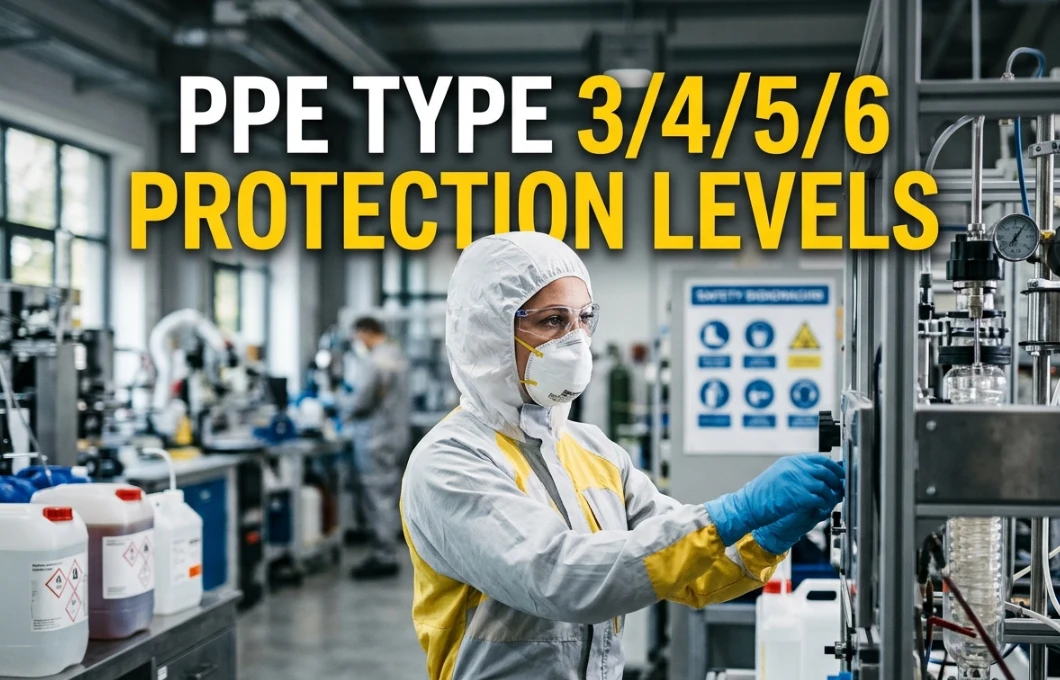
Choosing protective coveralls is not simply a matter of picking a thicker fabric or a garment that looks more resistant. The type of exposure matters just as much. A worker handling liquid chemicals faces a different risk from someone cleaning up dry dust, and the protective clothing needs to match that risk.
Under European protective clothing standards, Types 3, 4, 5 and 6 describe different forms of protection. Understanding these distinctions can help safety managers, PPE distributors and purchasing teams narrow down suitable products before checking the garment’s specific test results and chemical compatibility.
What Does Type 3, 4, 5 and 6 Mean?
PPE Type 3, 4, 5 and 6 refer to protective clothing designed and tested for different exposure conditions. Types 3 and 4 address liquid chemical hazards, while Types 5 and 6 focus on airborne solid particles and limited liquid splashes, respectively.
| PPE type | Main protection | Relevant European standard |
|---|---|---|
| Type 3 | Liquid chemicals under pressure, including liquid jets | EN 14605 |
| Type 4 | Liquid chemical sprays | EN 14605 |
| Type 5 | Airborne solid particles | EN ISO 13982-1 |
| Type 6 | Limited exposure to liquid chemical splashes or spray mist | EN 13034 |
These types are not a simple ranking from low to high protection. Each addresses a different hazard, so the right choice depends on the substance, the way exposure occurs and the conditions of the job.
Type 3 Protective Coveralls: Protection Against Liquid Jets
Type 3 protective clothing is designed for situations where liquid chemicals may strike the garment in the form of a jet. This can be relevant to certain chemical transfer operations, industrial maintenance tasks and work involving pressurized liquid handling.
The garment must meet the applicable liquid-tightness test requirements. Its seams, closures and overall construction matter because protection depends on the complete garment, not just the fabric.
Type 3 certification does not mean a coverall is suitable for every chemical. Before use, check whether the material has been tested against the specific substance and whether its permeation resistance is adequate for the expected exposure time.
Type 4 Protective Coveralls: Protection Against Liquid Sprays
Type 4 clothing is intended for exposure to liquid chemical sprays. It may be considered for selected industrial cleaning, coating and processing tasks where spray contact is a foreseeable hazard.
The distinction between Type 3 and Type 4 lies in the liquid exposure test: Type 3 addresses liquid jets, while Type 4 addresses sprays. Neither type should be selected solely by appearance or fabric thickness.
When comparing products, review the manufacturer’s conformity documentation, seam construction, closure design and chemical resistance data. If the job involves strong chemical jets, substantial liquid contact or an uncertain exposure pattern, a Type 4 garment should not be treated as an automatic substitute for Type 3 protection.
Type 5 Protective Coveralls: Protection Against Airborne Particles
Type 5 protective clothing is designed to protect the body against airborne solid particles under the applicable test conditions. It is commonly considered for tasks involving dry particulate contamination, such as selected insulation work, industrial dust handling and certain powder-processing operations.
Type 5 protection is not the same as liquid chemical protection. A garment tested for airborne particles should not be assumed to resist liquid splashes or chemical penetration.
When purchasing Type 5 coveralls, look at the complete garment’s certification and design. Hood fit, cuffs, ankle openings, closures and the way the suit works with other PPE can all affect how well the wearer is protected during a real task.
Type 6 Protective Coveralls: Limited Liquid Splash Protection
Type 6 clothing is intended for situations involving limited exposure to small quantities of liquid chemicals, including certain light splashes and spray mists. It may suit some low-exposure maintenance, handling or cleaning tasks after a proper risk assessment.
The word “limited” matters. Type 6 is not designed to provide the same liquid-tight protection as Type 3 clothing, and it should not be used as a substitute where hazardous liquids may strike the wearer in forceful jets or where extensive liquid exposure is expected.
For purchasing teams, the key question is whether the expected exposure falls within the garment’s tested performance. If the substance is hazardous, check its safety data sheet and the clothing manufacturer’s chemical resistance information before choosing a suit.
PPE Type 3 vs Type 4: What Is the Difference?
The main difference is the form of liquid exposure addressed by the relevant test.
- Type 3: Designed for liquid chemical jets.
- Type 4: Designed for liquid chemical sprays.
The two types are related, but they are not interchangeable in every workplace. A spray application and a pressurized liquid leak can create very different exposure conditions.
For example, a task involving a controlled chemical spray may call for a different garment assessment from one involving the possibility of a forceful liquid jet. The final selection should follow the workplace risk assessment and the garment’s documented performance.
Type 5/6 Coverall Protection: Why Are They Often Combined?
Type 5/6 coveralls are commonly marketed as garments offering both particle protection and limited liquid splash protection. This combination can be practical for jobs where workers may encounter dry particles alongside occasional, limited splashes.
However, the combined designation does not mean the suit offers strong protection against every solid or liquid hazard. It means the garment has been assessed against the relevant requirements for both types.
A Type 5/6 coverall may be considered for certain cleaning, maintenance, powder-handling or industrial support tasks, provided the specific exposure is within the garment’s tested scope. It should not be selected for high-pressure liquid chemical exposure simply because the product description mentions two protection types.
Buyers should confirm the actual certification, material construction, seam performance and intended use. Where chemical contact is possible, the substance itself and the expected duration of exposure also need to be considered.
How to Choose the Right Chemical Protective Suit Type
Before ordering protective coveralls, identify what workers may encounter and how that exposure could happen. A product label alone cannot replace a task-specific risk assessment.
1. Identify the hazard. Determine whether the main concern is a liquid jet, chemical spray, airborne solid particles or limited liquid splashes. Consider whether more than one hazard is present.
2. Check the applicable standard. Look for the relevant type designation and supporting conformity documentation. Confirm that the exact garment, rather than just the fabric, has been assessed against the required performance criteria.
3. Check chemical compatibility. Where chemicals are involved, review the safety data sheet and the manufacturer’s resistance information. Chemical permeation and degradation can vary significantly between substances and materials.
4. Inspect the garment design. Consider seams, zippers, elastic cuffs, hood coverage and the interfaces with gloves, footwear, eye protection and respiratory protection. Gaps between items can undermine the overall protective setup.
5. Match protection to the task. Consider exposure frequency, duration, pressure, temperature and the possibility of accidental contact. If the hazard is uncertain or severe, consult a qualified safety professional rather than relying on a general product description.
6. Confirm replacement and disposal procedures. Follow the manufacturer’s instructions and workplace procedures for use, removal, disposal and replacement. Disposable clothing should not be reused unless the manufacturer explicitly permits it and the applicable safety procedures support that use.
Does Fabric Material Determine the Protection Type?
Fabric construction affects comfort, durability and barrier performance, but a material name alone does not establish a garment’s protection type.
Polypropylene nonwoven, SMS and microporous laminated materials are used in different disposable protective garments. Their suitability depends on the complete product design and verified test results. A thicker fabric is not automatically better for every hazard, and a microporous material should not be assumed to resist every chemical.
For industrial buyers, the useful comparison is between documented performance, intended application, fit and total purchasing cost—not fabric weight alone.
FAQ
1. What does Type 3, 4, 5 and 6 mean in PPE?
These designations identify protective clothing tested for different exposure conditions. Type 3 addresses liquid jets, Type 4 liquid sprays, Type 5 airborne solid particles and Type 6 limited liquid chemical splashes or spray mist.
2. Is Type 3 better than Type 4 protective clothing?
Not in every situation. Type 3 is designed for liquid jets, while Type 4 is designed for liquid sprays. The appropriate choice depends on the exposure hazard and the garment’s documented performance.
3. Can Type 5 coveralls protect against chemical splashes?
Type 5 is intended for airborne solid particles. It does not, by itself, establish protection against liquid chemical splashes. Check whether the garment also meets the relevant liquid-splash requirements.
4. What does Type 5/6 coverall protection mean?
It generally means the garment has been assessed for both airborne solid particle protection and limited liquid splash protection. It does not mean the coverall is suitable for every chemical or high-pressure liquid exposure.
5. Are Type 5/6 coveralls suitable for chemical spills?
Not necessarily. Suitability depends on the chemical, the amount of liquid, exposure pressure and duration, and the garment’s verified resistance. Type 5/6 clothing should not be assumed suitable for major spills or pressurized chemical jets.
6. Which standard applies to Type 3 and Type 4 coveralls?
EN 14605 covers protective clothing against liquid chemicals, including Type 3 liquid-tight and Type 4 spray-tight clothing. Buyers should verify the specific garment’s conformity documentation.
7. What is the difference between Type 5 and Type 6 coveralls?
Type 5 addresses airborne solid particles, while Type 6 addresses limited exposure to liquid chemical splashes or spray mist. They address different hazards rather than successive levels of the same protection scale.
8. How can I choose disposable chemical protective coveralls?
Start with a workplace risk assessment, identify the exposure type and chemical involved, and check the garment’s certification, chemical resistance, fit and compatibility with other PPE. When the risks are unclear, seek advice from a qualified safety professional.
Choose Protective Coveralls Based on Verified Performance
Selecting protective clothing starts with understanding the exposure, not simply choosing a type number. Type 3, 4, 5 and 6 coveralls are intended for different conditions, and the right garment must match the risks workers may actually face.
For PPE distributors and industrial purchasing teams, compare the product’s documented protection type, construction, available sizes and intended application before placing an order. When chemical exposure is involved, verify compatibility with the specific substance and follow the workplace’s protective equipment procedures.