
Blog
Disposable Patient Gown Design: Neck, Sleeve and Waist Options

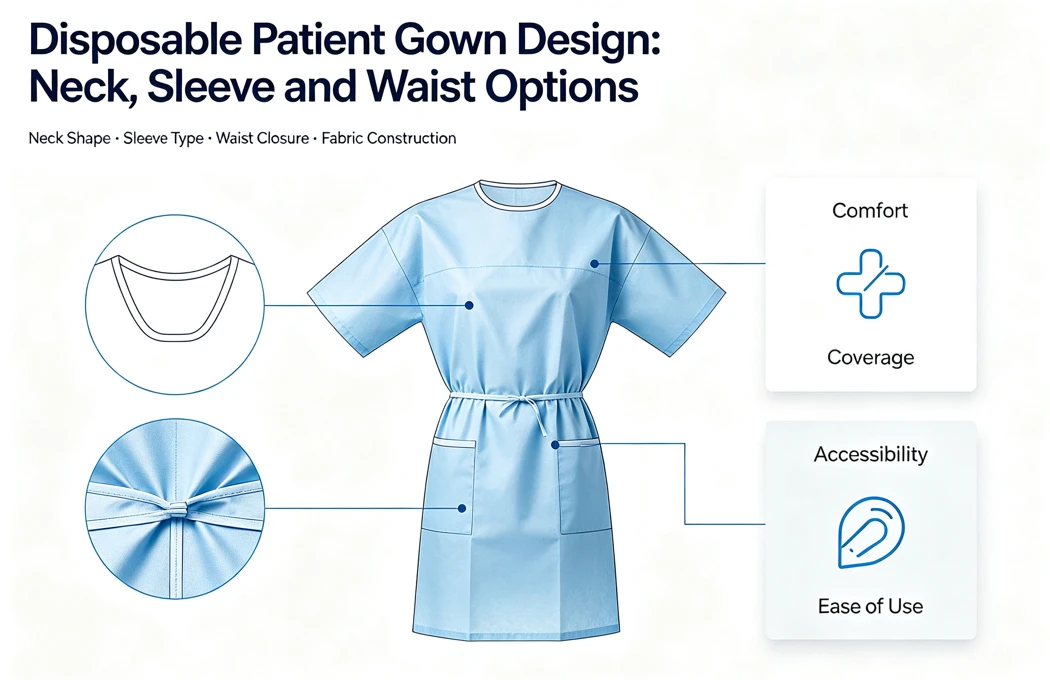
Choosing the right disposable patient gown design involves more than selecting a color or material. Neck shape, sleeve type, waist closure, and fabric construction can affect patient comfort, coverage, accessibility, and ease of use.
For hospitals, clinics, and medical distributors, understanding these design options makes it easier to specify the right gown for different applications and purchasing requirements.
Why Does Patient Gown Design Matter?
A well-designed patient gown should provide appropriate coverage while allowing healthcare professionals convenient access during examinations and routine care.
The main design factors include:
- Neck shape and closure
- Sleeve length and cuff type
- Waist closure
- Material and GSM
- Size and color
- Packaging and customization
The appropriate combination depends on the intended application. A lightweight PP gown may be suitable for routine patient care, while SMS can be considered when additional barrier performance is required.
Patient Gown Sleeve Types
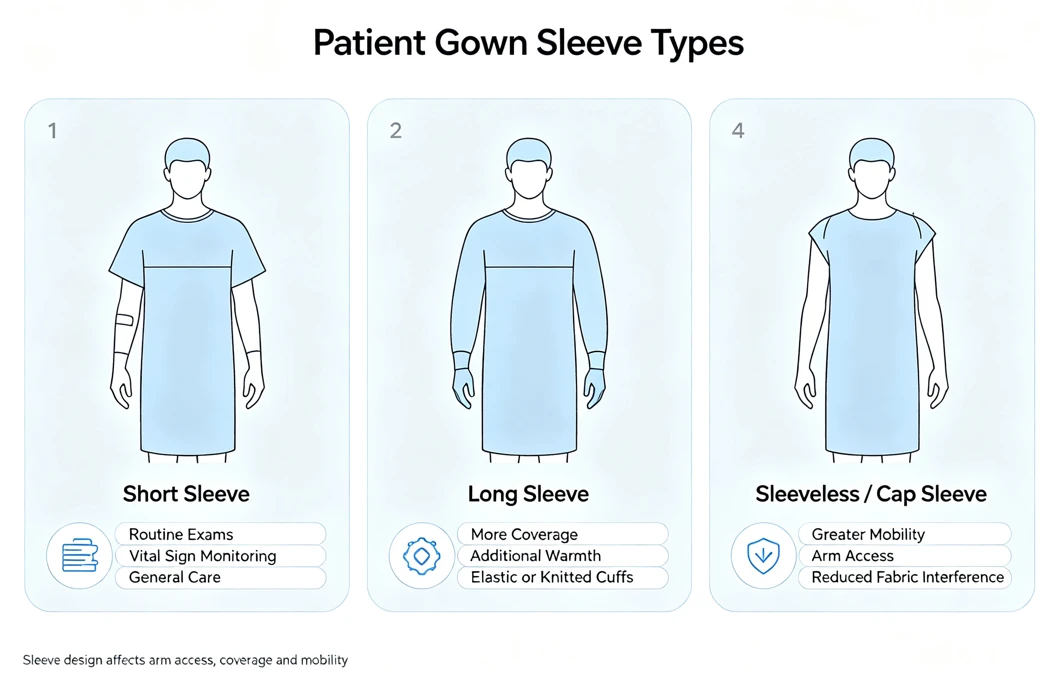
Sleeves directly affect arm access and coverage. Common patient gown sleeve types include short sleeves, long sleeves, and sleeveless or cap-sleeve configurations.
Short Sleeve
Short sleeves leave more of the lower arm exposed, making them suitable for routine examinations, vital sign monitoring, and general patient care.
For hospitals that need a lightweight option, our Lightweight Disposable Patient Gown for Hospital Use provides a practical choice for routine use.
Long Sleeve
Long sleeves provide greater arm coverage and can be useful when additional coverage or warmth is preferred. They can be combined with open, elastic, or knitted cuffs depending on the product design.
Sleeveless or Cap Sleeve
Sleeveless and cap-sleeve designs provide greater upper-body mobility and arm access. They may be selected for specific examinations or procedures where reduced fabric interference is useful.
Neck Options in Disposable Gown Design
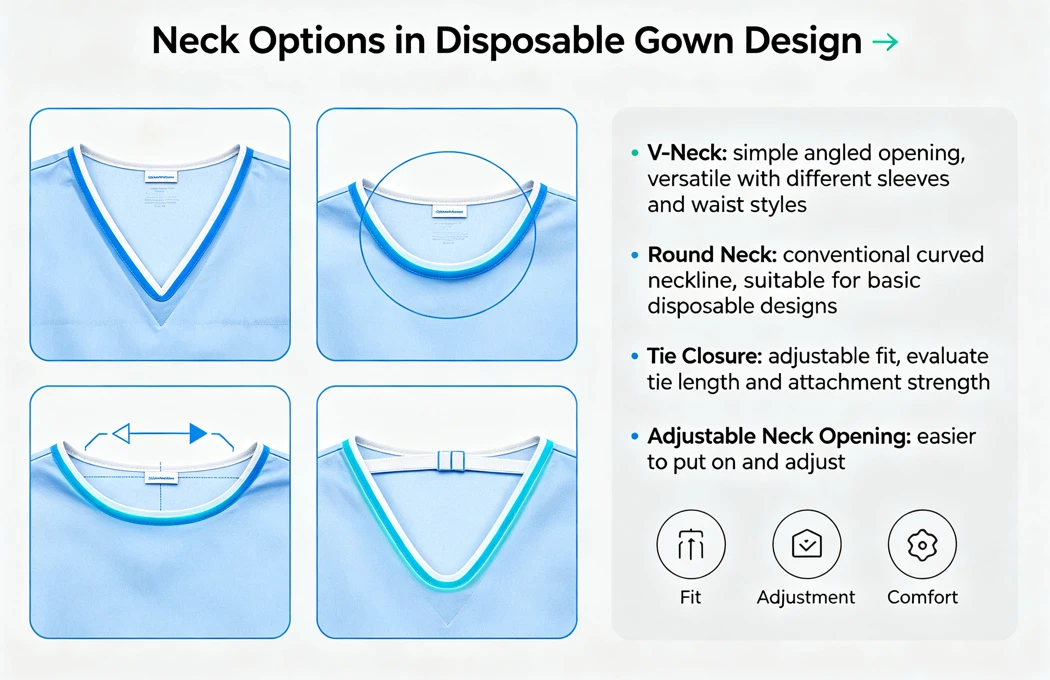
The neck structure affects how easily a patient can put on and adjust the gown.
Common options include:
- V-neck
- Round neck
- Tie closure
- Adjustable neck opening
V-Neck
A V-neck provides a simple neckline with an angled opening. It can be combined with different sleeve and waist configurations for general patient clothing.
Round Neck
A round neck provides a conventional curved neckline and is suitable for basic disposable patient gown designs.
Tie Closure
Tie closures allow the neckline or back opening to be adjusted according to the patient’s body size. Buyers should pay attention to tie length and attachment strength when evaluating products.
For a basic non-woven option, see our **Disposable Non Woven Patient Gown for Medical Use**.
Patient Gown Waist Design
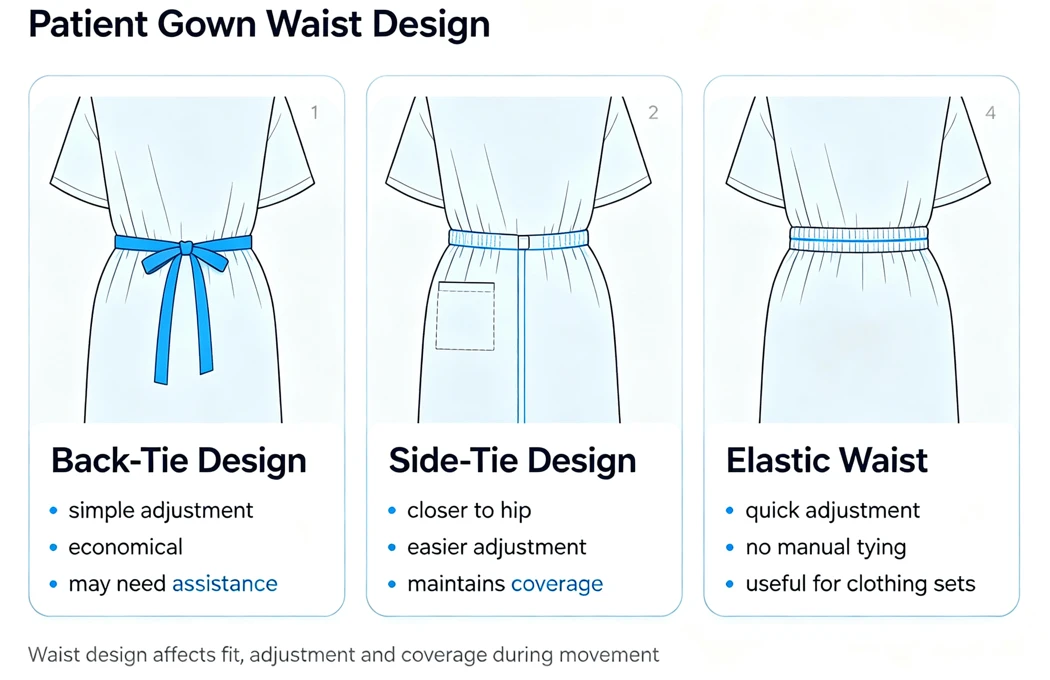
The patient gown waist design influences fit, adjustment, and overall coverage.
Back-Tie Design
Back ties are commonly used in open-back patient gowns. They provide a simple and economical way to adjust the garment.
However, patients with limited mobility may need assistance when securing the ties.
Side-Tie Design
Side ties place the closure closer to the patient’s hip. Depending on the garment structure, this can make adjustment easier and help maintain coverage during movement.
Elastic Waist
Elastic waist designs provide quick adjustment without requiring the patient to tie the garment manually. They can be particularly useful for patient clothing sets.
When choosing a waist design, buyers should consider:
- Tie or elastic strength
- Closure position
- Fabric overlap
- Ease of adjustment
- Patient mobility
- Available sizes
Materials for Different Patient Gown Design Options
Material selection is another important part of patient gown design options.
PP Non-Woven
PP is lightweight, breathable, and economical. It is commonly used for routine patient clothing and short-term medical care.
SMS
SMS combines spunbond and meltblown layers. It can provide greater barrier performance than basic PP and may be considered for applications requiring additional protection.
Our SMS Disposable Patient Gown with Barrier Protection is one option for buyers looking for an SMS construction.
Spunlace
Spunlace provides a softer, more textile-like feel and can be considered when comfort is an important purchasing factor.
PP+PE
PP+PE or coated materials can be selected when greater liquid resistance is required. Buyers should confirm the actual material specifications and applicable test data with the manufacturer.
How to Choose a Disposable Patient Gown?
Before placing a bulk order, procurement teams should confirm the following specifications:
| Design Factor | Options to Consider |
|---|---|
| Neck | V-neck / Round neck |
| Sleeve | Short / Long / Sleeveless |
| Cuff | Open / Elastic / Knitted |
| Waist | Back tie / Side tie / Elastic |
| Material | PP / SMS / Spunlace / PP+PE |
| GSM | According to application |
| Size | Standard / OEM |
| Color | Blue / White / Yellow / Green / Pink / Light Blue / OEM |
| Packaging | Bulk / Individual / OEM |
| Customization | Size / Color / Logo / Packaging |
For facilities that prefer a two-piece configuration, the PP Non Woven Disposable Patient Gown Set can be considered for standardized patient clothing requirements.
The final specification should be based on the intended use, required coverage, comfort expectations, and applicable purchasing requirements.
Choosing the Right Patient Gown
Different healthcare environments may require different combinations of design features.
For routine examinations and general patient care, a lightweight PP non-woven gown can provide practical patient coverage. For applications requiring additional barrier performance, an SMS construction may be more appropriate.
Buyers can also compare different materials, sleeve configurations, neck designs, and waist options in our **Disposable Patient Gown Collection**.
For OEM projects, manufacturers can customize specifications such as GSM, dimensions, colors, sleeve types, neck styles, waist closures, and packaging according to the buyer’s requirements.
Conclusion
The right disposable patient gown design should match the intended application and patient-care requirements.
Neck design affects wearing and adjustment, sleeve configuration influences arm access and coverage, while waist design affects fit and ease of use. Material selection then determines characteristics such as weight, breathability, softness, and barrier performance.
For B2B procurement, buyers should define these specifications before requesting samples and quotations. Comparing the complete garment design helps healthcare facilities select a patient gown that fits their practical requirements.
FAQ
1. What are the common patient gown sleeve types?
Common options include short sleeves, long sleeves, sleeveless designs, and cap sleeves. The choice depends on the required arm access and coverage.
2. What neck designs are available for disposable patient gowns?
Common neck options include V-neck and round neck designs. Tie closures can also be used for adjustment.
3. What is a common patient gown waist design?
Back ties, side ties, and elastic waist configurations are common options. The appropriate choice depends on the required fit and ease of adjustment.
4. Which material is suitable for disposable patient gowns?
PP is suitable for lightweight, economical patient clothing, while SMS can be considered when additional barrier performance is required. Spunlace and PP+PE are also available for specific requirements.
5. Can disposable patient gown designs be customized?
Yes. OEM customization can include material, GSM, size, color, neck design, sleeve type, waist configuration, packaging, and other product specifications.