
Blog
What Does a Blue Hospital Gown Mean? Uses, Colors & Materials

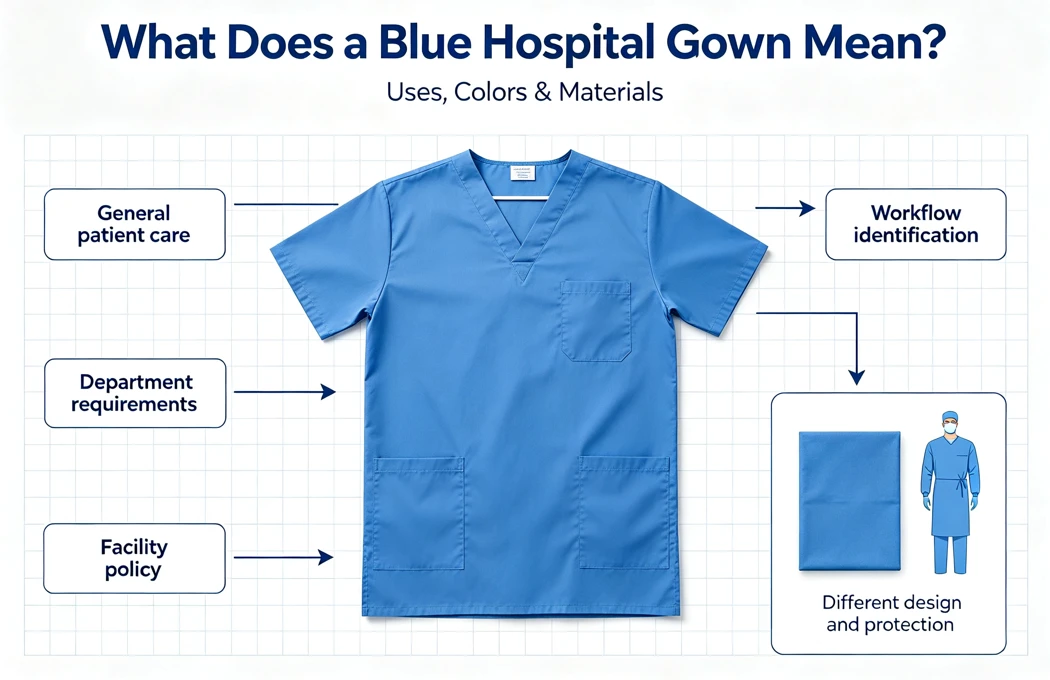
In many healthcare facilities, blue may be used for general patient care, but there is no universal color-coding system for hospital gowns. Each hospital or healthcare organization may establish its own gown colors based on workflow, department requirements, patient identification, or internal policies.
A blue gown does not automatically indicate a patient’s medical condition, infection status, or level of clinical risk. The meaning of the color depends on how the healthcare facility uses its patient apparel.
It is also important to distinguish a blue patient gown from a blue isolation gown or surgical gown. Although these garments may share similar colors, their intended users, designs, and protective functions can be different.
What Does a Blue Hospital Gown Mean?
A blue hospital gown is commonly used as patient apparel in some hospitals, clinics, and healthcare facilities. It may be supplied for hospital admission, routine examinations, consultations, diagnostic procedures, and other situations where patients need convenient clinical clothing.
However, blue does not have one standardized meaning across all hospitals.
Some facilities may use blue as a general patient gown color, while others may assign different colors to particular departments, patient groups, or operational purposes. For this reason, patients should not assume that a blue gown indicates a specific diagnosis or infection-control status.
For medical procurement teams, the intended use is more important than the color itself. Buyers should evaluate the gown according to its material, construction, size, fabric weight, design, and required performance.
Why Do Healthcare Facilities Use Different Gown Colors?
Healthcare facilities may use different gown colors for practical and organizational reasons.
Visual Identification
Different colors can help staff quickly recognize particular garment types or patient-apparel groups. This can simplify daily workflows when several types of gowns are used within the same facility.
Department and Workflow Organization
Color can also support internal organization. A hospital may assign particular colors to specific departments, procedures, or types of patient clothing.
Patient Communication
A consistent color system can make it easier for patients and healthcare workers to recognize certain garment types without checking labels or packaging.
Inventory Management
Color differentiation can help purchasing and inventory teams distinguish between different gown specifications, sizes, or intended applications.
However, gown color itself is not an infection-control measure. CDC guidance focuses on selecting protective gowns according to the anticipated interaction and potential exposure to blood, body fluids, or other potentially infectious materials.
What Is the Difference Between a Blue Patient Gown and a Blue Isolation Gown?
A blue patient gown and a blue isolation gown can look similar, but they serve different purposes.
| Feature | Blue Patient Gown | Blue Isolation Gown |
|---|---|---|
| Primary user | Patient | Healthcare personnel |
| Main purpose | Comfort, modesty, and clinical access | Protection from anticipated exposure |
| Typical design | Open-back, ties, snaps, or easy-access construction | Greater body and arm coverage |
| Material focus | Comfort, breathability, and practical use | Construction and barrier performance |
| Protection requirements | Depend on intended use and product specifications | May be evaluated according to applicable protective-gown requirements |
| Color meaning | Facility-specific | Facility-specific |
Patient gowns are primarily designed to make examinations, treatment, and patient movement more convenient. Isolation gowns, by contrast, are protective apparel used by healthcare personnel when exposure to infectious material or body fluids is anticipated. CDC guidance states that the need for an isolation gown depends on the nature of the patient interaction and anticipated exposure.
ANSI/AAMI PB70 is relevant to protective apparel such as surgical and isolation gowns. It should not automatically be treated as a universal standard for every patient gown. The FDA describes PB70 as a classification system for protective apparel and drapes based on liquid barrier performance.
Therefore, a blue patient gown should not be described as an isolation gown simply because both garments are blue.
What Materials Are Used for Disposable Blue Hospital Gowns?
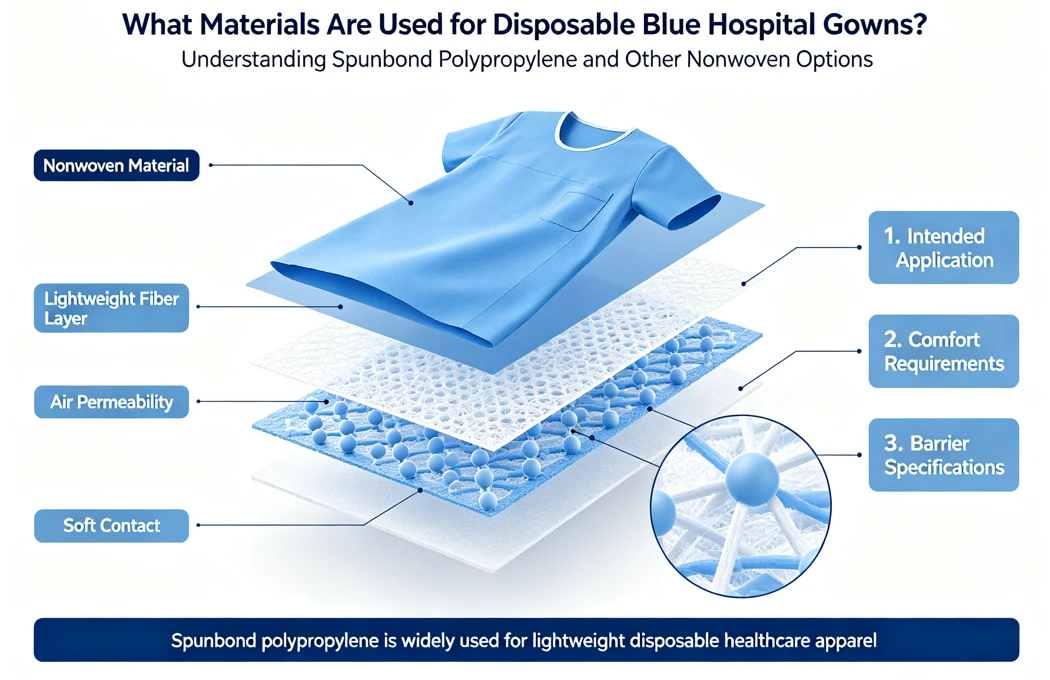
Disposable blue hospital gowns can be produced from several nonwoven materials. The most appropriate material depends on the intended application, desired comfort, barrier requirements, and purchasing specifications.
Spunbond Polypropylene
Spunbond polypropylene is lightweight and commonly used for disposable healthcare apparel. It can provide comfortable coverage for routine patient use while keeping the garment relatively lightweight.
For hospitals looking for a lightweight disposable option, the Lightweight Disposable Patient Gown for Hospital Use provides an example of PP nonwoven patient apparel.
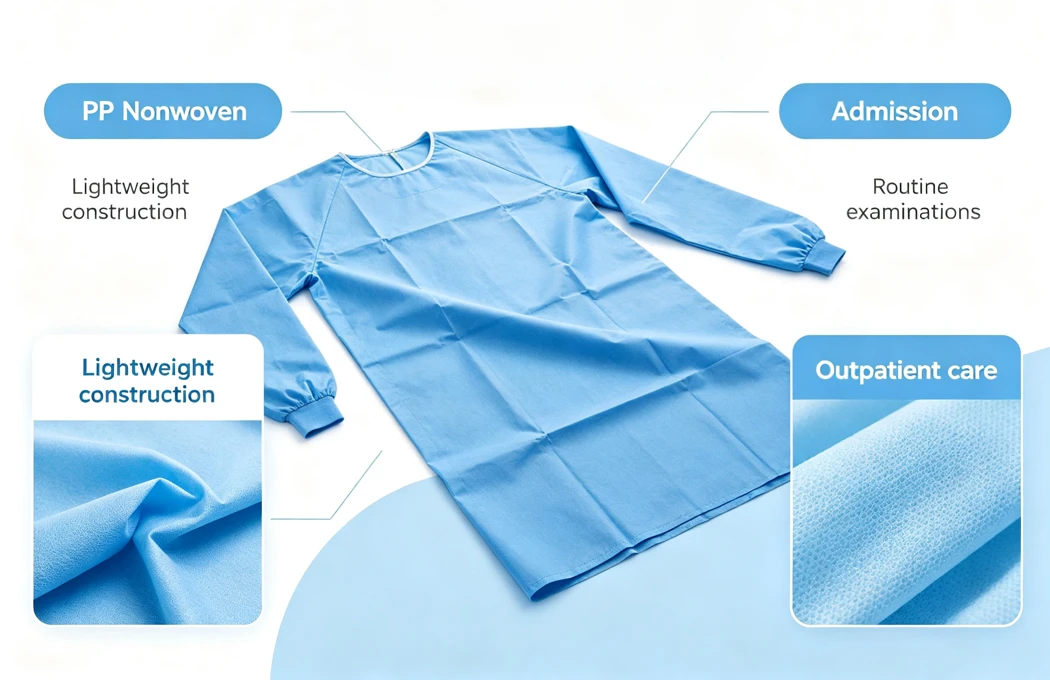
PP Nonwoven
PP nonwoven is another common material for disposable patient clothing. It offers a lightweight construction that can be suitable for routine examinations, admission, outpatient care, and similar applications.
A PP Non Woven Disposable Patient Gown Set can be considered when a coordinated patient clothing solution is preferred.
The actual performance of a PP gown depends on fabric weight, garment construction, seams, design, and other product specifications.
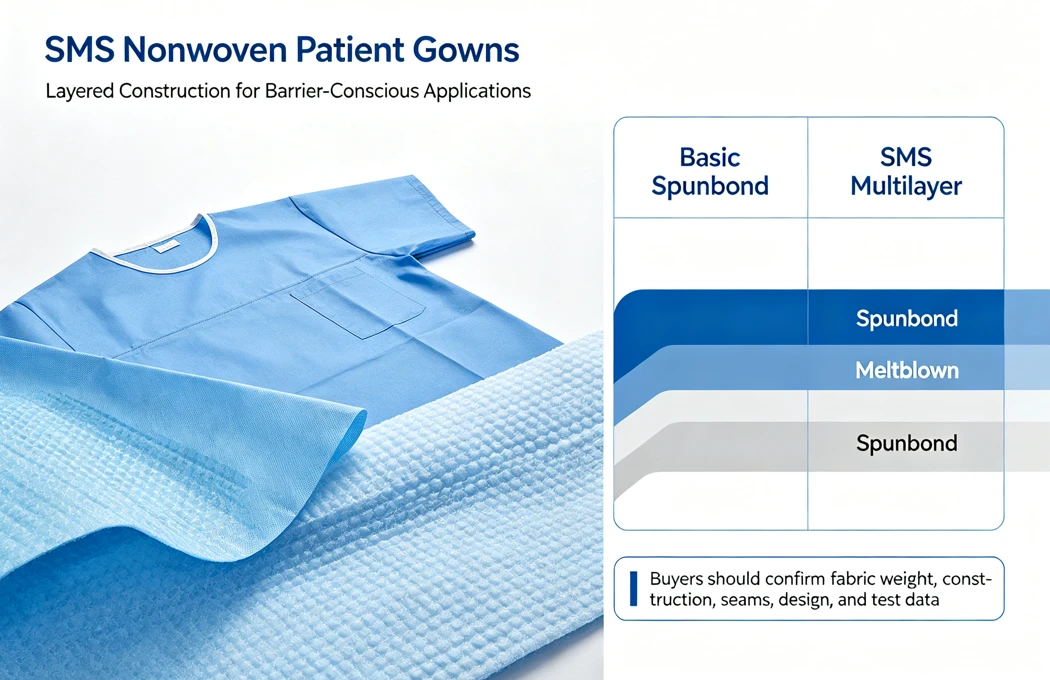
SMS Nonwoven
SMS consists of spunbond, meltblown, and spunbond layers. This multilayer structure can provide different characteristics from a basic single-layer spunbond material.
For applications requiring greater barrier characteristics, buyers may consider an SMS Disposable Patient Gown with Barrier Protection.
However, the material name alone does not establish a specific level of liquid resistance or protection. Procurement teams should verify the manufacturer’s specifications and applicable test documentation.
PE-Laminated Nonwoven
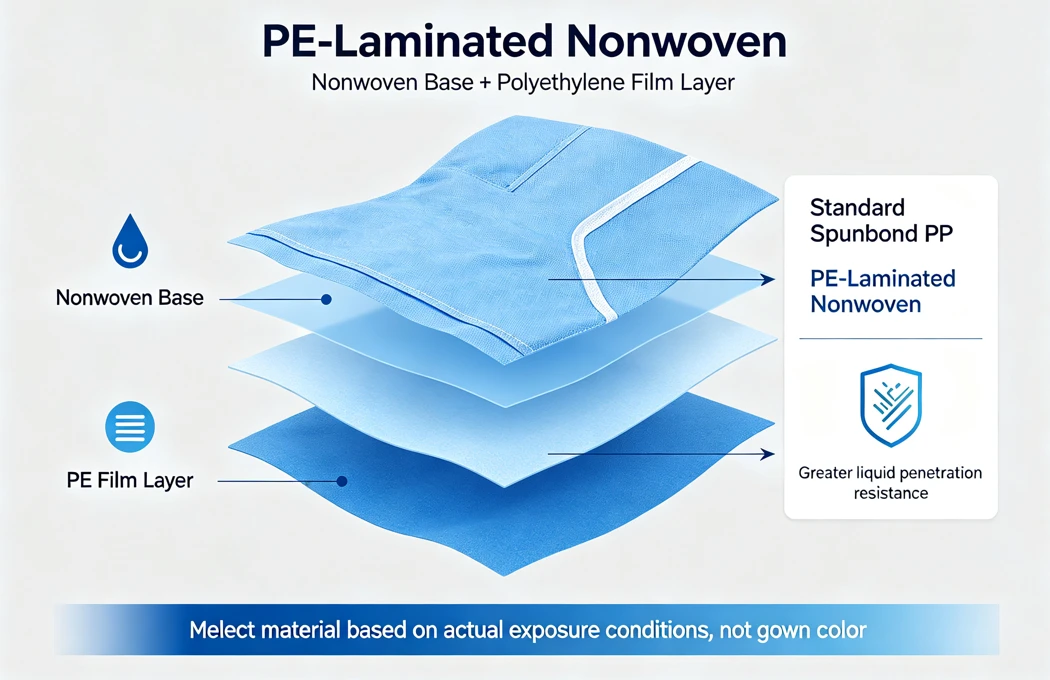
PE-laminated nonwoven combines a nonwoven base with a polyethylene film layer. This construction can provide greater resistance to liquid penetration than standard spunbond PP.
The appropriate material should therefore be selected according to the actual exposure conditions rather than the gown’s color.
When Are Blue Patient Gowns Used?
Blue patient gowns may be used in a variety of healthcare environments, depending on the facility’s internal clothing system.
Common applications include:
- Hospital admission
- Routine medical examinations
- Outpatient consultations
- Diagnostic procedures
- Pre-procedure preparation
- General clinical care
- Medical and healthcare facilities
- Clinics and primary-care environments
For clinic-based applications, a Disposable Patient Gown for Clinic and Medical Care may provide a practical disposable clothing option for routine patient use.
The color can support visual organization, but the application should determine the garment specification.
For example, a lightweight PP gown may be appropriate when comfort and basic coverage are the main requirements. An SMS or PE-laminated construction may be more appropriate when additional barrier characteristics are required for the intended application.
What Should Medical Procurement Teams Consider When Choosing a Blue Hospital Gown?
Color is only one part of patient-gown selection. Medical procurement teams should consider the complete product specification before placing a bulk order.
1. Material
Determine whether PP, SMS, PE-laminated nonwoven, or another material is appropriate for the intended application.
2. Fabric Weight
Fabric weight affects the garment’s feel, coverage, and overall construction. Buyers should select the appropriate GSM according to the intended use rather than assuming that a heavier fabric is always better.
3. Size and Design
Consider garment dimensions, neckline, sleeve construction, opening method, waist ties, and other design details that affect patient comfort and clinical access.
4. Barrier Performance
If liquid resistance or other protective performance is required, verify the manufacturer’s technical specifications and relevant test reports.
The FDA recommends considering intended use and the desired level of protection when selecting medical gowns.
5. Product Documentation
Depending on the destination market and intended product classification, buyers may need technical documentation, quality-system information, conformity documentation, or relevant test reports.
Requirements can vary between markets, so procurement teams should confirm the applicable requirements before purchasing.
6. Customization
For large-volume orders, manufacturers may offer customization of color, size, fabric weight, garment construction, packaging, labeling, and other specifications.
7. Manufacturing Capacity
Bulk buyers should also evaluate production capacity, quality-control procedures, lead times, packaging requirements, and the supplier’s ability to maintain consistent specifications across repeated orders.
How to Choose the Right Blue Hospital Gown?
Choosing a blue hospital gown should start with the intended application rather than the color.
A practical selection process includes the following steps:
1. Define the intended use.
Determine whether the gown will be used for hospital admission, examinations, outpatient care, diagnostic procedures, or another application.
2. Select the appropriate material.
PP is generally suitable for lightweight disposable apparel, while SMS or PE-laminated constructions may be considered when greater barrier characteristics are required.
3. Confirm fabric weight.
Choose the appropriate GSM according to comfort, coverage, and application requirements.
4. Check the garment design.
Review the neckline, sleeves, opening, ties, closures, and overall dimensions.
5. Confirm sizing requirements.
Make sure the available dimensions are suitable for the intended patient population.
6. Verify performance requirements.
When barrier performance matters, request relevant specifications and test documentation from the supplier.
7. Review customization options.
For private-label or large-volume purchasing, confirm available colors, sizes, packaging, labels, and OEM/ODM options.
8. Evaluate the supplier.
Consider manufacturing experience, quality management, documentation, production capacity, and export experience.
For hospitals and healthcare facilities purchasing disposable patient apparel in bulk, explore the full range of disposable patient gowns available from RuiChen.
Conclusion
A blue hospital gown does not have one universal medical meaning. In some healthcare facilities, blue is used for general patient apparel, while other organizations may use different colors according to their own internal systems.
The color should not be used to determine infection status, clinical risk, or protective performance. Instead, hospitals and medical procurement teams should evaluate the gown according to its intended use, material, fabric weight, construction, size, barrier requirements, documentation, and customization options.
For routine patient care, lightweight PP nonwoven gowns can provide practical disposable coverage. SMS and PE-laminated constructions may be considered when the intended application requires additional barrier characteristics.
When selecting disposable patient apparel, choosing the right specification is more important than choosing a color alone.
Frequently Asked Questions
Why are most hospital gowns blue?
Blue is commonly used for patient gowns in some healthcare facilities, but there is no universal rule requiring hospitals to use blue. Each facility may establish its own gown-color system according to operational and organizational needs.
What is the difference between a blue and yellow hospital gown?
There is no universal medical meaning for either color. Some facilities may use yellow gowns for specific purposes, such as fall-risk identification or special precautions, but color systems vary between organizations.
Are blue disposable patient gowns waterproof?
Not necessarily. Standard spunbond PP gowns are generally designed for lightweight coverage rather than waterproof protection. SMS and PE-laminated constructions may provide greater resistance to liquid penetration, depending on the complete garment design and tested performance.
Can disposable patient gowns be customized?
Yes. Depending on the manufacturer, disposable patient gowns can be customized by color, size, fabric weight, material, garment design, packaging, labeling, and other OEM/ODM requirements.
How are disposable patient gowns disposed of?
Disposal depends on the gown’s use and local healthcare-waste requirements. Gowns contaminated with blood, body fluids, or other potentially infectious materials may require disposal through the applicable clinical or regulated waste stream. CDC guidance recommends removing isolation gowns in a manner that prevents contamination and disposing of them in the appropriate designated container when applicable.