
Blog
SMS vs Microporous Coveralls: Key Differences

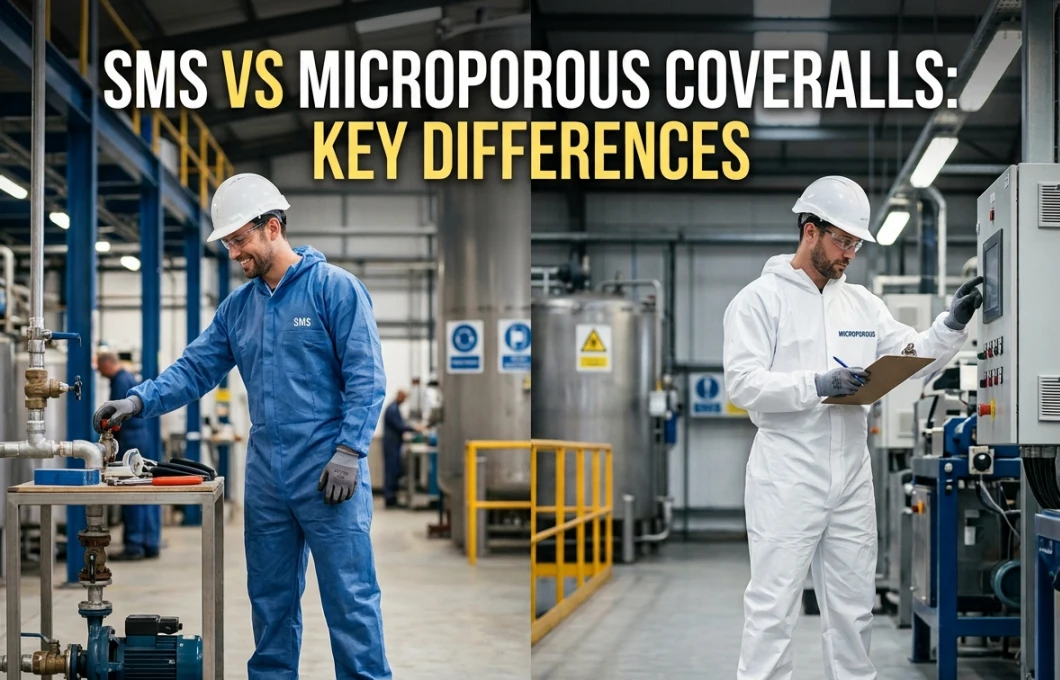
When sourcing disposable protective coveralls, the material can make a noticeable difference to worker comfort, liquid resistance, and suitability for a particular job. SMS and microporous coveralls are two common options, but they are not designed to meet exactly the same needs.
SMS fabric is often considered when breathability and comfortable wear matter. Microporous coveralls are generally preferred when a laminated barrier against liquid splashes is a higher priority. The right choice depends on the actual hazards, the garment’s construction, and the protection standards required for the job.
For importers, PPE distributors, and industrial purchasing teams, understanding the difference between SMS and microporous coveralls helps narrow down product specifications before requesting samples or placing a bulk order.
What Is the Difference Between SMS and Microporous Coveralls?
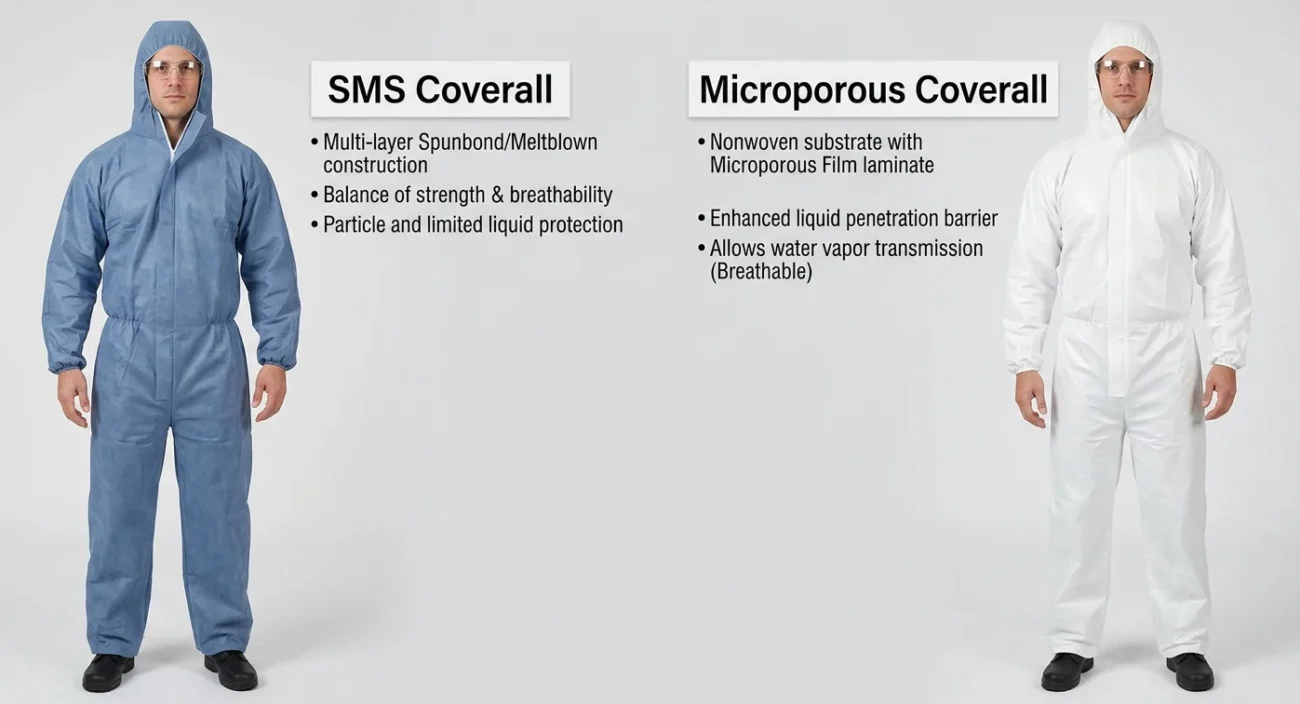
SMS coveralls use a multilayer nonwoven fabric made from spunbond, meltblown, and spunbond layers. This construction balances fabric strength, breathability, and barrier performance against certain particles and limited liquid exposure, depending on the material specification.
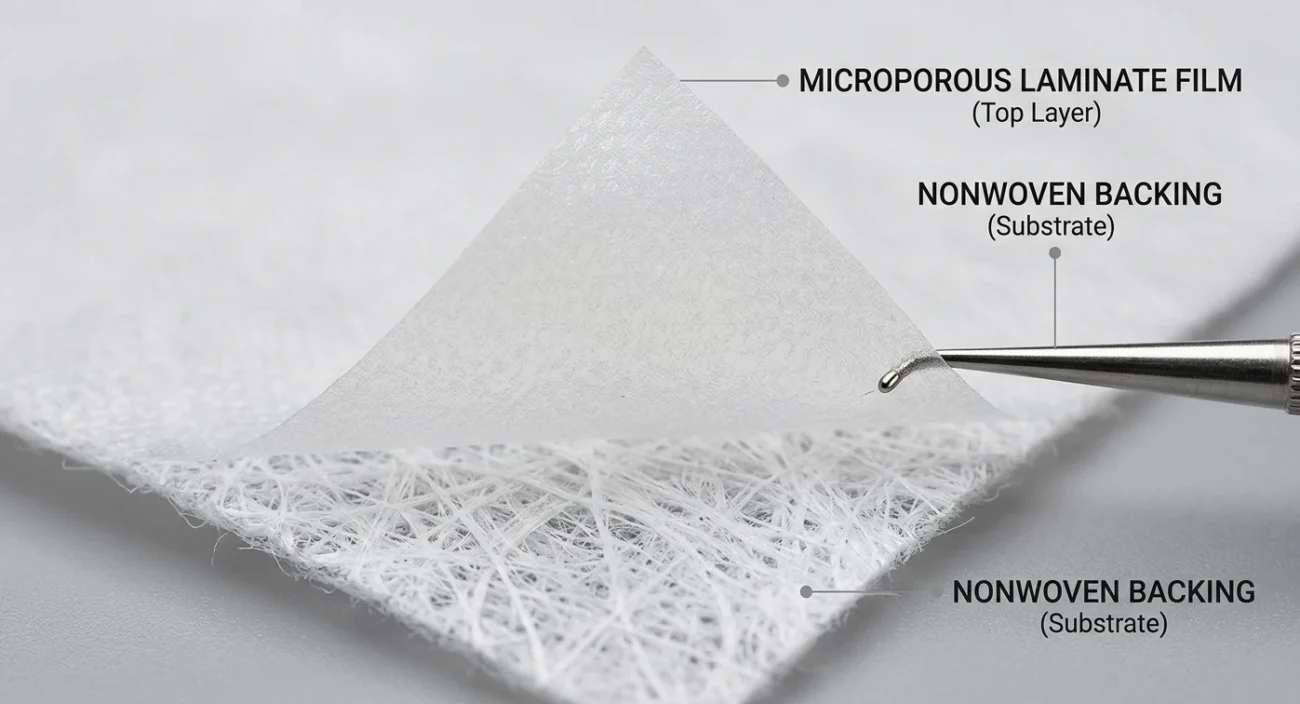
Microporous coveralls typically combine a nonwoven substrate with a microporous film laminate. The film provides an additional barrier against liquid penetration while allowing some water vapor to pass through.
The main difference is how each material balances comfort and barrier performance.
- SMS coveralls: A practical option when breathability, lightweight construction, and protection against specified dry particles are important.
- Microporous coveralls: Worth considering when greater resistance to liquid splashes and a laminated barrier are needed.
- Both materials: Must be evaluated according to the relevant hazards, garment design, seam construction, and applicable test results.
Neither material automatically guarantees a particular level of protection. Two coveralls made from the same material can perform differently because of fabric weight, treatments, seams, closures, and overall construction.
Understanding SMS Fabric
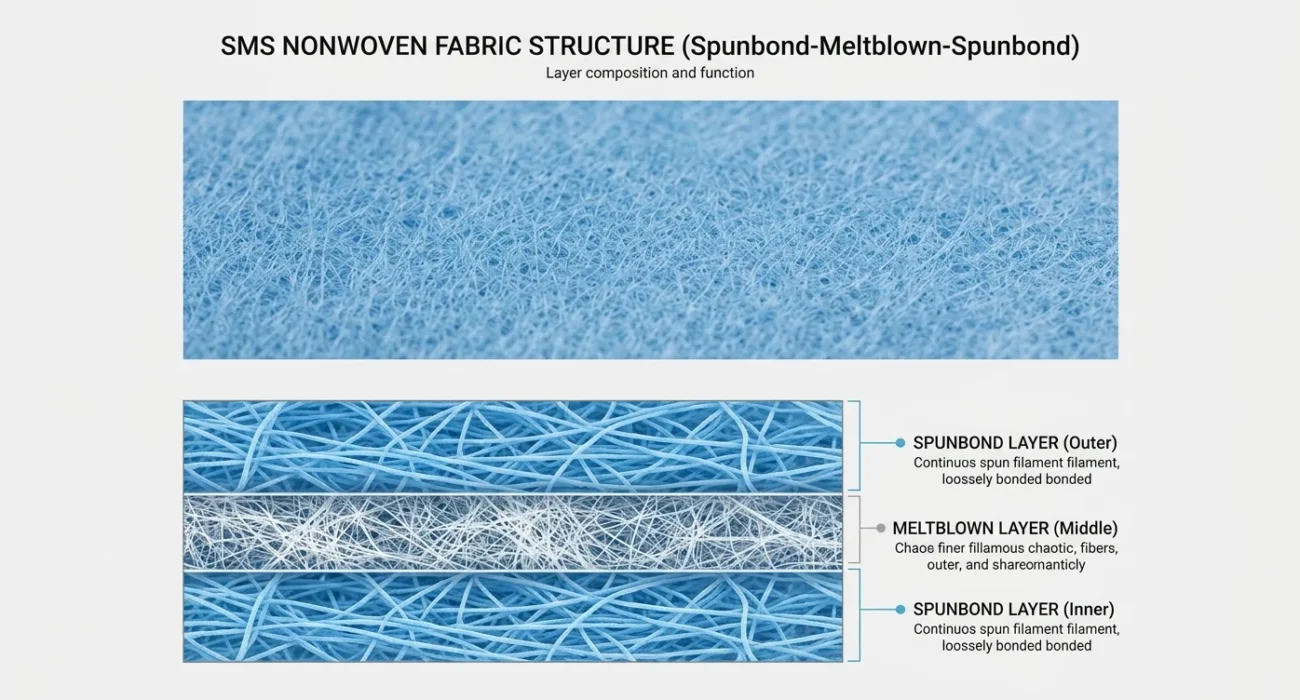
SMS stands for Spunbond-Meltblown-Spunbond. The fabric contains three functional layers, although the exact properties depend on the manufacturing process and material specification.
The outer spunbond layers contribute to strength and fabric integrity. The middle meltblown layer helps provide barrier performance against certain particles. Together, these layers create a nonwoven material commonly used in disposable protective clothing.
SMS coveralls are often considered for dry industrial work, dust-control tasks, and other environments where the required protection level is compatible with the garment’s tested performance.
Their breathable construction can also be useful when workers need to wear protective clothing for extended periods. However, actual comfort depends on fabric weight, garment fit, temperature, humidity, and the intensity of physical work.
For buyers evaluating this material, the important questions are whether the fabric meets the required performance specifications and whether the finished garment provides adequate coverage for the intended task.
Understanding Microporous Coveralls
Microporous coveralls generally use a nonwoven base laminated with a thin microporous film, commonly made from polyethylene. The laminate changes the way the fabric interacts with liquids and water vapor.
Compared with a standard SMS material, a suitable microporous laminate can offer greater resistance to liquid penetration. This makes it an option for certain cleaning, maintenance, and industrial tasks where liquid splashes are a concern.
The word microporous does not mean that the garment is suitable for every chemical or hazardous substance. Resistance depends on the specific liquid, exposure conditions, film formulation, seams, and garment design.
A coverall that resists water may not provide adequate protection against a particular solvent or concentrated chemical. Buyers should review the manufacturer’s test reports and confirm that the finished garment is appropriate for the intended exposure.
SMS Coverall vs Microporous: Key Performance Differences
When comparing SMS and microporous coveralls, procurement teams should evaluate several factors rather than choosing based on material names alone.
| Comparison factor | SMS coveralls | Microporous coveralls |
|---|---|---|
| Material structure | Spunbond-meltblown-spunbond nonwoven | Nonwoven substrate with a microporous film laminate |
| Breathability | Generally higher, depending on construction | Allows some vapor transmission; often less breathable than comparable SMS fabric |
| Liquid resistance | Depends on fabric treatment and tested performance | Generally offers stronger resistance to liquid penetration |
| Dry particle protection | Depends on fabric and garment testing | Depends on laminate and garment testing |
| Wearing comfort | Often suitable for extended wear when the design and environment permit | May feel warmer or less fabric-like, depending on construction |
| Flexibility | Depends on GSM, fabric layers, and garment design | Depends on film, substrate, and laminate construction |
| Typical consideration | Breathability and specified particle protection | Enhanced liquid barrier requirements |
| Selection priority | Comfort and required barrier performance | Liquid resistance and required barrier performance |
These comparisons describe common material tendencies, not guaranteed performance levels for every product.
Breathability and Worker Comfort
SMS coveralls are often preferred when airflow and comfort are important. Their nonwoven structure can provide a softer, more fabric-like feel than some laminated alternatives.
This may be useful in manufacturing facilities, dry processing environments, and other workplaces where workers perform physical tasks for several hours.
Microporous coveralls can also transmit water vapor, but the film layer may change the garment’s feel and thermal comfort. The difference becomes more noticeable in hot environments or during strenuous work.
Purchasers should consider the complete working environment, not just the fabric. A lighter garment may improve comfort, but it must still provide the protection required by the job.
Liquid Resistance and Barrier Performance
Liquid resistance is often the deciding factor when buyers compare SMS coveralls with microporous alternatives.
A microporous laminate generally provides a stronger liquid barrier than untreated or conventionally constructed SMS material. However, the actual level of resistance must be established through relevant testing.
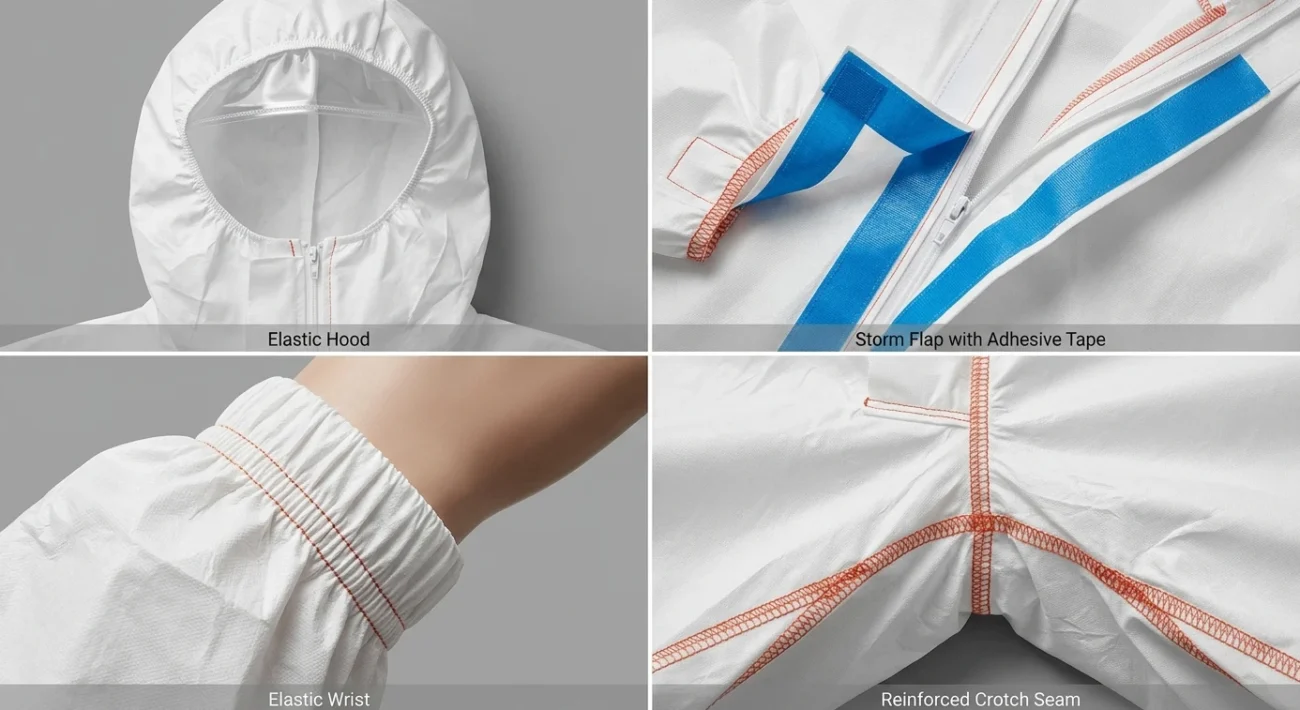
The garment’s seams, zipper area, cuffs, hood, and other openings also matter. Liquid can enter through vulnerable construction points even when the main fabric performs well.
When liquid exposure is part of the job, buyers should identify the substance, expected contact time, exposure method, and required protection classification before choosing a product.
Do not assume that either material provides adequate protection against hazardous chemicals solely because the garment is described as waterproof or protective.
Particle Protection and Fabric Construction
Both SMS and microporous materials can be used in disposable coveralls designed for particle-control applications.
SMS fabric uses a multilayer structure that can help control particle penetration. Microporous laminates provide a film-based barrier that may offer different particle and liquid resistance characteristics.
The final result depends on more than the material itself. Fabric performance, seam construction, garment fit, and the applicable test method all influence the protection offered by the finished product.
For example, a garment intended for dry particulate exposure should be assessed against the applicable particulate-protection requirements. A garment intended for liquid chemical exposure requires a different evaluation.
Purchasers should request documentation for the exact model being considered instead of relying on general descriptions of SMS or microporous fabric.
Which Applications Suit SMS and Microporous Coveralls?
The working environment should guide the choice between the two materials. Consider the expected exposure, the required protection level, and how long workers will wear the garment.
When Should You Choose SMS Coveralls?
SMS coveralls may be suitable when the job requires breathable disposable clothing and the garment’s tested performance matches the identified hazards.
Typical applications to evaluate include:
- General manufacturing and assembly involving specified dry particles.
- Warehousing and handling tasks where protective clothing is required.
- Selected pharmaceutical or cleanroom operations, subject to garment cleanliness and performance requirements.
- Certain food-processing operations where the garment is appropriate for the process and hygiene requirements.
- Other low-liquid-exposure environments where the required barrier performance has been verified.
SMS should not be selected solely because a workplace is described as a cleanroom or medical facility. Those environments may have specific requirements for particle release, cleanliness, liquid resistance, or regulatory compliance.
Related product: White Disposable SMS Non-Woven Medical Protective Suit
When Should You Choose Microporous Coveralls?
Microporous coveralls may be more appropriate when the task involves liquid splashes or requires a laminated barrier that a standard SMS garment may not provide.
Potential applications to evaluate include:
- Industrial cleaning involving defined liquid exposure.
- Maintenance work where splashes are anticipated.
- Selected manufacturing processes involving liquids.
- Certain painting or surface-treatment tasks, provided the garment is compatible with the specific coating and exposure.
- Other industrial operations requiring tested resistance to specified liquids or particles.
These are potential applications, not blanket recommendations. Microporous film does not automatically provide protection against all chemicals, oils, solvents, or hazardous substances.
For chemical work, check the chemical’s identity and concentration, exposure duration, permeation and degradation data, seam construction, and applicable garment certification before selecting a product.
Related product: Disposable Microporous Film Protective Coveralls
How to Choose the Best Coverall Material for Your Requirements
The best coverall material is the one that meets the job’s protection requirements without creating unnecessary difficulties for the wearer or procurement team.
Use the following checklist when comparing product samples and specifications.
1. Identify the hazard
Determine whether workers face dry particles, liquid splashes, biological contaminants, or specific chemicals. Different hazards require different protection assessments.
2. Define the required protection level
Identify applicable standards and garment classifications before comparing materials. For European markets, relevant protective clothing standards may include EN ISO 13982-1 for certain particulate hazards and EN 13034 for limited protection against liquid chemicals, where applicable.
Confirm that the specific garment has the required supporting documentation. A material description alone does not establish compliance.
3. Evaluate comfort and working conditions
Consider temperature, humidity, physical activity, shift duration, and the need for movement. Breathability can improve comfort, but it should not take priority over the required protection level.
4. Check the finished garment
Review fabric weight, seams, zipper flap, hood, cuffs, ankle closures, sizing, and overall coverage. These details affect usability and may influence barrier performance.
5. Compare product specifications and samples
Ask suppliers for the technical data sheet, applicable test reports, available sizes, packaging details, and customization options. Where appropriate, evaluate samples under a controlled procedure before approving a bulk order.
6. Confirm the commercial requirements
For importers and distributors, compare minimum order quantities, packaging configurations, labeling, lead times, and the consistency of repeat orders.
A clear specification makes it easier to compare suppliers on a like-for-like basis.
What Should Buyers Ask a Coverall Manufacturer?
Before placing an order, request information that connects the material description to the finished product.
Useful questions include:
- What is the exact fabric composition and GSM?
- What liquid or particle protection tests have been completed?
- Are test reports and certification documents available for the specific model?
- What seam construction and closure features does the garment use?
- Which sizes, colors, and packaging options are available?
- Can the supplier provide samples for evaluation?
- What are the minimum order quantity and production arrangements?
- Can the supplier support custom labeling or other OEM requirements?
If the intended application involves hazardous chemicals, also request relevant chemical-specific performance information. A general statement that a garment is waterproof is not a substitute for chemical permeation data.
Buyers comparing different designs can also review the disposable protective coveralls with zipper flap to examine how closure design fits into the overall product specification.
For a broader overview of available styles and materials, visit the protective clothing product category.
Conclusion
The choice between SMS and microporous coveralls comes down to the balance between breathability and barrier performance required for the task.
SMS is often a practical option when comfortable wear and protection against specified particles are priorities. Microporous coveralls are worth considering when a stronger barrier against liquid penetration is required.
Neither material is automatically the best choice for every workplace. The final decision should be based on the identified hazards, applicable standards, test results, garment construction, and working conditions.
For PPE distributors and industrial buyers, comparing complete product specifications is more reliable than comparing material names alone. Confirming these details before ordering helps ensure that the selected coverall matches the intended application.
FAQ
1. What is the main difference between SMS and microporous coveralls?
SMS coveralls use a spunbond-meltblown-spunbond nonwoven structure and are often selected for breathability and specified particle protection. Microporous coveralls use a laminated film layer that generally provides greater resistance to liquid penetration.
2. Are microporous coveralls more waterproof than SMS coveralls?
Microporous laminates generally offer stronger liquid resistance than standard SMS materials. However, actual performance depends on the fabric specification, garment construction, seams, and test results.
3. Are SMS coveralls more breathable than microporous coveralls?
SMS coveralls are generally more breathable because they do not use the same type of laminated film layer. The exact difference depends on fabric construction, weight, and garment design.
4. Can microporous coveralls protect against chemicals?
Some microporous coveralls are designed and tested for specific chemical hazards. The material name alone does not confirm chemical protection. Buyers should verify chemical-specific permeation data, garment classification, and the manufacturer’s supporting documentation.
5. Which material is better for industrial work?
Neither material is universally better. SMS may suit certain dry, particle-control applications where comfort is important. Microporous coveralls may be more suitable for selected liquid-exposure tasks. The correct choice depends on the hazards and required protection level.
6. What should buyers check before ordering disposable protective coveralls?
Check the material composition, GSM, sizes, seam construction, applicable test reports, certification documents, packaging, minimum order quantity, and available customization. For hazardous applications, verify that the exact garment is suitable for the specific exposure.