

Coverall Materials & Applications

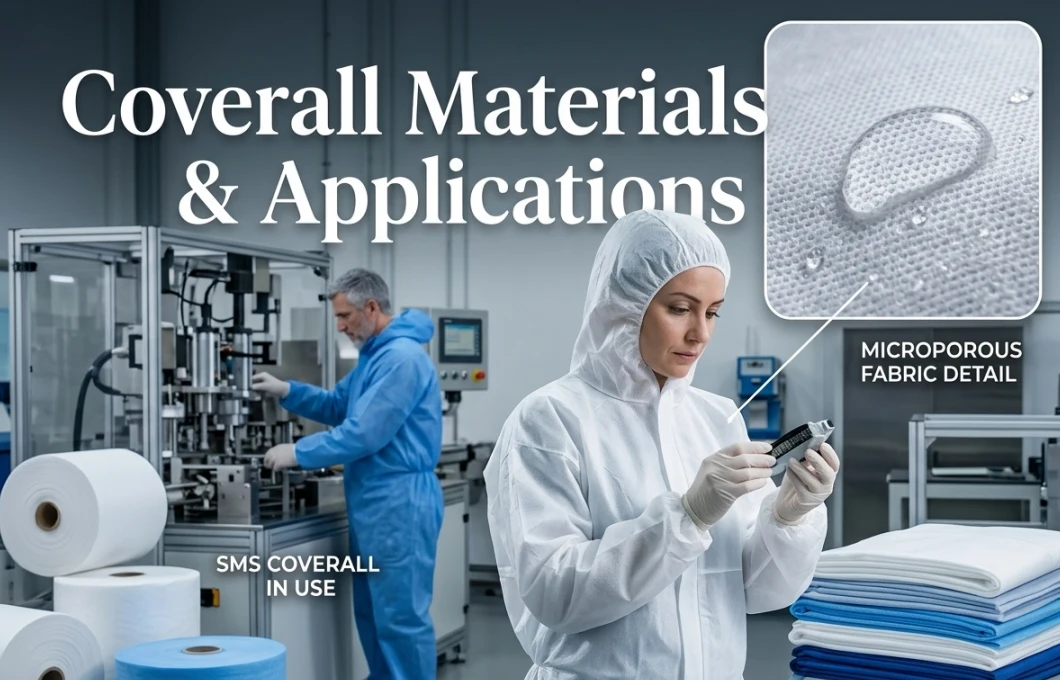
Disposable coveralls are used in many workplaces, from medical facilities and food processing plants to laboratories, factories, and industrial maintenance sites. Although they may look similar at first glance, the materials used to make them can differ considerably in strength, breathability, liquid resistance, and particle protection.
Choosing the right coverall materials is about understanding the working environment. A lightweight PP suit may be suitable for routine dust protection, while a laminated fabric is more appropriate when workers need a stronger barrier against liquid splashes.
So, what are the common coverall materials, and where does each one work best? Let’s look at their properties, practical uses, and limitations.
What Are Disposable Coveralls Made Of?
Most disposable coveralls are made from synthetic materials, particularly polypropylene, polyethylene, and composite nonwoven fabrics. Some designs also use protective films or specialty materials to provide additional resistance to liquids, chemicals, or airborne particles.
The main coverall fabric types include:
- Polypropylene (PP)
- Polyethylene (PE)
- SMS nonwoven fabric
- Microporous film laminate
- Tyvek® (high-density polyethylene)
- Polyvinyl Chloride (PVC)
- Polyethersulfone (PES) and other specialty materials
Each material has its own characteristics. The right choice depends on the level of protection required, the type of exposure, and how long workers need to wear the garment.
1. Polypropylene (PP) Coveralls
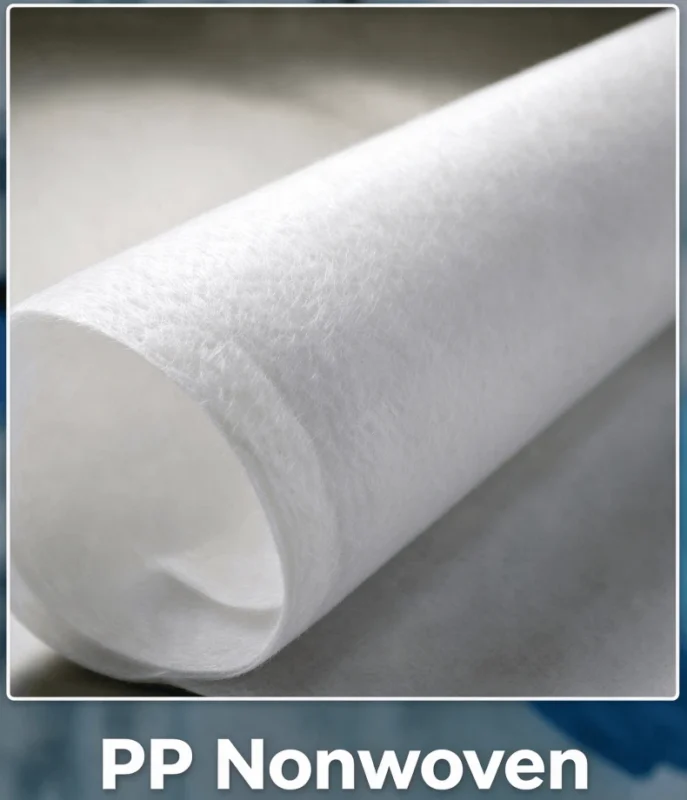
Polypropylene is one of the most common materials used in disposable protective clothing. It is a lightweight nonwoven fabric produced mainly through the spunbond process.
PP fabric feels soft and is relatively economical to manufacture. Its structure provides a basic barrier against dust, dry particles, and general workplace contaminants.
Key characteristics:
- Lightweight and comfortable for routine work
- Breathable compared with many film-coated materials
- Suitable for basic dust and particle protection
- Cost-effective for high-volume disposable use
- Limited resistance to liquids, oils, and aggressive chemicals
Common applications
PP coveralls are often used in cleaning, general maintenance, laboratories, painting preparation, and other light-duty environments. They can also be used in certain food processing and industrial settings where basic garment protection is sufficient.
However, standard PP fabric should not be treated as a waterproof or chemical-resistant barrier. Workers handling hazardous liquids or chemicals need garments specifically tested and selected for those risks.
For buyers looking for economical disposable protective clothing, PP nonwoven coveralls are a practical option for routine applications.
Ruichen Product Recommendation: White Disposable PP Nonwoven Medical Protective Suit
2. Polyethylene (PE) Coveralls
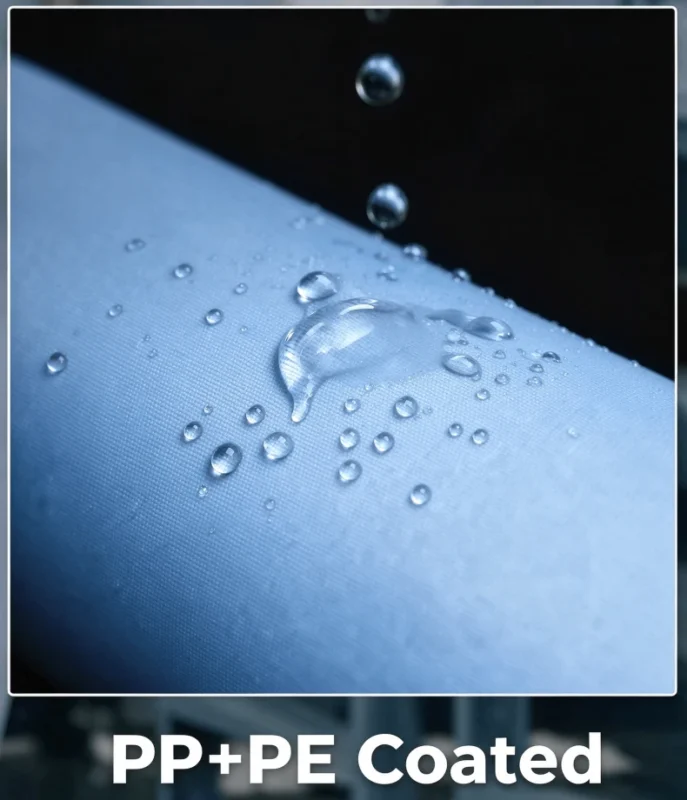
Polyethylene is a plastic material commonly used when better resistance to water and liquid splashes is needed.
Unlike ordinary PP nonwoven fabric, PE is generally used as a film or coating. It can also be laminated with a nonwoven base to create a composite protective material.
This combination helps provide a barrier against moisture while retaining some of the flexibility of the underlying fabric.
Key characteristics:
- Good resistance to water and moisture
- Suitable for certain liquid splash applications
- Can be combined with PP nonwoven fabric
- Available in different thicknesses and constructions
- Generally less breathable than uncoated PP fabric
Common applications
PE-based protective clothing is used in food processing, agricultural work, cleaning operations, and selected industrial environments where workers may encounter water, moisture, or mild chemical splashes.
PP+PE coveralls combine a polypropylene nonwoven base with a polyethylene film layer. This construction offers a different balance of comfort and liquid resistance compared with standard PP garments.
The actual protection depends on film thickness, garment construction, seams, and the tested performance of the finished product.
Ruichen Product Recommendation: Blue Striped White Disposable PP+PE Nonwoven Medical Protective Suit
3. SMS Nonwoven Coveralls
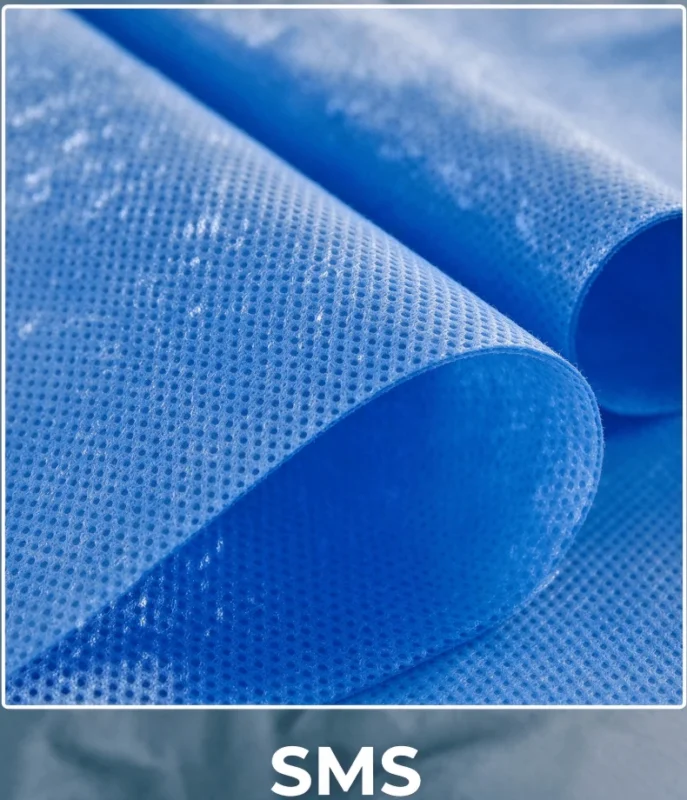
SMS stands for Spunbond-Meltblown-Spunbond. It is a three-layer composite nonwoven fabric made from polypropylene.
The two outer spunbond layers provide strength and help maintain the fabric structure. Between them is a meltblown layer with finer fibers, which contributes to particle filtration and barrier performance.
This layered construction makes SMS different from ordinary single-layer PP fabric.
Key characteristics:
- Three-layer nonwoven structure
- Good strength and durability for disposable garments
- Better particle barrier performance than basic spunbond PP
- Relatively breathable and comfortable
- Suitable for applications requiring higher hygiene standards
Common applications
SMS coveralls are commonly used in medical facilities, laboratories, pharmaceutical production, electronics manufacturing, and cleanroom-related operations.
They are useful where workers need a balance of breathability, garment strength, and particle protection.
However, SMS should not automatically be considered waterproof or suitable for every biological or chemical hazard. Its protective performance depends on fabric specifications and the test results of the finished garment.
For buyers sourcing disposable protective suits for healthcare or industrial use, SMS is worth considering when basic PP fabric does not provide the required barrier performance.
Ruichen Product Recommendation: White Disposable SMS Nonwoven Medical Protective Suit
4. Microporous Film Laminate Coveralls
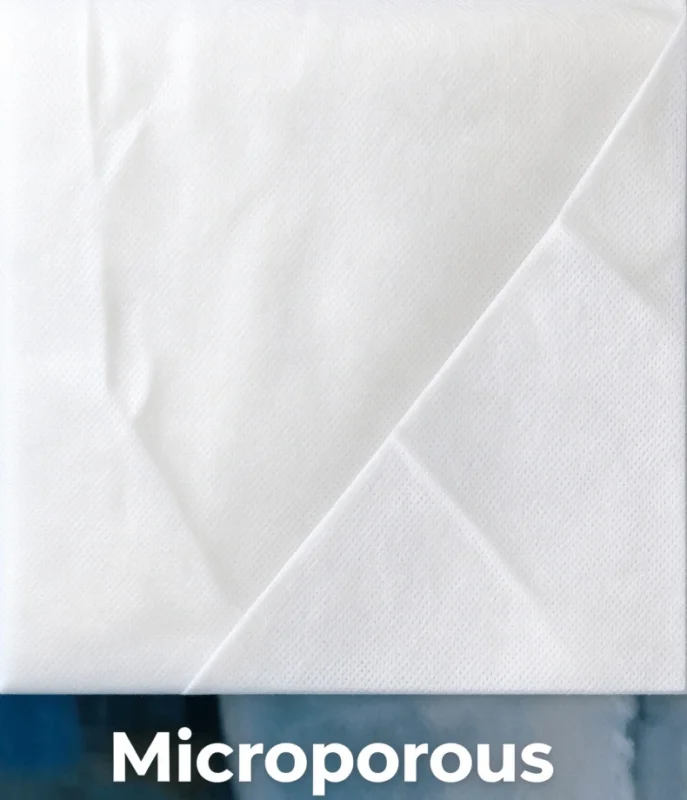
Microporous film laminate is a composite material made by bonding a microporous film to a nonwoven fabric base, often polypropylene.
The film contains very small pores designed to allow moisture vapor to pass through while restricting the penetration of certain liquids and particles.
This structure provides a useful balance between barrier performance and wearer comfort.
Key characteristics:
- Better liquid barrier performance than basic PP fabric
- Designed to resist certain liquid splashes and particles
- Allows some moisture vapor to escape
- Suitable for applications requiring additional barrier protection
- Performance varies with film construction and garment design
Common applications
Microporous coveralls are used in industrial maintenance, chemical handling, cleaning, and selected emergency response operations.
They may be suitable for workers who need protection against particulate contamination and certain liquid splashes during extended tasks.
The microporous structure can help reduce heat and moisture buildup compared with completely impermeable materials. However, it does not make the garment suitable for every chemical exposure.
Always check the manufacturer’s chemical compatibility information and relevant garment test results before selecting this material for hazardous work.
5. Tyvek® Coveralls (High-Density Polyethylene)
Tyvek® is a branded material developed by DuPont. It is made from flash-spun high-density polyethylene (HDPE) fibers.
Unlike conventional woven fabrics or ordinary plastic films, its structure forms a lightweight, durable sheet with good resistance to tearing and penetration by many dry particles.
It is widely recognized in industrial protective clothing.
Key characteristics:
- Lightweight with good tear resistance
- Suitable for protection against many dry particles
- Helps resist certain non-hazardous liquid splashes
- Flexible enough for a range of industrial tasks
- Available in different protective garment designs
Common applications
Tyvek® coveralls are used in construction, asbestos abatement, mold remediation, industrial cleaning, automotive work, and aerospace-related operations.
They are particularly useful in environments where workers need protection against airborne dust and particulate contamination.
However, Tyvek® is not a universal chemical barrier. The specific garment model and its tested performance must match the hazards involved.
6. PVC (Polyvinyl Chloride) Coveralls
Polyvinyl chloride, commonly known as PVC, is a synthetic plastic material used in protective clothing that requires resistance to certain liquids and chemicals.
PVC-coated garments are generally heavier and less breathable than nonwoven disposable coveralls. Many are designed for repeated use, although single-use options are also available.
Key characteristics:
- Good resistance to selected chemicals
- Provides an impermeable barrier when properly constructed
- Suitable for wet and heavy-duty cleaning tasks
- Generally heavier and less breathable
- Can feel stiff during extended wear
Common applications
PVC protective clothing is used in chemical processing, wastewater treatment, industrial cleaning, and other environments where workers may encounter corrosive liquids.
Its chemical resistance depends on the specific chemical, concentration, temperature, exposure duration, and garment construction.
For this reason, buyers should always check compatibility data rather than choosing PVC based on the material name alone.
7. PES and Other Specialty Materials
Some high-performance protective garments use specialty materials designed for specific working conditions.
Polyethersulfone (PES) is an engineering polymer known for its thermal stability and chemical resistance. It is more commonly associated with specialized industrial and technical applications than standard disposable coveralls.
Other specialty protective materials may be developed for specific requirements, such as chemical resistance, thermal performance, or protection against particular contaminants.
Key characteristics:
- Designed for specialized technical requirements
- May offer improved thermal or chemical resistance
- Often more expensive than common nonwoven materials
- Requires application-specific testing and evaluation
Common applications
Specialty protective materials may be considered for advanced research, selected industrial processes, and other controlled environments where ordinary PP or SMS fabrics are insufficient.
The exact material should always be selected according to the exposure risk and verified performance of the finished protective garment.
How to Choose the Best Coverall Material?
There is no single best coverall material for every workplace. A garment that works well for routine dust protection may be unsuitable for liquid splashes or chemical handling.
When comparing different coverall materials, buyers should consider the following factors.
1. Identify the Workplace Hazards
Start by identifying what workers may come into contact with.
- Dry dust and particles: PP or SMS may be suitable, depending on the required protection.
- Water and moisture: PE-based garments may offer better resistance.
- Liquid splashes and particles: Microporous laminated garments may be worth considering.
- Specialized chemical exposure: Select garments with verified chemical compatibility and appropriate test results.
2. Consider Breathability and Wearing Comfort
Workers may wear disposable coveralls for several hours. Fabric weight, air permeability, garment fit, and working temperature can all affect comfort.
PP and SMS fabrics are generally more breathable than film-laminated materials. However, the actual comfort level also depends on the garment design and fabric specifications.
3. Check the Required Protection Standards
Material names alone do not establish a garment’s protection level.
For industrial and medical applications, check the relevant product standards, test reports, and certification documents. Pay attention to seam construction, closures, and the performance of the complete garment.
For chemical and biological hazards, the garment must be suitable for the specific exposure conditions.
4. Compare Cost and Purchasing Requirements
For distributors, importers, and bulk buyers, purchasing cost is also an important consideration.
PP coveralls are often a cost-effective choice for basic applications. SMS and laminated materials may be more appropriate when additional fabric performance is required.
When comparing suppliers, look beyond the unit price. Fabric weight, size options, packaging, customization, production capacity, and quality consistency should also be considered.
FAQ About Coverall Materials
What are the most common materials used in disposable coveralls?
The most common materials include polypropylene (PP), polyethylene (PE), SMS nonwoven fabric, and microporous film laminate. Specialty options include Tyvek® and PVC.
What is the difference between PP and SMS coveralls?
PP coveralls are commonly made from a single spunbond polypropylene layer. SMS coveralls use two spunbond layers with a meltblown layer in between. This structure gives SMS different strength and particle barrier characteristics.
Are PE coveralls waterproof?
PE film provides good resistance to water. However, the actual water resistance of a finished coverall depends on its construction, seams, closures, and material specifications.
Which coverall material is best for medical use?
PP and SMS are commonly used in disposable medical protective clothing. The right choice depends on the intended procedure, exposure risk, and applicable medical protection requirements.
Are microporous coveralls breathable?
Yes. Microporous film is designed to allow some moisture vapor to pass through while restricting certain liquids and particles. Actual breathability varies with the material construction.
How do I choose the right disposable coverall supplier?
Check the supplier’s material specifications, product samples, relevant test reports, quality control procedures, customization options, and ability to meet your order requirements.
Find the Right Disposable Protective Clothing for Your Business
Selecting disposable coveralls starts with understanding the material and the protection your application requires.
PP, SMS, and PP+PE each offer different advantages in terms of comfort, barrier performance, and cost. The best option depends on your working environment and purchasing requirements.
Ruichen PPE supplies disposable protective clothing made from different nonwoven materials for medical, industrial, and hygiene-related applications.
Whether you are sourcing PP coveralls for routine protection, SMS suits for higher hygiene requirements, or PP+PE garments for additional moisture resistance, our team can help you review suitable product specifications.
Explore our Disposable Protective Clothing collection or contact Ruichen PPE to discuss bulk orders, product customization, and samples.