

What Does a Red Hazmat Suit Mean?

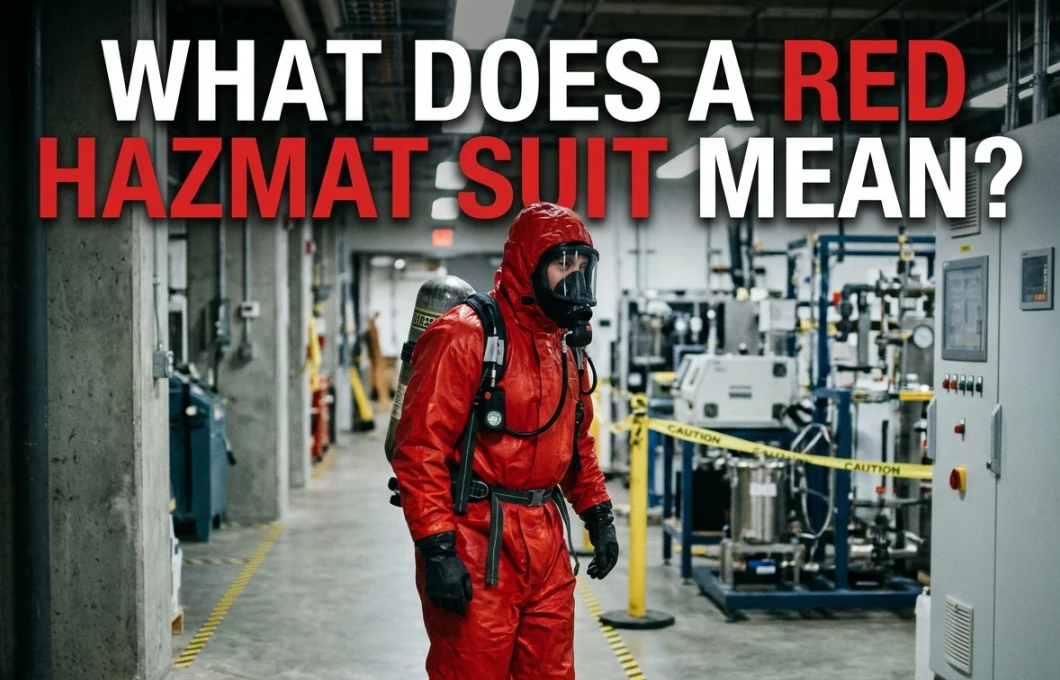
A red hazmat suit is hard to miss. Its bright color immediately catches the eye, especially in places where workers handle hazardous chemicals, respond to industrial accidents, or enter contaminated areas.
For many people, the color itself raises a question: does a red hazmat suit indicate a particular danger or level of protection?
Red is commonly associated with warning, danger, and emergency situations. In some workplaces, teams may choose red protective clothing to make workers easier to identify or distinguish them from other personnel. However, there is no universal rule that assigns a specific protection level to red hazmat suits.
The actual level of protection depends on the suit’s design, material, construction, and compatibility with the hazardous substance involved. Understanding these differences helps workers and safety managers choose equipment that matches the risks they face.
What Does a Red Hazmat Suit Mean?
The meaning of a red hazmat suit usually comes down to visibility, workplace identification, and local safety practices.
Red is a familiar warning color. It can help draw attention to workers operating in restricted areas, particularly during emergency response activities or hazardous material handling. A company may also use different suit colors to distinguish teams, job functions, or work zones.
However, the color does not tell you exactly what the wearer is protected against.
A red chemical protective suit could be designed for a particular chemical splash hazard, while another red suit might offer a completely different level of protection. The same applies to yellow, white, blue, and other commonly used colors.
There is also no universal color code that identifies a hazmat suit’s chemical resistance or respiratory protection.
If you see someone wearing a red hazmat suit, it is reasonable to recognize that they may be working in a controlled or potentially hazardous environment. But you cannot determine the exact hazard or protection level from appearance alone.
Why Do Hazmat Suits Come in Different Colors?
Hazmat suits come in various colors, including red, yellow, white, blue, and green. The choice often depends on the manufacturer’s product design, workplace requirements, visibility needs, and organizational identification systems.
Color can make a practical difference in the field.
For example, a high-visibility suit may help supervisors locate workers in a busy industrial environment. Different colors can also help separate emergency response teams from maintenance staff or other personnel.
Here are some common reasons organizations choose different suit colors:
- Visibility: Bright colors can make workers easier to spot in certain environments.
- Workplace identification: Different departments or teams may use separate colors.
- Hazard awareness: A designated color can serve as a visual warning under a company’s safety procedures.
- Operational consistency: Color selection may follow an organization’s established PPE policy.
Does Suit Color Indicate Chemical Protection?
No. Suit color does not establish chemical resistance.
A protective suit must be evaluated according to its material performance, seam construction, closure design, and compatibility with the chemicals involved.
For example, a garment made from microporous material may provide a barrier against certain liquid splashes and particulate hazards. A specialized chemical protective suit may use different materials and construction methods to resist more demanding chemical exposures.
The right choice depends on the specific substance, its concentration, exposure route, and working conditions.
What Are the Different Hazmat Suit Levels?
When discussing hazmat suit levels, safety professionals commonly refer to Level A, B, C, and D protection.
These categories describe different combinations of respiratory, skin, and eye protection. They are not color classifications.
The appropriate level depends on the hazards identified at the worksite and the protection required for the task.
Level A: Maximum Skin, Respiratory, and Eye Protection
Level A provides the highest overall level of skin, respiratory, and eye protection among the four categories.
Workers may need Level A protection when they face highly hazardous chemical vapors, gases, or substances that can seriously harm the skin through direct contact or absorption.
A typical Level A ensemble includes:
- A totally encapsulating chemical protective suit
- A positive-pressure self-contained breathing apparatus (SCBA)
- Chemical-resistant inner and outer gloves
- Chemical-resistant protective boots
- Appropriate additional protective equipment
The suit must be compatible with the specific chemical hazards. Its seams, closures, and overall construction also need to meet the required performance criteria.
Level B: Highest Respiratory Protection
Level B is used when workers need a high level of respiratory protection but do not require the same degree of skin protection as Level A.
A typical Level B ensemble includes:
- A positive-pressure SCBA
- Chemical-resistant protective clothing
- Inner and outer protective gloves
- Chemical-resistant boots
- Additional eye and face protection where required
This level may be appropriate when inhalation presents a major concern, but the potential for skin exposure is lower than in situations requiring Level A.
Level C: Respiratory Protection with Known Airborne Hazards
Level C may be suitable when the airborne contaminants have been identified, their concentrations have been measured, and an appropriate air-purifying respirator can provide adequate protection.
Typical equipment includes:
- An air-purifying respirator
- Chemical-resistant protective clothing
- Protective gloves
- Chemical-resistant footwear
- Eye protection and other necessary accessories
The respirator must be suitable for the identified contaminants and meet the conditions for its use. Level C is not appropriate when the atmosphere requires a supplied-air breathing system.
Level D: Basic Workplace Protection
Level D provides the lowest level of protection among these four categories.
It may be used in environments where no known respiratory hazard exists and the work does not involve significant chemical splashes, immersion, or direct contact with hazardous substances.
Typical equipment may include:
- Work coveralls
- Safety glasses or goggles
- Protective gloves, where necessary
- Safety footwear
Level D should never be treated as suitable for every industrial environment. A workplace assessment must confirm that its limited protection is adequate for the actual conditions.
How to Choose the Right Hazmat Suit
Choosing a hazmat suit based on its color or appearance can lead to serious protection gaps. A more reliable approach starts with understanding the hazards and matching the garment’s performance to the job.
Here are several factors worth reviewing before selecting protective clothing.
1. Identify the hazardous substance
Find out what chemicals or contaminants workers may encounter. Check their safety data sheets (SDS) and identify the possible routes of exposure, including inhalation, skin contact, and liquid splashes.
2. Check the material’s chemical resistance
Different protective materials perform differently when exposed to chemicals. A fabric that resists water or light splashes may not withstand concentrated chemicals or prolonged contact.
Always review manufacturer test data and chemical compatibility information before making a selection.
3. Examine the suit’s construction
The material is only part of the protection. Seams, zippers, elastic closures, cuffs, and connections with gloves or boots can all affect how well a protective garment works.
For demanding applications, the complete protective ensemble must meet the relevant performance requirements.
4. Consider respiratory protection
A protective suit does not automatically protect the wearer from airborne hazards. Depending on the environment, workers may need an air-purifying respirator or a supplied-air breathing system.
Respiratory equipment must be selected separately as part of the overall PPE assessment.
5. Follow workplace safety procedures
Employers should establish clear procedures for putting on, removing, inspecting, cleaning, and disposing of protective equipment. Workers also need appropriate training before entering hazardous areas.
The correct protection level may change as more information about the worksite becomes available.
Red Hazmat Suits and PPE During Emergency Response
Red protective clothing is often associated with emergency situations because the color is highly noticeable and can help distinguish workers in the field.
During chemical spills, industrial accidents, or other hazardous material incidents, response personnel may wear specialized protective ensembles. These can include chemical-resistant suits, gloves, boots, respiratory equipment, and other accessories.
The COVID-19 pandemic also brought protective clothing into public view. Images of healthcare workers wearing full-body protective equipment became familiar around the world.
However, medical PPE and industrial hazmat suits are not interchangeable.
Medical protective clothing is generally selected to address biological exposure and infection-control requirements. Industrial chemical protective suits must address the particular chemical, liquid, vapor, or particulate hazards involved.
Some garments may look similar, but their materials, testing requirements, and intended applications can be very different.
A suitable protective ensemble should always match the exposure risk rather than simply follow a particular appearance or color.
FAQ About Red Hazmat Suits
1. What does a red hazmat suit mean?
A red hazmat suit is generally associated with warning, visibility, or workplace identification. Some organizations use red to distinguish workers or indicate specific operational roles. However, red does not represent a universally recognized chemical protection level.
2. Does a red hazmat suit mean Level A protection?
No. Level A is a defined category of PPE protection that provides the highest level of skin, respiratory, and eye protection. The category depends on the complete protective ensemble, not its color.
3. What do different hazmat suit colors mean?
Red, yellow, white, blue, and green may be used for visibility, team identification, or company-specific safety procedures. Their meanings vary between workplaces and manufacturers. Always check the relevant safety policy and product specifications.
4. What is the difference between Level A and Level B hazmat suits?
Level A provides the highest overall skin, respiratory, and eye protection. Level B provides the highest level of respiratory protection but a lower level of skin protection. The appropriate choice depends on the identified hazards and exposure conditions.
5. Can a disposable coverall replace a hazmat suit?
Not necessarily. Disposable coveralls are available in different designs and protection categories. Some protect against particles, while others provide resistance to liquid splashes. They should only be used when their tested performance matches the intended application. Ordinary disposable coveralls cannot automatically replace specialized chemical protective suits.
6. How can I tell whether a hazmat suit provides adequate protection?
Check the product’s technical documentation, applicable certifications, material performance, seam construction, and chemical compatibility data. Also consider the required respiratory equipment and the conditions in which the suit will be used. Appearance alone is not a reliable indicator of protection.
Choose Protective Clothing Based on the Actual Risk
A red hazmat suit may attract attention, but its color tells only a small part of the story. The material, garment construction, protective performance, and compatibility with the working environment determine whether it is suitable for a particular task.
For industrial buyers and safety managers, reviewing technical specifications is far more useful than choosing a suit based on color alone. A well-matched protective ensemble helps workers perform their duties with a level of protection appropriate to the hazards they may encounter.
When selecting protective clothing, always consult the manufacturer’s product documentation and conduct a proper workplace hazard assessment before use.