

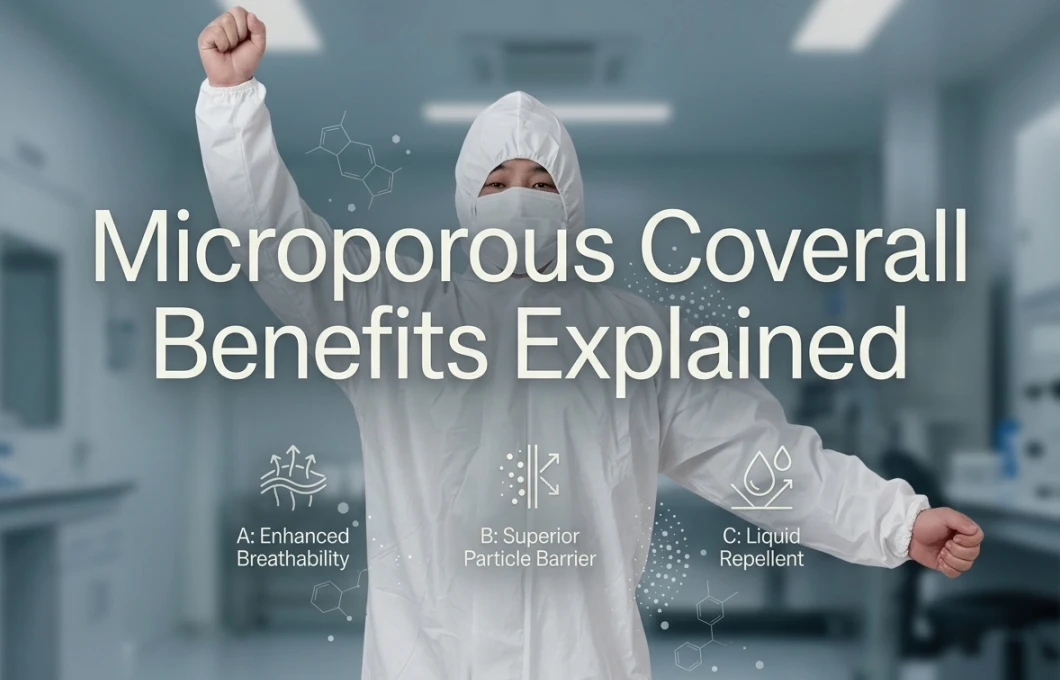
Microporous Coverall Benefits Explained

When workers need full-body protection, choosing the right protective clothing involves more than simply covering the skin. The material must offer a suitable level of barrier protection without making movement or daily work unnecessarily difficult.
This is where microporous protective coveralls come into consideration.
Made with a microporous film layer combined with a nonwoven fabric base, this type of protective clothing is designed to balance liquid resistance, breathability, and wearing comfort. It is commonly considered for workplaces where workers may encounter dust, light liquid splashes, or other non-hazardous workplace contaminants, depending on the garment’s specifications and test results.
So, what makes microporous coveralls a practical option, and when should businesses consider using them?
What Are Microporous Coveralls Made Of?
Microporous coveralls commonly use a composite material made from polypropylene (PP) nonwoven fabric and a microporous polyethylene (PE) film.
The PP layer provides a lightweight fabric base, while the PE film helps form a protective barrier. The film contains microscopic pores that allow water vapor to pass through while helping resist liquid penetration.
This structure offers a different balance of protection and comfort compared with ordinary PP nonwoven coveralls.
However, the actual performance depends on the material construction, fabric weight, seam design, and garment testing. Not every microporous coverall provides the same level of protection.
6 Practical Microporous Coverall Benefits
1. Resistance to Liquid Splashes and Contaminants
One of the main reasons businesses choose microporous coveralls is their liquid-resistant outer layer.
The PE film helps reduce the penetration of certain liquids and contaminants, making the garments useful in workplaces where workers may come into contact with occasional splashes or surface contamination.
They can be considered for applications such as industrial cleaning, maintenance, laboratory support, and selected healthcare tasks.
The level of protection should always match the actual workplace risk. Microporous coveralls should not automatically be treated as chemical-resistant or biological-hazard protective suits. Buyers should check the relevant test standards and product certification before selecting them.
2. Better Breathability Than Many Impermeable Materials
Wearing protective clothing for several hours can become uncomfortable, particularly in warm environments or physically demanding workplaces.
Microporous film technology allows water vapor to pass through the material while maintaining resistance to liquid penetration. This helps reduce the feeling of trapped moisture inside the garment.
It does not mean the coverall is completely sweat-proof or that heat will never build up. Still, its breathable construction can offer a more comfortable wearing experience than some fully impermeable materials.
3. Lightweight and Flexible for Daily Work
Protective clothing should allow workers to bend, stretch, walk, and handle equipment without unnecessary restriction.
Microporous PP+PE coveralls combine a lightweight nonwoven base with a thin protective film. The resulting material is generally flexible enough for routine workplace activities.
This can be useful in warehouses, maintenance facilities, cleaning operations, and production environments where workers need to move around throughout their shifts.
The garment’s size, cut, elastic cuffs, and overall construction also influence comfort. Choosing the correct fit is just as important as choosing the material.
4. A Practical Option for Disposable Protection
Many workplaces prefer disposable coveralls because they simplify clothing management between tasks or work shifts.
Microporous coveralls can be supplied as single-use protective garments. After use, they can be removed and disposed of according to the workplace’s contamination-control and waste-management procedures.
This reduces the need for routine garment laundering and helps businesses manage protective clothing across different work areas.
For procurement teams, disposable designs can also make stock management easier. The actual cost per use depends on the garment specification, purchasing quantity, and replacement frequency.
5. Suitable for Different Workplace Applications
Microporous coveralls are used across several industries, although the required protection level varies from one application to another.
Common application areas include:
- Healthcare and medical support: Selected tasks involving dust, splashes, and general contamination control, subject to applicable requirements.
- Industrial cleaning: Work involving cleaning agents and occasional liquid contact, provided the material is suitable for the chemicals involved.
- Manufacturing and maintenance: General protective clothing for workers handling dust and surface contaminants.
- Laboratories: Selected routine activities where the garment’s tested barrier performance meets the task requirements.
- Food processing: Protective clothing for appropriate hygiene-controlled work areas.
For tasks involving hazardous chemicals, infectious materials, or high-risk liquid exposure, a more specific protective clothing standard may be required. Always assess the workplace hazards before choosing a garment.
6. Flexible Purchasing and Supply Options
For distributors, importers, and businesses purchasing protective clothing in bulk, product consistency and supply arrangements are also important.
Microporous coveralls can be specified by material weight, size, color, garment design, and packaging requirements. These options help buyers select products that suit their customers and workplace needs.
When comparing suppliers, it is useful to check material specifications, available test documentation, sample quality, packaging details, and production capacity rather than comparing unit prices alone.
How to Choose the Right Microporous Protective Coverall
Not every workplace needs the same type of protective suit. Before placing a bulk order, buyers should consider several practical details.
Material and weight
Check the PP+PE material construction and fabric weight. Different specifications may offer different levels of flexibility, coverage, and barrier performance.
Garment design
Consider the hood, zipper closure, elastic cuffs, and overall fit. These details affect how well the garment covers the body during movement.
Protection requirements
Identify the substances workers may encounter and check whether the garment has been tested against the relevant protection standards. Do not rely on the material name alone.
Size and color
Select suitable sizes for the intended users. Color options can also help businesses organize products or distinguish garment styles.
Supplier documentation
Request relevant product specifications, test reports, and certification documents. This makes it easier to assess whether the product meets your purchasing requirements.
Ruichen Microporous Protective Coveralls
Ruichen PPE offers two styles of disposable PP+PE microporous protective coveralls for different purchasing and workplace preferences.
White Disposable PP+PE Non-Woven Medical Protective Suit
A white microporous protective suit designed for buyers who prefer a simple, clean appearance for medical and general protective clothing applications.
Product details: White Disposable PP+PE Non-Woven Medical Protective Suit
Blue-Striped White Disposable PP+PE Non-Woven Medical Protective Suit
This version features blue stripes on a white garment, providing a different visual appearance for product identification and purchasing preferences.
Product details: Blue-Striped White Disposable PP+PE Non-Woven Medical Protective Suit
Both styles use a PP+PE product positioning. Buyers should refer to the individual product specifications for material weight, sizing, construction, and available documentation.
You can also explore our full range of Disposable Protective Clothing to compare different protective garment options.
Are Microporous Coveralls the Right Choice?
Microporous coveralls offer a practical combination of liquid resistance, water vapor permeability, and lightweight construction. For workplaces that need disposable full-body protective clothing, they can be a suitable option when their tested performance matches the intended task.
The most important thing is to select a garment based on actual exposure risks rather than its material name or appearance alone.
If you are sourcing PP+PE microporous coveralls for your business, Ruichen PPE can provide product information for both white and blue-striped styles. Contact our team to discuss specifications, samples, and bulk purchasing requirements.
FAQs About Microporous Coveralls
1. What are microporous coveralls made of?
Microporous coveralls are commonly made from polypropylene (PP) nonwoven fabric laminated with a microporous polyethylene (PE) film.
2. What are the main benefits of microporous coveralls?
They offer liquid resistance, water vapor permeability, lightweight construction, and comfortable wear for suitable workplace applications.
3. Are microporous coveralls waterproof?
They provide resistance to certain liquid penetration, but they should not be considered completely waterproof. Performance depends on material construction and testing.
4. Are microporous coveralls breathable?
Yes. Their microporous film allows water vapor to pass through, helping reduce moisture buildup inside the garment.
5. Where are microporous coveralls commonly used?
They are used in selected healthcare, laboratory, cleaning, manufacturing, maintenance, and food processing environments.
6. What is the difference between white and blue-striped microporous coveralls?
The main difference is their appearance. Both styles use PP+PE material, while specific specifications should be checked on their individual product pages.
7. Are microporous coveralls suitable for chemical protection?
Not all microporous coveralls provide chemical protection. Buyers should check chemical resistance test results and select garments according to the specific workplace hazards.
8. Can microporous coveralls be reused?
They are generally designed for single use. Follow the manufacturer’s instructions and workplace disposal procedures.
9. How do I choose the right microporous coveralls?
Consider material weight, size, garment design, exposure risks, test reports, and relevant certification before purchasing.