

7 PPE Fabrics: Types, Uses & Comparison

Personal protective equipment (PPE) is used in hospitals, laboratories, food processing facilities, manufacturing plants, and other workplaces where clothing needs to provide a barrier against specific hazards. The fabric behind each garment affects how it feels, how well it resists liquids or particles, and how it performs during daily work.
There is no single fabric that suits every protective clothing application. A lightweight disposable gown used for routine tasks has different requirements from a coverall designed for liquid splash protection. Understanding the material is a practical starting point when comparing PPE products.
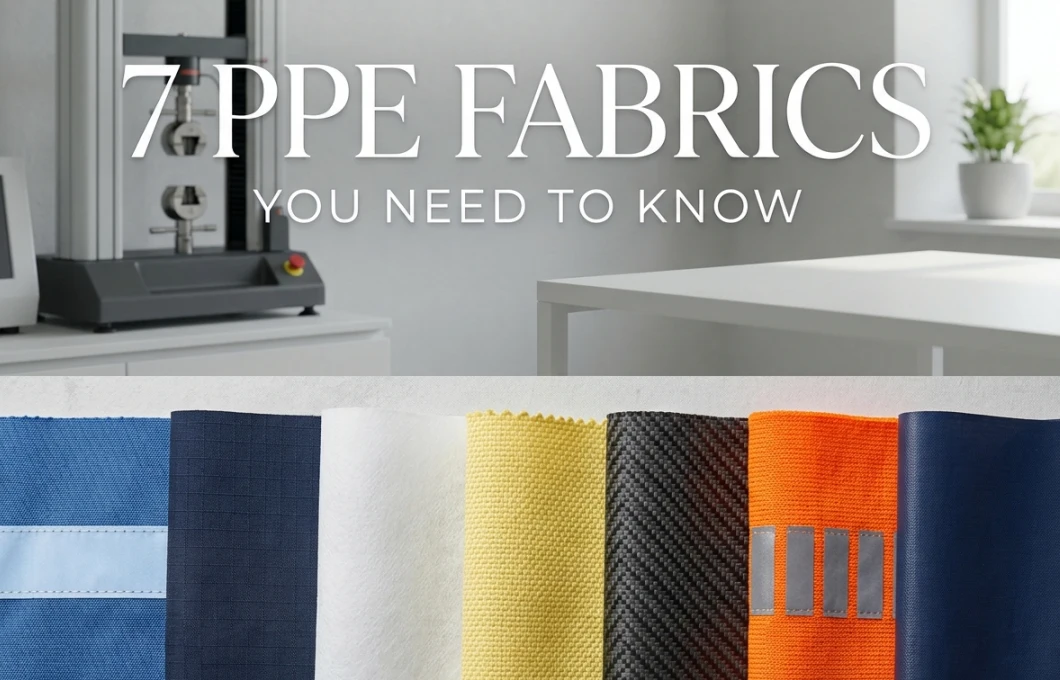
Here are seven common PPE fabric materials and constructions, along with the differences buyers should understand before choosing a product.
1. Microporous Fabric
Microporous fabric is commonly made by laminating a thin microporous film onto a nonwoven backing, often polypropylene (PP). The film contains microscopic pores that allow some water vapor to pass through while helping resist liquid penetration, depending on the material’s construction and test results.
This combination makes microporous laminates a common option for disposable coveralls, protective suits, aprons, and other garments that require a balance between barrier performance and wearer comfort.
The actual performance depends on the film, backing fabric, seam construction, and garment design. Abrasion or damage to the film can reduce its barrier performance, so the intended working conditions should be considered before selection.
Typical applications: Disposable protective coveralls, liquid-splash protection garments, aprons, and selected protective accessories.
What buyers should check: Liquid penetration resistance, breathability, abrasion resistance, seam integrity, and the garment’s intended protection level.
2. SMS Fabric (Spunbond-Meltblown-Spunbond)
SMS is a three-layer nonwoven structure made from spunbond polypropylene, a meltblown polypropylene middle layer, and another spunbond layer.
The outer layers contribute to the fabric’s strength and handling characteristics. The meltblown layer helps improve the barrier against particles and certain liquid splashes, depending on the fabric specification.
SMS is widely used in disposable medical gowns, isolation gowns, surgical drapes, face mask layers, and other single-use products. Its relatively lightweight construction can make it suitable for tasks where flexibility and breathability matter.
However, standard SMS should not automatically be treated as suitable for every liquid exposure or biological hazard. Performance varies with fabric construction and testing.
Typical applications: Disposable gowns, selected medical protective garments, surgical drapes, and hygiene products.
What buyers should check: Fabric weight, liquid resistance, tensile strength, linting, and applicable medical or protective clothing standards.
3. SMMS Fabric (Spunbond-Meltblown-Meltblown-Spunbond)
SMMS uses four layers: two spunbond outer layers and two meltblown layers between them. Compared with the three-layer SMS structure, the additional meltblown layer provides another opportunity to engineer the fabric’s barrier and filtration properties.
The finished performance still depends on the quality and arrangement of the layers. Adding a layer does not, by itself, establish a specific protection level.
SMMS is used in selected medical gowns, isolation garments, and other disposable nonwoven products where manufacturers need to balance barrier performance, strength, and comfort.
For buyers sourcing disposable protective clothing, SMMS may be worth comparing with SMS when the application requires a different combination of fabric properties.
Typical applications: Medical protective garments, isolation gowns, and selected disposable nonwoven products.
What buyers should check: Liquid barrier test results, fabric weight, strength, breathability, and compliance with the requirements of the intended application.
4. PP Fabric (Polypropylene)
Polypropylene (PP) is a thermoplastic polymer widely used to produce disposable nonwoven fabrics. Spunbond polypropylene is commonly used for lightweight protective clothing and accessories because it can be manufactured in different fabric weights and constructions.
PP nonwoven fabric is found in disposable coveralls, lab coats, caps, shoe covers, isolation gowns, and other protective or hygiene products. Its relatively lightweight structure can be useful for routine tasks involving dust, dirt, or low-level contamination, depending on the garment design.
Basic spunbond PP fabric does not provide the same barrier performance as every coated or multilayer material. If liquid resistance or biological protection is required, buyers should verify the finished product’s test results rather than relying on the PP material name alone.
Typical applications: Disposable lab coats, lightweight coveralls, caps, shoe covers, and selected gowns.
What buyers should check: GSM, fabric strength, breathability, fluid resistance, and whether additional layers or treatments are required.
5. PE Fabric (Polyethylene)
Polyethylene (PE) is a polymer widely used in plastic films and protective products. In disposable protective clothing, PE is often used as a film or coating rather than as a conventional standalone nonwoven fabric.
PE film can help resist water and certain liquid exposures, making it useful in products such as disposable aprons, protective sleeves, shoe covers, and laminated garments.
Its suitability depends on the film thickness, product construction, and the liquid or substance involved. A garment that resists water may not necessarily resist oils, solvents, or hazardous chemicals.
PE-based materials are therefore best evaluated according to the actual exposure conditions and the manufacturer’s documented performance.
Typical applications: Disposable aprons, film-based shoe covers, protective sleeves, and selected laminated garments.
What buyers should check: Film thickness, leakage resistance, tear resistance, flexibility, and compatibility with the intended use.
6. PE-Coated Fabric
PE-coated fabric combines a base material with a polyethylene layer. In protective clothing, this construction can add a liquid-resistant surface to a fabric that would otherwise offer limited resistance to fluid penetration.
The backing material and PE layer work together to determine the finished product’s performance. Coating coverage, thickness, bonding quality, and the construction of seams and closures can all affect how the garment performs.
PE-coated materials may be used for disposable aprons, gowns, sleeves, and other products intended for tasks involving moisture or selected liquid splashes.
The coating also changes the way the garment feels. Depending on its thickness and construction, a coated fabric may be less breathable than an uncoated nonwoven material.
Typical applications: Liquid-resistant aprons, selected protective gowns, sleeves, and laminated disposable garments.
What buyers should check: Coating uniformity, liquid penetration resistance, flexibility, seam construction, and resistance to tearing during normal use.
7. CPE (Chlorinated Polyethylene)
Chlorinated polyethylene (CPE) is produced by chlorinating polyethylene. It is used in certain flexible plastic products and disposable protective items.
In the PPE market, CPE is associated with products such as disposable gowns and shoe covers. Its properties depend on the formulation, processing method, thickness, and final product design.
CPE should not be confused with ordinary PE film or polypropylene nonwoven fabric. Although these materials may appear in similar disposable products, their physical properties and intended applications can differ.
For buyers, the material name is only one part of the specification. The finished item’s fit, durability, resistance to liquid penetration, and suitability for the working environment also matter.
Typical applications: Selected disposable protective gowns, shoe covers, and other flexible protective products.
What buyers should check: Material thickness, flexibility, tear resistance, liquid resistance, and product-specific test documentation.
PPE Fabric Comparison: Which Material Should You Choose?
The best fabric for coveralls or other protective clothing depends on the hazard, expected exposure, working conditions, and required protection level. The following comparison is a starting point for evaluating common materials.
| Material | General characteristics | Common applications | Main consideration |
|---|---|---|---|
| Microporous laminate | Film-based barrier with some breathability | Protective coveralls, selected aprons | Check barrier performance and film durability |
| SMS | Three-layer PP nonwoven | Gowns, drapes, selected coveralls | Balance breathability and tested barrier performance |
| SMMS | Four-layer PP nonwoven | Selected medical gowns and protective garments | Verify the actual performance of the finished fabric |
| PP nonwoven | Lightweight, flexible, breathable | Lab coats, caps, shoe covers, gowns | Basic PP alone may not provide sufficient liquid protection |
| PE film | Plastic film with liquid-resistant properties | Aprons, sleeves, shoe covers | Check thickness and resistance to the specific exposure |
| PE-coated fabric | Fabric backing with a PE coating | Liquid-resistant gowns and aprons | Inspect coating coverage and seams |
| CPE | Flexible chlorinated polyethylene material | Selected disposable gowns and shoe covers | Confirm product specifications and intended use |
This comparison describes general material characteristics, not guaranteed protection levels. Two products made from the same material can perform differently because of differences in fabric weight, layer structure, coating, seams, and manufacturing quality.
How to Choose the Right PPE Fabric for Your Application
Material selection should start with the hazard rather than the fabric name.
Identify the type of exposure
Determine whether workers need protection from dust, dirt, water, liquid splashes, biological contaminants, or specific chemicals. Different hazards require different barrier properties, and a material suitable for one exposure may be unsuitable for another.
Consider breathability and comfort
Workers may need to wear protective garments for several hours. Fabric weight, air permeability, garment fit, and the working temperature can affect comfort and mobility. A highly resistant material may be less comfortable in a hot environment, so the requirements need to be balanced.
Check the complete garment, not just the fabric
A fabric’s performance does not tell the whole story. Seams, zippers, cuffs, closures, and areas of potential stress can affect the protection provided by the finished garment. For medical applications, buyers should review the relevant barrier test results and applicable standards.
Review test reports and specifications
Ask the supplier for the fabric composition, GSM or film thickness, intended use, and applicable test documentation. Where liquid or biological barrier performance is important, confirm which test method was used and whether the results cover the fabric alone or the complete garment, including seams.
For chemical protection, the specific chemical, concentration, contact time, and conditions of use must also be considered. A general claim of water resistance is not evidence of chemical resistance.
Match the material to the garment
The same fabric may be used in different product categories, but the finished products do not necessarily provide the same coverage or protection. A disposable gown, for example, may leave parts of the body exposed that a coverall is designed to cover.
Choose the garment according to the task, required coverage, and applicable workplace or healthcare requirements.
FAQ
What are the most common types of PPE fabric?
Common options include PP spunbond nonwoven, SMS, SMMS, microporous laminates, PE film, PE-coated fabric, and CPE. Each has different properties, so the right choice depends on the intended application and required barrier performance.
What is the difference between SMS and SMMS fabric?
SMS contains three layers: spunbond, meltblown, and spunbond. SMMS adds a second meltblown layer, creating a four-layer structure. The extra layer can be used to adjust the fabric’s performance, but the finished material must still be evaluated using relevant test results.
What is the best fabric for disposable coveralls?
There is no single best fabric for every coverall. PP nonwoven may suit basic, low-risk tasks, while SMS or microporous laminate may be considered when different barrier and comfort requirements apply. The final choice should be based on the hazard assessment, garment design, and verified performance.
Does a heavier PPE fabric always provide better protection?
No. A higher GSM can indicate more material by weight, but it does not automatically mean better resistance to liquids, particles, or chemicals. Layer construction, pore structure, coatings, seams, and test results also influence performance.
Can PP fabric protect against liquid splashes?
Basic PP spunbond nonwoven has limited liquid barrier properties. A coated, laminated, or specially engineered PP-based fabric may offer greater resistance, but its suitability should be confirmed through product-specific testing.
What should buyers request from a PPE fabric supplier?
Ask for the material composition, fabric weight or film thickness, available sizes, intended applications, and relevant test reports. For protective garments, request information about seams, closures, and applicable standards as well. These details make it easier to compare suppliers on performance rather than price alone.
Choosing PPE Fabrics with Confidence
Selecting protective clothing is a matter of matching material performance to real working conditions. PP, SMS, SMMS, microporous laminates, PE, PE-coated fabrics, and CPE each have applications where their properties may be useful.
For procurement teams, the most reliable comparison combines the fabric specification with verified test results and the design of the finished garment. This approach helps avoid paying for unnecessary features while reducing the risk of choosing a product that does not meet workplace requirements.
When comparing PPE products, start with the exposure, confirm the required protection level, and ask suppliers for documentation that supports their claims. The material name is a useful starting point, but it should never be the only basis for a purchasing decision.