
Blog
Coverall Size Guide: How to Choose the Right Fit

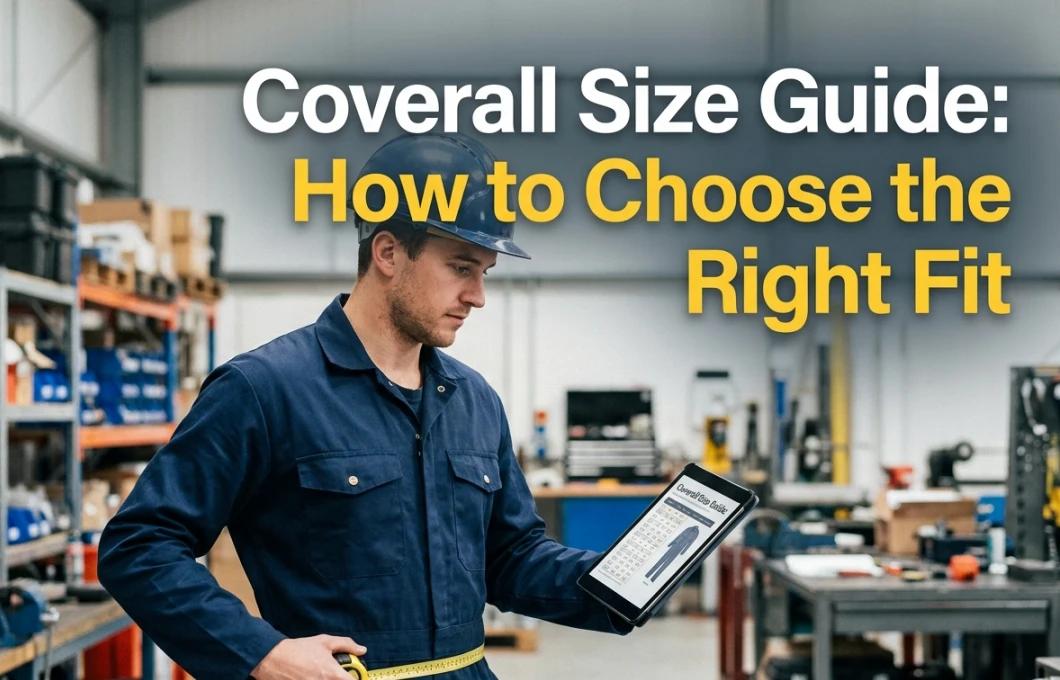
Choosing the right size of disposable protective coveralls is about more than finding a comfortable fit. A garment that is too tight may restrict movement, while one that is too loose can interfere with work or create unnecessary excess fabric. For purchasing teams, distributors, and safety managers, getting the sizing right also helps reduce fitting problems across bulk orders.
This coverall size guide explains how to read a size chart, match body measurements with garment sizes, and account for the extra room needed when wearing protective clothing over workwear. The chart below provides a starting point, but the intended application, garment design, and measurement method should also be considered before confirming an order.
Coverall Size Chart: Measurements at a Glance
Use the following chart to compare the listed body measurement range with the wearer’s height. If a measurement falls near the boundary between two sizes, check the garment’s actual dimensions and intended fit before making a decision.
Note: The size chart below is based on our disposable protective coverall sizing measurements. Please refer to these measurements when selecting your size.
| Size | Round (cm) | Height (cm) |
|---|---|---|
| S | 84–92 | 162–170 |
| M | 92–100 | 168–176 |
| L | 100–108 | 174–182 |
| XL | 108–116 | 180–188 |
| 2XL | 116–124 | 186–194 |
Important measurement note: The supplied chart labels one measurement as “Round.” Before using it for final size selection, confirm with the manufacturer whether this refers to chest circumference or another body measurement. The table should not be treated as a complete garment measurement specification until that detail is verified.
A few practical points can help you interpret the chart:
- Check both measurements. Height alone may not indicate the best fit, particularly for people with broader shoulders or a larger torso.
- Look at the overlap. Adjacent sizes share some height ranges, so two sizes may initially appear suitable.
- Consider the intended fit. Coveralls worn over ordinary clothing may require more room than garments worn over lightweight base layers.
- Confirm the product specifications. A size label does not guarantee identical dimensions across different manufacturers or coverall designs.
For bulk purchasing, request the manufacturer’s measurement definitions and garment size specifications before finalizing the size breakdown.
How to Choose the Right Disposable Coverall Size
The most reliable approach is to compare the wearer’s measurements with the manufacturer’s chart, then check how the coverall will be worn. A size that fits well over a T-shirt may feel restrictive over a uniform, jacket, or other protective layers.
1. Measure the wearer accurately
Take measurements while the wearer stands naturally. Use a flexible measuring tape and avoid pulling it so tightly that it compresses clothing or the body.
For a practical fitting check, collect:
- Height: Measure from the floor to the top of the head while standing upright.
- Chest circumference: Measure around the fullest part of the chest, keeping the tape level.
- Waist circumference: Record this measurement if the manufacturer uses it to determine garment fit.
- Other relevant dimensions: Shoulder width, sleeve length, inseam, or hip circumference may matter for particular designs.
Follow the manufacturer’s instructions if its size chart specifies a different measurement method.
Do not assume that every dimension is interchangeable. A body circumference and a finished garment circumference describe different things. The garment usually needs enough room for movement and any clothing worn underneath.
2. Match the measurements to the chart
Start by locating the wearer’s height range. Then compare the relevant body measurement with the corresponding range in the chart.
For example, someone who is 175 cm tall falls within the listed height ranges for M and L. If the relevant body measurement is 98 cm, that measurement falls within the M range of 92–100 cm.
This example identifies a possible starting size, not a guaranteed fit. The correct choice depends on what “Round” means in the manufacturer’s chart, how much ease the garment provides, and whether the coverall will be worn over other clothing.
When height and body measurements point toward different sizes, do not automatically choose the larger or smaller option. Ask for the garment’s actual measurements and consider the wearer’s required range of movement.
3. Allow room for workwear and movement
Disposable coveralls are often worn over personal clothing or work uniforms. That extra layer can affect the fit around the shoulders, chest, waist, knees, and seat.
Consider the following before selecting a size:
- Will the wearer put the coverall on over a uniform or heavier clothing?
- Does the job involve bending, reaching, squatting, or climbing?
- Must the wearer stretch both arms overhead or crouch repeatedly?
- Will the garment be worn for a short task or throughout a full shift?
A useful fit check includes raising both arms, bending at the knees, sitting down, and walking normally. The garment should allow the required movements without excessive pulling across the back, crotch, or shoulders.
Avoid choosing a size so large that excess fabric interferes with the task. A practical fit balances freedom of movement with the need to keep the garment appropriately positioned.
4. Check the garment design
Two disposable coveralls carrying the same size label may fit differently. Their cut, fabric, closures, and construction can affect the available room and the way the garment moves with the wearer.
Check these details when comparing products:
- Fabric structure: Different nonwoven materials may have different flexibility and drape.
- Garment construction: The shape of the torso, sleeves, legs, and crotch affects movement.
- Closures and elastic areas: Zippers, cuffs, ankles, and waist features influence fit and ease of dressing.
- Intended layering: A garment designed to fit over workwear may have different dimensions from one intended for lighter clothing.
Material and sizing should be evaluated separately from protective performance. A comfortable fit does not, by itself, establish that a coverall meets a particular chemical, biological, or particulate protection requirement.
Why Coverall Sizing Matters in Different Work Environments
The right fit depends partly on the tasks being performed. A garment used for light cleaning may have different practical fit requirements from one worn in a laboratory, cleanroom, or industrial production area.
Industrial work and maintenance
Maintenance workers may bend, reach, kneel, or move around equipment. Coveralls that restrict the shoulders or crotch can make these movements uncomfortable and may place extra stress on seams.
For these applications, evaluate the fit over the clothing normally worn at work. Pay attention to sleeve length, leg length, and whether the garment remains in place during repeated movements.
Laboratory and cleanroom environments
In laboratories and controlled environments, garment fit can affect how the clothing sits around cuffs, ankles, and other openings. Excess fabric may also be undesirable in processes where garment design and particle control matter.
Size selection should follow the site’s clothing procedures and the product’s intended application. A correctly sized garment is not automatically suitable for every cleanroom classification or laboratory hazard.
Food processing and general hygiene tasks
Workers in food processing and hygiene-sensitive areas may need coveralls that allow repeated movement without sleeves or legs becoming a distraction.
Consider the duration of wear, the clothing underneath, and the movements required for the job. Confirm that the selected garment is appropriate for the site’s hygiene and operational requirements.
Chemical or biological hazard environments
Where chemical splash, hazardous substances, or biological exposure is possible, sizing is only one part of product selection.
The material, garment construction, relevant test results, and applicable protection requirements must be evaluated together. Do not select a coverall solely because its size fits well or its product name suggests a particular level of protection.
Common Coverall Sizing Mistakes to Avoid
Sizing problems are easier to prevent before purchase than to resolve after a large shipment arrives. The following mistakes are especially relevant when selecting disposable protective clothing for multiple workers.
Choosing by height alone
Height is useful, but it does not account for body proportions. A wearer may need a different size because of chest circumference, shoulder width, or the clothing worn underneath.
Assuming all manufacturers use the same measurements
Size labels are not universal measurements. Always check the specific manufacturer’s chart rather than transferring a size recommendation from another brand.
Ignoring the difference between body and garment measurements
A body measurement describes the wearer. A garment measurement describes the finished clothing. The difference between them helps determine how much room the garment provides.
Ordering bulk quantities without checking fit
A size breakdown based on assumptions can leave a buyer with too many garments in unsuitable sizes. Where possible, review a sample or obtain detailed garment measurements before confirming the order.
Using a larger size to solve every fit problem
A larger garment may provide extra room in one area but also create excessive length or loose fabric elsewhere. Review the overall fit rather than relying on size alone.
How to Confirm Sizes Before a Bulk Order
For distributors, importers, and businesses supplying multiple work sites, size selection should be part of the purchasing process rather than an afterthought.
A straightforward workflow can reduce avoidable fitting issues.
- Collect wearer measurements. Record the height and the body dimensions required by the manufacturer’s chart.
- Review the size specifications. Confirm what each measurement represents and whether the chart describes body dimensions or garment dimensions.
- Identify clothing layers and tasks. Consider uniforms, base layers, movement requirements, and the working environment.
- Request a sample when practical. Check the fit on representative wearers before committing to a large quantity.
- Confirm the size breakdown. Establish the quantities needed for each size and document any agreed specifications.
- Verify the product requirements. Check material, construction, intended application, packaging, and relevant compliance documentation separately from sizing.
This process is particularly useful when a buyer is sourcing coveralls for a workforce with varied heights and body proportions.
For product comparisons, you can review the available options in the disposable protective clothing category. Compare the specific product specifications rather than assuming that every garment in the category shares the same sizing, materials, or protective properties.
When requesting a quotation, provide the intended application, required sizes, estimated quantities, and any material or compliance requirements. This gives the supplier a clearer basis for confirming product suitability and availability.
Conclusion
Choosing a suitable disposable coverall size requires more than matching a height to a letter on a chart. Body measurements, garment dimensions, clothing layers, and the movements required at work all affect the final fit.
Use the size chart as a starting point, verify the meaning of each measurement, and check the actual garment specifications before placing a bulk order. For workplace protection, confirm that the product’s material and performance requirements also match the intended application.
FAQ
How do I choose the right coverall size?
Compare your height and body measurements with the manufacturer’s size chart.
Should disposable coveralls fit loosely?
They should allow free movement without excessive loose fabric.
What if I am between two sizes?
Check garment measurements and consider the clothing worn underneath.
Are coverall sizes universal?
No. Sizing varies by manufacturer and garment design.
Can I choose a size based on height alone?
No. Consider body measurements and the intended fit.
What should buyers check before bulk orders?
Verify size specifications, materials, fit, and required quantities.