Blog
Risks of Using Expired Medical Masks

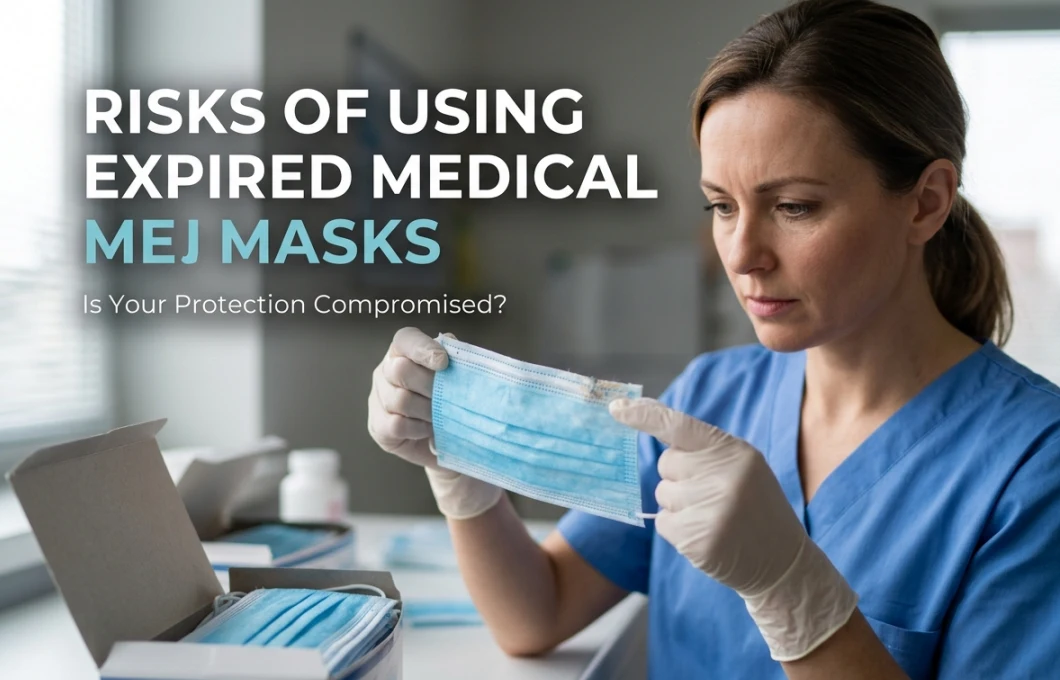
Medical masks are often stored in large quantities by hospitals, clinics, distributors, and other healthcare organizations. Keeping spare supplies makes sense, but masks can remain in storage longer than expected. When the expiration date passes, a practical question arises: can the masks still provide the protection they were designed for?
The answer depends on the product, its intended use, the manufacturer’s instructions, and its storage history. An expired mask does not automatically become harmful, but its original performance should not be assumed to remain unchanged. For healthcare facilities and PPE buyers, the distinction matters when deciding whether to replace old inventory or investigate it further.
What Happens If You Use an Expired Mask?
An expired medical mask may no longer meet the performance expectations established by its manufacturer. The expiration date generally reflects the period for which the product’s specified performance is expected to remain valid under defined storage conditions.
Several issues deserve attention:
- Uncertain filtration performance: Changes in materials or components may affect the product’s intended performance over time.
- Reduced physical integrity: Ear loops, nose clips, seams, or other components may deteriorate during unsuitable storage.
- Compromised packaging: Damaged or contaminated packaging may affect product cleanliness and usability.
- Uncertain suitability for clinical use: A product that has passed its designated shelf life may no longer be appropriate for applications requiring verified performance.
These outcomes are not inevitable for every expired mask. The actual condition depends on its construction, materials, packaging, and storage conditions.
A mask that looks normal may still have performance limitations that cannot be identified through a visual inspection alone. For this reason, appearance should never replace the manufacturer’s instructions or applicable requirements.
Why filtration performance matters
Medical masks are designed for specific purposes. Depending on the product, they may help reduce exposure to large respiratory droplets, provide a fluid barrier, or limit the spread of respiratory secretions.Their performance depends on more than the visible outer layer. The filtration medium, material construction, fit, and other design characteristics all contribute to how the mask performs.
Over time, some materials or components may change. However, the extent of any change cannot be determined simply by looking at an expiration date or examining the mask.This is why expired disposable mask protection should be treated as uncertain unless appropriate, product-specific guidance establishes otherwise.
Can an expired mask cause skin irritation?
Skin discomfort is possible when a mask has rough edges, damaged components, or materials that do not agree with the wearer. However, an expiration date alone does not establish that a mask will cause irritation or release harmful chemicals.
Masks that have an unusual odor, visible contamination, moisture damage, discoloration, or deteriorating components should not be used. These signs warrant particular caution, regardless of the printed expiration date.
Why Do Medical Masks Expire?
A medical mask’s shelf life is based on the manufacturer’s assessment of the product and its expected performance during storage. It is not a universal period that applies to every mask.Disposable masks can contain several materials and components. Their condition may change at different rates, depending on their design and the environment in which they are stored.
Three factors deserve particular attention.
1. Material and component stability
Many disposable medical masks use nonwoven materials, including spunbond polypropylene and meltblown filtration layers. Some products also contain nose clips, elastic ear loops, adhesives, or other components.The precise construction varies by product. Manufacturers must account for the materials and components used in their designs when establishing storage recommendations and shelf life.
A material’s original properties should not be assumed to remain unchanged indefinitely. The relevant question is whether the finished mask continues to meet the performance requirements specified for its intended application.
2. Storage temperature and humidity
Storage conditions can influence the condition of disposable protective products.Direct sunlight, excessive moisture, extreme temperatures, dust, and chemical contamination may affect products or their packaging. The degree of impact depends on the specific materials and the manufacturer’s storage instructions.
For healthcare facilities and distributors, keeping inventory in a clean, dry environment is a practical starting point. Products should remain in their original packaging until needed, unless the manufacturer provides different instructions.Suitable storage can help preserve product condition, but it does not automatically extend a manufacturer’s designated expiration date.
3. Packaging and handling
Packaging helps protect masks from dust, moisture, handling, and other environmental influences. Damaged packaging can raise questions about whether the contents have remained in the intended storage environment.
For bulk inventory, the condition of the outer carton matters as well as the individual mask packaging. Water damage, crushed cartons, torn seals, and evidence of contamination should prompt further inspection.An intact package is useful evidence of proper handling, but it cannot independently prove that the mask still meets its original performance specifications.
How to Check Expired Medical Masks Before Use
When an inventory check reveals expired masks, the next step should be a product-specific review rather than a decision based on appearance alone.
Use this practical checklist:
- Check the label. Confirm the product name, model, lot number, manufacturing date, and expiration date where available.
- Review the manufacturer’s instructions. Look for stated shelf life, storage conditions, and any guidance concerning products beyond their expiration date.
- Inspect the packaging. Check for broken seals, moisture, tears, crushing, dust, or visible contamination.
- Examine the mask. Look for damaged ear loops, detached nose clips, unusual odors, discoloration, or material deterioration.
- Confirm the intended application. Determine whether the mask is intended for general use, medical procedures, or a specific regulated application.
- Contact the manufacturer if necessary. Provide the model, lot number, and storage history when requesting product-specific guidance.
A visual inspection can identify obvious problems. It cannot establish filtration efficiency, fluid resistance, or compliance with a particular performance standard.
If the product has expired and its continued suitability cannot be established, replacing it with an in-date product is the more dependable choice for applications that require verified performance.
What should healthcare facilities do with expired inventory?
Healthcare organizations and PPE distributors may hold thousands of masks across multiple storage locations. A simple inventory management process can reduce uncertainty and prevent usable stock from expiring unnoticed.
A practical approach includes:
- Record expiration dates and lot numbers when stock arrives.
- Use a first-expiring, first-out inventory rotation system.
- Separate expired stock from current inventory to prevent accidental distribution.
- Check applicable regulations and organizational policies before making a decision about expired products.
- Contact the manufacturer when product-specific questions remain unresolved.
- Arrange disposal or other permitted handling according to local requirements.
For regulated clinical use, expired products should not be returned to routine service merely because the packaging looks intact. Any exception must be supported by applicable regulatory authorization and appropriate product-specific guidance.
Expired Medical Masks vs. N95 Respirators
The terms medical mask and N95 respirator are sometimes used interchangeably in everyday conversation. They describe different types of protective equipment, however, and the distinction matters when evaluating expired stock.
| Consideration | Disposable medical mask | N95 respirator |
|---|---|---|
| Primary purpose | Provides a barrier against droplets, splashes, or respiratory secretions, depending on its design | Filters airborne particles when properly fitted and used |
| Fit | Generally loose-fitting | Designed for a close facial seal |
| Performance considerations | Depends on filtration, fluid resistance, construction, and intended use | Depends on filtration, fit, component condition, and approval requirements |
| Expiration guidance | Follow the manufacturer’s product-specific instructions | Follow the manufacturer’s shelf-life guidance and applicable NIOSH approval conditions |
| Beyond expiration | Do not assume the original performance remains valid | Do not assume the respirator remains approved for occupational respiratory protection |
An N95 respirator’s status requires particular care. NIOSH explains that when an approval holder designates a shelf life, use beyond that date can affect its status for occupational respiratory protection programs. The absence of an expiration date also does not mean that every respirator has an unlimited shelf life.
For both categories, the product label, intended use, and relevant regulatory requirements should guide decisions. A general rule for one type of mask should not be applied automatically to another.
When Should You Replace Medical Masks?
Replacing expired stock is generally the sensible approach when the product is required for healthcare procedures or another application with defined performance requirements.
Replacement is particularly important when:
- The manufacturer’s expiration date has passed and no applicable guidance supports continued use.
- The mask is wet, visibly dirty, damaged, or contaminated.
- Ear loops or other fastening components no longer function properly.
- The packaging has been compromised and the product’s condition is uncertain.
- The mask is required to meet a specific medical or occupational protection standard.
An unopened mask is not automatically suitable for use after expiration. Likewise, a mask that remains within its shelf life may still be unsuitable if it has been damaged or stored improperly.
For healthcare procurement teams, the goal is not simply to reduce waste. It is to maintain an inventory that can be used for its intended purpose with an appropriate level of confidence in product condition and compliance.
How Does Expired Mask Safety Affect Different Applications?
The consequences of using expired masks depend partly on where they are used and what level of performance the application requires.
In hospitals and clinics, masks may be used during patient care, medical procedures, or infection prevention activities. Staff should follow facility protocols and applicable product requirements rather than decide on suitability based solely on appearance.
For laboratories and cleanroom environments, product selection may depend on specific contamination-control requirements. A general-purpose medical mask should not be treated as a substitute for protective equipment designed for a different environment.
In workplaces where respiratory protection is required, employers should select equipment that meets the applicable requirements. Expired products should not be used as substitutes for approved protective equipment simply to avoid replacing inventory.
For distributors and purchasing teams, these differences make accurate product labeling and inventory control especially important. Products with different intended uses should be identified and managed separately.
Conclusion
Expired medical masks are not automatically harmful, but their original performance should not be taken for granted. Storage conditions, packaging integrity, material condition, and the manufacturer’s shelf-life guidance all matter.
If a mask has passed its expiration date, check the product documentation and applicable requirements before making a decision. Replace it when its suitability cannot be established, particularly when verified medical or occupational protection is required.
For healthcare providers, distributors, and other organizations managing bulk PPE supplies, a clear inventory rotation process is often the simplest way to reduce expired stock and maintain dependable supplies.
FAQ
Can you use expired medical masks?
You should not assume that an expired medical mask still meets its original performance specifications. Follow the manufacturer’s instructions and applicable requirements. For clinical use requiring verified performance, replace expired products unless an applicable authorization or product-specific assessment supports another course of action.
What happens if you use an expired mask?
An expired mask may have reduced or uncertain performance if its materials or components have deteriorated. However, expiration does not mean that every mask has become harmful. Its suitability depends on the product, storage history, intended use, and manufacturer’s guidance.
Does an expired disposable mask still provide protection?
An expired disposable mask may retain some of its original properties, but appearance alone cannot confirm its filtration or barrier performance. Do not rely on it for an application requiring verified performance unless its continued suitability has been established through appropriate guidance.
Do unopened medical masks expire?
Yes. An unopened mask can still reach its manufacturer’s designated expiration date. Original packaging helps protect the product during storage, but it does not guarantee that the mask will retain its original performance indefinitely.
How should expired medical masks be stored before disposal?
Keep expired stock clearly separated from usable inventory. Follow local disposal requirements and any relevant organizational procedures. If the products are being evaluated for a permitted alternative use, retain their labels and lot information so their status is not mistaken for that of in-date stock.
Can expired N95 respirators still be used?
Do not assume that an expired N95 respirator remains approved for occupational respiratory protection. Follow the manufacturer’s instructions and applicable NIOSH requirements. Where a respirator’s shelf-life information is unclear, contact the approval holder with the model and lot details.
Does proper storage extend a mask’s expiration date?
Proper storage helps preserve product condition, but it does not automatically extend the designated shelf life. Any extension or continued-use decision should be supported by the manufacturer’s guidance and applicable regulatory requirements.