
Blog
What Is SMS Non-Woven Fabric?

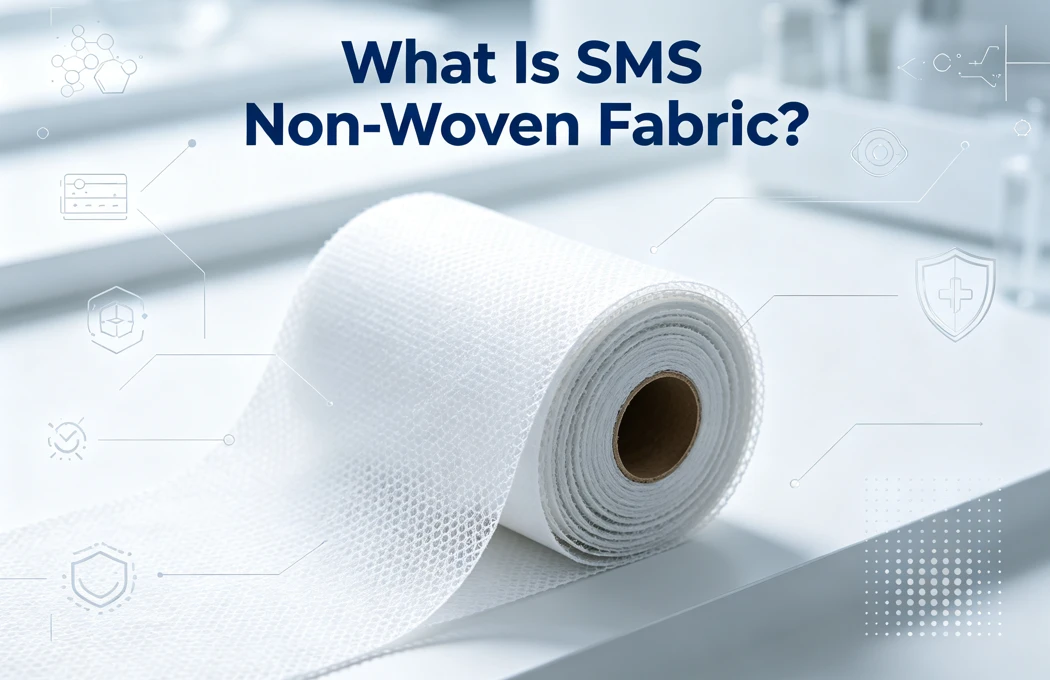
In the high-stakes environment of medical and industrial protection, the choice of material is the primary determinant of safety and performance. Among the various textiles used in the production of Personal Protective Equipment (PPE), SMS non-woven fabric has emerged as the industry standard for balancing barrier protection with physiological comfort. For procurement managers and medical professionals, understanding the technical structure of SMS material is critical for ensuring compliance with international safety standards.
The Technical Structure of SMS Non-Woven Fabric
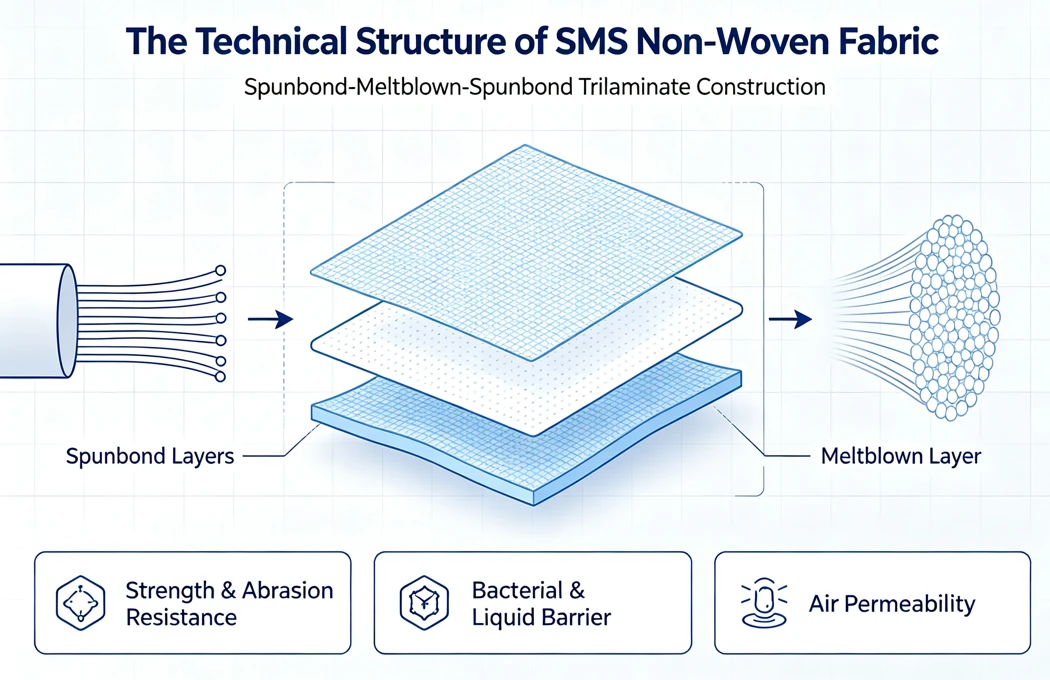
SMS is an acronym for Spunbond-Meltblown-Spunbond. It is a trilaminate non-woven fabric composed of three distinct layers that are thermally bonded together to create a unified textile. Unlike traditional woven fabrics, SMS is engineered directly from polymers—typically polypropylene—to achieve specific performance metrics required in healthcare and industrial settings.
The Spunbond Layers (External)
The “S” layers represent Spunbond polypropylene. This process involves extruding molten polymer through spinnerets to create continuous filaments. These filaments are then cooled and laid onto a moving belt to form a web.
- Function: The spunbond layers provide the fabric’s structural integrity, tensile strength, and abrasion resistance.
- Protection: They act as the “armor” for the delicate inner layer, ensuring the garment does not tear during physical activity.
The Meltblown Layer (Internal)
The “M” layer is the core of the SMS sandwich. In the meltblown process, high-velocity hot air “blows” the molten polymer into extremely fine microfibers—significantly thinner than human hair.
- Function: This layer creates a dense, tortuous path of micro-pores.
- Protection: It acts as the primary filter, providing a barrier against bacteria, liquid splashes, and fine particulates while allowing air molecules to pass through.
Key Properties and Performance Metrics
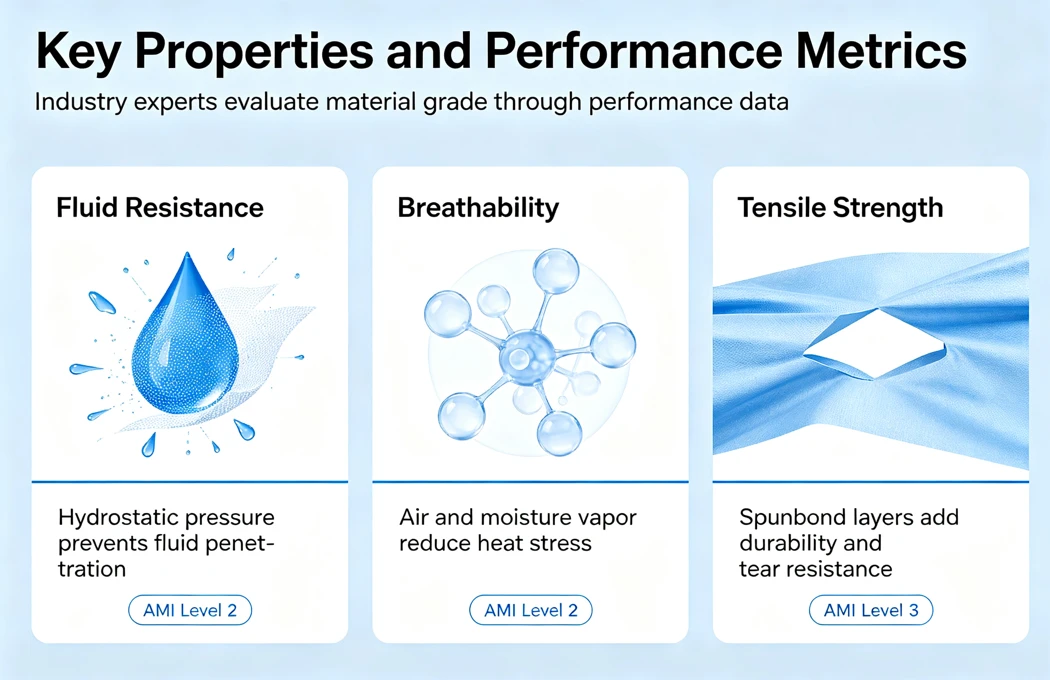
When evaluating SMS protective clothing material, industry experts look at a specific set of physical and chemical properties that define its “grade.”
Fluid Resistance and Hydrostatic Pressure
SMS material is naturally hydrophobic. In a medical setting, this is measured by hydrostatic pressure—the amount of water pressure a fabric can withstand before leakage occurs. High-quality SMS used in isolation gowns often meets AAMI Level 2 or Level 3 standards, providing a reliable barrier against blood and bodily fluids.
Breathability and Moisture Vapor Transmission
One of the greatest challenges in PPE design is heat stress. Unlike plastic films (like PE or CPE), SMS is “breathable.” It allows for the exchange of air and moisture vapor. This is critical for surgical teams or industrial workers who must wear protective suits for 8–12 hours at a time.
Tensile Strength and Durability
Because of the outer spunbond layers, SMS fabric exhibits high tear and puncture resistance. This ensures that the garment maintains its protective integrity even under the mechanical stress of movement in a laboratory or factory floor.
SMS vs. Alternative Non-Woven Materials
Choosing the right material requires understanding how SMS stacks up against other common PPE fabrics in terms of filtration and durability.
| Material Type | Structure | Key Strength | Best Application |
|---|---|---|---|
| SBPP (Spunbond) | Single layer | Low cost, high breathability | Basic hygiene (hair caps, shoe covers) |
| SMS | 3-layer sandwich | Balance of barrier & comfort | Isolation gowns, coveralls, drapes |
| SMMS / SMMMS | 4 or 5 layers | Enhanced filtration | High-risk surgical gowns (AAMI Level 3/4) |
| SF (Microporous) | PP + PE Film | Maximum liquid barrier | Chemical handling, heavy spray protection |
While SBPP is too porous for fluid protection and SF (Microporous film) can be uncomfortably hot, SMS sits in the “Goldilocks zone”—providing sufficient protection for most healthcare and industrial tasks without compromising the wearer’s ability to regulate body temperature.
Industry Application Scenarios
The versatility of SMS material for PPE allows it to be utilized across various sectors where infection control and particle containment are paramount.
Medical and Healthcare Services
In hospitals and clinics, SMS is the “gold standard” for:
- Isolation Gowns: Used in patient rooms to prevent the spread of MRSA or other pathogens.
- Surgical Drapes: Providing a sterile field around the patient.
- Sterilization Wraps: Protecting surgical instruments from contamination during storage.
Industrial and Cleanroom Environments
For manufacturing sectors, SMS is used in:
- Type 5/6 Coveralls: Protecting workers from hazardous dust (Type 5) and light liquid splashes (Type 6).
- Electronic Manufacturing: Electronic manufacturers use low-linting materials to prevent contamination of sensitive components.
- Food Processing: Ensuring high hygiene standards in production areas.
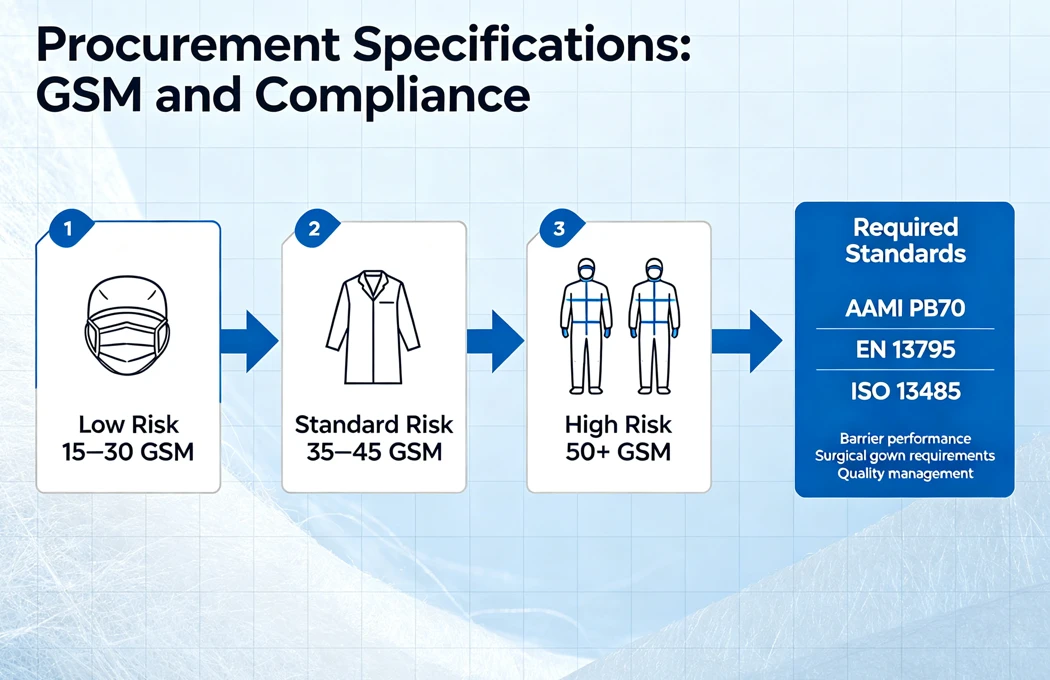
Procurement Specifications: GSM and Compliance
When sourcing SMS protective clothing, the term GSM (Grams per Square Meter) is the most important technical specification to monitor. It refers to the weight and density of the fabric.
- Lightweight (15–30 GSM): Typically used for disposable face masks or light-duty hair covers.
- Medium Weight (35–45 GSM): The standard for isolation gowns and basic protective suits.
- Heavyweight (50+ GSM): Reserved for high-risk coveralls and surgical gowns requiring maximum durability and barrier protection.
For international buyers, SMS fabric must be validated through specific testing protocols. Key standards include AAMI PB70 for liquid barrier performance, EN 13795 for surgical gowns, and ISO 13485 for quality management systems.
Conclusion
SMS non-woven fabric represents a peak in textile engineering for the safety industry. By combining the strength of spunbond filaments with the filtration capabilities of meltblown microfibers, it addresses the dual needs of safety and human physiology. Whether you are managing a hospital’s supply chain or overseeing safety in a pharmaceutical plant, selecting the correct grade and weight of SMS material is an investment in both worker safety and operational efficiency.
FAQ
1. Is SMS non-woven fabric waterproof?
SMS is highly water-resistant and hydrophobic, meaning it repels water and liquid splashes. However, it is not “waterproof” in the way a solid plastic sheet is. Under high pressure, liquid can eventually penetrate the pores. For high-pressure liquid protection, a Microporous (SF) or PE-laminated fabric is usually required.
2. Can SMS fabric be washed and reused?
No. SMS is designed as a single-use, disposable material. The meltblown layer’s filtration structure can be compromised by the mechanical agitation and heat of industrial laundering. Attempting to reuse SMS PPE can lead to a significant drop in barrier protection and increased risk of cross-contamination.
3. What is the difference between SMS and SMMS?
The “M” in the middle stands for the meltblown layer. SMS has one meltblown layer, while SMMS has two. Adding more meltblown layers (SMMS, SMMMS) increases the filtration consistency and reduces the risk of “pinholes” in the fabric, making it safer for higher-risk medical procedures or environments with fine particulate hazards.
4. What are the main benefits of SMS for isolation gowns?
The main benefits include high breathability, which reduces wearer heat stress, and excellent bacterial filtration efficiency. It provides a more comfortable experience for healthcare workers compared to polyethylene gowns while maintaining the fluid resistance necessary for AAMI Level 2 and Level 3 compliance.
Reference Sources
FDA guidance on medical gowns and PPE barrier performance.