
Blog
Disposable Medical Gown vs. Non-Medical Gown

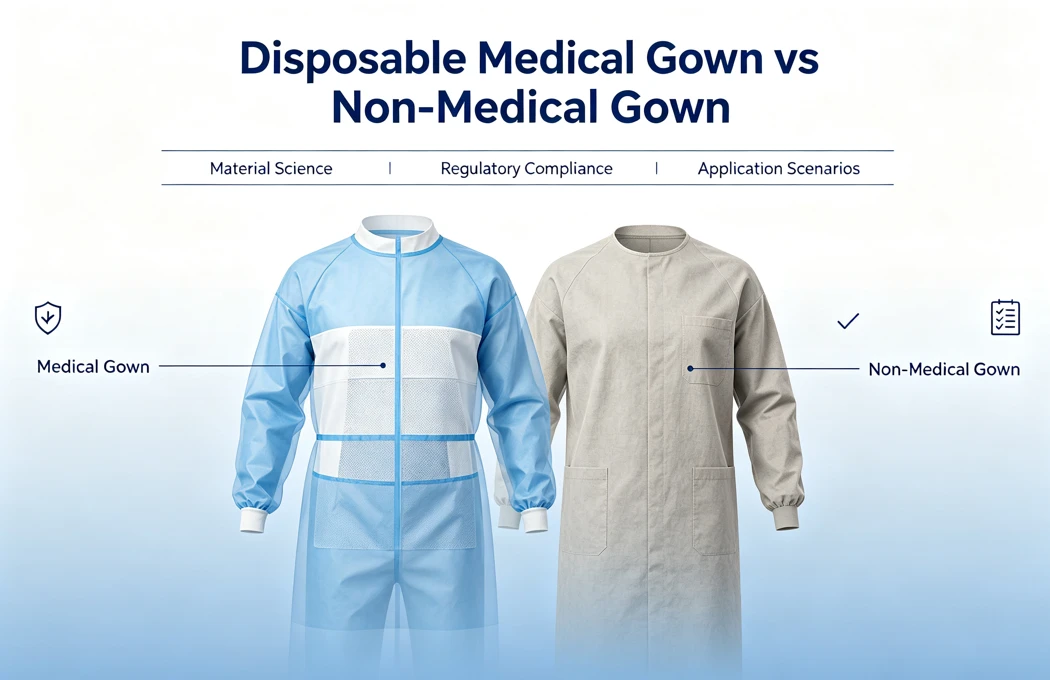
In the global Personal Protective Equipment (PPE) market, the terms “medical gown” and “non-medical gown” are frequently used, but the technical boundaries between them are often misunderstood. For procurement managers, hospital administrators, and safety officers, choosing the wrong type of gown isn’t just a budgetary error—it is a significant safety risk. This guide provides an expert analysis of the differences between disposable medical gowns vs non-medical gowns, focusing on material science, regulatory compliance, and specific application scenarios.
What Defines a Disposable Medical Gown?
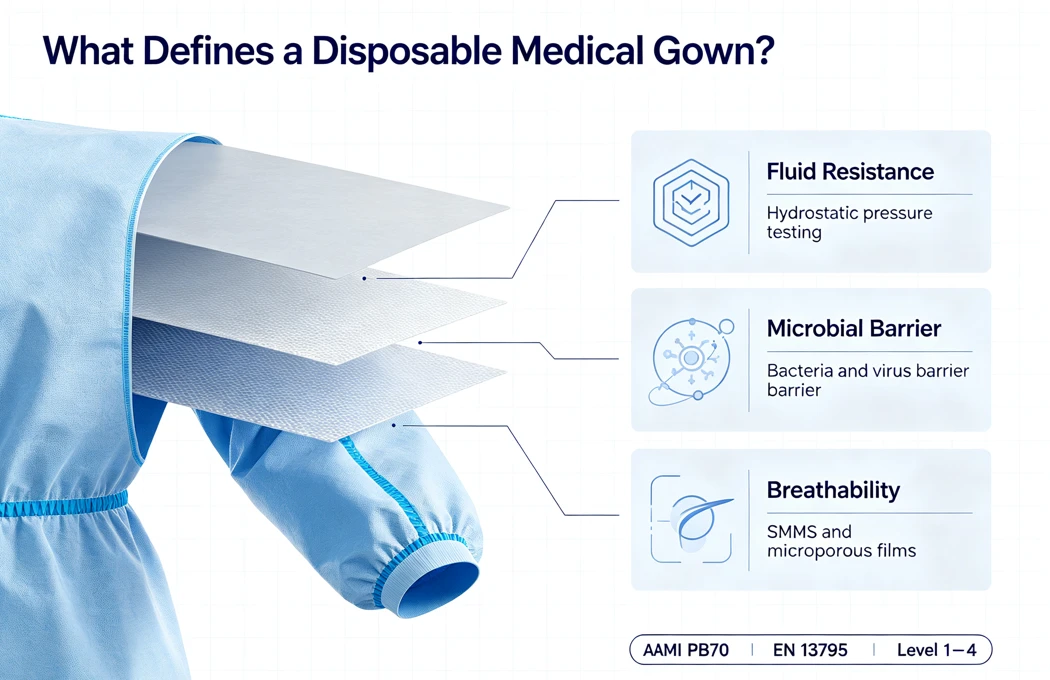
A medical gown is specifically designed for use in healthcare environments. It serves as a dual-purpose barrier: protecting the wearer from blood, bodily fluids, and infectious agents, while also protecting the patient from microorganisms carried by the healthcare worker. To be classified as “medical grade,” these gowns must adhere to stringent international standards, such as AAMI PB70 (in the US) or EN 13795 (in Europe). These standards categorize gowns based on their barrier performance, ranging from Level 1 (minimal risk) to Level 4 (high risk/fluid-intensive procedures).
Key Technical Attributes of Medical Gowns
- Fluid Resistance: Measured by hydrostatic pressure and impact penetration tests.
- Microbial Barrier: Ability to prevent the passage of bacteria and viruses.
- Sterility Options: Often available in sterile packaging for surgical use.
- Breathability vs. Protection: Advanced materials such as SMMS and microporous films balance thermal comfort with reliable barrier protection.
What is a Non-Medical Protective Gown?
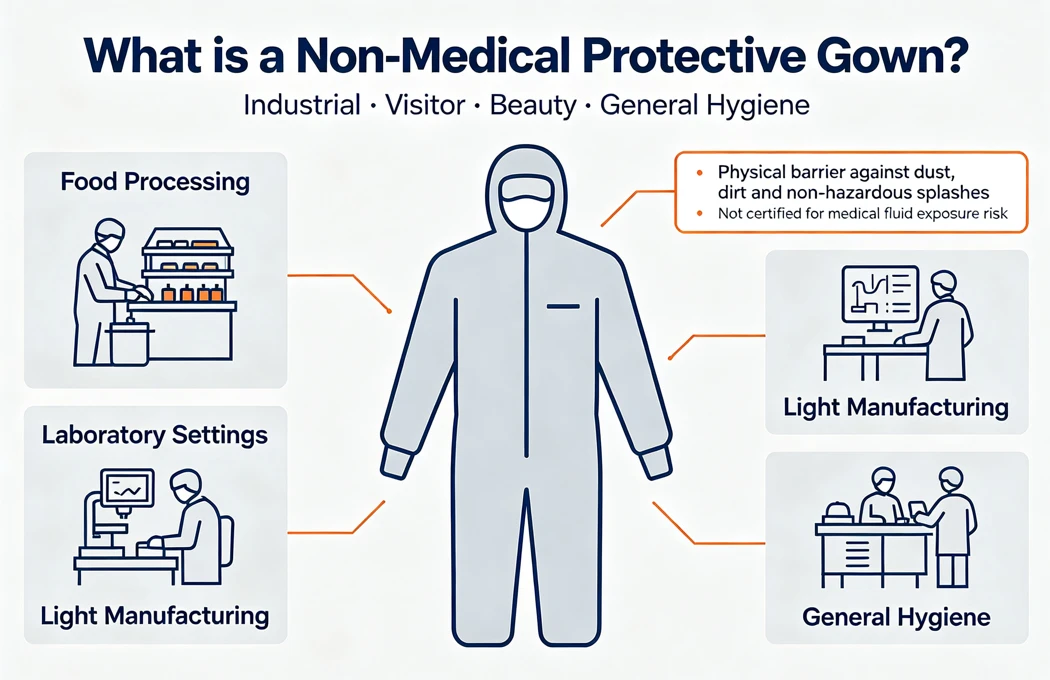
Non-medical gowns, often referred to as “industrial gowns,” “visitor gowns,” or “beauty gowns,” are intended for environments where the risk of exposure to infectious biological fluids is negligible. These are typically used in food processing, laboratory settings, light manufacturing, or general hygiene maintenance. While non-medical gowns provide a physical barrier against dust, dirt, and non-hazardous splashes, they do not undergo the rigorous clinical testing required for FDA or CE medical certification.
Disposable Medical Gown vs Non-Medical Gown: The Core Differences
Understanding the nuances between these two categories requires a look at primary factors: Regulatory Standards, Material Engineering, and Barrier Performance.
Regulatory Standards and Certifications
This is the most significant differentiator. Medical gowns must comply with AAMI PB70 standards. In the United States, these are regulated by the FDA as Class I or Class II medical devices. In the EU, they must meet MDD 93/42/EEC or the newer MDR 2017/745. Non-medical gowns usually fall under PPE Regulation (EU) 2016/425 Category I (simple design). They are not intended for clinical use and do not require fluid-resistance validation via AAMI levels.
Material Engineering
The raw materials used by manufacturers differ based on the gown’s purpose. Medical Grade Materials typically include SMS/SMMS (Spunbond-Meltblown-Spunbond trilaminate fabric) which is the industry standard for high-performance medical gowns. The meltblown layer acts as a filter against bacteria. PP+PE Laminated materials (Polypropylene with a Polyethylene film) provide 100% fluid impermeability, essential for Level 3 or 4 protection. Non-medical materials often use SBPP (Spunbond Polypropylene), which is lightweight and breathable, ideal for dust protection but offers very low fluid resistance. CPE (Chlorinated Polyethylene) is used for simple aprons where basic waterproofing is needed but microbial filtration is not a priority.
Barrier Performance Levels (AAMI PB70)
In the context of medical vs non-medical isolation gowns, the AAMI rating system is the “gold standard” for medical classification:
| Protection Level | Risk Level | Test Requirement | Common Material |
|---|---|---|---|
| AAMI Level 1 | Minimal | Impact Penetration < 4.5g | SBPP or Light SMS |
| AAMI Level 2 | Low | Hydrostatic Pressure > 20cm | Medium Weight SMS |
| AAMI Level 3 | Moderate | Hydrostatic Pressure > 50cm | Heavy SMS or PP+PE |
| AAMI Level 4 | High | Viral Penetration (ASTM F1671) | Reinforced SF/Microporous |
Medical Gown Applications vs. Non-Medical Applications
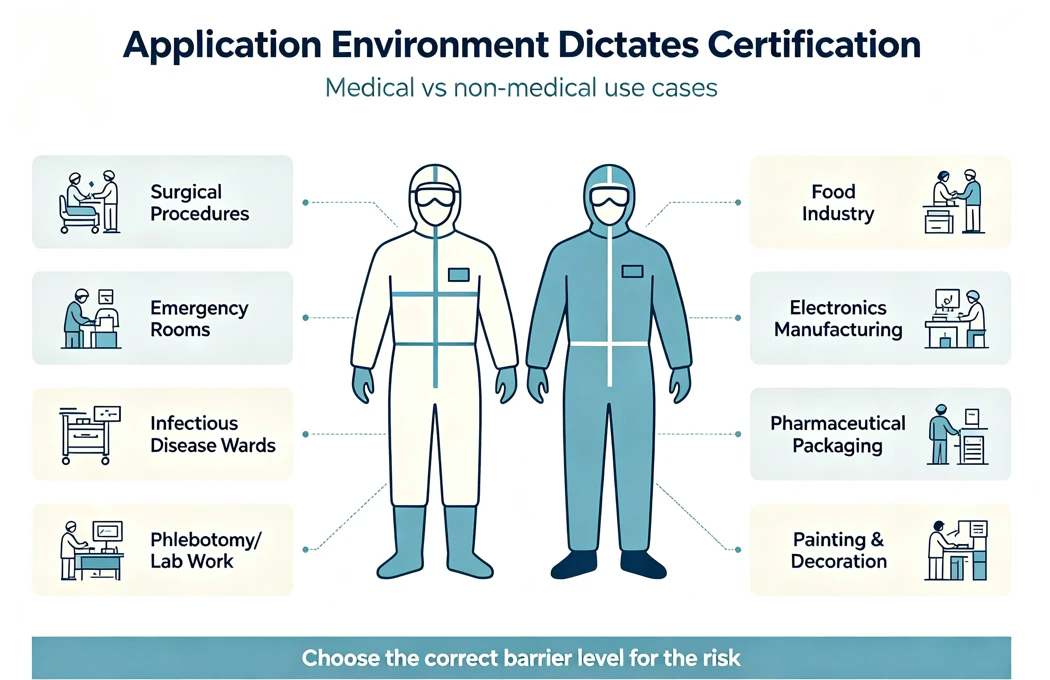
The application environment dictates the necessity for medical certification. Choosing the wrong category can lead to cross-contamination or regulatory non-compliance.
Medical Gown Applications
- Surgical Procedures: Requires sterile, high-barrier surgical gowns (Level 3 or 4).
- Emergency Rooms: Protection against unknown fluid splashes.
- Infectious Disease Wards: Critical for preventing cross-contamination of pathogens like MRSA or viral agents.
- Phlebotomy/Lab Work: Protection during blood draws.
Non-Medical Protective Gown Applications
- Food Industry: Preventing hair or skin cells from contaminating food lines.
- Electronics Manufacturing: Cleanroom environments where dust control is paramount.
- Pharmaceutical Packaging: General hygiene in non-sterile zones.
- Painting & Decoration: Protection against non-hazardous spills and particulates.
Critical Procurement Considerations: How to Choose?
When evaluating a manufacturer, B2B buyers should look beyond price. For medical-grade products, the technical documentation is the most important asset.
- Request Test Reports: For medical gowns, ask for specific AAMI PB70 test results from third-party labs.
- Evaluate Seam Construction: In high-risk medical environments, sewn seams may leak. Look for ultrasonic welding or taped seams in isolation gowns intended for fluid-heavy environments.
- Check Factory Certifications: A reliable manufacturer should hold ISO 13485.
- Material Traceability: Ensure the supplier controls the production of raw materials, such as PE film, to guarantee consistency in barrier performance.
The Role of Hubei Ruichen in Professional PPE Supply
As a professional manufacturer with over 10 years of experience, Hubei Ruichen Protective Products Co., Ltd understands the technical nuances of both categories. We produce our own PE and CPE films, allowing us to strictly control the quality and cost of our protective clothing range. Whether you require SMS isolation gowns for clinical use or SBPP visitor gowns for industrial tours, our facility in Xiantao, China, operates under ISO 9001 and ISO 13485 standards to ensure every shipment meets the specified protection level.
Conclusion
The primary difference between a disposable medical gown vs non-medical gown lies in the validated barrier performance and regulatory oversight. Medical gowns are clinical tools designed to save lives by preventing infection transmission, governed by AAMI and EN standards. Non-medical gowns are hygiene tools designed for general cleanliness and particulate protection. For healthcare institutions, there is no substitute for certified medical gowns. For industrial clients, using medical-grade gowns may be an unnecessary expense, but using non-medical gowns in a clinical setting is a dangerous liability.
FAQ
1. Can I use a non-medical gown for COVID-19 protection?
Public health authorities generally recommend at least an AAMI Level 1 or 2 medical gown for healthcare workers dealing with suspected viral cases. Non-medical gowns are usually insufficient for clinical frontline use because their fluid resistance and microbial filtration are not validated.
2. Is a “Protective Gown” the same as an “Isolation Gown”?
“Protective gown” is a broad term. An “Isolation gown” specifically refers to a medical gown used to prevent the spread of microorganisms in a healthcare setting. Always check the AAMI rating to confirm if an isolation gown is medical-grade.
3. What is the difference between SMS and PP+PE materials?
SMS (Spunbond-Meltblown-Spunbond) is highly breathable and offers good bacterial filtration, making it popular for Level 1-3 medical gowns. PP+PE (Polypropylene laminated with Polyethylene) is completely waterproof and offers superior fluid protection (Level 3-4) but is less breathable.
4. How can I verify if a gown is truly medical grade?
Look for the CE mark with a 4-digit notified body number or a valid FDA 510(k) number. The packaging should clearly state the AAMI Level or EN 13795 compliance to ensure it meets the required safety standards for clinical environments.
5. Does Hubei Ruichen provide OEM services for medical gowns?
Yes. We specialize in OEM/ODM manufacturing, allowing distributors to customize material weight, sizing, and packaging while maintaining ISO and CE-certified quality standards for both medical and industrial sectors.
Reference Sources
FDA: Medical Gowns and Protective Clothing Standards