
Blog
Isolation Gown vs Protective Suit: What Is the Difference?

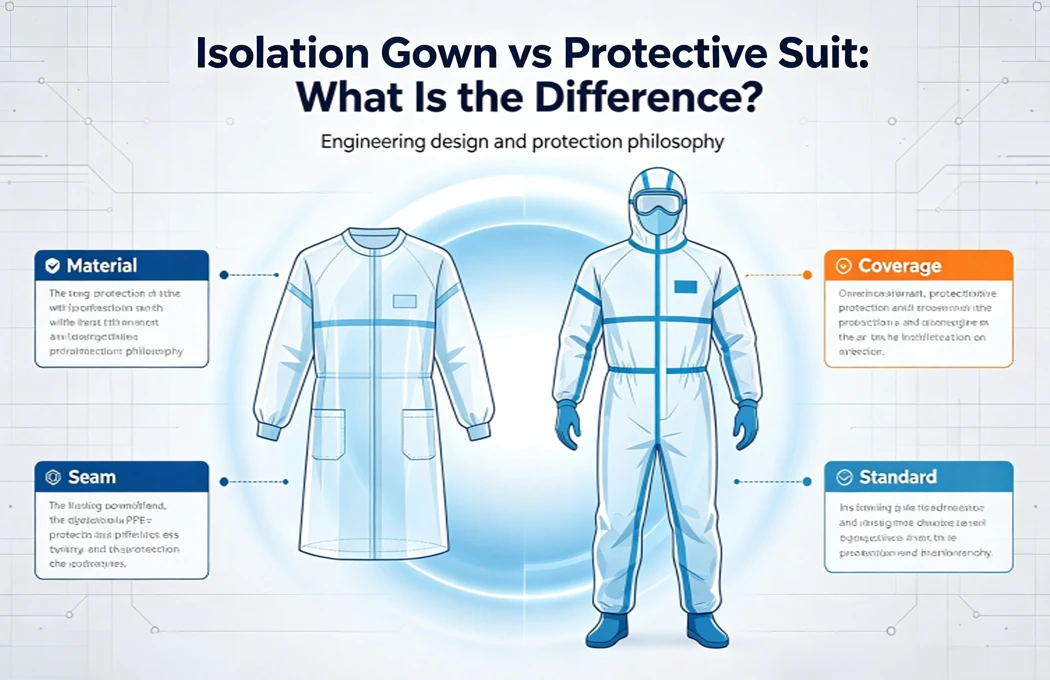
In the specialized field of Personal Protective Equipment (PPE), selecting the correct barrier protection is not merely a matter of compliance—it is a critical decision for healthcare safety, industrial hygiene, and infection control. For procurement managers and safety engineers, the terms “isolation gown” and “protective suit” (often referred to as coveralls) are frequently used, but they represent fundamentally different engineering designs and protection philosophies.
Understanding the nuances between these two product categories is essential for ensuring that frontline workers are adequately protected against specific hazards, whether they are fluid-borne pathogens in a clinical setting or hazardous particulates in an industrial environment. As a professional manufacturer based in Xiantao, Hubei Ruichen provides technical insights into how these products differ in material, design, and regulatory standards.
Defining the Core Structures: Gown vs. Coverall
At the most basic level, the difference between an isolation gown and a protective suit lies in their physical geometry and the degree of body coverage they provide. Each design serves a specific ergonomic and protective function based on the intended environment.
What is an Isolation Gown?
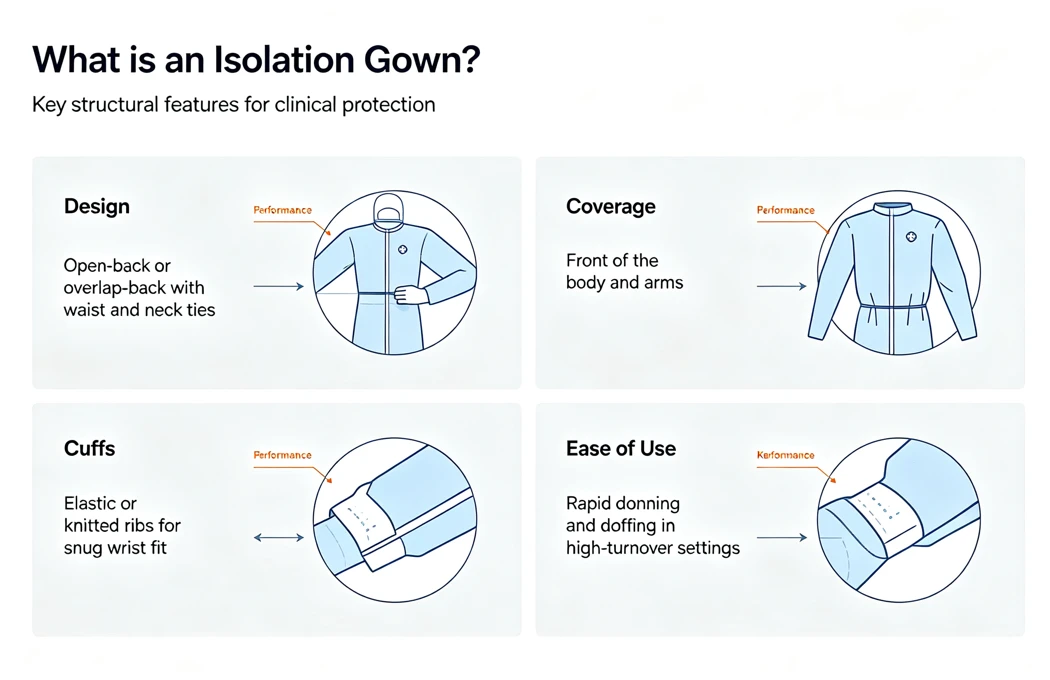
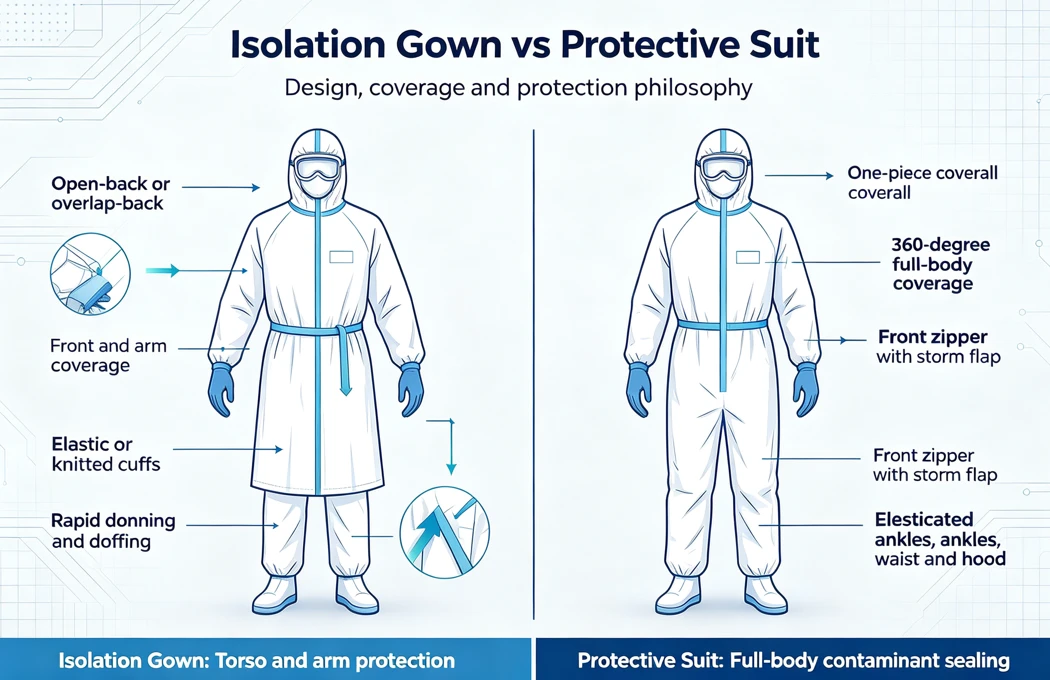
An isolation gown is a piece of protective apparel designed to protect the torso and arms of the wearer from the spread of infection or illness. Key structural features include:
- Design: Typically open-back or overlap-back with waist and neck ties.
- Coverage: Provides protection primarily to the front of the body and the arms.
- Cuffs: Usually finished with elastic or knitted ribs to ensure a snug fit around the wrists.
- Ease of Use: Designed for rapid donning and doffing, which is vital in high-turnover clinical environments.
What is a Protective Suit (Coverall)?
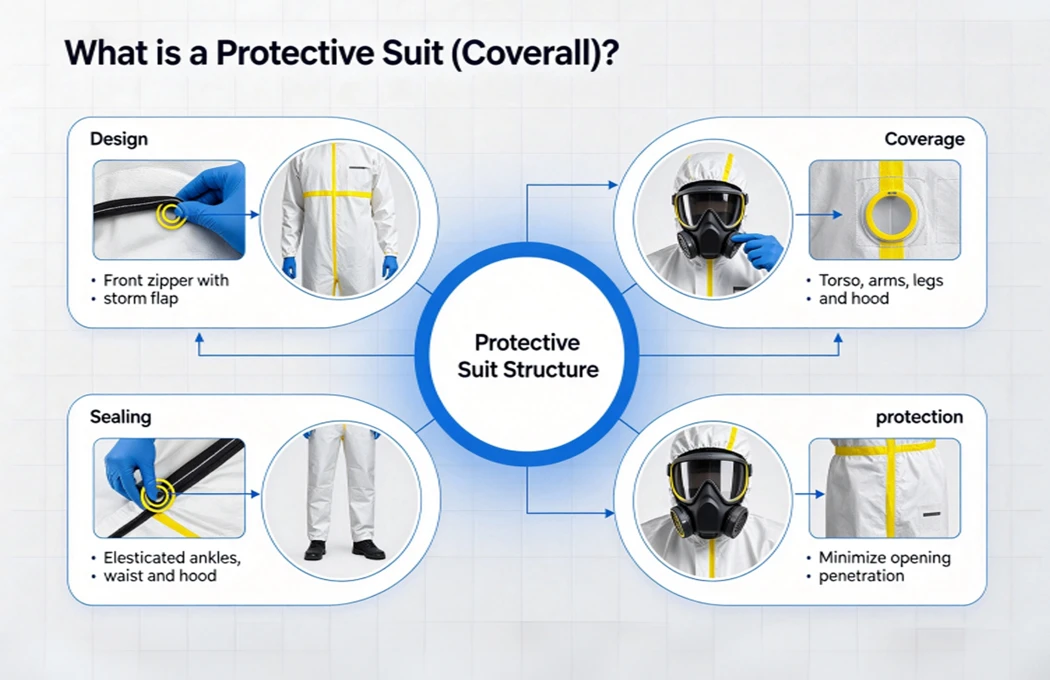
A protective suit, or coverall, is a one-piece garment designed to provide 360-degree protection. It covers the entire body, including the torso, arms, legs, and often the head (via an integrated hood).
- Design: A continuous garment with a front zipper closure, often protected by a storm flap.
- Coverage: Full-body protection, leaving only the face, hands, and feet exposed (unless integrated with a hood and boot covers).
- Sealing: Often features elasticated ankles, waist, and hood to minimize the entry of contaminants through garment openings.
Material Science: SMS, Microporous, and Lamination
From a manufacturing perspective, the fabric choice is what determines the barrier performance of the garment. At Hubei Ruichen, we utilize a variety of non-woven technologies to meet specific global standards and buyer requirements.
Spunbond Polypropylene (SBPP)
Commonly used for basic, low-risk isolation gowns. It is breathable but offers limited fluid resistance. It is most suitable for basic hygiene, visitor protection, and general dust control in non-hazardous environments.
SMS and SMMS (Spunbond-Meltblown-Spunbond)
This is a “sandwich” structure where the meltblown layers act as a filter against bacteria and fluids, while the spunbond layers provide mechanical strength. SMS is the industry standard for high-quality isolation gowns and Type 5/6 protective suits because it balances breathability with significant barrier properties.
PE/CPE Film and Lamination (PP+PE)
For environments where high fluid resistance is mandatory, we laminate a Polyethylene (PE) film onto the non-woven base. This creates a “fluid-proof” barrier.
- Isolation Gowns: PP+PE gowns are used in situations with high fluid exposure or when dealing with infectious waste.
- Protective Suits: Often utilize Microporous Film (SF). This material contains billions of microscopic pores that are small enough to block liquid water and blood-borne pathogens but large enough to allow water vapor (sweat) to escape, significantly improving wearer comfort during long shifts.
Barrier Performance Standards: AAMI vs. EN Types
One of the most common mistakes in PPE procurement is assuming that a “high-level” gown provides the same protection as a “basic” coverall. They are tested under different frameworks and serve different safety protocols.
Isolation Gowns: The AAMI PB70 Framework
In the medical sector, gowns are classified by the Association for the Advancement of Medical Instrumentation (AAMI) based on their liquid barrier performance:
- Level 1: Minimal risk; used for basic care or standard isolation.
- Level 2: Low risk; used during blood drawing or suturing.
- Level 3: Moderate risk; used in the ER or for trauma cases.
- Level 4: High risk; the highest level of fluid and viral resistance, often requiring ASTM F1670/F1671 testing for blood-borne pathogen penetration.
Protective Suits: The European “Type” System
Protective suits are categorized into “Types” based on the nature of the hazard they defend against, usually regulated under EU PPE Regulation 2016/425:
- Type 6 (EN 13034): Limited splash protection against liquid chemicals.
- Type 5 (EN ISO 13982-1): Protection against hazardous dry particulates (dust).
- Type 4 (EN 14605): Spray-tight protection (requires taped seams).
- Type 3 (EN 14605): Liquid-tight protection against pressurized jets.
- EN 14126: This is a crucial certification for suits used against biological hazards, ensuring the material blocks infectious agents.
Technical Comparison Table
| Feature | Isolation Gown | Protective Suit (Coverall) |
|---|---|---|
| Body Coverage | Partial (Front & Arms) | Full (Head to Toe) |
| Back Design | Open or Overlapping | Fully Closed |
| Primary Use Case | Clinical, Patient Care, Lab | Chemical, Industrial, Bio-hazard |
| Protection Focus | Fluid Splash (Frontal) | Particles, Aerosols, Chemical Spray |
| Donning/Doffing | Very Fast / Easy | Complex / Requires Protocol |
| Heat Stress | Low (Breathable Back) | Higher (Full Encapsulation) |
| Seam Construction | Standard Stitched | Stitched, Bound, or Heat Taped |
Critical Application Scenarios: Which One to Choose?
As a technical manufacturer, we advise our clients to base their selection on a formal risk assessment. Choosing the wrong garment can lead to either inadequate protection or unnecessary heat stress and cost.
When to Use an Isolation Gown?
- Standard Medical Procedures: When the risk of fluid exposure is localized to the front of the clinician during routine check-ups.
- Contact Precautions: Protecting against the transfer of microorganisms from patients with MRSA or C. difficile.
- Food Processing: Using lightweight SBPP or PE aprons/gowns for basic hygiene and cross-contamination prevention.
- Routine Lab Work: Where minor splashes or dust are the primary concern and ventilation is required for the wearer.
When to Use a Protective Suit?
- Infectious Disease Outbreaks: When pathogens are airborne or when full-body decontamination is required.
- Pharmaceutical Manufacturing: Especially in cleanrooms where the garment must prevent the wearer’s skin cells and hair from contaminating the product.
- Industrial Spraying/Painting: When the worker is surrounded by fine mists or aerosols that can settle on any part of the body.
- Asbestos or Lead Abatement: Where total exclusion of hazardous dust is mandatory to prevent long-term health risks.
The “Back Opening” Factor: A Safety Double-Edged Sword
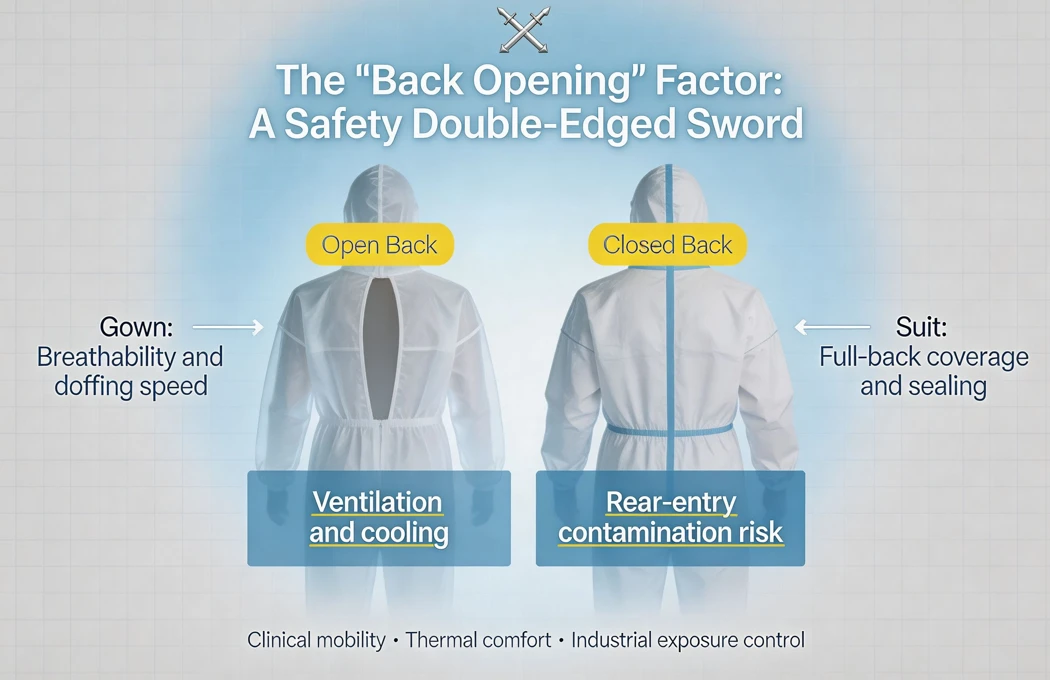
The defining difference between these two items is the back of the garment, which dictates the level of ventilation and the risk of rear-entry contamination.
- The Gown’s Advantage: The open back allows for much better thermoregulation (cooling). In a hospital ward, a nurse moving between patients needs this breathability to prevent exhaustion. Furthermore, in doffing, a gown can be “snapped” off from the front, pulling the contaminated surface away from the body.
- The Suit’s Advantage: The closed back ensures that if a worker turns around or is in a confined space, their back remains protected. In industrial cleaning or heavy chemical handling, an open back is a dangerous vulnerability that could lead to accidental exposure.
Manufacturing Considerations and Quality Control
When sourcing from a manufacturer like Hubei Ruichen, several technical factors influence the final product quality and the reliability of the barrier.
Seam Integrity
For isolation gowns, a standard stitched seam is often sufficient. However, for a protective suit to reach Type 4 or Type 3 status, the seams must be covered with waterproof tape. This prevents liquids from “wicking” through the needle holes, ensuring a total liquid barrier across the entire garment surface.
Breathability vs. Barrier
We often utilize SF Microporous fabric for suits because it solves the “sauna effect” common in traditional PE-coated garments. By controlling the pore size of the film produced in our factory, we ensure that the suit remains liquid-proof while allowing moisture vapor transmission, which is critical for worker safety and compliance.
Donning and Doffing Protocols
A protective suit is only as safe as the person taking it off. Because suits are one-piece garments, the doffing process is more complex and prone to self-contamination if not done correctly. For high-risk medical environments, some facilities prefer high-level (AAMI Level 3 or 4) isolation gowns specifically because the doffing protocol is simpler and safer for staff during long shifts.
Why Choose Hubei Ruichen as Your PPE Partner?
With over 10 years of professional manufacturing experience in Xiantao, the heart of China’s non-woven industry, Hubei Ruichen Protective Products Co., Ltd offers a unique advantage to international buyers seeking reliable supply chains.
- Integrated Production: We produce our own PE and CPE films. This not only allows for tighter cost control but also ensures that the barrier material used in our protective suits and isolation gowns meets consistent thickness and density specifications.
- Certified Excellence: Our facilities are ISO9001 and ISO13485 certified, and our products carry the CE mark, ensuring compliance with both medical and industrial safety regulations globally.
- Material Diversity: From basic SBPP to advanced SF Microporous and SMS, we provide the full spectrum of raw materials to match your specific protection requirements and budgetary constraints.
- OEM/ODM Expertise: We work closely with global distributors to provide customized sizing, labeling, and packaging solutions tailored to local market needs and institutional requirements.
Conclusion
The choice between an isolation gown and a protective suit is not about which is “better,” but which is appropriate for the risk level of the specific environment. Isolation gowns offer excellent frontal protection and ease of use for clinical settings, while protective suits provide the total encapsulation required for hazardous environments involving particulates or chemical sprays. For procurement professionals, understanding the material composition and the relevant standards is the key to ensuring both safety and cost-effectiveness in your supply chain.
FAQ
1. Can a Level 4 Isolation Gown replace a Type 5/6 Coverall?
Technically, no. While a Level 4 gown has extremely high fluid resistance, it does not protect the back or the legs as a coverall does. If the hazard is airborne or requires 360-degree protection, a coverall is necessary.
2. What is the benefit of a “taped seam” in protective suits?
A taped seam involves heat-sealing a waterproof tape over the stitched lines. This ensures that the garment is “spray-tight” (Type 4), preventing liquids from entering through the small holes created by the sewing needle during the assembly process.
3. Is SMS material better than Microporous film?
It depends on the priority. SMS is generally more breathable and comfortable for long-term wear in dry environments. Microporous film (SF) offers superior liquid barrier performance and is better suited for wet or high-fluid-risk scenarios where blood-borne pathogens are a concern.
4. How do I verify the quality of a Chinese PPE manufacturer?
Look for ISO13485 certification (for medical devices) and specific test reports for the product (e.g., EN 14126 for suits). A reliable manufacturer like Hubei Ruichen will provide clear documentation, material traceability, and has a proven history of international exports.
5. Are isolation gowns reusable or disposable?
While reusable gowns exist, Hubei Ruichen specializes in disposable non-woven gowns. Disposable gowns are preferred in most high-infection environments because they eliminate the risks and costs associated with laundering and cross-contamination.
Reference Sources
FDA Medical Gown Classification and Regulatory Requirements
CDC Guide to Selection and Use of PPE in Healthcare Settings
AAMI PB70 Standard for Liquid Barrier Performance and Classification