

How to Clean Coveralls Safely

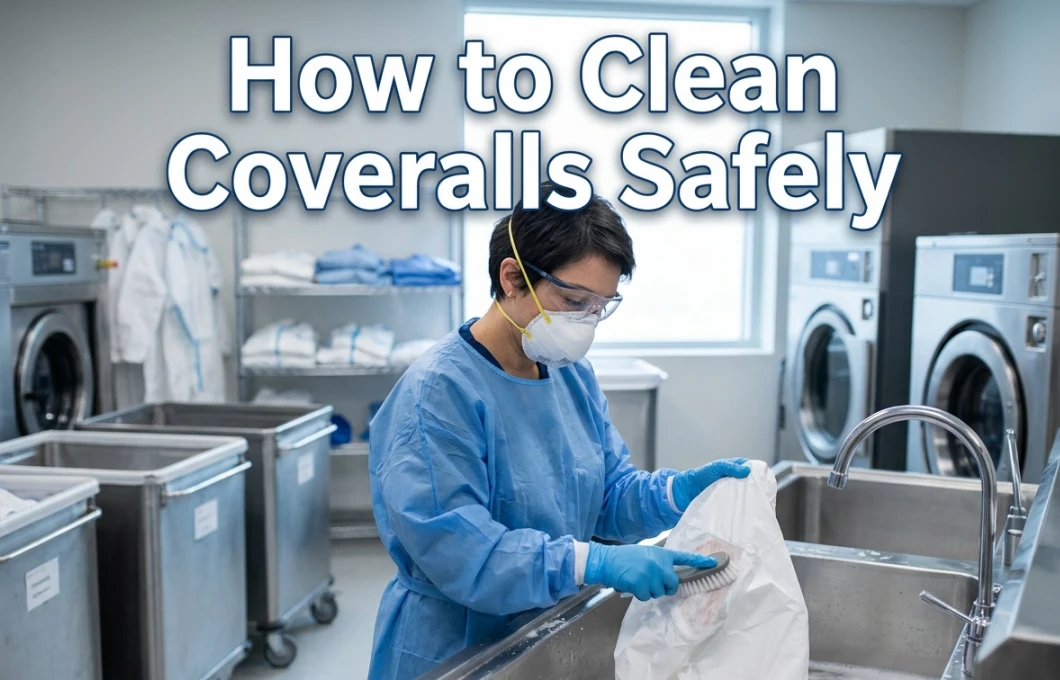
Coveralls can get dirty quickly, especially in workplaces where employees deal with dust, grease, liquids, chemicals, or other contaminants. After a long shift, it is natural to wonder whether a quick wash is enough to make them ready for the next day.
The answer depends on the type of coveralls you are wearing.
Some work coveralls are designed for repeated washing and use. Others are disposable garments intended for a single use. Treating them the same way can affect their protective properties and may expose workers to unnecessary risks.
If you are looking for how to clean coveralls, start by identifying the garment material, checking its care instructions, and understanding what it has been exposed to. These details determine whether cleaning is appropriate at all.
When Should You Clean Your Coveralls?
Coveralls should be checked after each use. Visible dirt is an obvious sign that cleaning may be needed, but contamination is not always easy to see.
Dust, oil, chemical residues, and flammable substances can remain on fabric even when a garment looks relatively clean. Wearing contaminated clothing again may expose the wearer or other people to these substances.
The cleaning schedule depends on the working environment and the type of garment.
For example, coveralls used in general manufacturing may collect dust and grease throughout a shift. Workers in food processing, healthcare, and laboratory environments may need to follow stricter garment handling and replacement procedures.
Pay attention to these situations:
- Visible dirt or stains: Grease, dust, food residue, and other substances can build up during daily work.
- Chemical exposure: Certain chemical residues may remain on the garment and require specialized handling.
- Contact with flammable materials: Oil, fuel, and similar substances can create additional safety concerns.
- Repeated use: Reusable coveralls should be maintained according to their care instructions and workplace cleaning procedures.
Do not assume that a garment is safe to wear again simply because it looks clean. Its intended use and exposure history matter just as much.
Can You Wash Disposable Coveralls?
This is one of the most common questions people ask when buying protective clothing.
Generally, disposable coveralls should not be washed for reuse. They are designed for limited use, and ordinary washing cannot guarantee that their original protective properties will remain intact.
Disposable coveralls are commonly made from materials such as PP nonwoven, SMS, and microporous fabric. Their construction and intended protection vary depending on the product.
Washing may affect the fabric structure, seams, elastic cuffs, and other garment components. Even if the coverall looks unchanged after washing, that does not prove it can provide the same level of protection.
Here is a simple comparison:
| Coverall Type | Cleaning or Reuse Recommendation |
|---|---|
| Disposable PP coveralls | Do not wash for reuse |
| Disposable SMS coveralls | Do not wash for reuse |
| Disposable microporous coveralls | Do not wash for reuse |
| Reusable work coveralls | Follow the manufacturer’s washing instructions |
| Specialized protective garments | Follow the garment-specific care and maintenance procedures |
For disposable PPE, follow the manufacturer’s instructions for use and disposal. Replace the garment when required by its instructions or workplace procedures.
If it has been exposed to hazardous chemicals, biological contaminants, or other dangerous substances, follow the applicable workplace handling and disposal procedures rather than putting it into a household washing machine.
Read the Care Instructions Before Washing
If your coveralls are designed for repeated use, take a moment to check the care label before putting them in the washing machine.
Different fabrics respond differently to water temperature, detergents, mechanical washing, and drying conditions. A cleaning method that works for ordinary workwear may damage a garment with specialized protective properties.
Check the following details:
Washing temperature
Look for the recommended water temperature. Excessive heat may affect certain fabrics, coatings, elastic components, or protective treatments.
Detergent selection
Use a detergent suitable for the garment material. Avoid strong cleaning products unless the manufacturer specifically permits them.
Bleach and chemical cleaners
Do not use bleach, hydrogen peroxide, or other aggressive cleaning agents unless the garment instructions allow them. These products may affect fabric color, strength, or protective treatments.
Washing method
Some garments can be machine-washed, while others require a different cleaning process. Follow the manufacturer’s instructions rather than assuming all coveralls can go through the same cycle.
Drying requirements
Check whether the garment can be tumble-dried or should be air-dried. High temperatures may damage certain materials and garment components.
When the care label is missing or unclear, contact the manufacturer before choosing a cleaning method.
Cleaning Reusable Coveralls: A Practical Guide
Reusable coveralls are designed for repeated use, but that does not mean they can withstand unlimited washing.
The cleaning process should match the garment’s material, construction, and intended application. For ordinary reusable workwear, the following steps provide a practical starting point.
1. Check the Garment for Contamination
Before washing, inspect the entire garment.
Look at the sleeves, knees, cuffs, collar, pockets, and seams. These areas often collect dirt during daily work.
Pay particular attention to chemical stains, oil, fuel, and unknown substances. If the garment may have been exposed to hazardous materials, do not handle it as ordinary laundry.
Follow your workplace’s decontamination procedures or seek professional guidance.
2. Separate Workwear from Regular Clothing
Work coveralls should generally be washed separately from everyday clothes, especially when they have collected industrial dirt or workplace residues.
Mixing contaminated workwear with household laundry may transfer unwanted substances to other garments.
Keep used coveralls in an appropriate designated laundry area or container until they can be handled according to the workplace cleaning procedure.
3. Choose a Suitable Detergent
For reusable coveralls that are safe for ordinary laundering, select a detergent compatible with the fabric.
There is no single detergent that works for every protective garment. Some specialized fabrics have coatings or treatments that may be affected by certain cleaning products.
Avoid experimenting with strong chemicals to remove stubborn stains. A cleaner garment is not necessarily a safer one if the cleaning process damages its protective properties.
4. Follow the Recommended Washing Cycle
Set the washing machine according to the manufacturer’s care instructions.
Pay attention to water temperature, washing intensity, and any restrictions on machine washing.
Do not automatically use the hottest setting. Some garments require controlled washing conditions to maintain their construction and performance.
If the coveralls are designed for industrial laundering, use the recommended professional cleaning service when necessary.
5. Dry the Coveralls Properly
After washing, follow the specified drying instructions.
Some reusable garments can be air-dried, while others permit machine drying under controlled conditions. Avoid excessive heat if it is not approved by the manufacturer.
Make sure the garment is completely dry before storing it. Damp clothing can develop unpleasant odors and may be unsuitable for storage or immediate use.
6. Inspect Before Wearing Again
Cleaning does not automatically restore a garment to its original condition.
Once the coveralls are dry, inspect the fabric, seams, closures, elastic cuffs, and other components.
Look for:
- Tears, holes, or thinning fabric
- Damaged seams or loose stitching
- Worn elastic bands or broken fasteners
- Changes in coatings or protective treatments
- Remaining stains or signs of contamination
If the garment is damaged or its protective performance is uncertain, remove it from service until it has been assessed according to the manufacturer’s requirements.
How to Clean Work Coveralls Made from Different Materials
The material used in a coverall affects how it should be maintained. This is particularly important for disposable protective clothing, where different nonwoven fabrics offer different construction and protection characteristics.
Here are some common materials used in disposable coveralls.
PP Nonwoven Coveralls
Polypropylene (PP) nonwoven fabric is commonly used in disposable protective clothing.
It is lightweight and breathable, making it suitable for applications where basic dust and dirt protection is required.
PP disposable coveralls are intended for limited use. They should not be treated as reusable workwear or washed in an attempt to extend their service life.
SMS Coveralls
SMS stands for Spunbond-Meltblown-Spunbond. This material combines multiple nonwoven layers to create a fabric used in various protective clothing applications.
SMS coveralls are available in different weights and constructions. Their suitability depends on the product specifications and intended use.
Like other disposable garments, SMS coveralls should not be washed and reused unless the manufacturer has specifically designed and validated the product for that purpose.
Microporous Coveralls
Microporous coveralls are made with a material designed to provide a barrier against certain particles and liquid splashes while allowing water vapor to pass through to some extent.
They are used in selected industrial, cleaning, and protective applications.
Washing a disposable microporous coverall may affect its material structure and protective performance. Follow the product instructions and replace the garment as required.
PP+PE Coveralls
PP+PE coveralls combine a polypropylene nonwoven base with a polyethylene film layer.
They are used in applications where additional liquid resistance is needed, depending on the garment’s construction and specifications.
Because the protective layer and garment construction may be affected by inappropriate cleaning, disposable PP+PE coveralls should not be washed for reuse.
Common Mistakes to Avoid When Washing Coveralls
Even when a garment is washable, a few common mistakes can shorten its useful life or compromise its intended performance.
Washing every type of coverall in the same way
Disposable and reusable garments have different purposes. Always identify the garment before choosing a cleaning method.
Using excessive heat
High temperatures may damage certain fabrics, coatings, elastic components, and protective treatments.
Ignoring chemical contamination
Oil, fuel, and chemical residues should not be treated as ordinary household stains. Some contaminated garments require specialized handling.
Using strong cleaning agents without checking compatibility
Bleach and other aggressive cleaners may affect the fabric or its protective properties. Follow the care label.
Reusing damaged protective clothing
Small holes, weakened seams, and worn closures can affect garment performance. Inspect reusable coveralls before each use.
Assuming washing restores protection
A garment may look clean without meeting its original protective requirements. Cleaning is not a substitute for product testing or manufacturer-approved maintenance.
Choosing the Right Coveralls for Your Workplace
Cleaning requirements should be considered before purchasing protective clothing, not after the garments have already been used.
For workplaces that need disposable PPE, material selection should reflect the actual working environment. PP, SMS, microporous, and PP+PE coveralls have different characteristics, so the cheapest or thickest option is not automatically the most suitable.
Purchasing teams should consider:
- The type of workplace contamination
- Required barrier and protection characteristics
- Fabric material and weight (GSM)
- Garment size and design
- Intended use and replacement procedures
- Applicable product specifications and certifications
For reusable garments, check the manufacturer’s washing and maintenance requirements before placing an order. This helps purchasing teams understand the practical maintenance process and avoid selecting clothing that does not fit their workplace procedures.
At Ruichen PPE, we supply disposable protective clothing made from materials including PP, SMS, and microporous fabric. Different material options and garment specifications are available for industrial, medical, laboratory, and other workplace applications.
If you are sourcing disposable coveralls for your business, contact our team to discuss material options, fabric weight, garment sizes, and bulk order requirements.
FAQ
1. How do you clean coveralls safely?
Start by checking whether the coveralls are disposable or reusable. Follow the manufacturer’s care instructions for reusable garments. Disposable coveralls should not be washed for reuse, and garments exposed to hazardous substances require appropriate handling procedures.
2. Can you wash disposable coveralls in a washing machine?
Generally, no. Disposable PP, SMS, microporous, and PP+PE coveralls are designed for limited use. Machine washing may affect their fabric structure, seams, or protective properties. Follow the manufacturer’s instructions for use and disposal.
3. Can you wash reusable coveralls at home?
Some reusable work coveralls can be washed at home if their care labels permit it. However, garments contaminated with hazardous chemicals, flammable substances, or other dangerous materials should not be treated as ordinary household laundry.
4. What detergent should I use for work coveralls?
Choose a detergent compatible with the garment material and follow the manufacturer’s recommendations. Avoid bleach, hydrogen peroxide, and aggressive cleaning agents unless they are specifically approved for the garment.
5. Should work coveralls be washed separately?
For ordinary reusable workwear, washing separately from everyday clothing is generally a sensible practice. It helps reduce the possibility of transferring workplace dirt and residues to household garments. Contaminated PPE must be handled under the appropriate workplace procedures.
6. How often should reusable coveralls be washed?
The frequency depends on the working environment, level of contamination, garment type, and manufacturer’s instructions. Inspect coveralls after each use and clean them whenever required by the garment’s care instructions or workplace hygiene procedures.
7. Can washing damage protective coveralls?
Yes. Excessive heat, unsuitable detergents, aggressive washing cycles, and improper drying may damage certain fabrics or protective treatments. This is why garment-specific care instructions should always be followed.
8. How can I tell if coveralls need to be replaced?
Look for holes, tears, damaged seams, worn elastic, broken closures, or changes in the fabric and protective layers. If the garment has been exposed to hazardous substances or its protective performance is uncertain, follow the manufacturer’s replacement criteria and wo