

How to Put On & Remove a Coverall

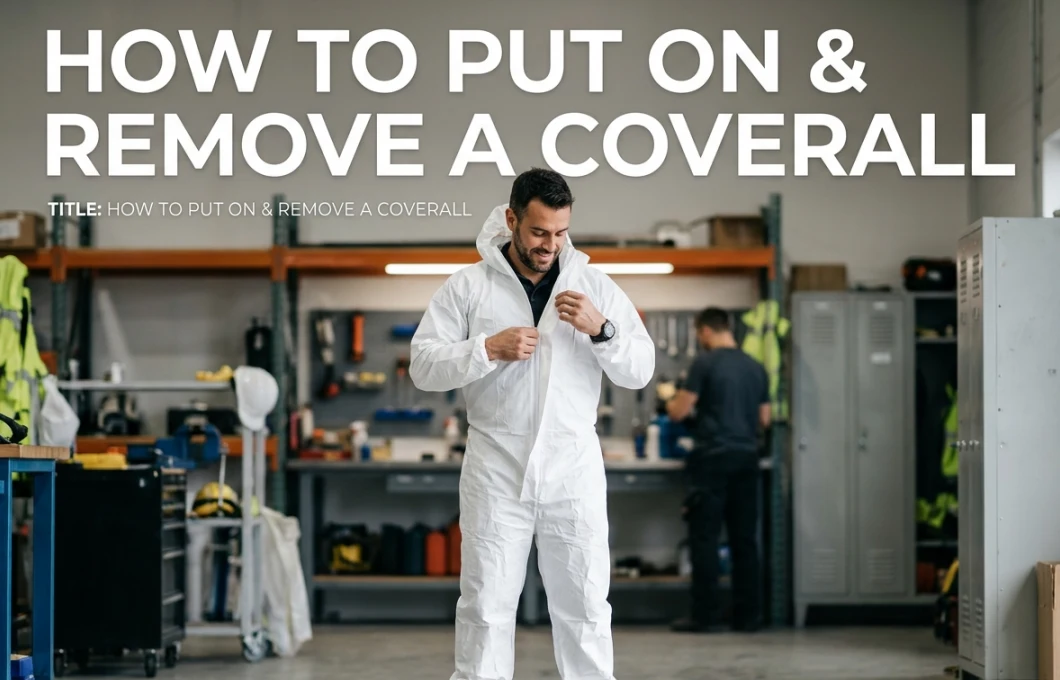
A disposable coverall may look simple to wear, but putting it on and taking it off requires some care. A poorly fitted suit, an exposed cuff, or an incorrect removal technique can reduce the protection it is supposed to provide.
This matters in places where workers handle dust, splashes, chemicals, biological materials, or other workplace contaminants. The coverall itself is only one part of the protective equipment. Gloves, footwear, respiratory protection, and other PPE must also be selected to match the working environment.
Understanding proper coverall donning and doffing helps workers avoid unnecessary contact with contaminated surfaces and use their protective clothing more effectively.
What Is Coverall Donning and Doffing?
Donning refers to putting on personal protective equipment (PPE), while doffing means taking it off after use.
For disposable coveralls, both processes require attention to fit, coverage, and contamination control.
A properly worn coverall should allow enough room for normal movement without leaving large gaps around the wrists, ankles, neck, or other openings. Its zipper, hood, elastic cuffs, and protective flaps should be positioned as intended by the manufacturer.
The exact procedure depends on the coverall design and the hazards involved. A lightweight PP coverall used in a clean workshop, for example, may require different precautions from a chemical-resistant or microporous protective suit used in a higher-risk environment.
How to Put On a Safety Coverall: 7 Steps
Before entering the work area, take a moment to prepare your protective equipment. It is much easier to correct a loose cuff or damaged zipper before the job starts than after exposure has occurred.
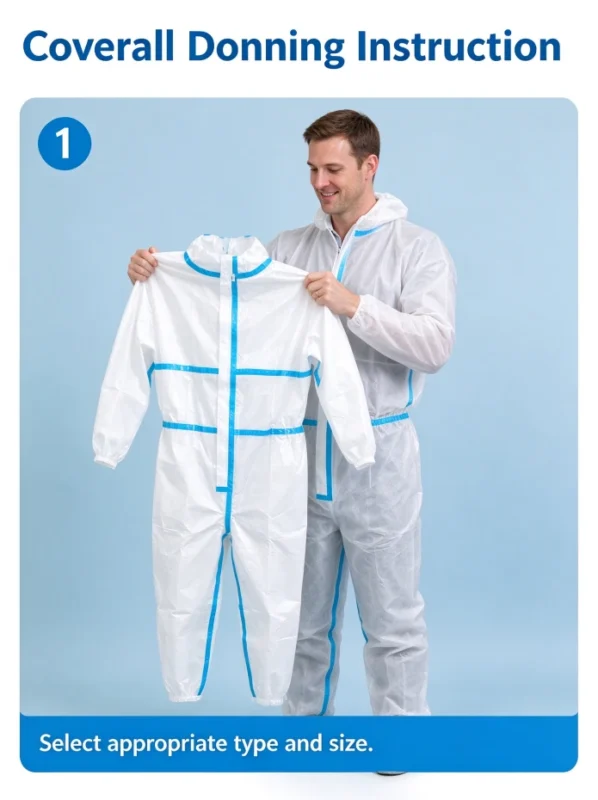
1. Choose the Right Coverall Size
Start with a coverall that fits your body and allows you to move comfortably.
A suit that is too tight can restrict bending, reaching, and walking. Excessively loose clothing may catch on machinery or equipment.
Check the size chart and product specifications before use. Pay attention to the length of the sleeves and legs, as well as the fit around the shoulders, waist, and crotch.
If you need to wear additional clothing underneath, make sure the coverall still fits properly.
2. Check Your PPE Before Wearing It
Unfold the coverall and inspect it under adequate lighting.
Look for:
- Tears, holes, or damaged seams.
- A broken or stuck zipper.
- Damaged elastic cuffs or closures.
- Defects around the hood and ankle openings.
- Any signs of contamination or moisture.
Make sure the gloves, protective footwear, and respiratory equipment are also suitable for the task.
A damaged coverall should not be used when its condition could compromise the required protection.
3. Put On the Required Base PPE
Wear the PPE that must go underneath the coverall according to your workplace procedure.
This may include protective footwear, socks, and other designated equipment. The order in which gloves and footwear are worn depends on the coverall design and the required protection level.
For example, some protective suits are designed to be worn over boots, while others use integrated boot covers or separate footwear arrangements.
Check the manufacturer’s instructions to make sure the equipment fits together correctly.
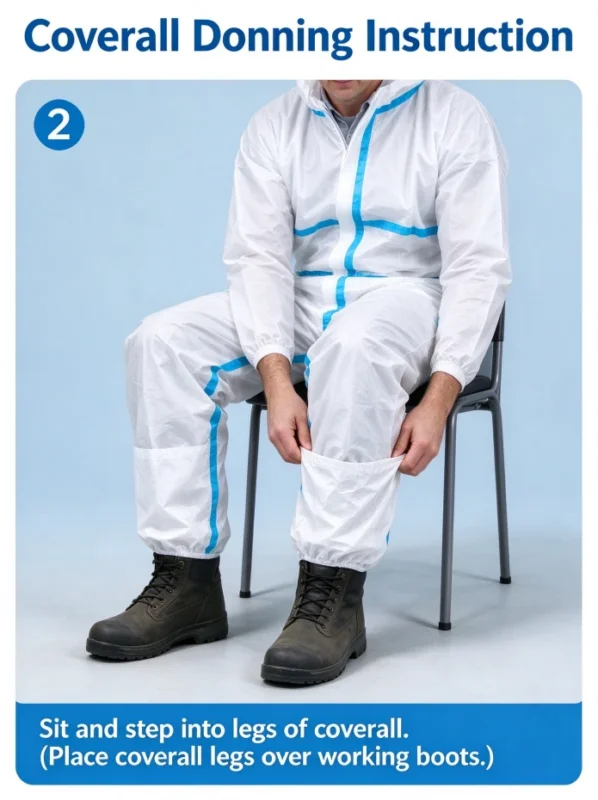
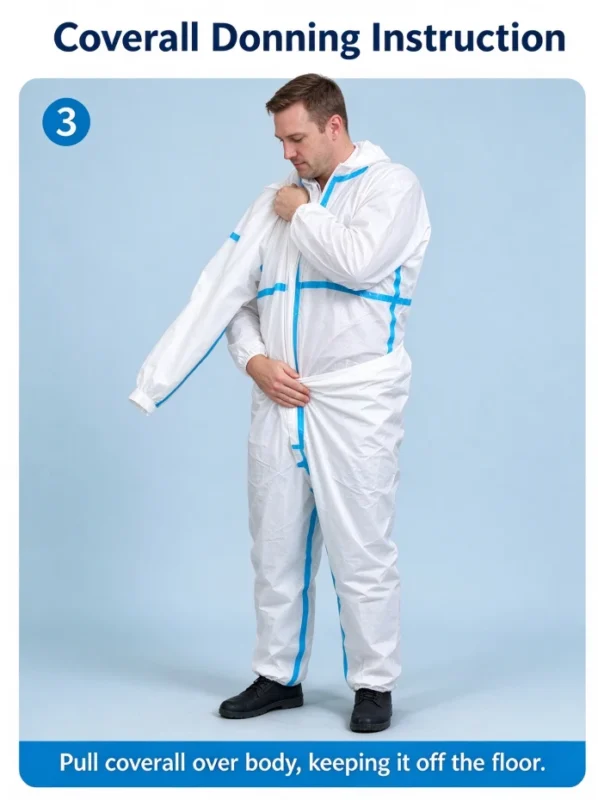
4. Step Into the Coverall
Sit down if necessary to avoid stepping on the garment or losing your balance.
Insert one leg at a time, then pull the coverall up toward your waist. Make sure the fabric is not twisted around your legs.
Put your arms through the sleeves and adjust the shoulders. Move your arms and bend your knees slightly to check that the suit does not pull too tightly.
Avoid stretching the fabric unnecessarily, especially around the seams and closures.
5. Adjust the Hood
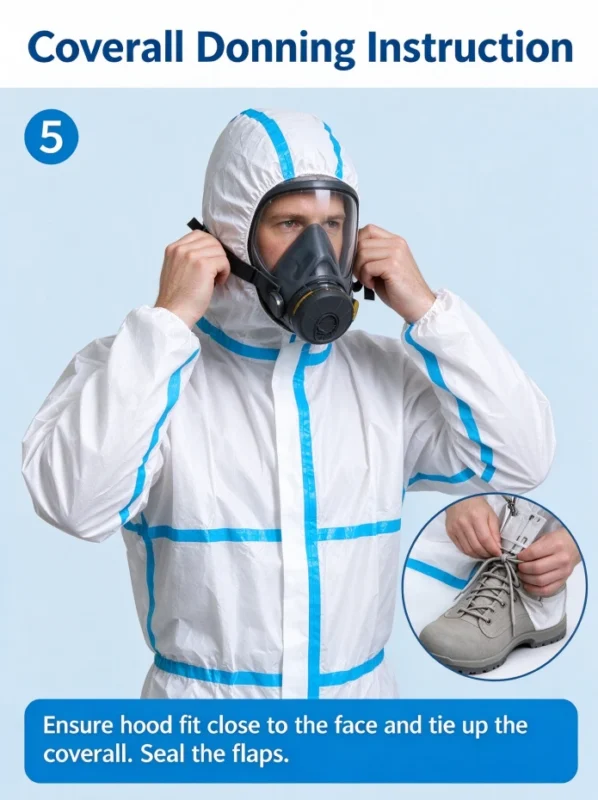
If the coverall comes with an attached hood, pull it over your head and position it comfortably.
The hood should cover the required areas around your head and neck without blocking your vision.
Check how it fits with your respiratory protection. The hood must not interfere with the proper fit or function of a respirator.
Not every disposable coverall includes a hood, so follow the product design rather than trying to modify the garment.
6. Close the Zipper and Protective Flap
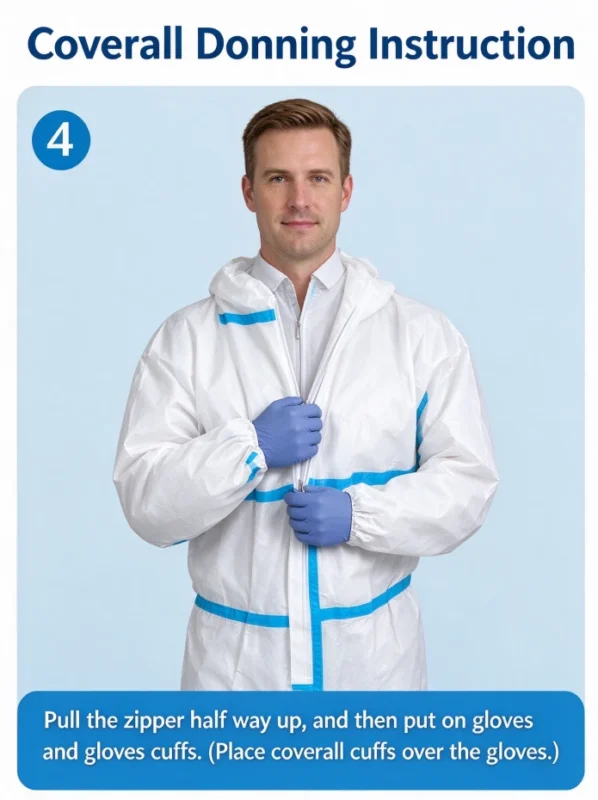
Pull the zipper fully closed according to the manufacturer’s instructions.
If the coverall has an adhesive or protective flap, position it over the zipper as designed. Press it down carefully to ensure that it stays in place.
Avoid forcing a damaged zipper. A closure that cannot be secured properly may leave an opening where contaminants can enter.
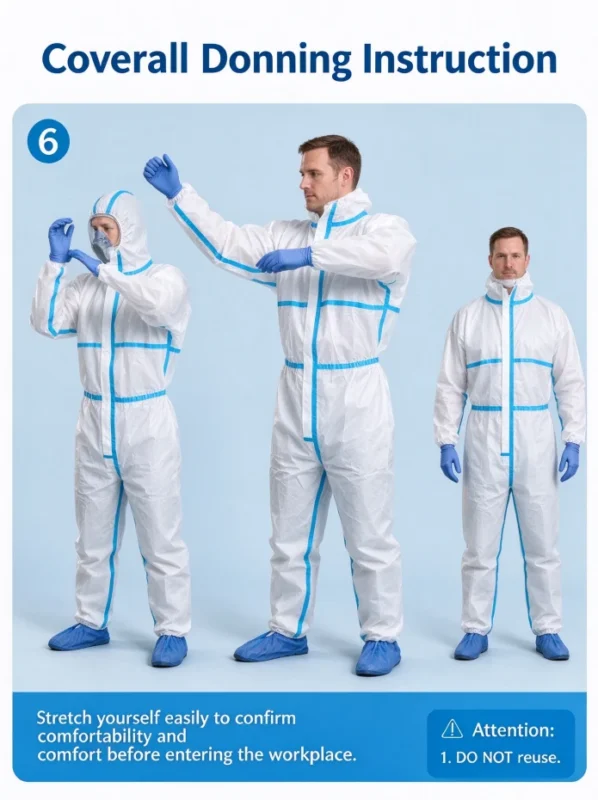
7. Check the Cuffs, Ankles, and Overall Fit
Before starting work, check all openings.
Make sure the sleeves, wrists, ankles, and hood are properly positioned. If the coverall has elastic or sealable cuffs, adjust them according to the product instructions.
Put on the required gloves and make sure the glove-coverall interface provides the intended coverage. Check the footwear arrangement as well.
Raise your arms, bend down, and take a few steps. The coverall should stay in place without pulling apart at the seams or restricting normal movement.
Once everything is adjusted, ask a coworker to check areas that are difficult to see yourself.
Coverall Removal Steps: How to Take Off a Disposable Coverall
Taking off a used coverall deserves just as much attention as putting it on.
The outer surface may have collected dust, liquid splashes, or other contaminants during work. Pulling the garment off carelessly can transfer those materials to your hands, clothing, or surrounding surfaces.
The following steps provide general guidance. For contaminated PPE, follow the specific workplace doffing procedure and any required supervision or assistance. Do not use this sequence as a substitute for a site-specific procedure.
1. Prepare a Designated Removal Area
Move to the designated PPE removal area before taking off the coverall.
Keep clean and contaminated items separate. Prepare the appropriate waste container and hand hygiene supplies.
If the work involved hazardous chemicals, biological materials, or other high-risk substances, follow the established decontamination procedure before removing the garment.
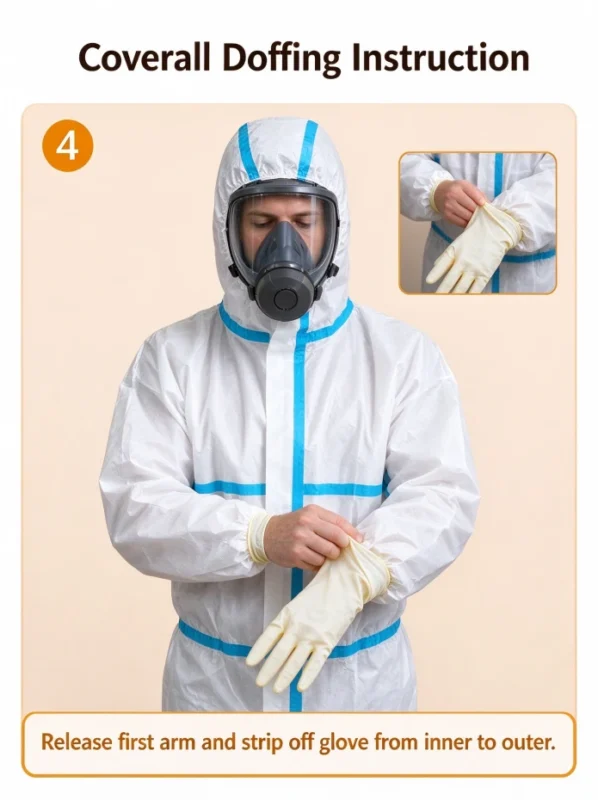
2. Check Your Gloves and Other Protective Equipment
If the coverall may be contaminated, do not remove your protective gloves before handling it unless the applicable procedure specifically requires this.
Inspect the gloves for visible damage or contamination. If they need to be replaced or cleaned before doffing, follow the workplace instructions.
The purpose is to avoid direct contact between your skin and the contaminated outer surface of the coverall.
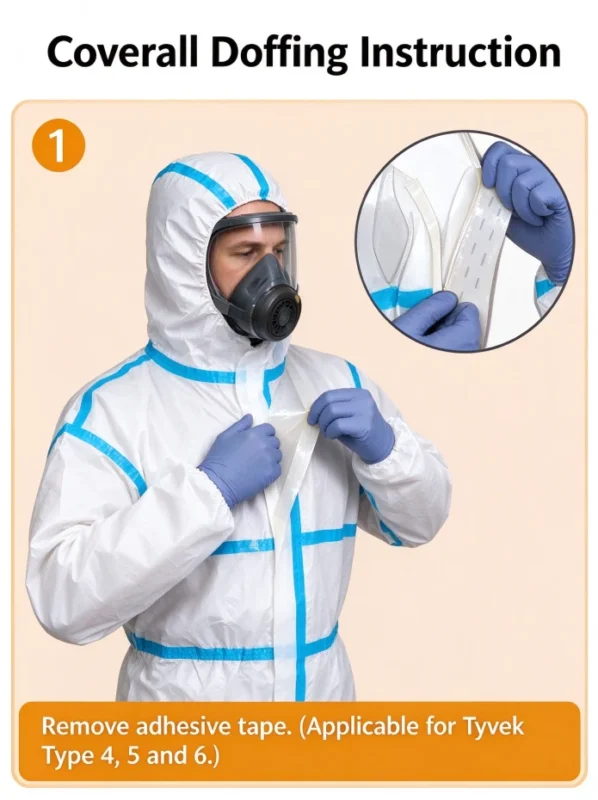
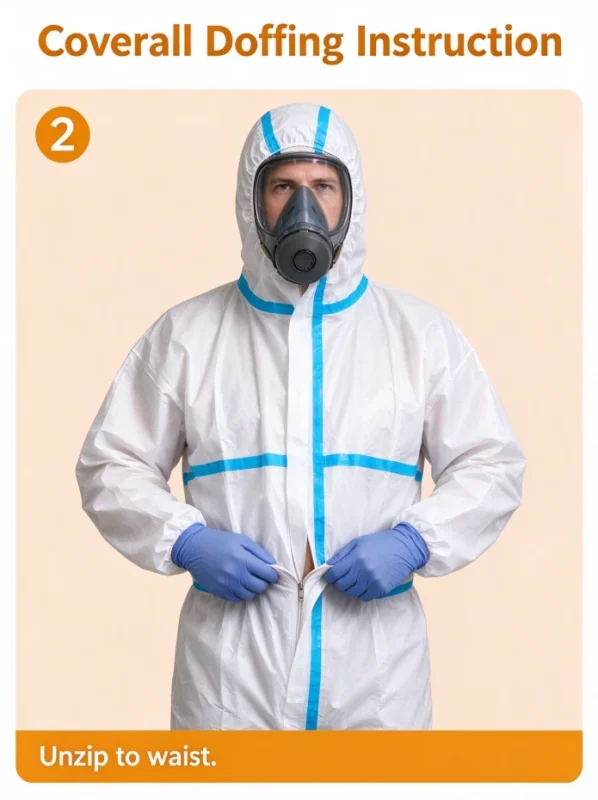
3. Open the Zipper Carefully
Once you are ready to remove the garment, open the protective flap and unzip the coverall.
Avoid touching the outside of the suit with bare hands.
If the zipper is difficult to open, do not pull aggressively. Work carefully to avoid tearing the fabric or spreading contamination.
4. Remove the Hood
If the coverall has an attached hood, lower it carefully.
Pull the hood away from your face and head without dragging its outer surface across your skin, hair, or other exposed areas.
Keep your hands on the inside of the garment whenever possible.
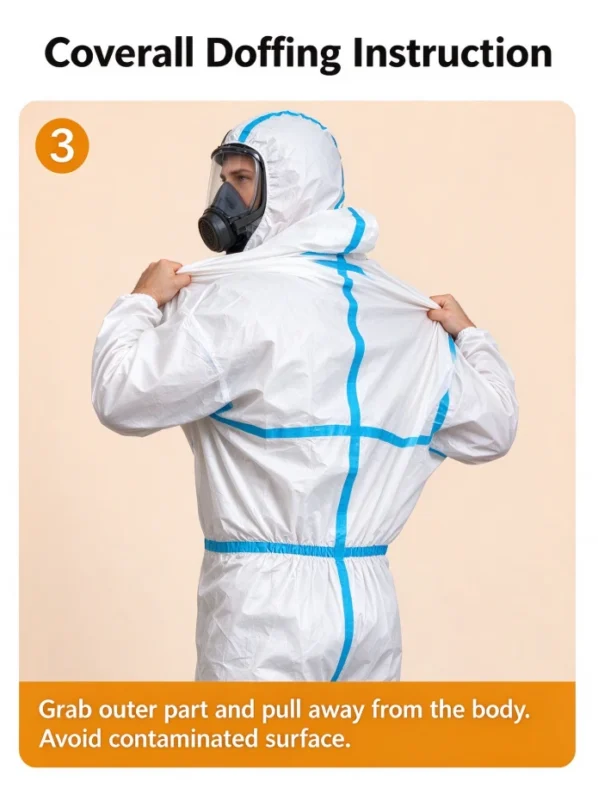
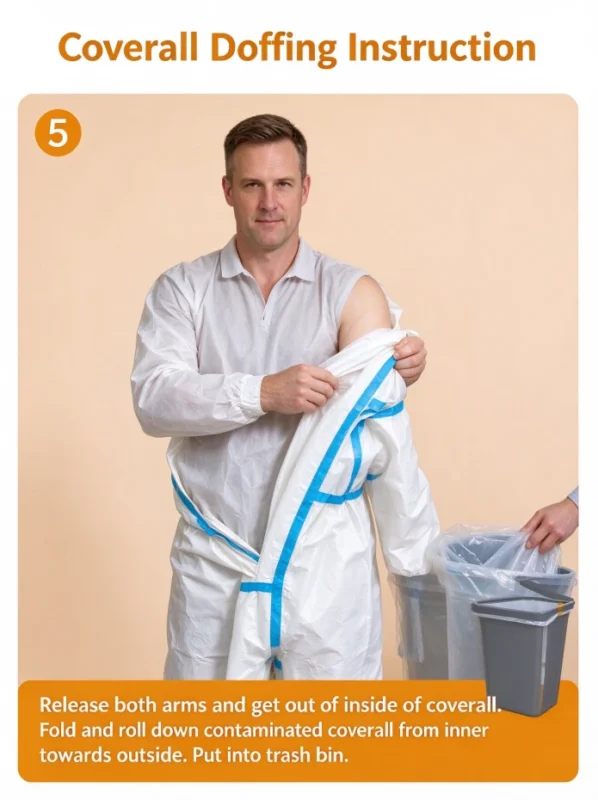
5. Remove the Upper Part of the Coverall
Lower the upper section gradually, turning the garment inside out as you remove it.
Avoid shaking the fabric or pulling it over your face. Keep the contaminated outer surface folded inward.
Take your time around the shoulders, arms, and wrists. If the garment is difficult to remove, follow the designated assistance procedure rather than forcing it.
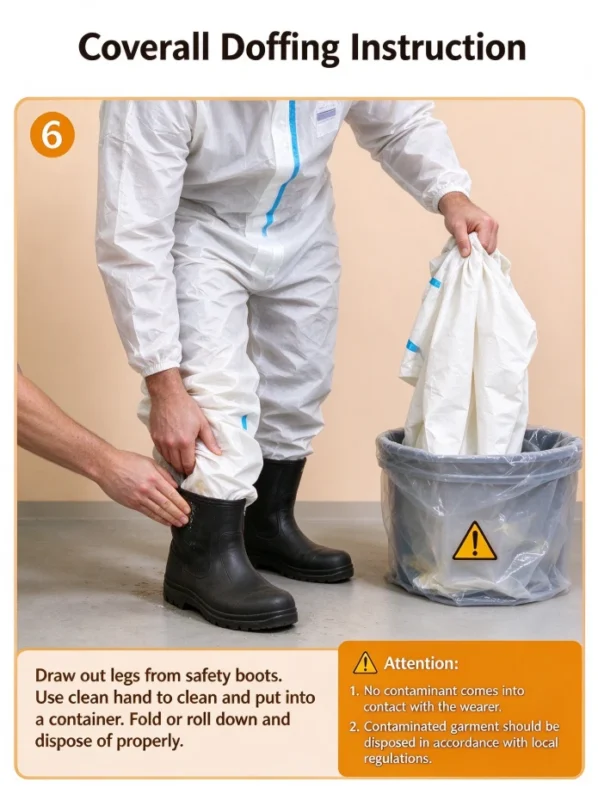
6. Remove the Lower Part and Footwear
Continue lowering the coverall toward your ankles.
Remove each leg carefully, taking care not to step on the contaminated outer surface. If the suit has integrated boot covers, handle them according to the workplace removal procedure.
Keep the garment inside out as much as possible and avoid letting it touch clean clothing or nearby surfaces.
7. Dispose of the Used Coverall and Clean Your Hands
Place the disposable coverall directly into the designated waste container.
The disposal method depends on the material handled and the applicable workplace requirements. PPE exposed to hazardous substances should not automatically be treated as ordinary waste.
Remove the remaining PPE in the prescribed order. Complete the required hand hygiene procedure, even if gloves were worn throughout the removal process.
Common Mistakes During Coverall Donning and Doffing
Even experienced workers can overlook small details when they are in a hurry. These mistakes are worth checking before and after each shift.
| Common mistake | Why it matters |
|---|---|
| Choosing the wrong size | May restrict movement or leave excessive loose fabric |
| Ignoring damaged seams | Can reduce the intended protective coverage |
| Leaving the zipper partly open | Creates an unprotected opening |
| Poorly positioned cuffs | May leave gaps around the wrists or ankles |
| Removing contaminated PPE too quickly | Can transfer contaminants to skin or clothing |
| Touching the outer surface with bare hands | Increases the risk of direct contact |
| Disposing of used PPE incorrectly | May expose other people to contaminated materials |
A little preparation can prevent many of these problems. Workers should be familiar with the specific coverall model they use and receive appropriate training for the hazards in their workplace.
How to Choose a Disposable Coverall for Different Work Environments
The right coverall depends on the type of exposure, the working environment, and the level of protection required.
Disposable coveralls are available in different materials, each with its own characteristics.
PP Coveralls
Polypropylene (PP) coveralls are commonly used in environments where lightweight clothing and basic dust protection are needed.
They are suitable for applications such as general maintenance, cleaning, and certain manufacturing tasks, depending on the product specifications.
SMS Coveralls
SMS fabric combines layers of spunbond and meltblown polypropylene. This structure provides a balance of breathability and barrier performance for suitable applications.
SMS coveralls are used in various industrial, healthcare, and clean working environments. Their suitability depends on the fabric specifications and relevant testing.
Microporous Coveralls
Microporous coveralls use a protective film-laminated fabric structure.
They are designed for applications where resistance to certain liquid splashes and fine particles is required. The actual protection level depends on the garment construction and its tested performance.
Chemical Protective Coveralls
When workers handle chemicals or potentially hazardous liquids, ordinary disposable coveralls may not provide sufficient protection.
The garment must be selected according to the specific chemical, exposure conditions, and applicable protection requirements. Always check the manufacturer’s compatibility information and product certification.
Choosing a coverall based only on its material name is not enough. Review its specifications, test results, intended application, and instructions before use.
Frequently Asked Questions About Coverall Donning and Doffing
1. What does coverall donning and doffing mean?
Coverall donning means putting on a protective coverall before entering a work area. Doffing refers to removing the used garment afterward. Both processes should follow the manufacturer’s instructions and workplace safety procedures.
2. How do you put on a safety coverall correctly?
Choose the correct size, inspect the garment, prepare the required PPE, and step into the legs before putting your arms through the sleeves. Adjust the hood, close the zipper, secure the cuffs, and check the overall fit before starting work.
3. What are the main coverall removal steps?
The general process includes preparing a designated removal area, checking gloves and other PPE, opening the zipper, removing the hood, turning the garment inside out, removing the lower section, and disposing of the used coverall correctly.
The exact sequence may change depending on contamination risks and workplace procedures.
4. Should you wear gloves when removing a disposable coverall?
Yes, when the coverall may be contaminated, appropriate protective gloves are generally needed during removal. The glove type and removal sequence should follow the applicable PPE procedure.
5. Can you reuse a disposable coverall?
Disposable coveralls are generally intended for single use. Reusing them may compromise their condition and protective performance. Follow the manufacturer’s instructions and workplace policy for use and disposal.
6. What is the difference between PP, SMS, and microporous coveralls?
PP coveralls are lightweight and commonly used for basic dust protection. SMS coveralls offer a combination of breathability and barrier properties. Microporous coveralls have a laminated structure designed to provide additional resistance to certain liquids and particles.
The actual performance of each garment depends on its construction and test results.
7. How do you prevent contamination when removing a coverall?
Avoid touching the outer surface with bare hands, remove the garment slowly, and turn it inside out as you go. Use a designated removal area and dispose of the used garment according to the relevant safety requirements.
Choose the Right Disposable Coverall for Your Application
A suitable disposable coverall should match the working environment, the type of exposure, and the protection required.
Material selection, garment construction, sizing, and closure design all deserve attention when comparing products.
Before placing a bulk order, review the product specifications and request samples when necessary. This gives your purchasing team an opportunity to check the fabric, fit, and construction before selecting a product for regular use.
For businesses sourcing disposable protective clothing, comparing PP, SMS, and microporous coveralls is a practical starting point. The right choice depends on the actual application rather than the material name alone.