

What Are Disposable Hospital Gowns Made Of?

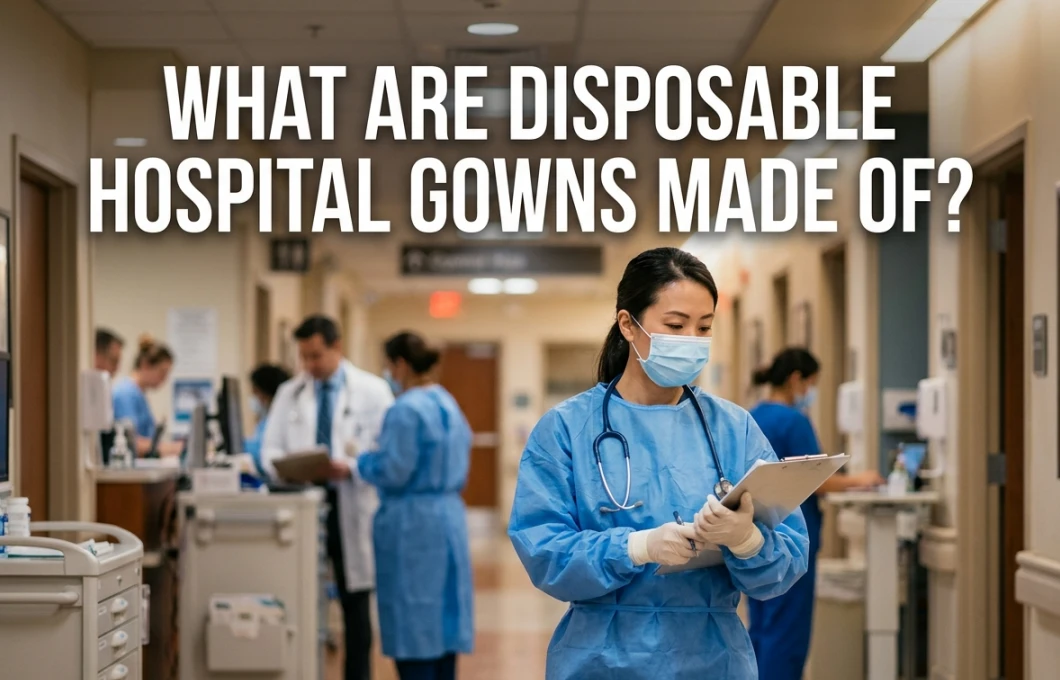
Disposable hospital gowns are a familiar sight in hospitals, clinics, and medical examination rooms. They are lightweight, easy to put on, and designed to be discarded after use. But have you ever wondered what goes into making one?
The answer depends on where and how the gown will be used. Some are made from basic non-woven polypropylene, while others combine several fabric layers or use a plastic coating to provide better resistance to liquids.
Understanding the differences between these materials makes it easier to choose a hospital gown that offers the right balance of comfort, protection, and cost.
What Materials Are Used in Disposable Hospital Gowns?
Most disposable hospital gowns are made from synthetic materials, particularly polypropylene (PP) and polyethylene (PE). These materials can be processed into lightweight fabrics that are suitable for single-use medical garments.
The fabric structure matters just as much as the material itself. A single-layer gown and a multi-layer gown made from similar polymers may offer different levels of strength, breathability, and fluid resistance.
Here are the common hospital gown fabric types used in disposable medical apparel.
1. Non-Woven Polypropylene (PP)
Polypropylene is one of the most widely used materials in disposable medical clothing. It is a thermoplastic polymer that can be formed into non-woven fabric through manufacturing processes such as spunbond and meltblown.
Spunbond polypropylene (SBPP) is made from continuous filaments bonded together to form a fabric. It is lightweight yet reasonably strong, making it a practical option for basic patient gowns and other disposable medical garments.
Meltblown polypropylene uses much finer fibers. It is commonly used in filtration applications and can also serve as a functional layer in certain multi-layer fabric constructions.
PP non-woven fabric is generally breathable and comfortable for routine use. It also offers some resistance to water, although ordinary PP fabric should not be treated as fully waterproof.
For hospitals and medical suppliers purchasing disposable gowns in bulk, PP is often considered a practical choice when basic coverage and everyday comfort are the main requirements.
2. SMS Fabric
SMS stands for Spunbond-Meltblown-Spunbond. As the name suggests, it combines three layers of polypropylene-based non-woven fabric.
The outer layers are made from spunbond material, which provides strength and helps the fabric maintain its structure. Between them is a meltblown layer that contributes to barrier performance.
This layered construction gives SMS hospital gowns a useful combination of properties:
- Good fabric strength for routine medical use
- Better fluid resistance than basic spunbond PP, depending on fabric specifications
- Breathability for extended wear
- A soft and lightweight feel
SMS fabric is commonly used in medical isolation gowns and other protective garments where a balance between comfort and barrier performance is needed.
Its actual protection level depends on factors such as fabric weight, construction, seam design, and testing results. The SMS label alone does not guarantee a particular level of protection.
3. Polyethylene (PE)-Coated Fabrics
When a medical procedure involves more liquid exposure, ordinary non-woven fabric may not provide enough resistance.
This is where PE-coated fabrics come in.
A polyethylene layer is applied to a fabric substrate, creating a surface that offers improved resistance to liquid penetration. The underlying fabric provides structure, while the PE coating acts as an additional barrier.
These gowns can be useful in situations involving splashes or contact with bodily fluids.
There is a trade-off, though. The coating can reduce breathability, making the garment feel warmer during prolonged wear.
For this reason, PE-coated gowns are generally selected according to the expected exposure conditions rather than simply choosing the most heavily coated option.
4. Tyvek®
Tyvek® is a material developed by DuPont. It is made from flash-spun high-density polyethylene fibers and has a distinctive combination of strength, lightweight construction, and resistance to tearing.
Unlike conventional non-woven PP fabric, Tyvek® has a dense fiber structure that provides an effective barrier against many particles.
It is commonly used in industrial protective clothing, pharmaceutical manufacturing, and cleanroom environments where low linting and particle control are important.
Some specialized protective garments may also use Tyvek® where the required protection is suitable for the material.
However, it is generally more expensive than basic PP or SMS fabrics and is not a standard choice for everyday patient gowns.
How Is a Disposable Hospital Gown Designed?
Fabric determines much of a gown’s performance, but the overall design also affects how well it works in a medical setting.
A disposable hospital gown needs to be easy to put on, comfortable enough for the intended wearing period, and designed to provide suitable coverage.
Common design features include:
Open-Back Design
Many patient gowns have an open-back structure. This makes it easier for medical staff to examine patients or carry out procedures without requiring them to remove the entire garment.
Tie straps or other fastening methods help keep the gown in place.
Elastic Sleeves and Cuffs
Elastic cuffs help the sleeves stay around the wrists and provide a closer fit. Depending on the gown design, they can also make it easier to wear gloves over the sleeves.
Tie Straps and Snap Fasteners
Neck and waist ties allow patients to adjust the fit. Some gowns use snap fasteners instead, making them easier to put on and remove.
Full-Length Coverage
Most hospital gowns are designed to cover a large portion of the body while allowing patients to move comfortably.
The exact length, sleeve style, and closure system vary according to the intended use.
Certain specialized gowns may also feature reinforced seams, anti-static treatments, or additional protective layers. These features are usually selected based on specific application requirements.
Disposable Hospital Gowns and Environmental Concerns
Disposable gowns are convenient, particularly in medical environments where garments may become contaminated during use. However, their single-use nature creates a waste management challenge.
Most conventional PP and PE materials are synthetic polymers. They do not readily biodegrade under ordinary environmental conditions, so discarded gowns can contribute to plastic waste.
Healthcare facilities have been exploring different ways to reduce this impact.
Some facilities operate recycling programs for suitable non-contaminated disposable garments. Other efforts focus on developing biodegradable or compostable alternatives that can still meet the performance requirements of medical applications.
The practical challenge is finding materials that offer the necessary protection while also reducing environmental impact. Any alternative intended for medical use still needs to meet the relevant safety and performance requirements.
How to Choose the Right Disposable Hospital Gown Material
There is no single material that works best for every medical situation. The right choice depends on the level of exposure, wearing time, and purchasing requirements.
Here are a few factors worth considering.
Required Protection Level
Think about the type of exposure the gown is expected to handle.
For routine patient examinations and basic coverage, lightweight PP gowns may be suitable. When better fluid resistance is needed, SMS or PE-coated options may be more appropriate.
For higher-risk procedures, the gown should be selected according to its verified barrier performance and applicable standards.
Breathability and Wearing Comfort
Patients may need to wear a gown for several hours, so comfort should not be overlooked.
Lightweight PP and SMS fabrics are commonly selected when breathability matters. PE-coated fabrics offer additional liquid resistance but may feel warmer during extended use.
The best balance depends on the working environment and expected exposure.
Fabric Weight and Construction
Fabric weight, usually measured in GSM (grams per square meter), can influence thickness, strength, and overall feel.
However, a higher GSM does not automatically mean better protection. Fabric construction, coatings, seams, and test results also need to be considered.
Cost and Supply Requirements
For hospitals, distributors, and medical supply companies, purchasing cost and product consistency are practical considerations.
PP gowns are often suitable for routine, high-volume requirements. SMS and coated options may be worth considering when specific barrier properties are needed.
Bulk buyers should also check available sizes, packaging, customization options, and production capacity before placing an order.
Understanding AAMI Levels for Medical Gowns
When comparing medical gowns, buyers may come across AAMI Levels 1 through 4.
These classifications are associated with the American National Standards Institute and the Association for the Advancement of Medical Instrumentation (ANSI/AAMI PB70). They describe the liquid barrier performance of protective apparel and surgical drapes.
The four levels represent different testing requirements:
- Level 1: Minimal risk. Suitable for basic care and routine medical procedures where limited fluid exposure is expected.
- Level 2: Low risk. Used in situations involving slightly greater fluid exposure, such as certain blood-drawing procedures.
- Level 3: Moderate risk. Intended for procedures where a higher level of fluid barrier performance is needed.
- Level 4: High risk. Designed for situations involving substantial fluid exposure, including certain surgical procedures.
These levels help healthcare facilities match gown performance to the conditions in which the garment will be used.
It is important to check the actual test documentation rather than assume that a gown meets a particular AAMI level simply because it is made from SMS, PP, or PE-coated fabric.
Find the Right Disposable Patient Gown for Your Needs
Choosing a disposable hospital gown is really about understanding what the garment needs to do.
PP offers a lightweight and economical option for routine use. SMS combines several fabric layers for a different balance of strength, breathability, and barrier performance. PE-coated fabrics provide additional resistance to liquid exposure, while specialized materials such as Tyvek® are used in applications with more specific protection requirements.
For hospitals, distributors, and medical product buyers, the material should always match the intended application.
Ruichen PPE offers disposable patient gowns designed for different medical and healthcare requirements, with material options including PP, PP+PE, and SMS.
Explore our Disposable Patient Gowns to learn more about available products and specifications. Contact our team for product details, bulk purchasing inquiries, and customization requirements.
FAQ
1. What are disposable hospital gowns made of?
Disposable hospital gowns are commonly made from non-woven polypropylene (PP), SMS fabric, or PE-coated materials. The choice depends on the required comfort and fluid resistance.
2. What is the best material for disposable hospital gowns?
PP is suitable for basic patient coverage, while SMS offers a balance of strength and breathability. PE-coated fabric is a better option when additional liquid resistance is needed.
3. What is an SMS hospital gown?
An SMS hospital gown is made from three layers of non-woven fabric: spunbond, meltblown, and spunbond. This structure provides good strength, breathability, and fluid resistance.
4. Are disposable hospital gowns waterproof?
Not all disposable gowns are waterproof. Standard PP and SMS fabrics offer different levels of fluid resistance, while PE-coated gowns provide a stronger liquid barrier.
5. What is the difference between PP and SMS hospital gowns?
PP gowns typically use a single spunbond layer and are lightweight and economical. SMS gowns combine three fabric layers, offering improved strength and barrier performance.
6. What does GSM mean in disposable hospital gowns?
GSM stands for grams per square meter. It measures fabric weight. A higher GSM may indicate a heavier or thicker fabric, but it does not automatically mean better liquid protection.
7. What are AAMI Levels 1–4 for hospital gowns?
AAMI Levels 1–4 classify medical gown barrier performance against liquid penetration. Level 1 represents minimal risk, while Level 4 is intended for high-risk fluid exposure situations.
8. Can disposable hospital gowns be customized?
Yes. Manufacturers may offer different materials, fabric weights, sizes, colors, sleeve styles, and packaging options depending on production capabilities and order requirements.
9. How do I choose the right disposable hospital gown material?
Consider the expected fluid exposure, wearing time, breathability, and budget. PP, SMS, and PE-coated fabrics serve different needs, so the material should match the intended application.