

PP vs PP+PE vs SMS Isolation Gowns: What Is the Difference?

Choosing an isolation gown is not simply a matter of picking a fabric. In healthcare settings, the material affects how well a gown handles liquid exposure, how comfortable it feels during a shift, and whether it suits the work being performed.
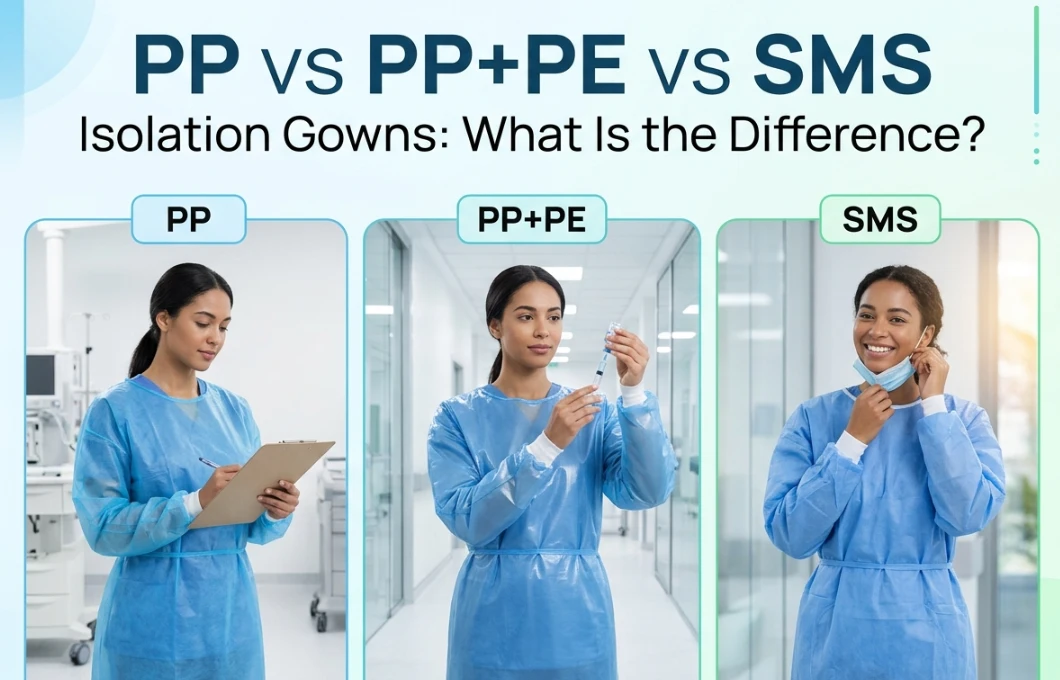
PP, PP+PE, and SMS are three commonly used materials for disposable isolation gowns. They may look similar at first glance, but their construction and performance are quite different.
A lightweight PP gown may be sufficient for routine tasks with limited exposure to fluids. When more liquid resistance is needed, a PP+PE gown is often a more practical option. SMS offers a different balance, combining a multilayer nonwoven structure with breathability and fluid resistance.
So, what separates these three materials? And which one makes more sense for your purchasing requirements?
Understanding the Three Isolation Gown Materials
Before comparing their performance, it helps to understand how each material is made.
1. PP Isolation Gowns: Lightweight and Breathable
PP stands for polypropylene. It is a synthetic material widely used in disposable nonwoven products.
PP isolation gowns are generally made from spunbond polypropylene fabric. The material is lightweight, flexible, and allows air to pass through. This makes the gowns comfortable for routine use, particularly when workers need to wear them for extended periods.
However, standard PP fabric provides limited resistance to liquid penetration. It can repel small amounts of moisture, but it should not be treated as waterproof.
PP isolation gowns are commonly considered for tasks with minimal liquid exposure, such as routine examinations, general patient care, and certain laboratory activities.
For buyers looking for a straightforward disposable gown with basic coverage, PP is often an economical choice.
Product recommendation: Blue Disposable PP Long Sleeve Non-Woven Medical Isolation Gown
2. PP+PE Isolation Gowns: Additional Protection Against Liquids
PP+PE isolation gowns combine polypropylene nonwoven fabric with a polyethylene (PE) layer.
The PP material provides a lightweight fabric base, while the PE layer acts as a liquid-resistant barrier. In the construction described here, PP and PE are used on different sides of the gown, giving it greater resistance to liquid penetration than a standard PP gown.
This makes PP+PE a practical option in environments where workers may encounter splashes or occasional liquid contact.
The trade-off is that the PE layer reduces air permeability compared with an uncoated PP fabric. Depending on the coating coverage and gown design, it may also feel warmer during extended wear.
PP+PE gowns are commonly considered for patient care, emergency departments, cleaning tasks, and other applications where additional liquid resistance is needed.
Product recommendation: Blue Disposable PP+PE Long Sleeve Non-Woven Medical Isolation Gown
3. SMS Isolation Gowns: A Multilayer Nonwoven Structure
SMS stands for Spunbond-Meltblown-Spunbond. Unlike standard PP fabric, SMS material is produced using three layers.
- Outer spunbond layer: Provides strength and fabric structure.
- Middle meltblown layer: Helps improve the material’s barrier properties.
- Inner spunbond layer: Adds strength and supports comfortable wear.
These layers work together to create a fabric that balances strength, breathability, and resistance to liquid penetration.
SMS isolation gowns are used in healthcare environments where workers need a combination of fabric comfort and fluid resistance. They can be considered for patient care, clinical procedures, and other applications depending on the required protection level.
One important detail: SMS does not automatically mean a gown provides the highest level of protection. Its actual performance depends on fabric weight, manufacturing quality, gown construction, and relevant test results.
For procurement teams, checking the product’s tested performance is more useful than relying on the SMS label alone.
Product recommendation: Blue Disposable SMS Long Sleeve Non-Woven Medical Isolation Gown
PP vs PP+PE vs SMS Gown: Key Differences
The biggest difference between these materials comes down to their construction and how they handle liquid exposure.
| Comparison | PP | PP+PE | SMS |
|---|---|---|---|
| Material | Polypropylene | PP + Polyethylene | Spunbond + Meltblown + Spunbond |
| Structure | Single-layer nonwoven | PP fabric with PE layer | Three-layer nonwoven |
| Breathability | Good | Generally lower | Good, depending on specifications |
| Liquid resistance | Limited | Higher than standard PP | Depends on fabric weight and testing |
| Fabric feel | Lightweight and soft | More coated and less breathable | Soft with a stronger structure |
| Typical use | Routine, low-exposure tasks | Tasks involving occasional splashes | Clinical and general healthcare applications |
There is no single material that suits every working environment.
PP is a reasonable option when comfort and cost are the main considerations. PP+PE is more suitable when liquid resistance is a priority. SMS provides a balance of breathability, fabric strength, and barrier performance.
The right choice depends on the actual exposure conditions rather than the material name alone.
How to Choose the Right Isolation Gown Material
When comparing isolation gown materials, buyers should look beyond the basic fabric description. The working environment, expected liquid exposure, and required protection standards all matter.
Choose PP for Routine, Low-Exposure Tasks
PP isolation gowns are suitable for applications where lightweight coverage is needed and liquid exposure is limited.
Common examples include:
- General patient care with minimal fluid exposure.
- Routine examinations.
- Non-hazardous laboratory activities.
- General hygiene and cleaning tasks with low exposure risks.
Their simple construction also makes them an economical choice for facilities that purchase disposable gowns in large quantities.
Choose PP+PE When Liquid Resistance Matters More
PP+PE gowns are worth considering when workers may encounter splashes or occasional contact with liquids.
Typical applications include:
- Patient care involving potential fluid contact.
- Emergency and triage environments.
- Cleaning and sanitation work.
- Food processing and hygiene operations.
The PE layer provides an additional barrier, although the actual protection depends on the coverage, seams, and tested performance of the finished gown.
Choose SMS for a Balance of Comfort and Barrier Performance
SMS gowns offer a multilayer fabric structure that combines breathability with improved barrier properties compared with basic single-layer PP fabric.
They may be suitable for:
- Hospital and clinical environments.
- Routine medical procedures.
- Patient care activities.
- Laboratory and healthcare facilities.
For procedures involving significant blood or body-fluid exposure, buyers should select gowns that meet the applicable protection requirements. SMS construction alone is not proof of suitability for high-risk procedures.
What Should Buyers Check Before Purchasing Isolation Gowns?
For distributors, importers, and healthcare procurement teams, choosing the right material is only part of the purchasing decision.
Several product details deserve attention.
Fabric weight (GSM)
GSM refers to grams per square meter. It indicates the weight of the fabric, but a higher GSM does not automatically mean better liquid protection. Material structure and testing results also matter.
Liquid barrier performance
Ask for relevant test reports when liquid resistance is important. Check whether the tested performance applies to the fabric alone or the finished gown.
Gown construction
Sleeve length, cuffs, neck closure, waist ties, coverage, and seam construction can all affect usability and protection.
Comfort during wear
Consider breathability, flexibility, and the expected wearing time. A gown that provides the required barrier but causes excessive heat may be less suitable for long working periods.
Certifications and documentation
Check whether the product has the documentation required for its intended market and application. CE marking, ISO certifications, and product-specific test reports serve different purposes and should not be treated as interchangeable.
For bulk orders, it is also sensible to request samples before confirming specifications and production quantities.
Explore Disposable Isolation Gowns from Ruichen PPE
Ruichen PPE supplies disposable nonwoven protective products for healthcare, hygiene, and industrial applications. Its isolation gown range includes PP, PP+PE, and SMS options for buyers with different material and purchasing requirements.
You can explore the available products in our Disposable Isolation Gown Collection.
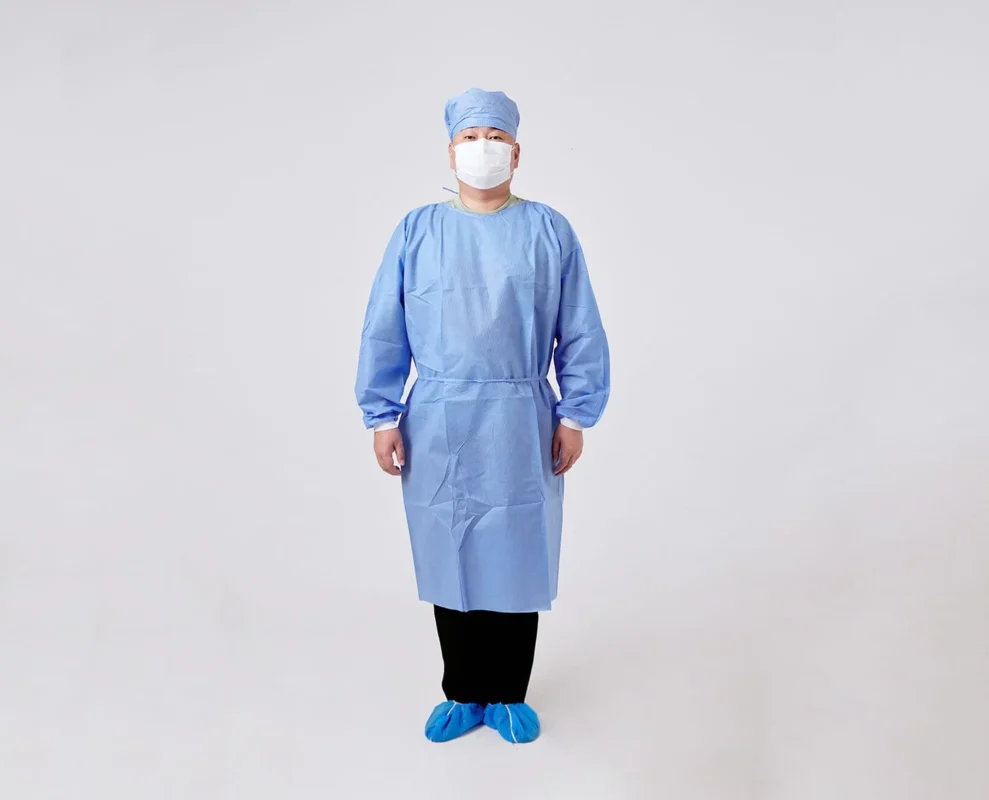
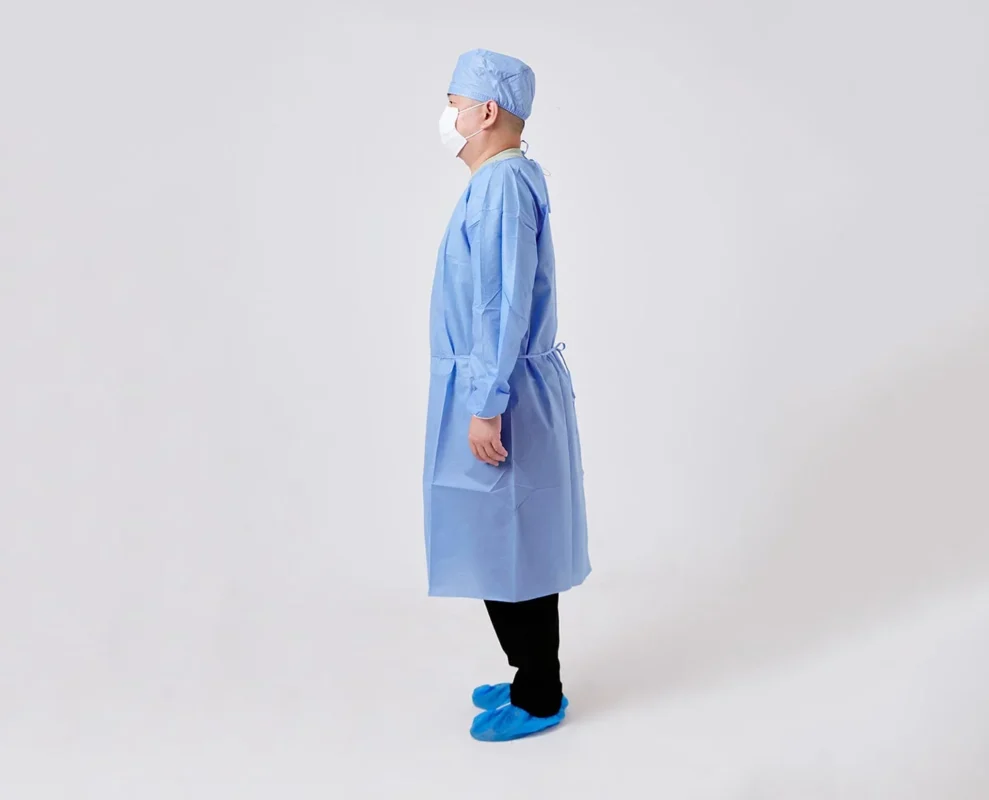
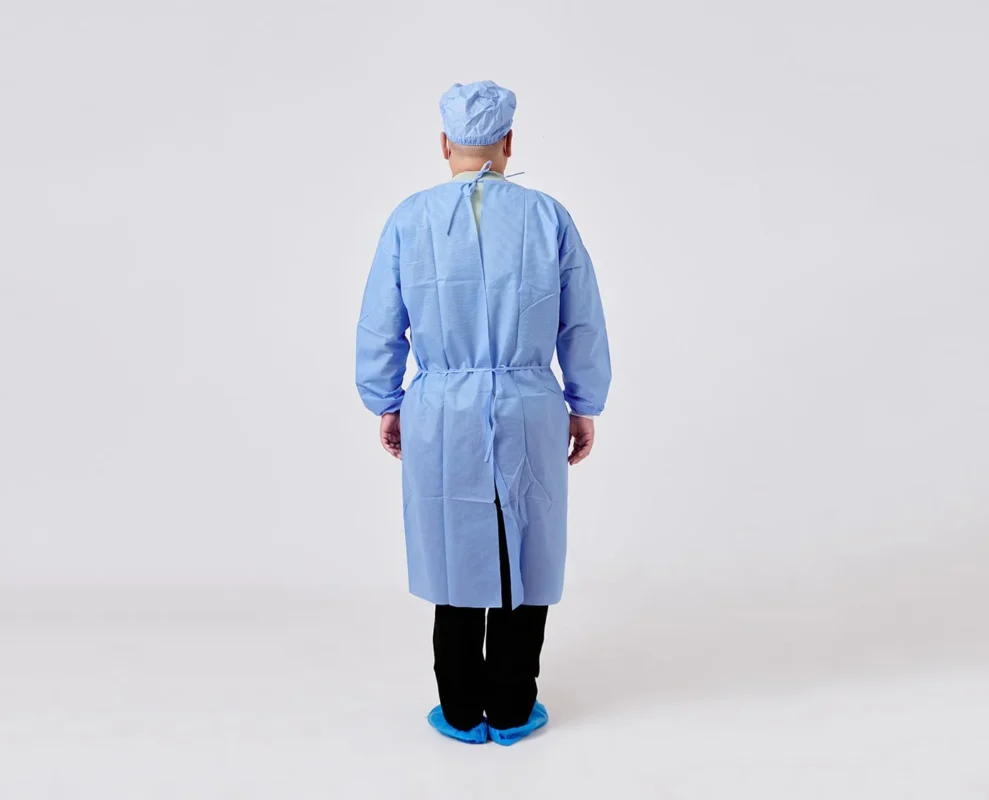
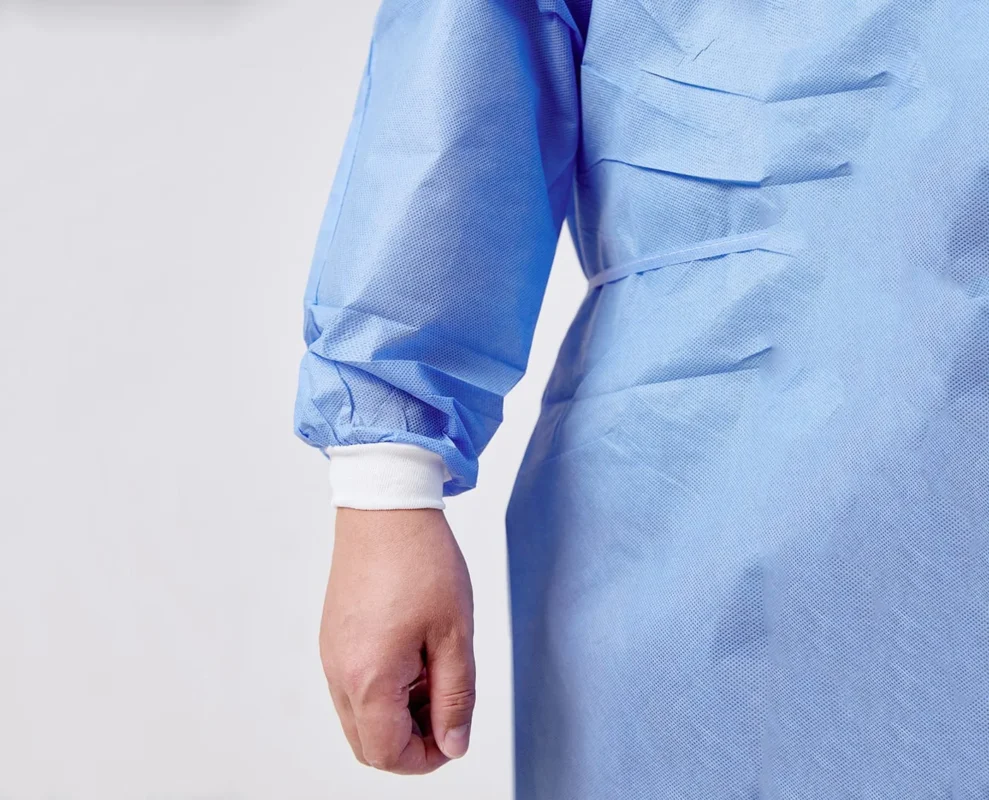

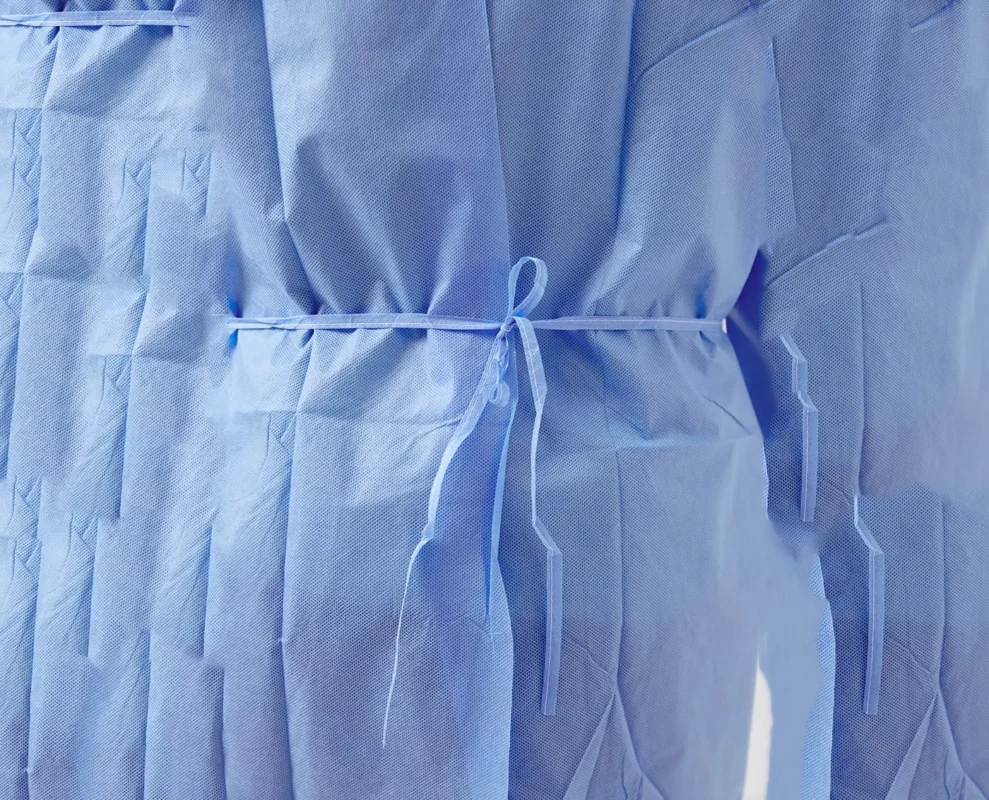
Our three material options include:
- PP Isolation Gown: A lightweight option for routine applications with limited liquid exposure.
- PP+PE Isolation Gown: Combines PP nonwoven fabric with a PE layer for additional liquid resistance.
- SMS Isolation Gown: Uses a three-layer nonwoven structure to balance breathability and barrier performance.
If you are sourcing disposable isolation gowns for distribution, healthcare facilities, or wholesale supply, contact Ruichen PPE to discuss material selection, product specifications, samples, and OEM customization.
FAQ
1. What is the main difference between PP and PP+PE isolation gowns?
PP gowns are made from polypropylene nonwoven fabric and offer basic liquid resistance. PP+PE gowns add a polyethylene layer, providing better resistance to liquid penetration while generally reducing breathability.
2. Is an SMS isolation gown better than a PP gown?
SMS has a three-layer structure that provides a different balance of strength, breathability, and barrier performance. It may offer better fluid resistance than basic PP fabric, but the actual performance depends on GSM, construction, and test results.
3. Are PP+PE isolation gowns waterproof?
The PE layer provides a liquid-resistant barrier. However, the finished gown’s resistance depends on its coating coverage, seams, and construction. It is better to check product-specific test results rather than assume every PP+PE gown is completely waterproof.
4. Which isolation gown material is the most breathable?
Standard PP fabric is generally more breathable because it does not have a continuous PE barrier layer. SMS can also offer good breathability through its multilayer nonwoven construction.
5. Can SMS isolation gowns be used in operating rooms?
They may be suitable for certain operating-room applications, depending on the required protection level and applicable standards. However, ordinary SMS isolation gowns should not automatically be considered surgical gowns.
6. What GSM is suitable for disposable isolation gowns?
The appropriate GSM depends on the material, gown design, and intended application. Buyers should evaluate fabric weight together with liquid barrier performance, strength, and comfort rather than choosing by GSM alone.
7. Which material is more suitable for bulk purchasing?
PP is often a cost-conscious choice for basic applications. PP+PE suits buyers who need additional liquid resistance, while SMS is an option when a balance of fabric strength and breathability is preferred. The best option depends on the target market and end-user requirements.