

Blog
FFP3 Masks for Asbestos Protection

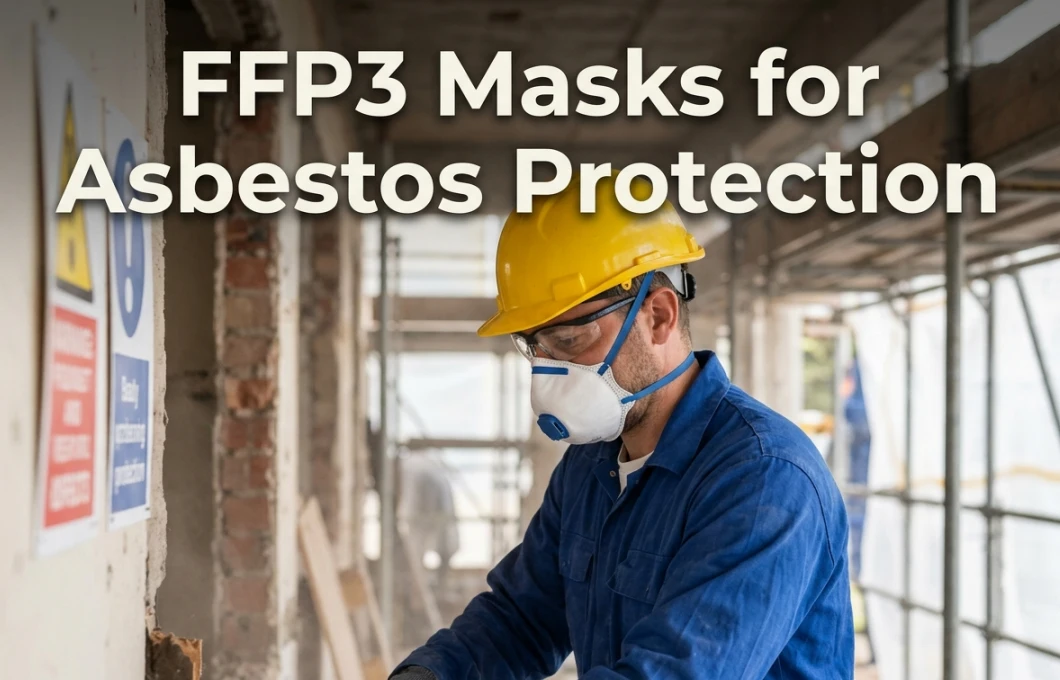
Asbestos is a material that can remain hidden in buildings for decades. It may be found in old insulation, ceiling panels, roofing materials, pipes, and other building components. The real danger often begins when these materials are damaged, drilled, cut, or removed. Tiny asbestos fibers can become airborne and enter the lungs without being noticed.
That is why respiratory protection deserves careful attention during asbestos-related work. An FFP3 mask for asbestos may be suitable for certain tasks when the respirator, fit, and working conditions meet the relevant safety requirements. However, choosing a mask is only one part of protecting workers from exposure.
Why Is Asbestos Dust So Dangerous?
Asbestos fibers are too small to be reliably identified by sight. When asbestos-containing materials are disturbed, fibers may spread through the air and remain a breathing hazard. Inhaling them can lead to serious diseases, including asbestosis, lung cancer, and mesothelioma.
These illnesses may take many years to develop. A worker might finish a job without experiencing immediate symptoms and still face health risks from past exposure.
For this reason, asbestos work should never be treated like ordinary dust-producing maintenance. Before disturbing a material that may contain asbestos, workers need to understand the potential hazard and follow the appropriate assessment and control procedures.
How Does an FFP3 Mask Help With Asbestos Protection?
An FFP3 mask is a filtering facepiece respirator classified under the European EN 149 standard. It is designed to provide a high level of protection against airborne particles when it is correctly selected, fitted, and worn.
Under the standard, FFP3 respirators have a nominal filtration efficiency of at least 99% under specified laboratory test conditions. This makes them a potential option for certain tasks involving hazardous particulate matter.
However, filtration efficiency and real-world protection are not the same thing. Air can leak around the edges of a mask if it does not seal properly against the face. A high-efficiency filter cannot compensate for a poor fit.
An FFP3 mask asbestos application therefore requires more than checking the product label. The respirator must be certified for the relevant market, suitable for the task, and compatible with the site’s respiratory protection procedures.
FFP1 vs. FFP2 vs. FFP3: What Is the Difference?
The FFP classification helps distinguish filtering facepiece respirators by their performance requirements under EN 149.
| Respirator class | Nominal filtration efficiency | General distinction |
|---|---|---|
| FFP1 | At least 80% | Lower filtration performance |
| FFP2 | At least 94% | Higher filtration performance than FFP1 |
| FFP3 | At least 99% | Highest filtration class in this series |
These figures describe performance under standardized testing. They should not be interpreted as a guarantee that the same percentage of hazardous fibers will be prevented from entering a worker’s breathing zone during every task.
When comparing respirators for asbestos work, buyers and safety managers should consider the required protection level, the applicable local regulations, fit testing, and the complete respiratory protection program. The highest filtration class alone does not determine whether a particular respirator is appropriate.
What Is the Best Mask for Asbestos Work?
There is no single best mask for asbestos that suits every situation. The appropriate choice depends on the type of work, the likelihood of fiber release, exposure levels, applicable regulations, and the respiratory protection system required for the job.
For some tasks, a certified FFP3 filtering facepiece may be appropriate. Other work, particularly higher-risk removal or work in which exposure cannot be adequately controlled with a filtering facepiece, may require a different respirator system.
Before selecting a product, check the following:
- Certification: Confirm that the respirator meets the relevant standard and is approved for the intended market.
- Face fit: The mask must form a proper seal. Fit testing and a user seal check should be carried out as required by the applicable program.
- Wearer compatibility: Facial hair crossing the sealing surface, incorrect positioning, or damaged straps can compromise protection.
- Breathing resistance: The respirator should be suitable for the expected duration and physical demands of the task.
- Work conditions: The selection must reflect the actual exposure risk, not simply the product’s filtration rating.
An FFP3 respirator should never be treated as permission to carry out asbestos removal without the required training, controls, and authorization.
Asbestos Respirator Protection Requires Proper Fit
Even a certified respirator may offer inadequate protection if it is worn incorrectly. A mask that shifts during movement or leaves gaps around the nose and cheeks can allow contaminated air to bypass the filter.
Before each use, inspect the mask for visible damage and follow the manufacturer’s fitting instructions. Perform the required user seal check every time the respirator is put on. Where the respiratory protection program requires fit testing, it should be completed using the appropriate procedure.
Facial hair that interferes with the sealing surface is a particular concern for tight-fitting respirators. Workers should also replace or dispose of masks according to the manufacturer’s instructions and site procedures, especially if a mask becomes damaged, contaminated, or difficult to breathe through.
A comfortable fit matters because workers need to keep the respirator correctly positioned throughout the task. Comfort, however, should never take priority over the required level of protection.
What PPE Is Needed for Asbestos Work?
Respiratory protection is only one part of an asbestos safety plan. Depending on the task and local requirements, workers may also need suitable protective clothing, gloves, eye protection, and footwear.
Disposable coveralls can help limit contamination of personal clothing. Appropriate gloves and other protective equipment can reduce the transfer of asbestos-containing dust to the skin and surrounding areas.
The exact asbestos PPE requirements depend on the work being performed and the rules that apply in that location. Equipment selection should follow a documented risk assessment rather than a generic checklist.
Safe work practices are just as important. Asbestos-containing materials should not be disturbed without appropriate assessment and controls. Procedures for containing dust, restricting access, cleaning contaminated areas, removing protective equipment, and disposing of waste must be established before work begins.
Ordinary sweeping or other practices that disperse settled dust can increase the risk of airborne exposure. Workers should follow approved asbestos-control and decontamination procedures instead.
Do FFP3 Masks Meet Asbestos PPE Requirements?
An FFP3 respirator may meet part of a respiratory protection requirement, but that does not automatically make it sufficient for every asbestos-related task.
Requirements vary by country, work activity, and exposure conditions. In the United Kingdom, for example, asbestos work is subject to specific regulations and guidance from the Health and Safety Executive (HSE). In the United States, applicable OSHA requirements differ according to the work and industry.
Employers and contractors should confirm the relevant rules before selecting respiratory equipment. They should also establish whether a filtering facepiece is permitted for the planned activity or whether a more protective respiratory system is necessary.
A product’s certification, the worker’s fit test, and the site’s exposure controls all need to be considered together. If the required level of protection cannot be established, the task should not proceed on the assumption that an FFP3 mask is enough.
Choosing FFP3 Respirators for Workplace Use
For businesses sourcing respiratory protection, the purchasing decision should start with the intended application. A respirator suitable for one industrial task may not be appropriate for another.
Check the product’s certification and documentation, sizing and fit characteristics, packaging information, and manufacturer’s instructions. For bulk purchasing, confirm that the supplied model matches the approved product specification and that its documentation is suitable for the destination market.
It is also useful to consider how the respirator will be integrated into the site’s wider PPE program. Protective clothing, gloves, eye protection, training, and disposal arrangements should all be planned around the work rather than purchased as unrelated items.
An FFP3 mask for asbestos can be a useful option where the risk assessment and applicable requirements support its use. The aim is not simply to purchase a high-filtration mask, but to select equipment that provides appropriate protection under the actual working conditions.
Frequently Asked Questions
1. Can an FFP3 mask protect against asbestos fibers?
An appropriately certified, correctly fitted FFP3 respirator can reduce inhalation exposure to airborne particles. Its suitability for asbestos work depends on the task, exposure conditions, and applicable regulations.
2. Is FFP3 better than FFP2 for asbestos protection?
FFP3 has a higher nominal filtration efficiency than FFP2 under EN 149 testing. However, the appropriate respirator must be selected according to the required protection level and work conditions.
3. What is the best mask for asbestos removal?
There is no universal answer. Some tasks may require an FFP3 filtering facepiece, while other removal work may require a different respiratory protection system. Follow the relevant regulations and professional risk assessment.
4. Can I use a disposable FFP3 mask for removing asbestos at home?
Do not assume that a disposable FFP3 mask makes DIY asbestos removal safe. Before disturbing suspected asbestos-containing materials, seek advice from a qualified asbestos professional and follow the applicable local rules.
5. Does an FFP3 mask need to be fit-tested?
Tight-fitting respirators require appropriate fit testing where the applicable respiratory protection program or regulations mandate it. A user seal check should also be performed each time the mask is put on, following the manufacturer’s instructions.
6. What other PPE is needed when working with asbestos?
Depending on the job, workers may need suitable protective coveralls, gloves, eye protection, and appropriate footwear. PPE must be selected as part of a wider exposure-control and decontamination plan.
7. Can facial hair affect an FFP3 mask’s performance?
Yes. Facial hair that crosses the sealing surface can prevent a tight-fitting respirator from forming an adequate seal. Workers should follow fit-testing requirements and the respirator manufacturer’s instructions.
8. How often should an FFP3 mask be replaced?
Follow the manufacturer’s instructions and workplace procedures. Replace a mask if it is damaged, contaminated, difficult to breathe through, or otherwise no longer suitable for use. Disposable respirators should not be reused unless the product instructions and applicable procedures explicitly permit it.
Protect Workers by Choosing Respiratory Protection Carefully
Asbestos exposure is a serious occupational hazard, and respiratory protection must be selected with care. FFP3 respirators offer high particle-filtration performance, but their effectiveness depends on proper fit, correct use, and the suitability of the equipment for the task.
Before starting asbestos-related work, establish the exposure risks, check the applicable requirements, and put appropriate controls in place. A respirator should be part of that plan—not a substitute for it.