
Blog
When Should PPE Be Disposed Of? A Practical Guide

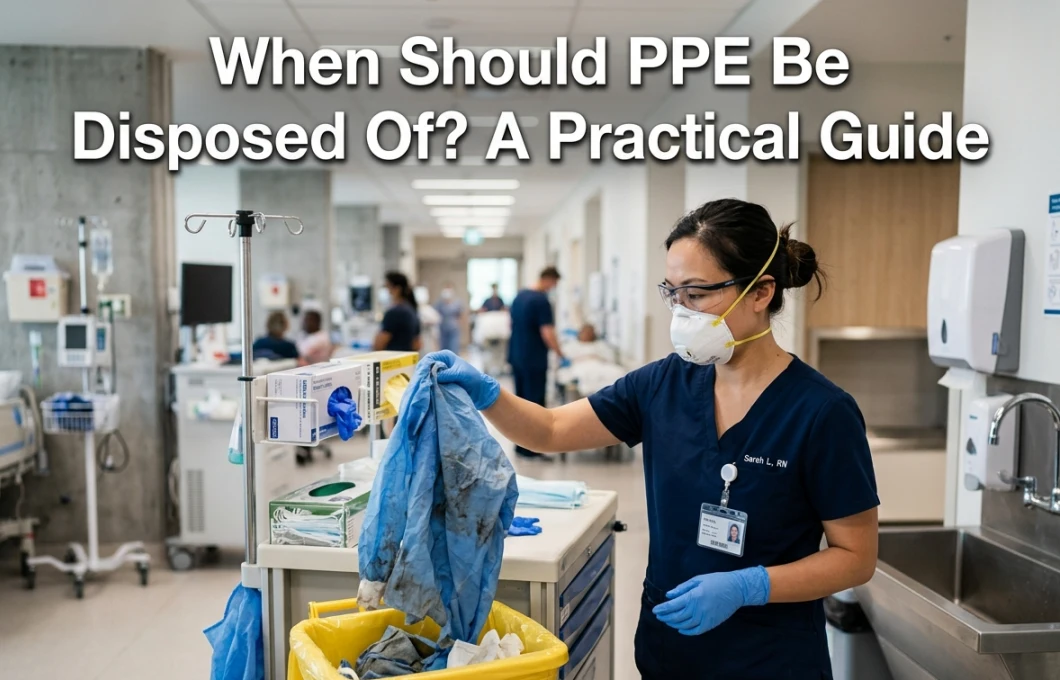
Personal protective equipment (PPE) is designed to reduce exposure to specific hazards, but it cannot do its job indefinitely. A disposable gown may need to be removed after one task, while a pair of reusable protective goggles can remain in service if they are properly cleaned, inspected, and maintained.
Knowing when to dispose of PPE depends on more than how long it has been worn. Contamination, visible damage, moisture, the type of hazard, and the manufacturer’s instructions all affect the decision. For healthcare facilities, laboratories, food processing plants, and industrial workplaces, following the correct replacement procedure helps prevent contaminated equipment from being carried into clean areas.
When Should PPE Be Disposed Of?
PPE should be removed and replaced when it is damaged, contaminated, no longer fits correctly, or cannot provide the protection required for the task. Single-use PPE should generally be discarded after its intended use rather than washed or reused. Reusable equipment should be cleaned, disinfected when required, and inspected according to its instructions.
Here are the main signs that PPE needs attention:
- Visible contamination: Blood, body fluids, chemicals, dirt, or other hazardous substances have reached the equipment.
- Physical damage: The material is torn, punctured, cracked, or otherwise compromised.
- Excessive moisture: A disposable mask or protective garment becomes wet enough to affect its intended function.
- Loss of fit: Straps, fasteners, elastic bands, or closures no longer hold the equipment securely.
- End of the intended task: Single-use PPE has completed its designated use and must be removed.
- Expired or unsuitable equipment: The product has passed its stated shelf life, or its condition and storage history make its suitability uncertain.
A product does not have to look dirty to require replacement. For example, disposable gloves may be contaminated during a task even when no residue is visible.
OSHA requires certain contaminated PPE to be removed promptly and before workers leave the relevant work area. CDC guidance also calls for appropriate PPE to be removed and discarded after healthcare tasks, subject to the applicable procedures for reusable equipment and respirators.
How Often Should You Change Different Types of PPE?
There is no single replacement schedule for every item. The appropriate interval depends on whether the product is designed for single use, the task being performed, and the exposure involved.
The following table provides general guidance for common disposable protective products.
| PPE type | When to change or discard it |
|---|---|
| Disposable gloves | After the designated task or patient contact; immediately if torn, punctured, or contaminated |
| Disposable face masks | After the intended single use, or sooner if wet, dirty, damaged, or difficult to fit correctly |
| Isolation gowns | After the designated patient-care task or when contaminated, wet, or damaged |
| Disposable coveralls | After the intended task or when contamination or damage compromises their protective function |
| Shoe covers | After the designated use, or sooner if torn or contaminated |
| Surgeon caps | After the intended use, or sooner if contaminated or damaged |
| Disposable bed sheets | After the designated use or when soiled, wet, or contaminated |
These are general guidelines, not a substitute for a facility’s infection-control procedures, hazard assessment, or product instructions. Some environments require more frequent changes.
Disposable Gloves
Gloves can become contaminated without developing obvious stains or holes. Their replacement schedule should follow the work being performed rather than a fixed number of minutes.
In healthcare, a new pair is generally required for each patient. Gloves should also be changed when moving between tasks if contamination could be transferred, and immediately when their integrity is compromised. Disposable gloves must not be washed or disinfected for reuse.
For procurement teams, glove material matters as well. Nitrile, vinyl, and other glove types have different properties, so selection should account for the substances handled, fit, durability, and intended application.
Disposable Face Masks
A disposable face mask should be discarded after its intended use and replaced sooner if it becomes wet, dirty, or damaged.
In healthcare settings, masks may also need to be changed between patients or procedures according to the applicable infection-control protocol. A mask that no longer fits properly should not be kept in service simply because it still looks clean.
The CDC provides specific guidance on changing disposable masks when they have been worn once or become wet or dirty. Respirators, however, may follow different use, replacement, and disposal requirements.
Isolation Gowns and Protective Coveralls
Isolation gowns and protective coveralls serve different purposes, so they should not automatically be treated as interchangeable products.
An isolation gown is commonly selected for patient-care activities where protection of clothing and exposed skin is needed. Protective coveralls provide a different garment design and may be selected for industrial, laboratory, or other applications according to the relevant hazard assessment.
Both types of disposable clothing should be removed when their intended task is complete and earlier if they become contaminated or damaged. If blood or other potentially infectious material penetrates a garment, it must be removed promptly under the applicable procedure.
When selecting these products, buyers should check the intended application, material construction, garment coverage, and required performance standards. A product’s name alone does not establish that it is suitable for a particular hazard.
Shoe Covers, Surgeon Caps, and Disposable Bed Sheets
Smaller protective items are easy to overlook during replacement checks.
Disposable shoe covers should be changed if they tear, become heavily soiled, or can transfer contamination into a controlled area. Surgeon caps should be replaced according to their intended use and the relevant facility procedures.
Disposable bed sheets should be changed between designated uses and whenever they become soiled or contaminated. Reusable linens follow a separate laundering and handling process, so they should not be managed as disposable PPE.
For facilities purchasing these products in bulk, consistent product specifications and clear single-use instructions help staff follow the same procedures across shifts.
What PPE Disposal Rules Should Workplaces Follow?
Correct disposal involves more than putting a used item into a bin. The waste stream, the hazard involved, and the location where the PPE was used all influence how it should be handled.
In a healthcare facility, for example, lightly soiled disposable items may not fall into the same waste category as items heavily contaminated with blood or other regulated materials. The applicable classification depends on the material, exposure, and local requirements.
A practical disposal workflow includes these steps:
- Identify the hazard. Determine whether the item was exposed to infectious material, chemicals, or another workplace hazard.
- Remove PPE carefully. Follow the established doffing procedure and avoid touching contaminated surfaces unnecessarily.
- Separate the waste. Use the designated container or waste stream required by the facility’s procedures.
- Prevent further exposure. Avoid shaking used garments or handling contaminated items in ways that spread residue.
- Perform hand hygiene. Clean your hands after removing PPE and handling used equipment.
- Follow local requirements. Confirm the applicable rules for regulated medical waste, chemical contamination, and other hazardous materials.
OSHA requires covered workplaces to provide appropriate arrangements for the storage, cleaning, decontamination, or disposal of relevant PPE. CDC guidance also distinguishes ordinary waste from regulated medical waste that requires special handling.
Can Used PPE Go Into Regular Trash?
Sometimes, but not always.
Used masks, gloves, and gowns are not automatically regulated medical waste simply because they were used in a healthcare setting. Their classification depends on the circumstances and applicable rules.
Items contaminated with certain infectious materials, hazardous chemicals, or other regulated substances may require designated containers and specialized disposal. Sharps must be handled separately in appropriate puncture-resistant containers.
Facilities should establish written procedures that identify the correct waste streams for different tasks. Workers should not make disposal decisions based on appearance alone.
What Is the Difference Between Disposable and Reusable PPE?
The most important distinction is how the product is designed to be maintained and used.
| Consideration | Disposable PPE | Reusable PPE |
|---|---|---|
| Intended service | Usually one designated use | Multiple uses under specified conditions |
| After use | Discard according to the applicable procedure | Clean, disinfect, or reprocess as instructed |
| Inspection | Check before use and during the task | Inspect before and after use as required |
| Replacement trigger | End of intended use, contamination, or damage | Damage, deterioration, failed inspection, or end of service life |
| Maintenance | Generally not washed for reuse | Requires the prescribed cleaning and maintenance process |
Disposable equipment should not be treated as reusable just because it appears intact. Washing or disinfecting a single-use product may change its material properties or barrier performance.
Reusable PPE is not automatically safe to keep using indefinitely, either. Equipment must remain suitable for its intended hazard and be maintained according to the manufacturer’s instructions.
The distinction is especially important when purchasing protective clothing for hospitals, laboratories, and industrial workplaces. The lowest-cost item per unit may not represent the lowest overall operating cost, but reusable equipment also requires suitable cleaning, inspection, and handling arrangements.
How Can Facilities Build a Practical PPE Replacement Procedure?
A clear procedure makes replacement decisions more consistent. It also helps procurement teams estimate consumption and avoid unnecessary stock shortages.
A useful workplace checklist should cover:
- Product classification: Identify which items are single-use and which can be reused.
- Task-based replacement: Define when equipment must be changed between patients, production stages, or work areas.
- Contamination response: Explain what workers should do when PPE becomes wet, torn, or exposed to hazardous material.
- Removal and disposal: Specify the correct removal sequence and waste container for each application.
- Stock management: Monitor expiry dates where applicable, packaging integrity, storage conditions, and usage rates.
- Staff training: Ensure workers understand product limitations and know where replacement supplies are kept.
For purchasing teams, these procedures also inform product specifications. A hospital may need disposable isolation gowns for particular patient-care tasks, while an industrial facility may require coveralls selected for a defined exposure risk.
The intended use should guide product selection. Material type, garment design, sizing, packaging, and applicable testing requirements should be confirmed before a bulk order is placed.
For reference, Ruichen’s disposable protective clothing range and isolation gowns can be reviewed when comparing garment categories. Other product categories include medical face masks, disposable gloves, shoe covers, surgeon caps, and disposable bed sheets.
These product categories serve different purposes. Confirm the relevant specifications and intended applications rather than assuming that every disposable item provides the same level of protection.
Conclusion
Knowing when to dispose of PPE comes down to its intended use, condition, exposure history, and maintenance requirements. Disposable products should generally be discarded after their designated use, while reusable equipment needs appropriate cleaning, inspection, and care.
For workplaces, a consistent replacement and disposal procedure helps staff handle used equipment correctly and keeps contaminated items from being carried into clean areas. Product instructions, workplace safety procedures, and local waste regulations should guide the final decision.
FAQ
When should PPE be disposed of?
Dispose of single-use PPE after its intended use, or earlier if it becomes contaminated, wet, torn, or otherwise unsuitable. Follow the relevant workplace procedure.
How often should disposable PPE be changed?
It depends on the product and task. Gloves may need changing after each patient or task, while masks, gowns, and coveralls follow their intended use and applicable replacement instructions.
Can disposable PPE be washed and reused?
Generally, no. Disposable PPE is designed for single use, and washing or disinfecting it for reuse may affect its protective properties.
Can used PPE be thrown in regular trash?
Some used PPE can enter ordinary waste streams, but regulated medical waste and chemically contaminated items may require special handling. Follow local rules and workplace procedures.
Should damaged PPE be replaced immediately?
Yes, when damage compromises the equipment’s fit, integrity, or protective function. Remove it safely and replace it before continuing the task.
Do reusable PPE products need to be discarded after every use?
Not necessarily. Reusable equipment can be used again when it remains suitable for its intended purpose and has been properly cleaned, maintained, and inspected.